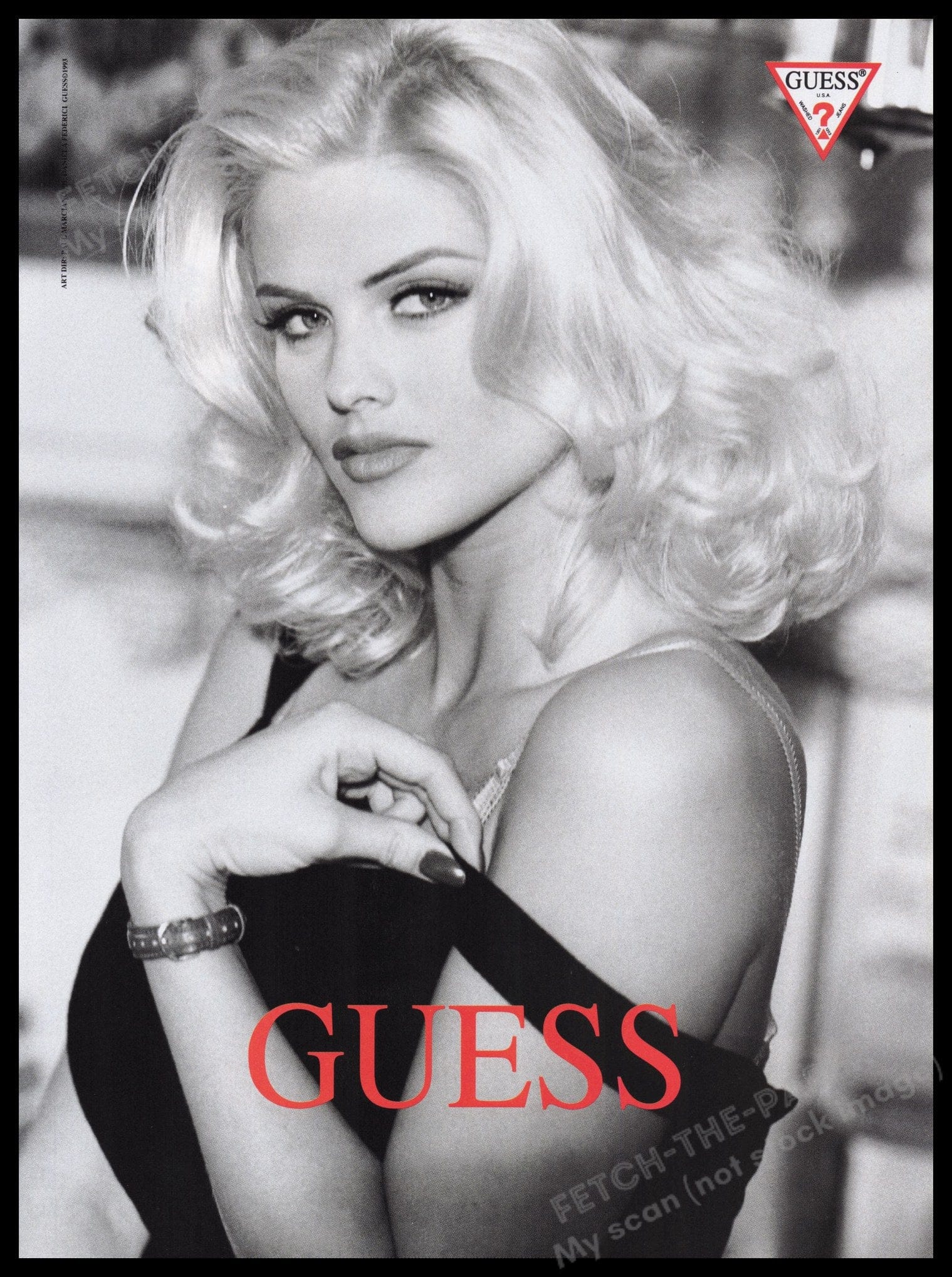
Anna Nicole Smith’s 1993 Guess? jeans campaign transformed her from a regional Texas model into an international pop-culture icon, bridging the gap between the classic Hollywood glamour of the 1950s and the raw, grunge-era aesthetics of the early 1990s. Handpicked by co-founder and creative director Paul Marciano, Smith stepped into the legacy previously held by supermodels like Claudia Schiffer, Karen Mulder, and Eva Herzigová, bringing a voluptuous, unapologetic presence that redefined the brand's visual identity and left a permanent mark on fashion advertising history.
The Genesis of the Partnership: Discovering Anna Nicole Smith
Before she became a global phenomenon, Vicki Lynn Hogan was working as a waitress in Houston, Texas, and trying to break into the modeling industry. Her early portfolio caught the attention of local scouts, eventually leading to a life-changing layout in Playboy magazine, where she was named Playmate of the Month in May 1992 and subsequently Playmate of the Year. However, the transition from adult entertainment to high-fashion advertising was notoriously difficult in the early 1990s, a period still dominated by the ultra-slim, linear body types popularized by runway standards.
Paul Marciano, the creative force behind Guess?, saw something distinct in Smith that transcended prevailing industry trends. Marciano was searching for a model who could channel the golden age of cinema—specifically evoking the sultry, wind-swept vulnerability and raw magnetism of Jayne Mansfield and Marilyn Monroe. When Marciano reviewed Smith's initial test polaroids, he recognized a cinematic quality that static fashion photography often missed.
The collaboration began with a series of test shoots in Los Angeles. Marciano understood that Guess? campaigns relied heavily on stark, high-contrast black-and-white photography that emphasized texture, shadow, and timeless emotion. Smith’s physical proportions, expressive eyes, and natural ability to project both innocence and intense sensuality aligned perfectly with the brand's romantic, vintage-inspired narrative. Rather than forcing her to conform to the prevailing waif aesthetic, Guess? celebrated her full figure, positioning her as a modern pin-up girl for a new decade.
The Aesthetic and Impact of the 1993 Campaign
Released in 1993, the primary Guess? campaign featuring Anna Nicole Smith immediately disrupted the fashion landscape. Shot primarily by renowned fashion photographers like Wayne Maser and Ellen von Unwerth, the advertisements featured Smith draped in distressed denim, oversized denim jackets, and classic white button-down shirts, often set against sun-drenched California backdrops or rustic, cinematic interiors.
The artistic direction of the campaign relied on several core elements:
- Monochromatic and Sepia Tones: The heavy use of black-and-white and muted sepia grains removed the distractions of bright 1990s color palettes, focusing the viewer entirely on texture, expression, and form.
- Nostalgic Americana: The styling invoked a romanticized, mid-century American lifestyle, blending rugged workwear denim with classic Hollywood glamour.
- Unapologetic Voluptuousness: Smith's physique stood in sharp contrast to the minimalist grunge movement spearheaded by alternative culture and competing luxury brands. Her presence signaled a return to classic, hyper-feminine curves.
- Cinematic Storytelling: Each advertisement was framed like a still from a classic motion picture, encouraging viewers to project a narrative onto the imagery rather than simply viewing a product catalog.
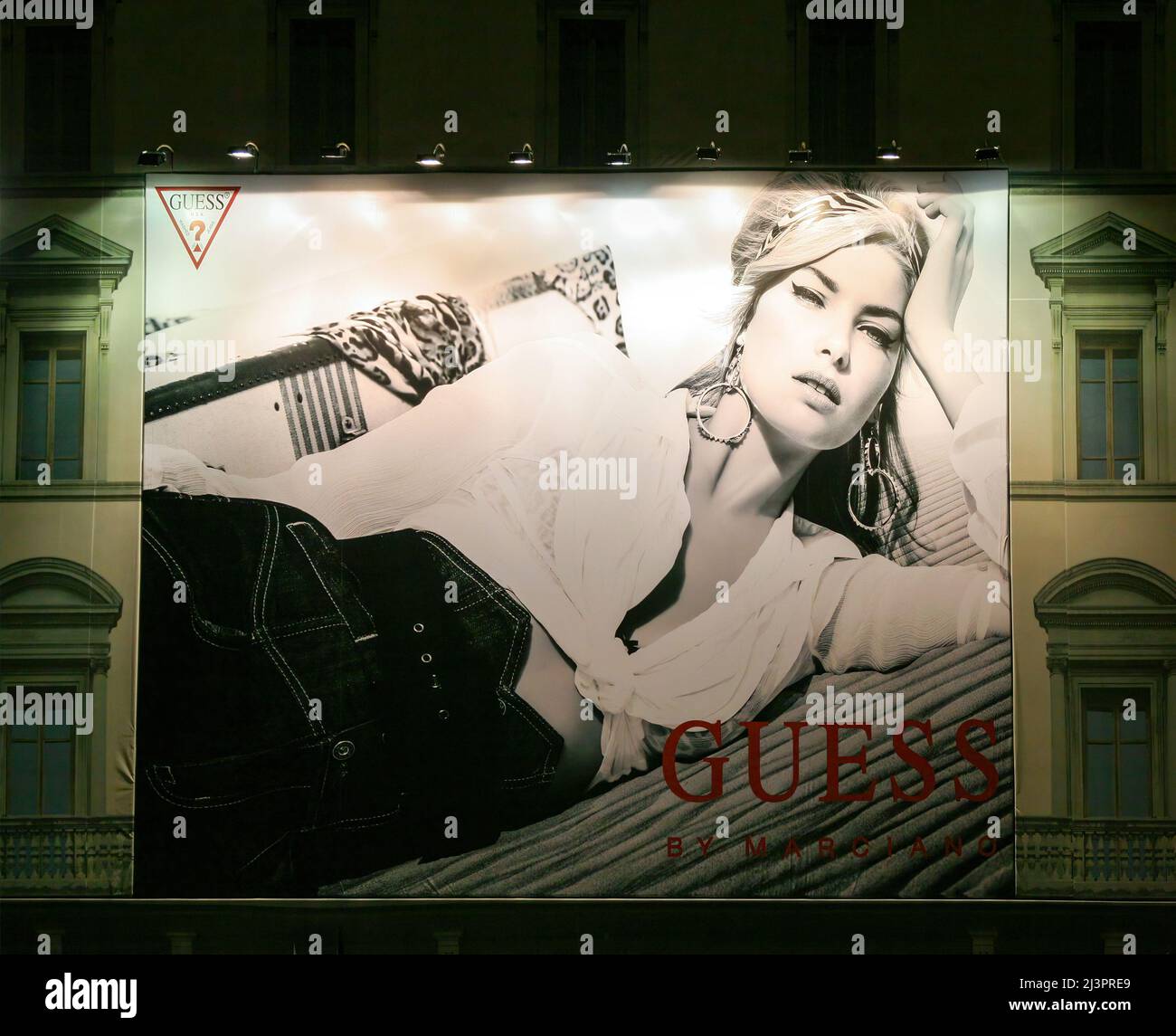
The public reaction was immediate and profound. Billboards featuring Smith towering over Times Square in New York and the Sunset Strip in Los Angeles generated massive traffic disruptions and immediate commercial demand. Retail sales for Guess? surged as consumers rushed to purchase the specific cuts of denim and lifestyle apparel modeled in the spreads. The campaign cemented Guess? not just as a denim manufacturer, but as a tastemaker capable of defining cultural archetypes.
Comparison of Guess? Eras: Pre-Smith, Smith, and Post-Smith
To understand the unique weight of Anna Nicole Smith’s tenure, it is helpful to examine how Guess? utilized different muses across distinct eras of the brand's marketing evolution.
| Era / Campaign Period | Defining Muses | Primary Aesthetic & Tone | Cultural Impact |
|---|---|---|---|
| 1980s Golden Era | Estelle Lefébure, Carré Otis, Claudia Schiffer | European sophistication, high-contrast glamour, outdoor desert and beach settings. | Established Guess? as a luxury denim pioneer with cinematic storytelling. |
| The Anna Nicole Era (1992–1994) | Anna Nicole Smith, Drew Barrymore | Mid-century pin-up revival, raw sensuality, heavy black-and-white contrast. | Bridged the gap between classic Hollywood and 90s pop culture; redefined curves in fashion. |
| Late 1990s to 2000s | Laetitia Casta, Adriana Lima, Alessandra Ambrosio | Globalized supermodel appeal, energetic youth culture, colorful and dynamic framing. | Shifted toward contemporary runway trends and the rise of Brazilian supermodels. |
Cultural Aftershocks and Pop-Culture Legacy
The Guess? campaign served as the foundational springboard for Anna Nicole Smith's entire mainstream career. It proved that she was not merely a magazine pin-up, but a commercially viable global brand ambassador. The imagery from these shoots established visual tropes that filmmakers, musicians, and fashion designers would reference for decades.
Following her work with Guess?, Smith transitioned into film, television, and high-profile tabloid notoriety. Yet, fashion historians and pop-culture critics consistently return to her 1993 advertisements as the high-water mark of her public life. In these images, she achieved a rare alchemy: capturing the vulnerable, tragic archetype of Marilyn Monroe while projecting the confident, self-aware agency of a modern woman manipulating the machinery of fame.
The campaign also altered how fashion brands approached body diversity. While the industry would not broadly embrace comprehensive size inclusivity for another twenty years, Smith's massive commercial success proved that mainstream audiences hungered for figures outside the restrictive runways of Paris and Milan. Her collaboration with Paul Marciano remains a masterclass in talent scouting and visual branding, demonstrating how a single advertising campaign can permanently alter the cultural footprint of a global enterprise.
Frequently Asked Questions
Who discovered Anna Nicole Smith for Guess?
Anna Nicole Smith was discovered and personally championed by Paul Marciano, the co-founder and creative director of Guess?. Marciano recognized her unique resemblance to classic Hollywood icons like Jayne Mansfield and pushed to make her the face of the brand despite prevailing industry trends.
When did Anna Nicole Smith shoot her first Guess? campaign?
Smith shot her breakthrough campaigns for Guess? in late 1992, with the major billboard and print advertisements rolling out globally throughout 1993.
Why was the Anna Nicole Smith Guess? campaign so controversial?
While the campaign was overwhelmingly praised for its artistic merit and commercial success, it also challenged the prevailing 1990s grunge and waif aesthetics. By celebrating a full, voluptuous figure reminiscent of 1950s pin-ups, the ads sparked widespread cultural conversations about body standards in fashion advertising.
Did Anna Nicole Smith work with other major fashion brands?
Following her breakthrough with Guess?, Smith became an in-demand personality and appeared in various print layouts, television programs, and promotional events, though her collaboration with Guess? remains her most iconic contribution to high-fashion marketing.
Where can original Guess? ads featuring Anna Nicole Smith be found today?
Original prints of the 1993 campaign are frequently collected by fashion historians, vintage photography enthusiasts, and pop-culture archives. They occasionally appear in retrospective museum exhibitions dedicated to 1990s fashion photography.
Next Actions for Fashion and Photography Enthusiasts
For researchers, designers, and photography students examining this era, the most effective next step is to study the complete portfolios of photographers Wayne Maser and Ellen von Unwerth from the 1992–1994 period. Analyzing the lighting setups, grain structures, and framing choices used in these specific shoots provides deep technical insight into how vintage analog marketing campaigns achieved enduring cultural resonance without digital manipulation.