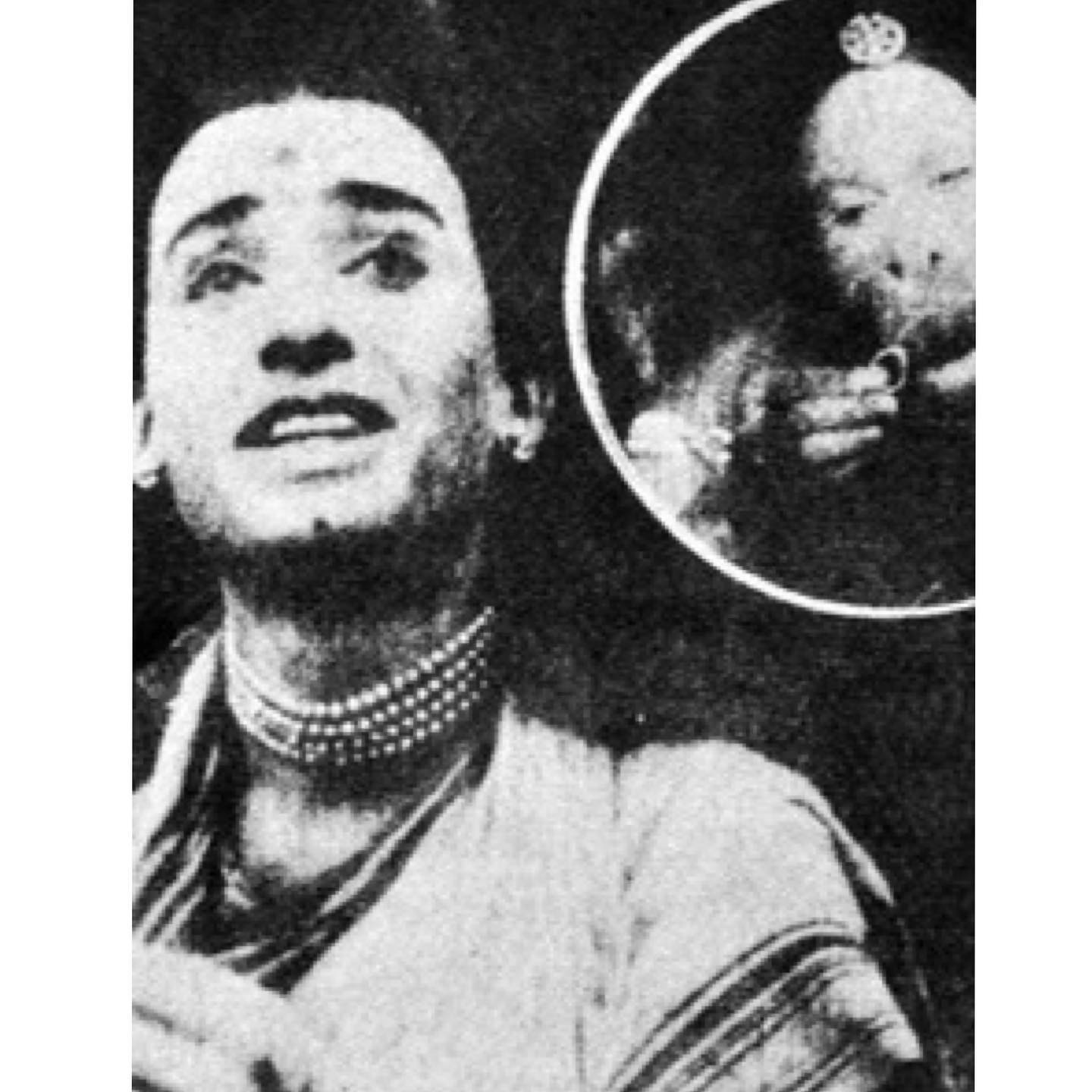
Anna Salunke holds a distinct and historically significant place in the annals of Indian cinema as the first male actor to portray a female character on the silver screen. His performance in Dadasaheb Phalke’s groundbreaking silent film, Raja Harishchandra (1913), marked a paradigm shift in the cultural and technical landscape of early Indian filmmaking. By stepping into the role of Queen Taramati, Salunke navigated the complex societal constraints of the early 20th century, effectively establishing the precedent for female impersonation in a medium where women’s participation was initially deemed socially unacceptable.
The Cultural Context of Early Indian Cinema
To understand the magnitude of Anna Salunke’s contribution, one must analyze the social fabric of India during the late 19th and early 20th centuries. Dadasaheb Phalke, often referred to as the "Father of Indian Cinema," was determined to bring Indian mythology to the screen through the medium of motion pictures. However, he faced an insurmountable barrier: the prevailing societal norms rendered it impossible for women to pursue acting as a career.
In the conservative environment of the 1910s, theatre and film were generally perceived as professions unsuitable for women from respectable backgrounds. Such roles were often reserved for men or women from specific communities associated with performing arts, yet even then, the nascent film industry lacked the infrastructure to normalize female presence in public performances. Phalke’s quest to cast a female lead for his debut film, Raja Harishchandra, hit a dead end when he could not find a woman willing—or permitted—to perform. This constraint necessitated the utilization of male actors for female roles, a practice borrowed from traditional Indian folk theatre, such as Yakshagana and Parsi theatre.
Anna Salunke and the Portrayal of Queen Taramati
Anna Salunke, a humble cook and a man of great versatility, was working in the kitchens on the set of Raja Harishchandra when he was discovered by Phalke. His physical stature and delicate features made him a suitable candidate to embody the grace and regality required for the character of Queen Taramati.
The transition from a kitchen staff member to the lead actress of the first Indian feature film was not merely a matter of casting convenience; it required immense technical and artistic dedication. Salunke had to adopt the mannerisms, gait, and emotive expressions expected of a queen in the context of a silent, mythological drama. His performance was characterized by subtle gestures that conveyed the gravity of the narrative—a story about integrity, sacrifice, and the trials of King Harishchandra.
Historians often note that Salunke’s performance was so convincing that audiences of the era were effectively suspended in their disbelief. He did not merely "dress up" as a woman; he inhabited the character to serve the narrative’s emotional arc. This performance set a benchmark for future actors who would follow in his footsteps, maintaining the tradition of female impersonation for several years until the entry of women into the industry became more socially acceptable.
Technical Requirements of Silent Film Acting
Acting in 1913 was vastly different from the performance standards required today. Without the support of sound or dialogue, the entire weight of the character’s emotional state relied on physical performance, facial expressions, and body language.
Key Elements of Early 20th-Century Performance
- Hyper-expressivity: Since there was no audio, actors used exaggerated facial movements to communicate joy, sorrow, anger, or devotion to the camera.
- Theatricality: The influence of stage drama was profound. Actors needed to project their presence, ensuring their movements were clear enough to be understood in the absence of spoken words.
- Staging and Lighting: Due to the limitations of film stock and lighting technology at the time, actors often worked in natural sunlight or under heavy reflectors. This required a level of endurance and consistency in maintaining character throughout long, arduous shooting schedules.
For Salunke, these technical requirements were compounded by the discomfort of heavy costumes, wigs, and makeup designed to mimic the appearance of a queen from the Puranic eras. The heat and the physical constraints of his attire were secondary to the commitment required to maintain the character’s persona throughout the duration of the film's production.
Comparison of Early Cinema Roles and Gender Representation
The reliance on male actors for female roles was not a unique Indian phenomenon, as it shared roots with global traditions like Elizabethan theatre, where young boys played female parts. However, in the context of India, this practice was a bridge to a modern industry. The following table provides a comparison of the progression of gender representation in early Indian cinema.
| Era / Factor | Early Silent Era (1913–1920s) | Transition Period (1920s–1930s) | Modern Era (Mid-20th Century+) |
|---|---|---|---|
| Primary Actors | Mostly male impersonators | Introduction of female actors | Balanced gender representation |
| Public Acceptance | Very low for women | Gradually increasing | High and standardized |
| Acting Style | Highly theatrical and silent | Transitioning to naturalism | Integrated with sync sound |
| Casting Basis | Availability and convenience | Talent and social shift | Professional screen testing |
The Impact on the Indian Film Industry
Anna Salunke’s contribution did not end with Raja Harishchandra. He continued his career in cinema, eventually taking on male roles as well, most notably playing the dual role of both Rama and Sita in Phalke’s Lanka Dahan (1917). This unique feat—playing both the hero and the heroine in the same production—remains a testament to his versatility and his standing as a pioneer of the medium.
The success of Raja Harishchandra proved that Indian cinema could be a viable commercial and cultural force. By filling the role of the female lead, Salunke enabled the completion of the film, which effectively launched the massive industry that operates today in 2026. His work allowed future generations of filmmakers and actresses to eventually transition into the industry once the cultural taboo against female performers had significantly subsided.
Common Historical Misconceptions
It is important to address common questions regarding the history of Indian film, particularly concerning the identity of early actors.
Frequently Asked Questions
1. Was Anna Salunke the only male actor to play a woman in early Indian films? No. While Salunke was the first in a feature film, the practice was common for several years. Other men also performed female roles until societal barriers were lowered, allowing women to enter the film industry.
2. Why was it considered socially unacceptable for women to act? During the early 1900s, performing on stage or screen was often associated with women of lower social status or "courtesan" culture in certain regions. To protect their status, women from mainstream or conservative families were generally discouraged from entering the public gaze for the purpose of entertainment.
3. Did the use of male actors change the storytelling of the films? To an extent, yes. The storytelling was heavily stylized. Directors had to rely on archetypes and traditional theatrical motifs, which were easier for male actors to replicate than the nuanced, modern performances seen in later decades.
4. When did women start playing female roles in Indian films? The transition began in the late 1910s and early 1920s. Actresses like Durgabai Kamat and her daughter Kamlabai Gokhale are widely recognized as some of the first women to perform in Indian cinema, beginning their work shortly after the initial breakthrough of Phalke’s films.
5. How did Salunke manage the makeup and costumes? Dadasaheb Phalke was a master of his craft, often handling multiple departments himself. He worked closely with his actors, including Salunke, to ensure that the makeup, jewelry, and traditional attire were period-accurate and helped mask the masculine features of the performers as effectively as possible for the camera.
Why Salunke’s Legacy Matters in 2026
In 2026, as we observe the massive global footprint of Indian cinema, it is easy to take for granted the inclusion of diverse voices and genders on screen. Anna Salunke’s story serves as a reminder of the foundational hurdles that were overcome to establish the industry. His work was not about gender identity in the modern, political sense; it was a pragmatic, artistic solution to a rigid social problem.
The dedication required to perform in a medium that was, at the time, viewed with skepticism, demonstrates the resilience of early cinematic pioneers. Salunke’s role as the first "leading lady" of Indian cinema is a testament to the fact that artistry can persist through, and eventually transcend, the most restrictive social conditions.
For students of film history and those interested in the evolution of media, Salunke’s career is an essential case study. It highlights how the technical limitations of silent film were bypassed by creative ingenuity and how the definition of "acting" itself was redefined to allow for the birth of a national cultural phenomenon.
Recommendation for Further Research
For those looking to deepen their understanding of early Indian film history, the following actions are recommended:
- Consult Primary Documentation: Review the archives of the National Film Archive of India (NFAI). They hold restored versions and documentation regarding Phalke’s early productions, providing the most accurate insight into the production of Raja Harishchandra.
- Explore Biographical Literature: Read Dadasaheb Phalke’s personal correspondence or biographical works written by film historians who have meticulously mapped the transition of the Indian film industry.
- Watch Comparative Media: If possible, view contemporary footage or documentation of traditional Parsi theatre. Understanding the roots of the acting style prevalent in 1913 will provide a better appreciation for why Salunke’s performance was perceived as high-quality at the time.
The legacy of Anna Salunke remains an foundational element of Indian cinematic history. His courage to step into a role that defied social norms allowed the industry to take its first steps, ultimately paving the way for the inclusive and expansive artistic landscape that characterizes the industry today.