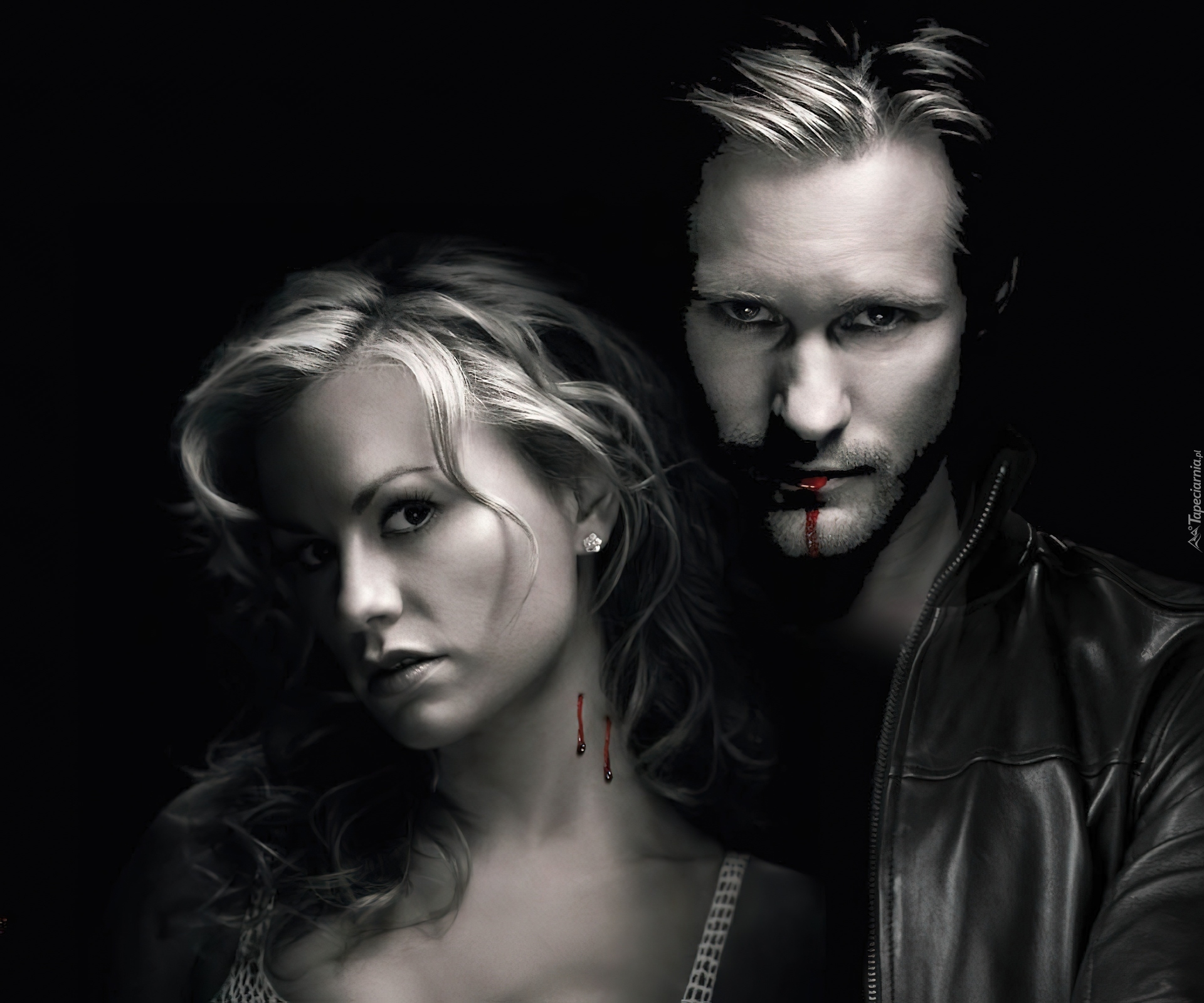
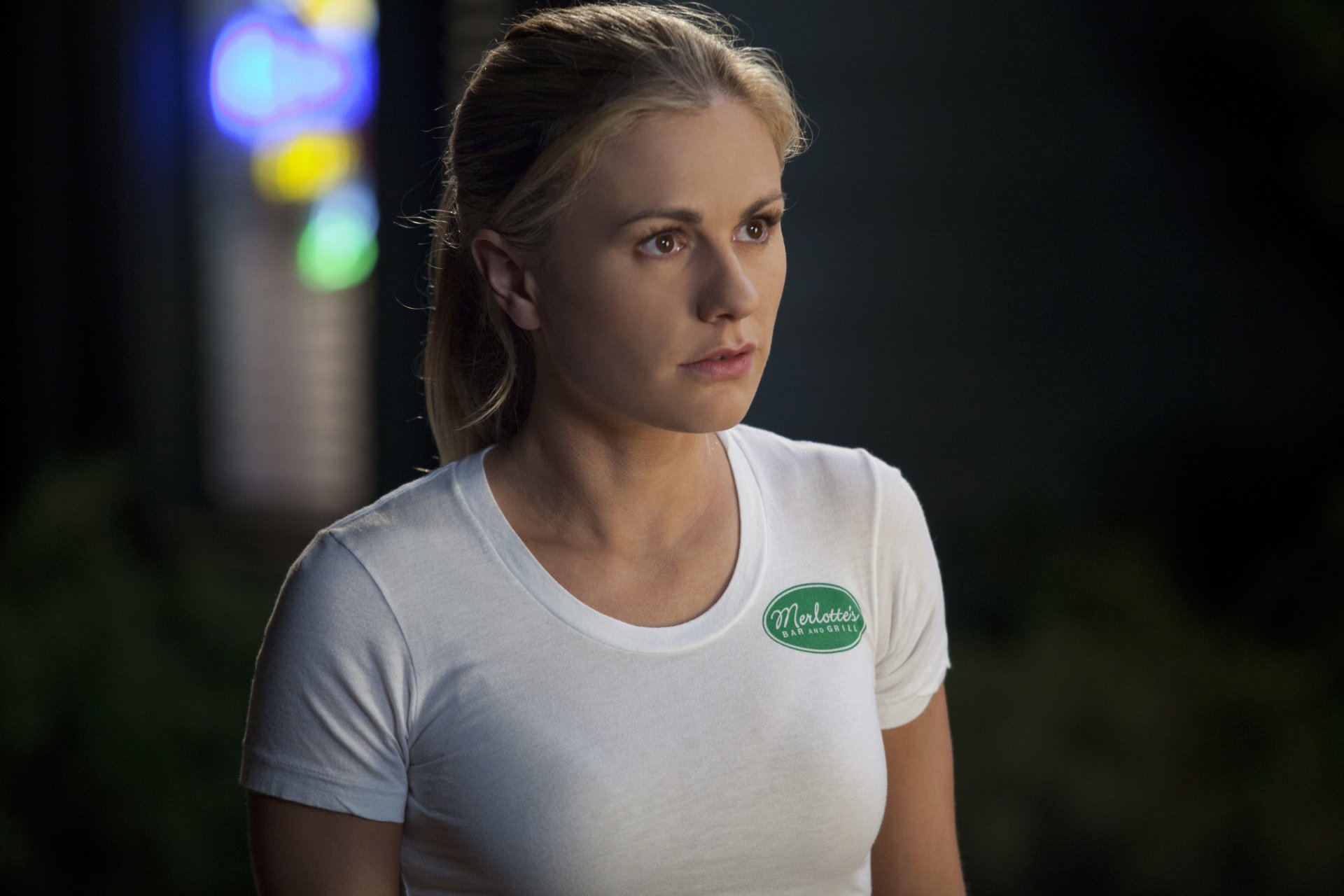
Anna Paquin delivers a career-defining performance as Sookie Stackhouse in HBO’s supernatural drama series True Blood, anchoring seven seasons of Southern Gothic romance, mystery, and horror with emotional authenticity, grounded vulnerability, and unwavering grit. Based on Charlaine Harris’s bestselling novel series The Southern Vampire Mysteries, the television adaptation ran from 2008 to 2014 and became a massive cultural phenomenon. At the center of its chaotic universe of vampires, shapeshifters, werewolves, and faeries stood Sookie, a telepathic barmaid in the fictional small town of Bon Temps, Louisiana. Paquin’s portrayal transformed what could have easily been a conventional damsel-in-distress archetype into a complex, fiercely independent protagonist who actively navigates the perils of a supernatural underworld while trying to maintain her humanity.
The Genesis of Sookie Stackhouse and Adaptation Challenges
When HBO greenlit True Blood under the visionary direction of Alan Ball—who had previously created the critically acclaimed series Six Feet Under—the network needed an anchor who could successfully bridge the gap between pulpy genre fiction and prestige television. Charlaine Harris’s literary version of Sookie Stackhouse was defined by a distinct first-person narrative voice, characterized by dry humor, stubborn independence, and a unique worldview shaped by the burden of hearing everyone's secret thoughts.
Adapting a first-person literary protagonist for a visual medium presents substantial hurdles. Internal monologues must be translated into external actions, facial expressions, and nuanced physical performances. Anna Paquin met this challenge by physically manifesting the psychological weight of Sookie's telepathy. From her guarded posture in crowded rooms to the subtle flinches and intense, piercing stares when overwhelmed by intrusive mental chatter, Paquin externalized the invisible torment of her character.
Furthermore, the character of Sookie operates as the audience surrogate. As viewers enter the humid, dangerous, and morally ambiguous swamps of Louisiana, they rely on Sookie’s moral compass to navigate alliances between humans and predatory immortals. Paquin imbued the character with a foundational earnestness that prevented the show's campier elements from overshadowing the emotional stakes. Even as Bon Temps descended into increasingly bizarre supernatural conflicts involving ancient authorities, political conspiracies, and mystical bloodlines, Paquin kept Sookie’s core identity rooted in her working-class dignity and fierce loyalty to her family and friends.
Character Trajectory Across Seven Seasons
Sookie Stackhouse’s evolution over the course of True Blood’s 80 episodes is marked by a steady erosion of naive idealism, replaced by hard-earned resilience and self-reliance. Examining her journey across the series reveals how Paquin adapted her performance to match the expanding scope of the narrative.
Seasons 1 to 3: The Awakening and Vulnerability
In the early seasons, Sookie is an isolated outsider in Bon Temps, viewed as an oddity due to her mind-reading abilities. Her world is upended by the arrival of Bill Compton (Stephen Moyer), a 173-year-old vampire. Paquin portrayed Sookie during this phase with a delicate blend of wide-eyed wonder and defensive caution. She was vulnerable, frequently finding herself targeted by predators because of her unique blood and telepathy. Yet, Paquin ensured Sookie never felt passive. Whether standing up to local bigots or defending Bill against hostile vampires, her physical fear was always counterbalanced by moral courage.
Seasons 4 to 6: Supernatural Entanglements and Agency
As the series progressed, Sookie discovered her own supernatural heritage as part-faerie, expanding her abilities beyond mere mind-reading to include projecting bolts of pure light. This period required Paquin to handle heavier visual effects and a more aggressive combat style. Sookie transitioned from a victim of circumstance to an active participant in supernatural politics. Paquin captured this transition by hardening Sookie's demeanor. Her interactions with Eric Northman (Alexander Skarsgård) and the various political factions of Louisiana vampires showcased a more pragmatic, cynical, and battle-tested woman who refused to be treated as a pawn by either humans or immortals.
Season 7: Resolution and Autonomy
The final season brought Sookie full circle, forcing her to confront the ultimate cost of her supernatural entanglements and her desire for a normal human life. Paquin grounded the finale in emotional maturity, portraying a Sookie who finally rejects the toxic codependency that defined many of her romantic entanglements. The performance in these concluding episodes emphasized peace, self-discovery, and the reclamation of her own narrative autonomy.
| Season Arc | Primary Supernatural Conflict | Sookie’s Character Development | Key Performance Focus |
|---|---|---|---|
| Seasons 1–2 | Murders in Bon Temps, introduction of vampires and maenads | Moving from isolated outsider to romantically entangled investigator | Innocent curiosity, defensive vulnerability, moral clarity |
| Seasons 3–4 | Werewolves, witches, and Sookie’s faerie heritage | Discovering supernatural ancestry and accepting inherent power | Physicality of combat, internal conflict over identity, growing cynicism |
| Seasons 5–6 | The Vampire Authority, Lilith mythology, government containment | Protecting loved ones while resisting institutional control | Defensive grit, leadership under pressure, emotional exhaustion |
| Season 7 | Hep-V epidemic, final romantic resolutions | Rejecting supernatural politics to seek domestic peace and autonomy | Internal reflection, closure, reclamation of agency |
Key Dimensions of Paquin’s Performance
Analyzing why Anna Paquin shines so brightly in the role requires looking at several distinct technical and artistic elements that elevated her work above standard television genre acting.
Balancing Vulnerability and Strength
Sookie Stackhouse is frequently placed in peril, often requiring rescue, yet Paquin never played her as weak. Sookie’s strength was not derived solely from physical combat prowess—though she certainly held her own with faerie light and firearms—but from her psychological resilience. Even when physically battered or emotionally devastated by betrayal, Paquin maintained a core tenacity in Sookie's eyes and posture. This refusal to break under extreme psychological and physical duress made her triumphs feel earned rather than unearned plot conveniences.
Mastering the Southern Gothic Tone
True Blood operated in a very specific aesthetic space: a hyper-sexualized, blood-soaked, satirical, yet earnest Southern Gothic melodrama. This tone is notoriously difficult to sustain. If an actor takes the material too seriously, the show becomes self-important; if they lean too far into camp, it loses its emotional stakes. Paquin served as the narrative anchor by playing the absurdity of the universe completely straight. Her commitment to Sookie’s emotional reality allowed the audience to buy into fantastical plots involving shape-shifting, mind control, and ancient deities. Her distinct, carefully modulated Louisiana accent further grounded the character in a specific cultural geography, contrasting sharply with the European accents of the ancient vampires surrounding her.
Chemistry and Ensemble Dynamics
A central pillar of Sookie’s narrative involved her complex romantic triangles and deep platonic bonds. Paquin's naturalistic chemistry with her co-stars—particularly Stephen Moyer and Alexander Skarsgård—fueled the central cultural debates of the show's airing era (Team Bill versus Team Eric). Beyond romance, Paquin forged an essential, grounded sibling dynamic with Ryan Kwanten, who played Sookie’s well-meaning but dim-witted brother, Jason Stackhouse. Their shared scenes provided the emotional heartbeat of the series, anchoring the supernatural madness in genuine familial love and shared trauma rooted in their parents' mysterious deaths.
Cultural Impact and Critical Reception
Anna Paquin’s work on True Blood received widespread industry recognition and cemented her status as a powerhouse television lead. Having already achieved historic critical acclaim early in her career—winning the Academy Award for Best Supporting Actress at age eleven for Jane Campion’s The Piano (1993)—Paquin transitioned seamlessly into adult prestige television.
For her portrayal of Sookie, Paquin won the Golden Globe Award for Best Actress in a Television Series – Drama in 2009, alongside multiple Saturn Award nominations and wins. Her performance helped validate genre television during the early days of the modern peak-TV era, proving that fantasy and horror adaptations could command serious critical attention and attract top-tier cinematic talent.
Furthermore, Sookie Stackhouse contributed to the broader evolution of female protagonists in speculative fiction. Unlike the hyper-competent action heroines of the late 1990s or the passive ingenues of traditional Gothic romance, Sookie was explicitly messy. She made poor romantic choices, experienced profound grief, struggled with her temper, and frequently found herself overwhelmed by her circumstances. Paquin embraced these flaws, creating a fully realized, three-dimensional woman whose agency remained intact even within a hyper-masculine and predatory supernatural hierarchy.
Common Misconceptions About the Character and Performance
Discussions surrounding Sookie Stackhouse often encounter critical shortcuts or misunderstandings regarding both the character's agency and Paquin's stylistic choices.
- The "Damsel in Distress" Fallacy: Critics of early seasons sometimes mischaracterized Sookie as a passive victim awaiting rescue. In reality, Sookie routinely initiated investigations, rescued her romantic partners from lethal situations, and rejected traditional protective structures when they compromised her independence. Paquin’s performance consistently emphasized proactive decision-making, even when those decisions proved dangerous.
- Tone Misinterpretation: Some viewers unfamiliar with Southern Gothic literature mistook the show's campy, satirical elements for poor acting. Paquin’s ability to navigate high-stakes emotional melodrama while surrounded by overt genre satire required a delicate balancing act that critics of genre fiction occasionally overlooked. Her commitment to sincerity is precisely what kept the series from collapsing under its own eccentricities.
- Literary Divergence: Fans of Charlaine Harris's novels frequently debated the differences between the page and screen versions of Sookie. While the television adaptation diverged significantly in plotlines, secondary characters, and ultimate romantic resolutions, Paquin captured the internal essence of Harris's protagonist: a woman determined to maintain her moral integrity in a world actively trying to strip it away.
Frequently Asked Questions
Did Anna Paquin read all the books in Charlaine Harris’s series?
While Paquin familiarized herself with the source material to understand Sookie’s background and motivations, the television series diverged significantly from the books starting in the middle seasons. Alan Ball and the writers' room charted a distinct narrative course, meaning Paquin primarily relied on the scripts and character bibles provided by the production team.
How did Anna Paquin prepare for her role as a telepathic character?
Paquin worked closely with director Alan Ball to develop physical cues that indicated when Sookie was receiving or blocking intrusive thoughts. This involved specific physical tension, posture adjustments, and maintaining an intense, focused gaze that signaled to the audience when Sookie was mentally engaged with her surroundings.
What awards did Anna Paquin win for playing Sookie Stackhouse?
Anna Paquin won the Golden Globe Award for Best Actress in a Television Series – Drama in 2009 for her performance in the first season of True Blood. She also received multiple Saturn Award nominations for Best Actress on Television, winning the category in 2009 and 2011.
How does Sookie Stackhouse differ from other supernatural heroines of her era?
Unlike many genre heroines who possess immediate combat training or magical mastery, Sookie begins the series as an ordinary working-class waitress whose only exceptional trait is an involuntary, often burdensome mental affliction. Her strength is rooted in emotional resilience, moral stubbornness, and community loyalty rather than physical dominance.
Why is Sookie’s Southern accent a notable aspect of the performance?
The Southern Gothic setting requires a specific linguistic and cultural atmosphere to function. Paquin, who was raised in New Zealand, adopted a distinct Louisiana accent that helped ground the fantastical supernatural elements in a tangible, specific geographic and cultural reality, contrasting effectively with the varied accents of the immigrant vampire population.
Conclusion and Legacy
Anna Paquin’s definitive turn as Sookie Stackhouse remains a landmark achievement in modern television acting. By anchoring a chaotic, blood-drenched, and wildly ambitious supernatural narrative with genuine emotional truth, physical commitment, and fierce vulnerability, Paquin elevated True Blood from a pulpy genre experiment into a defining television touchstone of the early twenty-first century. Her performance ensured that Sookie endured not merely as a passive observer of monsters, but as a complex, resilient woman who commanded the center of her own legendary world.