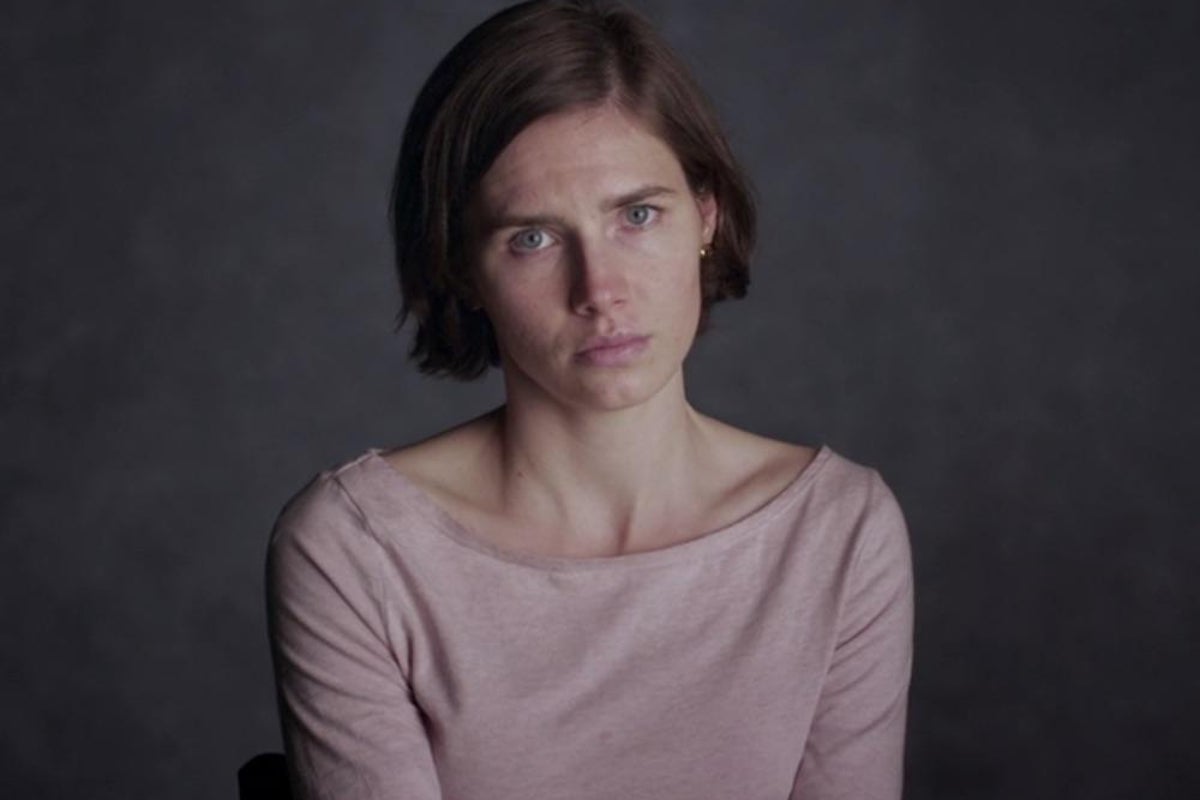
The 2016 Netflix original documentary Amanda Knox serves as a focal point for debates regarding true-crime storytelling, the influence of media sensationalism on legal proceedings, and the lingering ambiguity of the 2007 murder of Meredith Kercher in Perugia, Italy. A critical assessment of this film requires examining how the production balances the perspectives of the accused, the prosecution, and the press, while questioning whether a documentary can ever truly reconcile conflicting judicial outcomes.
The Scope of the Production: Intent and Subjectivity
Directed by Brian McGinn and Rod Blackhurst, the Amanda Knox documentary occupies a specific space within the true-crime genre. Unlike investigative series that focus on uncovering new physical evidence or hidden witnesses, this film focuses on the meta-narrative of the trial. Its primary subject is not necessarily the act of murder itself, but rather the construction of "Amanda Knox" as a media archetype—the "Foxy Knoxy" persona that dominated global tabloids for nearly a decade.
To provide a critical assessment, one must distinguish between the film’s role as an objective record and its function as an editorialized argument. The documentary positions Knox herself, along with her former co-defendant Raffaele Sollecito and lead prosecutor Giuliano Mignini, as primary narrators. By giving these key players direct access to the audience, the film highlights the subjective nature of truth in high-profile cases. However, this structure simultaneously limits the perspective of the victim’s family, who remained largely distanced from the project, resulting in a narrative that centers on the legal odyssey of the defendants rather than the loss of Meredith Kercher.
Technical Examination of Media Influence
A significant portion of the film’s critical merit lies in its exploration of the relationship between investigative journalism and judicial prejudice. The documentary effectively compiles archival footage from Italian and British media, demonstrating how public opinion was shaped by speculative reporting.
From an analytical standpoint, the filmmakers identify a clear feedback loop: police leaks informed the press, the press sensationalized the details, and the resulting public pressure placed undue stress on the Italian judicial system. The film underscores how the "trial by media" created a narrative of guilt before forensic evidence was fully analyzed. When conducting a review of this nature, viewers should consider the following technical pillars upon which the documentary relies:
- Direct Testimony: The inclusion of Giuliano Mignini is a technical masterstroke of production, as it allows the prosecution’s rationale to be heard without the mediation of a voiceover narrator.
- Archival Contrast: The editing team juxtaposes the stark, clinical reality of the courtroom with the frantic, highly stylized coverage of news crews, forcing the viewer to recognize the duality of the proceedings.
- Ambiguity Retention: The documentary deliberately refuses to offer a definitive "whodunit" conclusion. Instead, it leaves the audience with the discomfort of uncertainty, which is arguably the most accurate representation of the case’s final legal outcome.
Comparative Analysis of Perspectives
When assessing the documentary, it is useful to evaluate how it handles the competing testimonies of the individuals most involved. The documentary is often praised for its "balanced" approach, yet this balance is inherently precarious due to the impossibility of verifying subjective accounts of psychological states.
| Participant Category | Documentary Focus | Limitations in Coverage |
|---|---|---|
| The Accused (Knox/Sollecito) | Trauma and judicial procedural failures. | Inability to provide absolute proof of innocence. |
| The Prosecutor (Mignini) | Theoretical motive and intuitive suspicion. | Lack of concrete forensic confirmation. |
| The Press (Journalists) | The sensationalization of public interest. | Responsibility for spreading unverified narratives. |
| The Victim (Kercher) | A secondary focus as the point of tragedy. | Significantly less screen time than the legal discourse. |
This table illustrates that the documentary functions as a study of perspectives rather than a factual reconstruction of the crime. The critique here is that by treating the participants as "equal" narrators, the film grants the prosecutor’s intuition the same structural weight as the defendant’s legal acquittal, which some critics argue creates a false sense of parity.
The Judicial Reality vs. Narrative Framing
The legal outcome of the murder trial was complex: Knox and Sollecito were initially convicted, then acquitted, then convicted again, and finally acquitted definitively by the Italian Supreme Court of Cassation in 2015. A documentary trying to cover this trajectory faces the challenge of explaining technical legal concepts like "preliminary hearings" and "civil party participation" to a general audience.
The documentary succeeds in showing that the Italian legal system is not necessarily "flawed" or "corrupt," but rather operates on a different logic than the adversarial systems common in the United States or the United Kingdom. It emphasizes the inquisitorial nature of the Italian process, where a judge plays an active role in gathering evidence and shaping the trial. However, the film frequently cuts away from these technical legal complexities to focus on the human drama, which serves the entertainment value but may leave viewers wanting for a deeper understanding of the specific forensic failures—such as the mishandling of the bra clasp or the contamination of DNA evidence.
Common Misconceptions and Critical Blind Spots
Reviewers and audiences often approach this documentary with preconceived notions based on their previous engagement with the case. A common mistake is expecting the film to act as a definitive verdict.
One major critical assessment point is the documentary’s treatment of Rudy Guede, the individual whose DNA was found at the scene and who was eventually convicted of the murder. The film addresses Guede, but he is arguably presented as a peripheral figure to the central drama of Knox and Sollecito. This choice is vital to understand: the filmmakers chose to focus on the projection of guilt onto the two primary subjects rather than the factual mechanics of the crime itself.
Furthermore, viewers should be aware of the "Documentary Bias." Because the film uses music, pacing, and selective editing, it inevitably leads the viewer toward an empathetic stance regarding the ordeal of the defendants. Critics of the film have argued that by focusing heavily on Knox’s personality and the media's unfair treatment of her, the documentary effectively "rebrands" her at the expense of maintaining a sober, detached view of the judicial events.
FAQ: Understanding the Documentary and the Case
Does the documentary provide new evidence regarding the murder? No. The documentary does not attempt to solve the crime through new forensic discovery. Its purpose is to analyze the history of the case, the media coverage, and the trial proceedings as they occurred through 2015.
Is the film considered an accurate historical record? It is accurate regarding the chronology of the trial phases and the public statements made by the parties involved. However, it is an edited, creative work, not an official court transcript, and should be viewed as an interpretation of events rather than a legal record.
How does the documentary portray the Italian justice system? It highlights the differences between the Italian inquisitorial system and more adversarial models. It presents the system as a complex entity influenced by individual egos, political pressures, and an intense, often invasive media culture.
Why is there a debate over the documentary's "balance"? The debate stems from the film’s choice to give the prosecutor and the accused equal screen time. Some argue this implies that their claims carry equal validity, despite the final Supreme Court acquittal of the defendants.
Should I watch this if I have no prior knowledge of the case? Yes. The documentary is structured to provide sufficient context for a newcomer, though it may leave viewers with many questions regarding the specific forensic details of the crime scene that are bypassed in favor of the narrative focus.
Expert Guidance for Further Exploration
If you are engaging with this documentary for research or critical analysis, it is recommended to supplement your viewing with primary legal documents. Specifically, searching for the official English translations of the Supreme Court of Cassation’s final judgment provides the necessary legal context that the documentary’s narrative style may lack.
When evaluating the documentary, maintain a clear distinction between the performance of the people on screen and the evidence presented in the courtroom. The film is a masterclass in how narratives are built in the digital age, but it is not a substitute for the meticulous study of case files. For those interested in the ethics of true crime, comparing this documentary to other media coverage from the 2007–2015 period will reveal the extent to which the filmmakers have curated a specific perspective on a deeply polarized event.
Ultimately, the documentary is a valuable artifact of its time, capturing the collision between international media, investigative procedure, and the lives of those caught in the center. Its success lies not in solving the mystery of the murder, but in documenting the psychological and societal costs of a trial that refused to end.