Finding the right project management tool in 2026 requires balancing database flexibility with execution-focused task tracking. While Airtable remains a leader for relational data, teams often seek alternatives like Monday.com, Smartsheet, or SmartSuite to address specific needs regarding per-user pricing, offline access, advanced automation, or more robust native project reporting.
Understanding the Shift from Airtable in 2026
Airtable revolutionized the industry by blurring the lines between a spreadsheet and a relational database. However, as of 2026, many organizations have found that while "Bases" are excellent for data storage, they can sometimes lack the specialized workflow depth required for complex, multi-stage project lifecycles. The primary drivers for seeking an alternative typically fall into three categories: cost-to-value ratio, record limitations, and the learning curve associated with its Interface Designer.
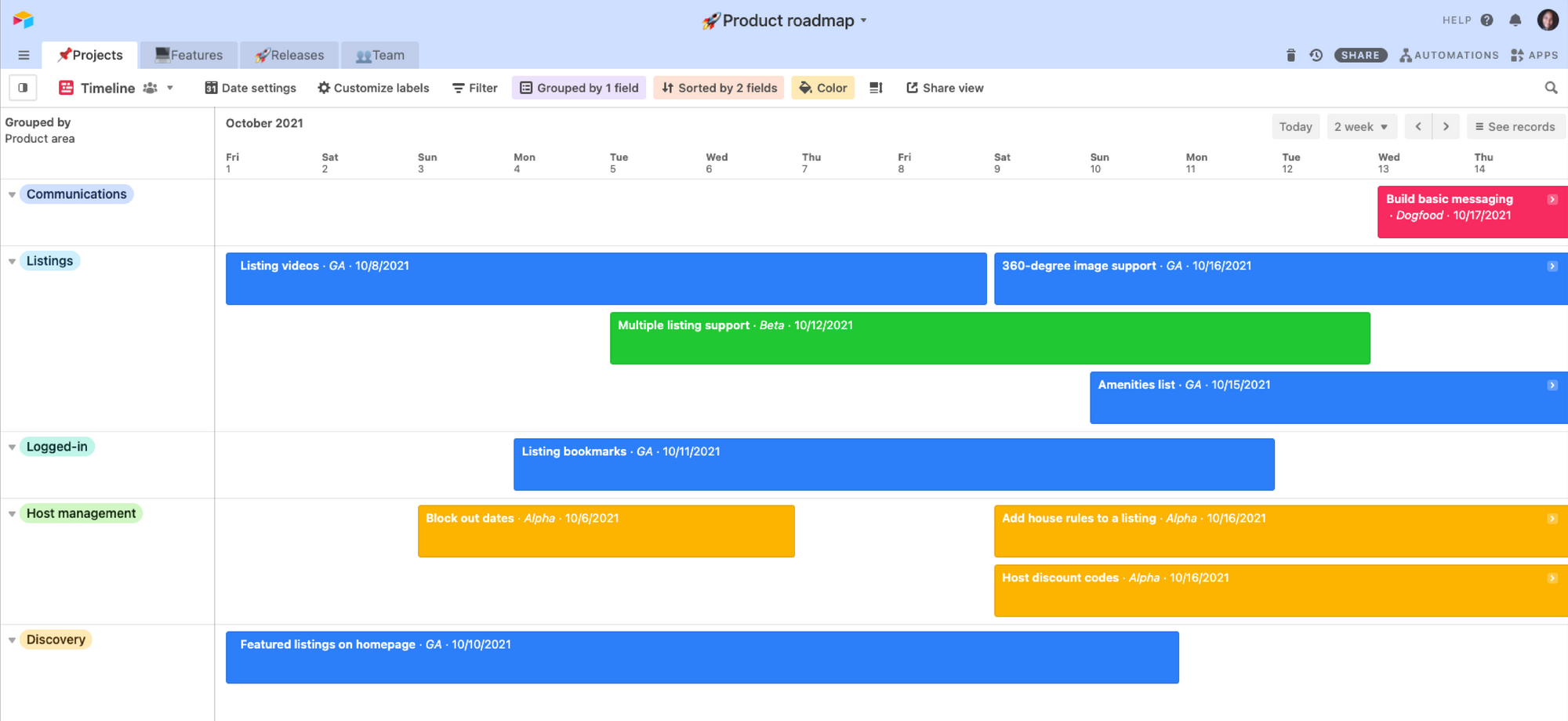
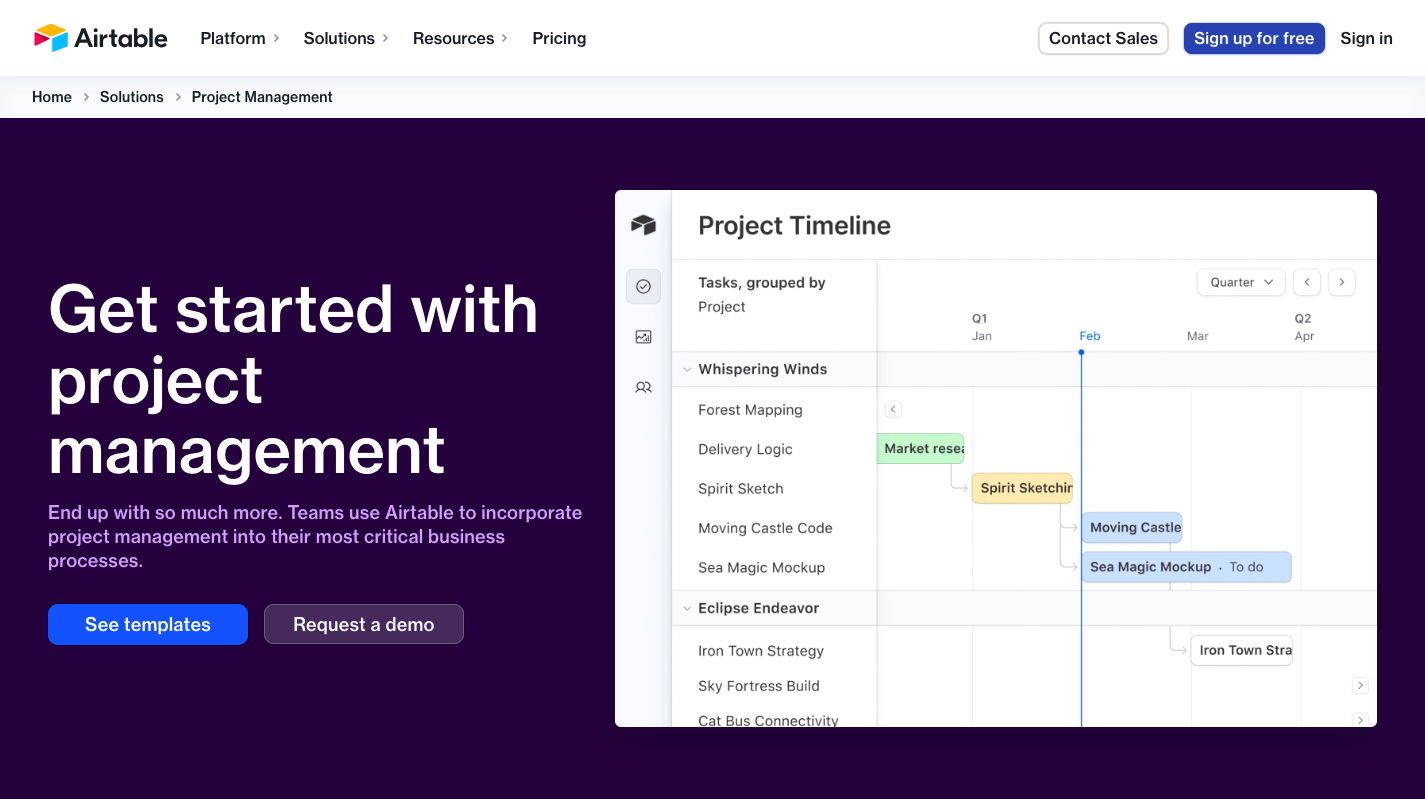
For many project managers, the "relational" aspect of Airtable—the ability to link a record in one table to a record in another—is its greatest strength. Yet, for teams that prioritize Gantt charts, resource leveling, and critical path analysis, Airtable can feel like a "build-it-yourself" kit rather than a ready-to-use project management solution. This has led to a diversified market where competitors have doubled down on specific niches, from high-level enterprise resource planning to agile software development.
Strategic Criteria for Evaluating Alternatives
When moving away from Airtable, it is essential to evaluate potential replacements based on technical architecture and operational utility. You are not just looking for a new place to store tasks; you are looking for a system that mirrors your team's specific logic.
Data Architecture and Relational Integrity
The most critical technical requirement for an Airtable alternative is how it handles data relationships. Airtable’s primary value proposition is its ability to create one-to-many and many-to-many relationships. If your project management relies on complex cross-referencing (e.g., linking Clients to Projects to Tasks to Invoices), you must ensure your chosen alternative supports relational database logic rather than just flat-file spreadsheet logic.
Automation and Extensibility
Modern project management is increasingly automated. In 2026, the standard for a "good" alternative includes native "If-This-Then-That" (IFTTT) logic that does not require third-party tools like Zapier or Make for basic functions. Look for tools that offer robust API access and webhooks, allowing your project data to flow seamlessly between your CRM, financial tools, and communication hubs like Slack or Microsoft Teams.
Scalability and Record Limits
A common pain point for Airtable users is the hard limit on records per base. In an enterprise environment, a project log can easily exceed 100,000 records over a few years. When evaluating alternatives, check the "workspace" or "workspace-wide" limits. Some platforms offer unlimited records but throttle performance, while others charge significantly for higher data tiers.
The Leading Alternatives to Airtable
The following platforms represent the top-tier options for teams looking to migrate or start fresh in 2026. Each has been selected for its ability to handle both data management and project execution.
1. Monday.com: The Versatile Work OS
Monday.com has evolved from a simple task board into a comprehensive "Work OS." It is often the first choice for teams that find Airtable too "academic" or data-heavy.
- Why it’s an alternative: Monday.com prioritizes the user interface (UI) and visual cues. While it has introduced deep relational capabilities through its "Connect Boards" column, its focus remains on the movement of tasks through a pipeline.
- Key Strength: Its automation engine is one of the most intuitive in the industry. Teams can set up complex status-change notifications and date-shifting logic in seconds.
- Best For: Marketing agencies, HR teams, and general operations where visual status tracking is more important than deep database architecture.
2. Smartsheet: The Enterprise Standard
For organizations that cannot let go of the spreadsheet interface but need enterprise-grade security and project power, Smartsheet is the primary contender.
- Why it’s an alternative: Unlike Airtable’s grid view, Smartsheet is built on a literal spreadsheet foundation but adds a layer of project management features like Critical Path, Baseline tracking, and Resource Management.
- Key Strength: Smartsheet excels in "Work Insights" and global reporting. It can aggregate data across thousands of sheets, something that remains difficult to do in Airtable without complex syncing.
- Best For: Construction, engineering, and large-scale corporate PMOs (Project Management Offices).
3. SmartSuite: The Direct Architecture Rival
SmartSuite is perhaps the closest direct competitor to Airtable in terms of how it structures data. It was built specifically to address the gaps in the Airtable ecosystem.
- Why it’s an alternative: SmartSuite treats "Workflows" as the core unit. It offers a more structured approach to data types (like designated columns for Addresses, Social Media links, and Currency) than Airtable’s more generic fields.
- Key Strength: It includes features that Airtable often requires extensions for, such as built-in time tracking, member availability, and a more robust "My Work" section that aggregates tasks for individual users.
- Best For: Teams that love the relational database aspect of Airtable but want more "out-of-the-box" project management features.
4. ClickUp: The Comprehensive All-in-One
ClickUp’s mission has always been to replace all other productivity tools. In 2026, it remains the most feature-dense alternative available.
- Why it’s an alternative: ClickUp offers a Hierarchy (Spaces > Folders > Lists > Tasks) that provides more structure than Airtable’s flat Base structure. This makes it easier to organize large departments.
- Key Strength: Customizability. Almost every aspect of the Task view can be toggled on or off, allowing it to be as simple or as complex as needed.
- Best For: Startups and tech-savvy teams that want docs, tasks, goals, and whiteboards in a single subscription.
5. Notion: The Documentation-First Choice
Notion is the primary alternative for teams that prioritize context and documentation alongside their data.
- Why it’s an alternative: While Notion's databases are less "powerful" in terms of raw data processing speed compared to Airtable, they are far superior for creating "living documents." Every record in a Notion database is its own fully customizable page.
- Key Strength: Wiki-style organization. If your project management requires a lot of written instructions, meeting notes, and SOPs (Standard Operating Procedures), Notion is the logical home.
- Best For: Creative teams, remote companies, and knowledge-management-heavy organizations.
Comparison of Key Features and Capabilities
The following table compares these platforms based on the technical requirements of project management in 2026.
| Platform | Primary Data Model | Strongest PM Feature | Relational Depth | 2026 Pricing Trend |
|---|---|---|---|---|
| Airtable | Relational Database | Interface Designer | Very High | Premium / Per Seat |
| Monday.com | Work OS / Boards | Automation Recipes | High | Mid-Range / Tiered |
| Smartsheet | Spreadsheet | Resource Leveling | Moderate | Enterprise / Per Seat |
| SmartSuite | Relational Database | Built-in Time Tracking | Very High | Competitive / Usage |
| ClickUp | Hierarchical Task List | Custom Task Statuses | Moderate | Value-Focused |
| Notion | Document / Wiki | Connected Docs | Moderate | Low-Cost / Freemium |
Open-Source and Self-Hosted Alternatives
For organizations with strict data sovereignty requirements or those looking to avoid the rising costs of SaaS in 2026, open-source alternatives have become increasingly viable.
Baserow
Baserow is the leading open-source alternative to Airtable. It offers a very similar user experience but allows for self-hosting on your own servers. This is a game-changer for industries like healthcare or finance where data residency is a legal requirement. It supports a high volume of rows without the performance lag sometimes seen in cloud-based tools.
NocoDB
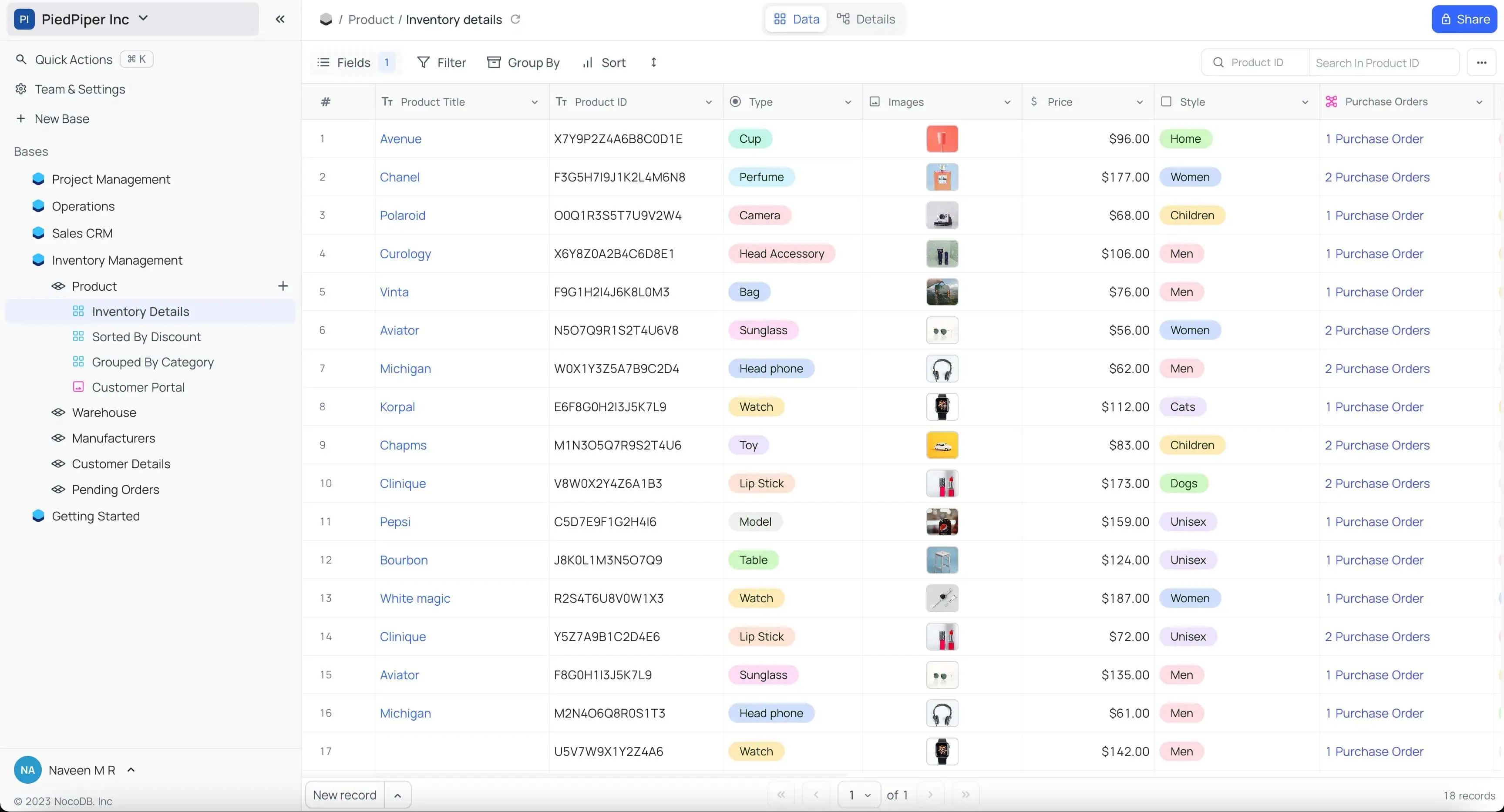
NocoDB takes a different approach by turning any existing database (MySQL, PostgreSQL, etc.) into a "smart spreadsheet." If your company already has a massive database of information, NocoDB allows you to build a project management interface on top of it without migrating the data into a proprietary third-party cloud.
Common Pitfalls When Switching Tools
Migrating away from Airtable is a significant technical undertaking. Teams often underestimate the "logic translation" required to move from one system to another.
- Loss of Data Types: Not every tool supports Airtable's specific field types (like "Rollups" or "Lookups"). Before migrating, you must map out how these calculated fields will be handled in the new tool.
- Broken Automations: If you rely on Airtable’s native automations, you will likely need to rebuild the logic from scratch in the new platform.
- User Adoption Friction: Airtable’s "grid" view is comfortable for spreadsheet users. Moving to a tool like ClickUp or Monday.com, which uses different terminology (e.g., "Pulses" or "Tasks"), can lead to temporary productivity dips.
Cost Considerations and ROI in 2026
In 2026, the "SaaS bloat" has led many companies to consolidate tools. Airtable’s pricing model, which often charges for "Editors" even if they only make occasional changes, can become expensive. When looking at alternatives, consider the Total Cost of Ownership (TCO):
- Subscription Fees: Does the tool charge per user, or is there a flat rate for a certain number of guests?
- Implementation Costs: Will you need a consultant to set up the relational structure, or are the templates sufficient?
- Third-Party Connectors: If the tool lacks native features (like Gantt charts or time tracking), how much will you spend on "Power-ups" or "Apps"?
Platforms like SmartSuite and Monday.com have moved toward more flexible "Guest" access models in recent years, which can significantly reduce the bill for teams that work with many external freelancers or clients.
Frequently Asked Questions
Which Airtable alternative is best for handling large datasets?
In 2026, Smartsheet and Baserow (self-hosted) are generally considered superior for handling extremely large datasets (100,000+ rows) without significant UI lag. While Airtable has improved its backend, its browser-based interface can struggle with massive record sets compared to Smartsheet’s grid engine or a dedicated SQL-backed open-source solution.
Can I migrate my Airtable data to these alternatives easily?
Most major competitors, including Monday.com, ClickUp, and SmartSuite, offer native Airtable importers. These tools can typically pull in your tables, field names, and basic data. However, formulas, linked record relationships, and automation logic rarely transfer perfectly and usually require manual reconfiguration after the import.
Is there a free alternative to Airtable for small teams?
Notion and ClickUp continue to offer the most generous free tiers in 2026. Notion is excellent for individuals or small teams needing basic database functionality, while ClickUp provides a vast array of project management features (Gantt, Kanban, etc.) for free, though they often limit the number of uses for advanced features like "Custom Fields" or "Goals."
Do any alternatives offer offline access?
Offline access remains a challenge for cloud-based relational databases. However, AppSheet (often used as a front-end for Google Sheets or databases) and certain configurations of Smartsheet offer better offline synchronization than Airtable. If true offline work is a requirement, self-hosted open-source options like Baserow managed on a local network may be the only reliable solution.
Which tool is best for Agile software development?
While Airtable can be configured for Agile, Jira remains the industry standard, and ClickUp is the strongest "all-in-one" alternative. ClickUp offers native Sprints, Burn-down charts, and direct integrations with GitHub/GitLab that are more robust for developers than Airtable’s generic record-linking.
Final Recommendation
If your primary goal is to maintain the relational database power of Airtable but with better project-specific features, SmartSuite is the most logical transition in 2026. It offers the structural integrity of a database with the specialized fields needed for modern business workflows.
For teams that find Airtable too complex and want a more visual, "push-button" project management experience, Monday.com is the recommended choice. Its emphasis on user adoption and automation makes it ideal for non-technical teams who need to get projects moving quickly without a week of database training.
Before making a final decision, conduct a "data audit" of your current Airtable Bases. Identify which features are non-negotiable—such as specific API integrations or record limits—and use those as the filter for your trial period with a new platform.