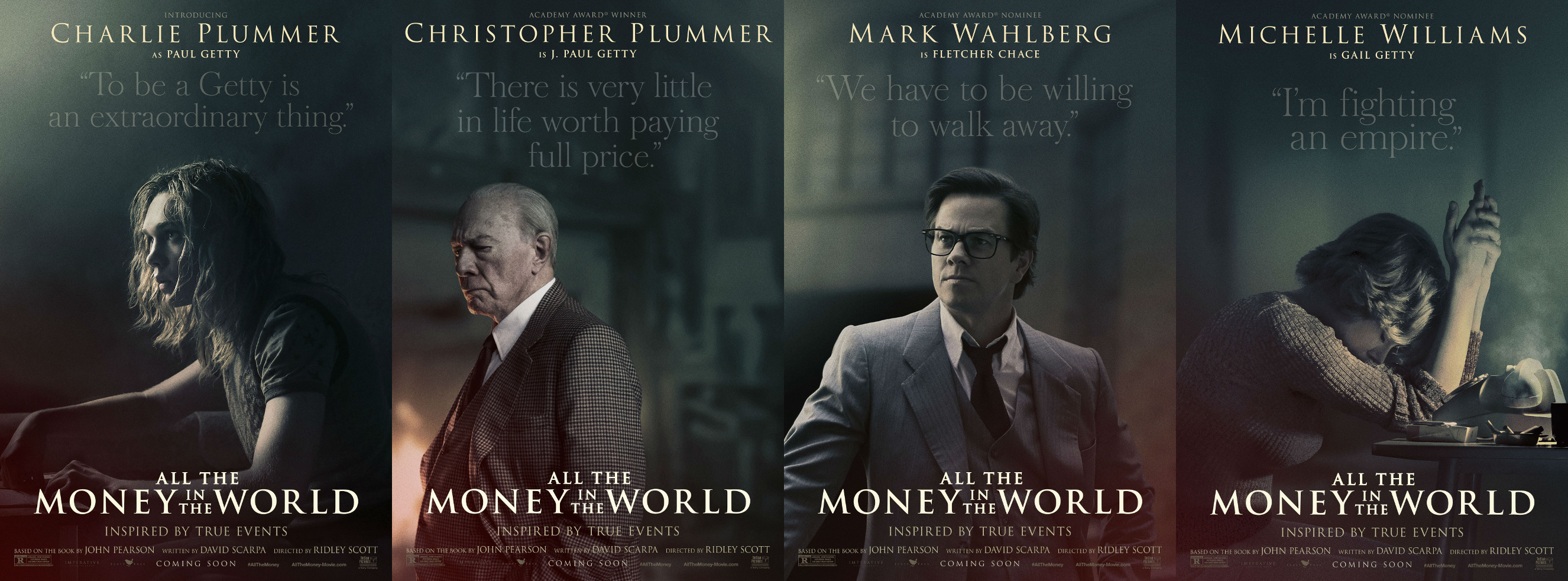
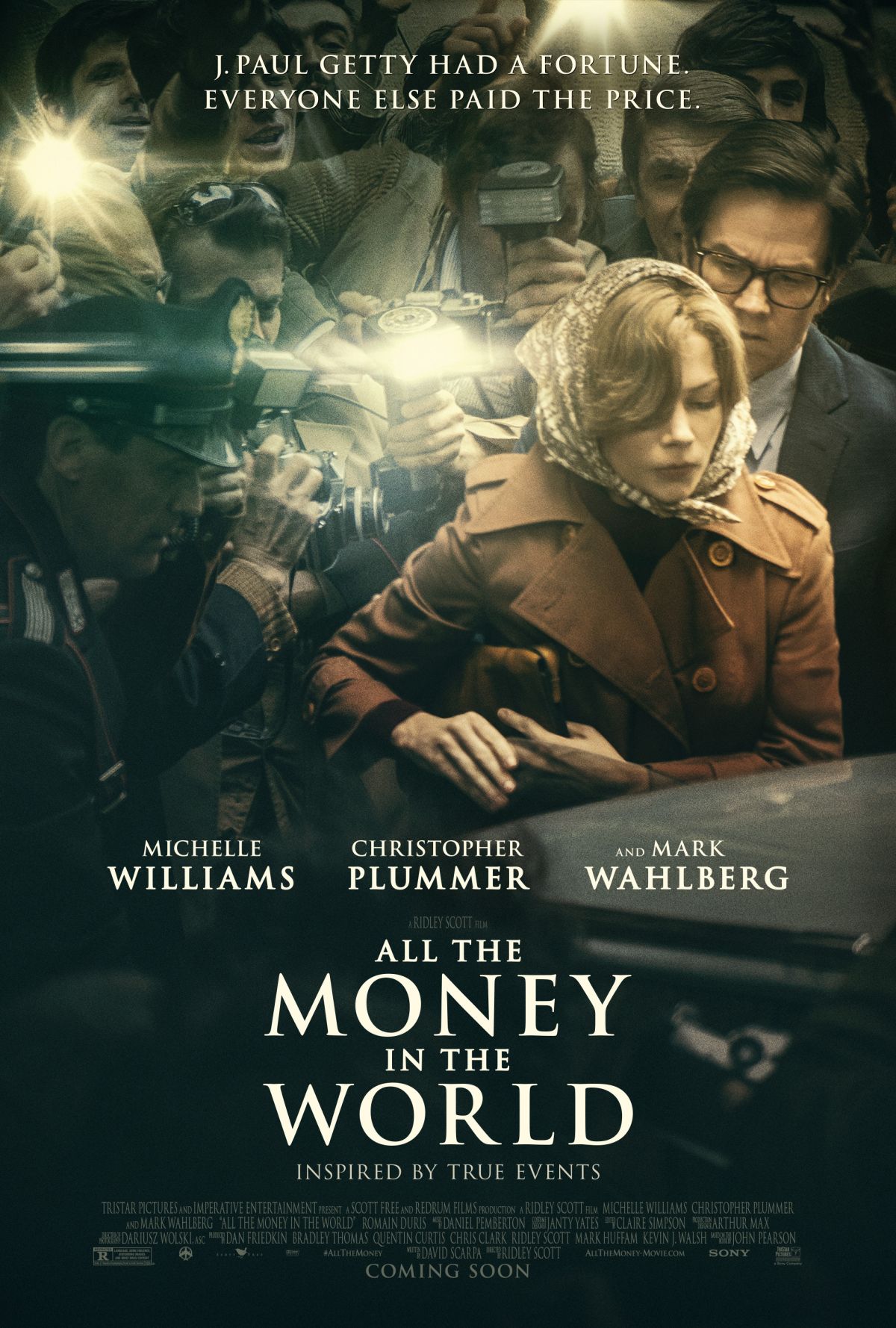
The true story behind All the Money in the World involves the 1973 kidnapping of John Paul Getty III, the grandson of oil tycoon J. Paul Getty. Despite his vast fortune, the elder Getty famously refused to pay a $17 million ransom, leading to a five-month ordeal that only ended after the kidnappers severed the teenager's ear.
The events surrounding the Getty kidnapping remain one of the most harrowing examples of how extreme wealth can distort familial bonds and moral obligations. While Ridley Scott’s 2017 film and the subsequent television series Trust brought this story back into the public consciousness, the historical reality is often more complex—and more tragic—than the cinematic dramatizations suggest. As of 2026, the legacy of the Getty family continues to be studied as a cautionary tale of the "gilded cage" and the collateral damage of a singular focus on capital accumulation.
The Cultural Landscape of 1973 Rome
To understand why the kidnapping of John Paul Getty III occurred, one must first understand the environment of Italy in the early 1970s. This period, often referred to as the "Years of Lead" (Anni di piombo), was characterized by extreme political turmoil, social unrest, and a surge in organized crime. Kidnapping for ransom had become a semi-regular "business model" for various criminal syndicates, particularly the 'Ndrangheta, the powerful crime organization based in Calabria.
John Paul Getty III, known to his friends as "Paul," was a 16-year-old living a bohemian lifestyle in Rome. He was the son of John Paul Getty II and Abigail "Gail" Harris. Unlike his grandfather, Paul was not insulated by private security or high walls. He moved through the counterculture circles of Rome, earning the nickname "the Golden Hippie." This visibility, combined with the legendary wealth of his surname, made him an irresistible target for kidnappers looking for a massive payout.
The Abduction of the "Golden Hippie"
On the night of July 10, 1973, Paul was snatched off the Piazza Farnese in Rome. He was blindfolded and driven to a remote hideout in the mountains of Calabria. Initially, the public and even some members of the Getty family were skeptical. Paul had occasionally joked about staging his own kidnapping to extract money from his notoriously stingy grandfather. This skepticism would prove to be a fatal delay in the early days of the investigation.
The kidnappers initially demanded $17 million (equivalent to roughly $115 million in 2026 currency) for his safe return. When the ransom note arrived, the family’s internal dynamics immediately became the primary obstacle to Paul’s release. Gail Harris, Paul’s mother, had divorced Paul’s father and had no access to the Getty fortune. Paul’s father, struggling with substance abuse in London, was unable to provide the funds. This left the decision entirely in the hands of the patriarch, J. Paul Getty.
J. Paul Getty’s Infamous Refusal
J. Paul Getty was, at the time, the richest private citizen in the world. Living in the 16th-century Tudor mansion Sutton Place in England, he was a man obsessed with frugality and the preservation of his empire. When approached about the ransom, Getty issued a statement that has since become synonymous with cold-blooded pragmatism:
"I have 14 other grandchildren. If I pay one penny now, I'll have 14 kidnapped grandchildren."
While this logic had a certain ruthless consistency—arguing that paying a ransom would put a "bounty" on the head of every Getty descendant—it ignored the immediate reality of a 16-year-old boy being held in a hole in the ground. Getty’s refusal was not just about the money; it was a testament to his belief that wealth should not be "wasted" on emotional crises. He viewed the kidnapping as a business transaction where the price was simply too high.
The Role of Gail Harris and Fletcher Chase
In the vacuum of J. Paul Getty’s inaction, Abigail "Gail" Harris became the central figure in the fight for Paul’s life. Unlike the portrayal in some media, Gail was not just a victim; she was a fierce negotiator who had to navigate the demands of Italian criminals, the incompetence of local police, and the indifference of her former father-in-law.
J. Paul Getty eventually sent Fletcher Chase, an ex-CIA agent and private investigator (played by Mark Wahlberg in the film), to "handle" the situation. However, Chase’s primary directive was not necessarily to pay the ransom, but to find a way to get Paul back without spending the Getty fortune. Chase’s initial efforts were largely unsuccessful. He initially shared the elder Getty’s suspicion that the kidnapping might be a hoax, which further delayed effective action.
The Escalation: A Severed Ear and a Postal Strike
By November 1973, Paul had been in captivity for four months. The kidnappers were growing frustrated by the Getty family's refusal to negotiate. To prove they were serious, they took a gruesome step. They cut off Paul’s right ear and a lock of his hair.
These were sent to the Roman newspaper Il Messaggero. However, due to a massive Italian postal strike at the time, the package took three weeks to arrive. When the ear finally reached the newspaper, it was partially decomposed, but the message was clear. Along with the ear, the kidnappers sent a letter stating: "This is Paul’s ear. If we don’t get some money within ten days, then the other ear will arrive. In other words, he will arrive in little bits."
This horrific evidence broke the stalemate. The sight of his grandson’s physical mutilation in the press made it impossible for J. Paul Getty to maintain his public stance of total refusal. However, his eventual agreement to pay was still marked by his trademark parsimony.
The Final Ransom: A Loan at 4% Interest
The kidnappers, realizing they would never get $17 million, lowered their demand to approximately $3 million. Even then, J. Paul Getty refused to pay the full amount. He eventually agreed to pay $2.2 million—the maximum amount that his accountants told him was tax-deductible.
For the remaining $800,000, he did not simply "give" it to his son (Paul’s father). Instead, he loaned the money to his son at a 4% annual interest rate. This detail remains one of the most shocking aspects of the true story, highlighting a level of financial detachment that most people find incomprehensible.
| Feature | Historical Reality | All the Money in the World Film |
|---|---|---|
| Ransom Amount | Initially $17M; settled for ~$3M. | Consistent with history. |
| J. Paul Getty's Death | Died in 1976 (3 years after events). | Dramatized to occur right after the ransom. |
| Fletcher Chase's Success | Largely failed to find Paul; ransom was paid. | Portrayed as more heroic and central. |
| Gail Harris's Finances | Had no money due to divorce settlement. | Accurately depicted as financially powerless. |
| Paul’s Condition | Released in a snowstorm; suffered permanent trauma. | Depicted as a tense, cinematic escape. |
| The "Loan" | Getty charged his son 4% interest on the balance. | Included as a key plot point. |
The Release and the Tragic Aftermath
On December 15, 1973, John Paul Getty III was found at a gas station in southern Italy. He was malnourished, missing an ear, and deeply traumatized. When he called his grandfather to thank him for paying the ransom, J. Paul Getty famously refused to come to the phone.
The trauma of the kidnapping set the stage for the rest of Paul’s life. He struggled with severe addiction as a way to cope with his experiences. In 1981, he suffered a massive stroke caused by a drug overdose that left him quadriplegic, partially blind, and unable to speak. He remained in the care of his mother, Gail, for the rest of his life until his death in 2011 at the age of 54.
Cinematic Liberties vs. Historical Fact
While Ridley Scott’s All the Money in the World is praised for its atmosphere and Christopher Plummer’s chilling performance as J. Paul Getty, it takes several significant liberties with the timeline and the character of Fletcher Chase.
- The Timeline of Getty's Death: In the film, J. Paul Getty dies shortly after the ransom is paid, suggesting a poetic justice where he dies alone amidst his art. In reality, he lived for three more years, continuing to manage his empire and purchase expensive art pieces until his death in 1976.
- Fletcher Chase’s Competence: Mark Wahlberg’s character is portrayed as a hyper-competent operative who eventually stands up to the elder Getty. In reality, Chase was unable to locate the kidnappers, and his initial dismissal of the kidnapping as a "stunt" actually endangered Paul’s life.
- The Ending: The movie ends on a somewhat redemptive note for Gail Harris. In reality, the legal and financial battles between Gail and the Getty estate continued for years, particularly regarding the medical costs for Paul’s care after his 1981 stroke.
The 'Ndrangheta and the Money Trail
A common question regarding the true story is: what happened to the money? After Paul’s release, Italian authorities arrested nine people associated with the 'Ndrangheta. These included high-ranking members of the Piromalli and Mammoliti clans. However, most of the ransom money was never recovered.
The money was reportedly laundered through various legitimate businesses in southern Italy, helping the 'Ndrangheta transition from a rural criminal organization into the global drug-trafficking powerhouse it is known as in 2026. Only two of the arrested individuals were ever convicted, and the mastermind behind the operation largely escaped justice.
The Psychological Legacy: "The Getty Curse"
The kidnapping is often cited as the definitive evidence of a "Getty Curse." This concept suggests that the family's wealth brought nothing but misery, leading to overdoses, legal battles, and estrangement. However, historians and biographers suggest the "curse" was simply the result of a patriarch who valued objects more than people.
J. Paul Getty famously had a payphone installed at Sutton Place for his guests to use so he wouldn't have to pay for their calls. This same mindset applied to his grandson. By treating his family as line items on a balance sheet, he created a fractured environment where loyalty was secondary to capital.
Frequently Asked Questions
Did J. Paul Getty really have a payphone in his house?
Yes, this is a verified historical fact. J. Paul Getty installed a dial-payphone at his Sutton Place estate in England after noticing his phone bills were high due to guests and workmen making international calls. It serves as the ultimate symbol of his legendary parsimony.
Was the ear really cut off by the kidnappers?
Yes. On October 21, 1973, the kidnappers cut off John Paul Getty III's ear. They had threatened to do so for weeks, but the family (and the elder Getty in particular) believed they were bluffing. The ear was sent to a newspaper along with a lock of hair to prove the boy was still alive but in grave danger.
How much did J. Paul Getty actually pay?
After months of negotiation, the final ransom was approximately $2.9 million to $3 million. J. Paul Getty paid $2.2 million himself—which was the maximum amount his accountants determined was tax-deductible as a "casualty loss." He loaned the remaining $800,000 to his son, John Paul Getty II, at a 4% interest rate.
What happened to John Paul Getty III after he was freed?
Paul struggled with the psychological aftermath of the kidnapping for the rest of his life. He underwent reconstructive surgery for his ear but turned to drugs to numb his trauma. In 1981, an overdose led to a stroke that left him paralyzed. He lived under his mother’s care until his death in 2011.
Why did the movie replace Kevin Spacey with Christopher Plummer?
While not part of the 1973 true story, this is a major part of the film's history. Following sexual misconduct allegations against Kevin Spacey in 2017, Ridley Scott decided to reshoot all of Spacey's scenes with Christopher Plummer just weeks before the film's release. Plummer’s performance was highly acclaimed and earned an Academy Award nomination.
Final Practical Takeaway
The true story of "All the Money in the World" serves as a harrowing case study in crisis management and the psychological impact of extreme wealth. For those researching the Getty family or the history of 1970s organized crime, the primary takeaway is the danger of rigid ideological positions (like J. Paul Getty’s "no ransom" policy) in the face of human suffering.
If you are interested in the deeper financial and legal nuances of the Getty estate, further reading into the Getty Trust and the subsequent legal battles over J. Paul Getty’s will provides additional context on how the fortune was eventually distributed. The kidnapping was not just a criminal event; it was the moment the world saw the high price of having "all the money in the world."