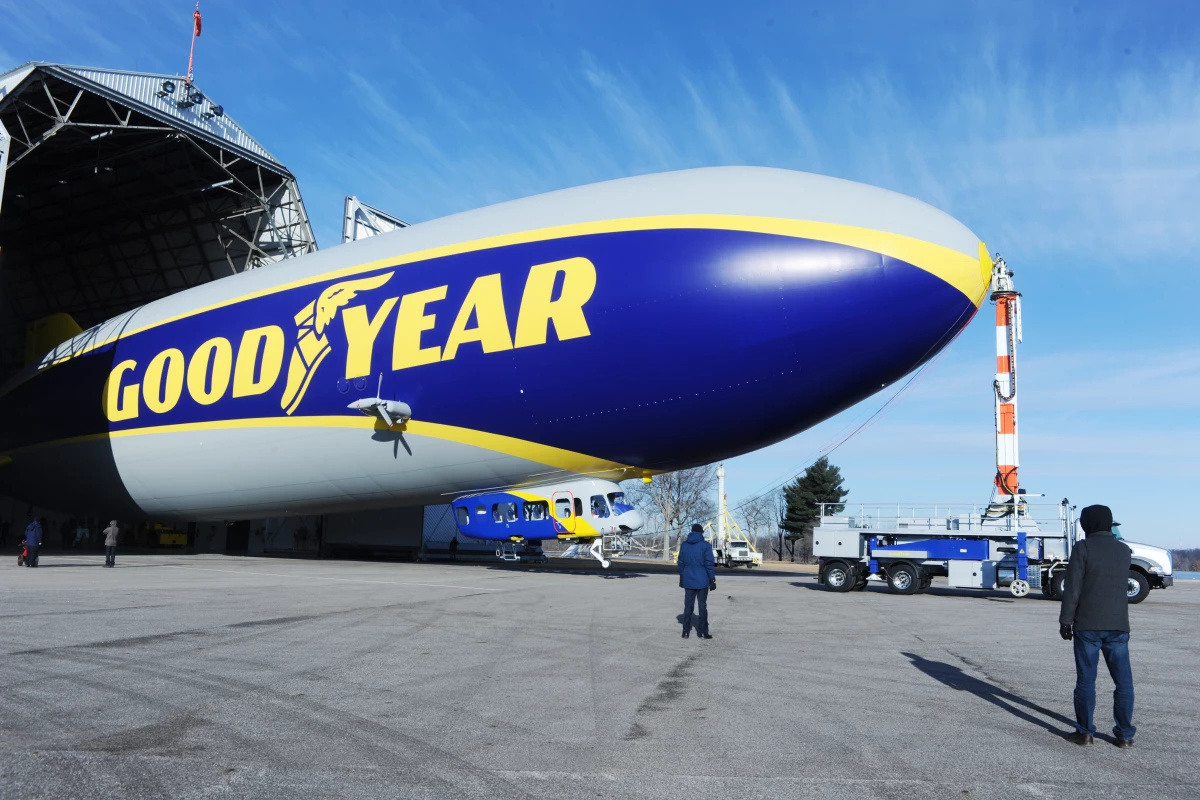
Modern airship flight has reached new heights in 2026 by transitioning from experimental prototypes to viable commercial solutions for cargo logistics, luxury tourism, and sustainable regional travel. By leveraging hybrid lift technologies and hydrogen fuel cells, these aircraft now offer a low-carbon alternative to traditional heavy-lift transport and short-haul aviation.
The resurgence of airships, or Lighter-Than-Air (LTA) vehicles, is not a nostalgic return to the era of the zeppelin, but a high-tech response to the dual pressures of global decarbonization and the need for infrastructure-independent logistics. As of 2026, the industry has moved past the "proof of concept" phase, with several major manufacturers entering the certification and initial deployment stages. These modern vessels are designed to solve specific problems that traditional fixed-wing aircraft and rotorcraft cannot: moving massive, indivisible loads to remote areas without runways and providing ultra-low-emission passenger transport over medium distances.
The Evolution of Modern Airship Architecture
To understand how airship flight is reaching new heights, one must distinguish between the three primary architectures currently in operation: rigid, semi-rigid, and hybrid. Unlike the blimps used for advertising in the late 20th century, which relied entirely on internal pressure to maintain their shape, the 2026 generation of airships utilizes sophisticated composite skeletons.
Hybrid Air Vehicles (HAV) have pioneered the most successful commercial model with the Airlander 10. These crafts do not rely solely on buoyancy from helium (aerostatic lift). Instead, their "double-hull" shape is an airfoil that generates up to 40% of its lift through forward motion (aerodynamic lift). This hybrid approach allows the craft to be "heavy" on the ground, making it much easier to moor and handle in windy conditions compared to traditional zeppelins.
Rigid Structures are also making a comeback through companies like Flying Whales. These vessels utilize a rigid internal frame made of carbon fiber and lightweight alloys, allowing them to carry immense internal payloads. By separating the gas cells from the structural frame, these airships achieve a level of safety and durability that was impossible during the early 20th century.
Leading Airship Projects and Commercial Status in 2026
The airship market is currently divided into three primary segments: heavy-lift cargo, regional passenger transport, and persistent surveillance/telecommunications. Each segment is dominated by a few key players that have successfully navigated the rigorous aerospace certification processes.
1. Hybrid Air Vehicles: Airlander 10 and 50
As of 2026, the Airlander 10 has completed its initial commercial flight trials and is entering service for regional routes, particularly in the Mediterranean and Northern Europe. With a payload capacity of 10 tonnes and the ability to stay airborne for five days, it is being utilized for high-end "experiential" tourism and short-hop logistics. The larger Airlander 50 is currently in the late stages of development, designed specifically for the 50-tonne cargo market, aiming to disrupt the point-to-point freight industry by bypassing congested ports and airports.
2. Flying Whales: The LCA60T
The French-Quebecois firm Flying Whales has become the leader in the heavy-lift sector. Their LCA60T (Large Capacity Airship 60 Tons) is uniquely designed for the forestry, renewable energy, and construction industries. In 2026, these 200-meter-long giants are being used to transport wind turbine blades and timber directly from remote production sites to their destinations. Because the LCA60T can load and unload while hovering, it eliminates the need for multi-modal transfers (truck to rail to ship), significantly reducing both time and carbon emissions.
3. LTA Research and Pathfinder
Funded by Sergey Brin, LTA Research has focused heavily on humanitarian aid and disaster relief. Their Pathfinder series utilizes 1.5-millimeter-thick ripstop nylon and a sophisticated "fly-by-wire" control system. In 2026, Pathfinder 3 is demonstrating the viability of using green hydrogen fuel cells for propulsion, allowing for true zero-emission long-endurance flight.
Technical Specifications and Performance Comparison
The following table outlines the technical capabilities of the primary airship models currently operational or in advanced flight testing as of 2026.
| Model | Manufacturer | Primary Use | Payload Capacity | Range | Power Source |
|---|---|---|---|---|---|
| Airlander 10 | Hybrid Air Vehicles | Regional/Luxury | 10,000 kg | 4,000 nm | Hybrid-Electric |
| LCA60T | Flying Whales | Heavy Industry | 60,000 kg | 1,000 nm | Hybrid/Electric |
| Pathfinder 3 | LTA Research | Humanitarian | 15,000 kg | 5,000 nm | Hydrogen Fuel Cell |
| H2 Clipper | H2 Clipper Inc. | Cargo/Hydrogen | 150,000 kg | 6,000 nm | Pure Hydrogen |
The Environmental and Economic Necessity
The primary driver behind airship flight reaching new heights in 2026 is the urgent need for sustainable aviation. Traditional jet aircraft contribute significantly to global CO2 emissions and high-altitude contrail formation. Airships, by contrast, derive the majority of their "lift" for free from buoyancy.
Fuel Efficiency and Decarbonization: A modern hybrid airship produces roughly 75% to 90% fewer emissions than a comparable fixed-wing aircraft. In 2026, as carbon taxes on traditional aviation fuel have increased, the economic case for airships has become undeniable for specific routes. By using electric motors powered by hydrogen fuel cells or high-density batteries, airships are the only viable way to move large volumes of cargo over long distances with zero operational emissions.
Infrastructure Independence: Airships do not require multi-billion dollar runways or deep-water ports. This "point-to-point" capability is a game-changer for developing regions and remote industrial sites. For example, in 2026, mining operations in the Canadian North and logistics hubs in the African interior are using airships to bypass non-existent road networks, reducing the environmental footprint of ground-based infrastructure development.
Overcoming Historical and Technical Challenges
The path to 2026 has not been without obstacles. The "Hindenburg shadow" remained a psychological barrier for decades, but modern engineering has addressed the safety concerns of the past through several key innovations:
- Non-Flammable Lifting Gases: While helium remains the standard for passenger-carrying vessels due to its inert nature, 2026 marks a turning point where hydrogen is being reconsidered for cargo-only "autonomous" airships. Advanced multi-layered gas cells and automated venting systems have mitigated the risks associated with hydrogen's flammability.
- Vectored Thrust: One of the greatest historical difficulties with airships was ground handling. Modern ships use vectored thrust—engines that can tilt to provide vertical or lateral force—allowing for precision docking and takeoff even in crosswinds.
- Materials Science: The use of Tedlar, Mylar, and carbon fiber composites has created hulls that are incredibly strong yet light. These materials are resistant to UV degradation and can withstand extreme weather conditions that would have grounded 20th-century zeppelins.
Operational Requirements and Prerequisites
For organizations looking to integrate airship flight into their operations in 2026, several prerequisites must be met:
- Mooring Infrastructure: While airships don't need runways, they do require mooring masts and ground handling equipment. These are significantly cheaper than airports but must be strategically located.
- Specialized Pilot Certification: Operating a hybrid airship requires a unique set of skills that combine traditional aviation with maritime-like navigation. In 2026, several dedicated academies have opened in the UK and France to train the next generation of LTA pilots.
- Regulatory Compliance: Operators must adhere to the latest EASA and FAA "Special Condition" certifications specifically designed for LTA vehicles. These regulations cover everything from gas cell integrity to lightning strike protection.
Common Misconceptions About Modern Airships
Despite the technological leaps, several myths persist about the industry.
- "They are too slow": While airships are slower than jet planes (typically cruising at 60-100 knots), they are much faster than sea freight. In 2026, they occupy the "middle ground" of logistics—faster than a ship, cheaper and cleaner than a plane.
- "They are dangerous in storms": Modern meteorology and onboard weather radar allow airship pilots to navigate around severe weather. Furthermore, the massive size and inertia of a modern airship make it surprisingly stable in moderate turbulence.
- "Helium is running out": While helium is a finite resource, modern airships are designed with closed-loop systems that experience minimal gas loss. Additionally, the development of synthetic helium and better extraction methods has stabilized the supply for the aerospace sector.
Frequently Asked Questions
How safe is airship flight in 2026? Airship flight is currently one of the safest modes of aviation. Modern LTA vehicles are designed to be "fail-safe." Even in the event of a total engine failure, the craft remains buoyant and will slowly descend rather than fall. The use of multiple independent gas cells ensures that a puncture in one area does not lead to a loss of lift for the entire vessel.
What is the typical range of a commercial airship? The range varies by model, but most commercial airships in 2026 have a range of 2,000 to 5,000 nautical miles. This allows for trans-oceanic crossings or multiple regional hops without refueling. The Airlander 10, for instance, can stay airborne for five days, making it ideal for long-endurance missions.
Can airships operate in extreme cold or heat? Yes. Modern materials and thermal management systems allow airships to operate in environments ranging from the Arctic to the Sahara. In fact, airships are currently being used in 2026 to resupply remote research stations in Antarctica, where traditional planes often struggle with icy runways.
Why is hydrogen being used again as a lifting gas? Hydrogen is significantly cheaper than helium and provides about 8% more lift. In 2026, its use is primarily restricted to unmanned cargo drones or vessels with highly advanced containment systems. The focus is on "green hydrogen," which serves as both a lifting gas and a fuel source for electric cells, creating a highly efficient circular energy system.
How much does a commercial airship cost to operate? Operating costs are roughly 60% lower than heavy-lift helicopters and 40% lower than traditional cargo planes on a per-tonne-mile basis. The primary costs in 2026 are initial capital expenditure and the cost of helium, though these are offset by significantly lower fuel consumption and maintenance requirements.
Practical Recommendations for Adoption
For logistics managers and regional planners, the move toward airship flight should begin with a route-feasibility study. Focus on "middle-mile" logistics where traditional infrastructure is either congested or non-existent. Airships are most effective when they can eliminate multiple handling steps.
If you are a commercial enterprise, consider the charter-model before purchasing a fleet. Several LTA leasing companies have emerged in 2026, allowing firms to test the integration of airships into their supply chains without the massive upfront cost of acquisition. Finally, ensure that your ground personnel are trained in LTA-specific safety protocols, as the scale and physics of these vessels differ significantly from standard aircraft.