Air pollution in Las Vegas is primarily characterized by elevated levels of ground-level ozone and particulate matter (PM), driven by the city’s unique valley topography, intense solar radiation, and rapid urban growth. While the region meets most federal standards, seasonal wildfires and dust storms frequently trigger health advisories for sensitive populations.
Understanding the Geographic and Climatic Drivers
As of 2026, the Las Vegas Valley continues to face a distinct set of environmental challenges that complicate air quality management. To understand why air pollution persists in Southern Nevada, one must first look at the "bowl" in which the city sits. Surrounded by the Spring Mountains to the west, the Sheep Range to the north, and the McCullough Range to the south, the valley acts as a natural catchment area for atmospheric pollutants.
The Role of Temperature Inversions
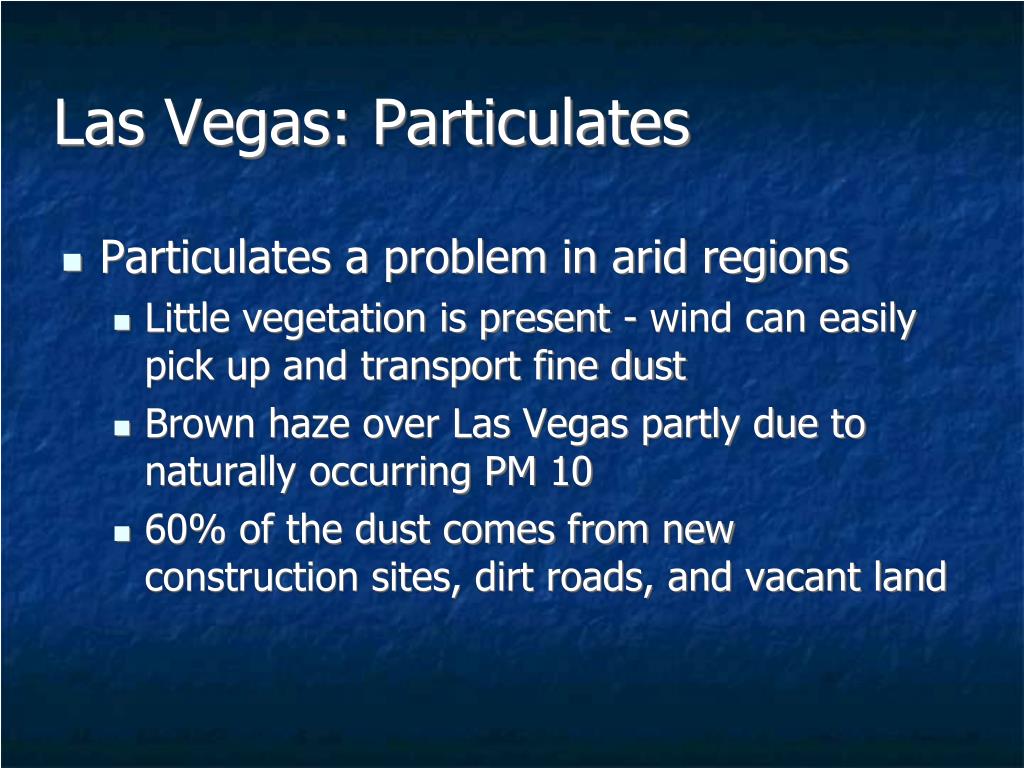
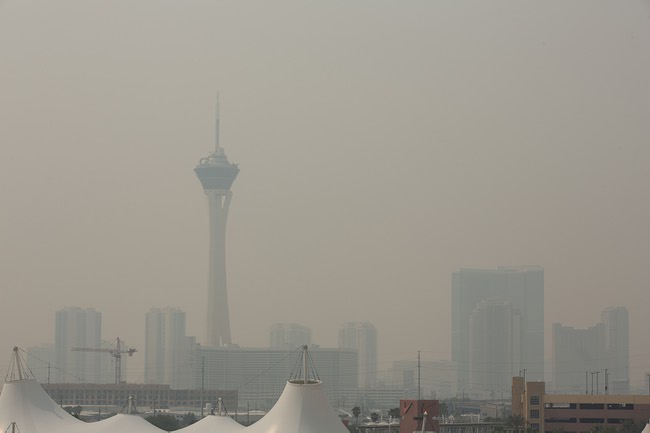
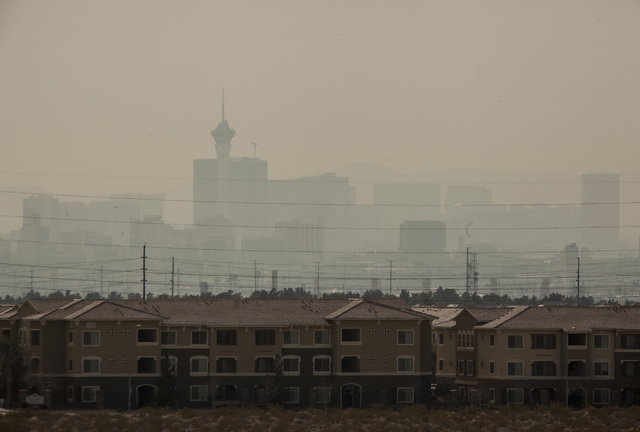
One of the most significant meteorological phenomena affecting Las Vegas is the temperature inversion. Under normal conditions, air temperature decreases with altitude, allowing warm air near the ground to rise and disperse pollutants. However, during the cooler months or early morning hours, a layer of warm air can settle over a layer of cooler, denser air trapped near the valley floor. This "lid" prevents the vertical mixing of the atmosphere, concentrating vehicle exhaust and wood smoke at breathing level. These inversions are particularly common in the winter, leading to localized "brown clouds" visible from higher elevations.
Photochemical Reactions and Intense Sunlight
Las Vegas averages over 300 days of sunshine per year. While this is a draw for tourism, it serves as a massive catalyst for chemical reactions in the atmosphere. Ground-level ozone ($O_3$) is not emitted directly from a tailpipe or smokestack; rather, it is a secondary pollutant formed when nitrogen oxides (NOx) and volatile organic compounds (VOCs) react in the presence of heat and UV radiation. In 2026, the combination of extreme summer heat and stagnant air continues to make ozone the most persistent air quality challenge in the region, particularly between the months of May and September.
Primary Pollutants of Concern in the Valley
The Clark County Department of Environment and Sustainability (DES) monitors several key pollutants mandated by the Clean Air Act. While sulfur dioxide and carbon monoxide levels remain well within safe limits due to cleaner fuel standards and industrial controls, two categories remain problematic.
Ground-Level Ozone ($O_3$)
Often referred to as "smog," ground-level ozone is a corrosive gas that irritates the respiratory system. In Las Vegas, the primary precursors for ozone are vehicle emissions from the I-15 and I-215 corridors and emissions from small gas-powered engines (like lawn equipment). Even as the fleet of electric vehicles (EVs) grows in 2026, the sheer volume of traffic associated with a metropolitan area of over 2.3 million people keeps NOx levels high enough to trigger "Ozone Action Days" during the peak of summer.
Particulate Matter ($PM_{10}$ and $PM_{2.5}$)
Particulate matter is categorized by the diameter of the particles in microns.
- $PM_{10}$ (Dust): This consists of larger particles like windblown dust, dirt from construction sites, and crushed stone. Given the arid desert environment and the constant pace of suburban expansion in areas like Summerlin and Henderson, $PM_{10}$ is a frequent issue during high-wind events.
- $PM_{2.5}$ (Fine Particulates): These are microscopic particles, often from combustion (vehicle engines, power plants, and fires). These are considered more dangerous because they can penetrate deep into the lungs and even enter the bloodstream. In 2026, the primary driver of $PM_{2.5}$ spikes in Las Vegas is no longer local industry, but rather transboundary smoke from wildfires in California and Arizona.
The Impact of Regional Wildfires
A major shift in the air quality narrative over the last decade has been the influence of external events. Even if Las Vegas were to eliminate all local emissions, the city remains vulnerable to the "smoke plume" effect. During the summer months, prevailing winds often carry massive amounts of smoke from forest fires in the Sierra Nevada and coastal ranges into the Mojave Desert.
These wildfire events can cause the Air Quality Index (AQI) to skyrocket into the "Unhealthy" or "Very Unhealthy" categories within a matter of hours. For residents, this means that some of the worst air quality days of the year occur when local conditions are otherwise calm. The persistence of these events has forced local health officials to issue more frequent "Smoke Alerts," advising residents to keep windows closed and utilize high-efficiency air filtration systems indoors.
Health Implications for Residents and Visitors
The health effects of air pollution in Las Vegas are not distributed evenly across the population. Understanding the risks is essential for those living in the valley long-term.
Respiratory Distress and Asthma
Ozone acts as a powerful oxidant that can "sunburn" the lungs. For the thousands of residents in Clark County living with asthma or Chronic Obstructive Pulmonary Disease (COPD), high ozone days can lead to increased emergency room visits and a reliance on rescue inhalers. Fine particulate matter ($PM_{2.5}$) also triggers inflammatory responses in the airways, leading to persistent coughing, wheezing, and shortness of breath.
Cardiovascular Risks
Recent medical research highlighted in 2026 continues to strengthen the link between poor air quality and heart health. Particulates that enter the bloodstream can cause systemic inflammation, which contributes to arterial plaque buildup and increases the risk of heart attacks and strokes, particularly in the elderly population.
Vulnerable Groups
- Children: Their lungs are still developing, and they breathe more air per pound of body weight than adults.
- Athletes: Those who exercise outdoors on the Las Vegas Strip or in Red Rock Canyon during peak pollution hours inhale deeper and more frequently, increasing their pollutant intake.
- Outdoor Workers: Construction and hospitality workers spend significant portions of their day exposed to ambient air, making them the most consistently impacted group.
Air Quality Monitoring and Data Verification
To manage these risks, the Clark County Department of Environment and Sustainability operates a network of monitoring stations throughout the valley. These stations provide real-time data to the public via the AirNow platform and local "Air Quality" apps.
Comparing Pollutant Sources and Seasons
| Pollutant | Primary Sources in Las Vegas | Peak Season | Key Health Concern |
|---|---|---|---|
| Ozone ($O_3$) | Vehicle exhaust, heat, sunlight | May – Sept | Lung irritation, asthma triggers |
| $PM_{10}$ | Construction, desert wind, unpaved roads | Year-round (Windy days) | Upper respiratory irritation |
| $PM_{2.5}$ | Wildfire smoke, diesel engines | Summer/Fall | Bloodstream penetration, heart issues |
| Nitrogen Dioxide | High-traffic corridors (I-15) | Winter | Increased susceptibility to infections |
Practical Strategies for Mitigation and Protection
While large-scale pollution control is the responsibility of the government, individuals can take several steps to protect themselves from the effects of poor air quality in Las Vegas.
Improving Indoor Air Quality
Since the average person spends 90% of their time indoors, creating a "clean air refuge" is critical.
- HEPA Filtration: Use portable air purifiers with True HEPA filters in bedrooms and living areas. These are effective at removing $PM_{2.5}$ from wildfire smoke.
- HVAC Maintenance: Ensure your home's HVAC system is fitted with a filter rated MERV 13 or higher. These filters are dense enough to capture fine particles without overly restricting airflow in most modern systems.
- Source Control: Avoid using gas stoves without proper ventilation and limit the use of candles or incense on days when outdoor air quality is already poor.
Behavioral Adjustments
Monitoring the AQI should become a daily habit, much like checking the weather.
- Timing: Ozone levels are typically lowest in the early morning. If you plan to run or bike outdoors during the summer, aim to finish before 10:00 AM.
- Recirculate Air: When driving in heavy traffic on the Spaghetti Bowl or the Strip, set your car’s ventilation to "recirculate" mode to prevent drawing in exhaust fumes from the vehicles directly in front of you.
- Hydration: Staying hydrated helps maintain the mucosal lining of the respiratory tract, which serves as a first line of defense against inhaled particulates.
Policy and Future Outlook for 2026 and Beyond
Las Vegas has made significant strides in air quality management, but the challenge remains dynamic. The transition toward renewable energy, particularly solar power, has reduced the reliance on local fossil-fuel power generation. Furthermore, Clark County’s "Dust Control" permit system for construction sites is among the most stringent in the United States, requiring developers to use water trucks and soil stabilizers to prevent $PM_{10}$ from becoming airborne.
However, as the city continues to densify, the focus has shifted toward reducing "Vehicle Miles Traveled" (VMT). The expansion of public transit options and the installation of thousands of EV charging stations across the valley are key components of the long-term strategy to lower nitrogen oxide emissions. Additionally, regional cooperation between Nevada and neighboring states is essential to address the root causes of wildfires, which remain the largest "wildcard" in the city's air quality profile.
Frequently Asked Questions
Is the air quality in Las Vegas worse than in Los Angeles?
Generally, no. Las Vegas typically enjoys better air quality than Los Angeles because it lacks the same level of industrial density and the extreme "marine layer" traps found in the L.A. Basin. However, during specific dust storms or intense wildfire seasons, Las Vegas can briefly experience AQI levels that exceed those of coastal cities. The primary difference is that Las Vegas pollution is more seasonal, whereas L.A. faces more consistent year-round challenges.
How does the "Heat Island Effect" impact pollution in Las Vegas?
The Urban Heat Island (UHI) effect occurs when pavement and buildings absorb heat during the day and release it at night. In Las Vegas, this keeps nighttime temperatures high, which can prevent the atmosphere from "cleaning" itself overnight. High overnight temperatures can also lead to an earlier start for the photochemical reactions that create ozone the following morning, resulting in longer durations of "unhealthy" air.
Can I see air pollution in Las Vegas?
Yes, it often manifests in two ways. During the winter, you may see a "brown cloud" or haze hanging low over the valley floor, which is typically a mix of particulates and nitrogen dioxide trapped by a temperature inversion. During the summer, ozone is invisible, but high levels are often accompanied by a white or yellowish haze that obscures the view of the surrounding mountains, such as Mount Charleston or the Red Rock escarpment.
What should I do if the AQI is in the "Unhealthy for Sensitive Groups" (Orange) category?
If you have asthma, heart disease, or are over the age of 65, you should limit prolonged outdoor exertion. It is not necessary to stay indoors entirely, but you should take frequent breaks and move activities indoors if you begin to experience any coughing or shortness of breath. For the general public, this is a signal to avoid heavy outdoor exercise during the afternoon hours when ozone peaks.
Are air purifiers necessary for Las Vegas residents?
Given the frequency of wildfire smoke incursions and the high levels of desert dust, an air purifier is highly recommended for residents, especially in bedrooms. While a home's HVAC system provides some filtration, a dedicated HEPA purifier can significantly reduce the concentration of sub-micron particles that the HVAC system might miss.
Practical Recommendation
For residents and long-term visitors, the most effective action is to integrate air quality monitoring into your daily routine. Download a reputable AQI tracking app and pay close attention to Ozone levels in the summer and PM2.5 levels during the wildfire season. If you are moving into a new home or upgrading your current one, prioritize high-quality weather stripping and a MERV 13 filtration setup. These small adjustments provide a robust defense against the environmental variables of the Mojave Desert and ensure that the "Neon City" remains a healthy place to live and work in 2026.