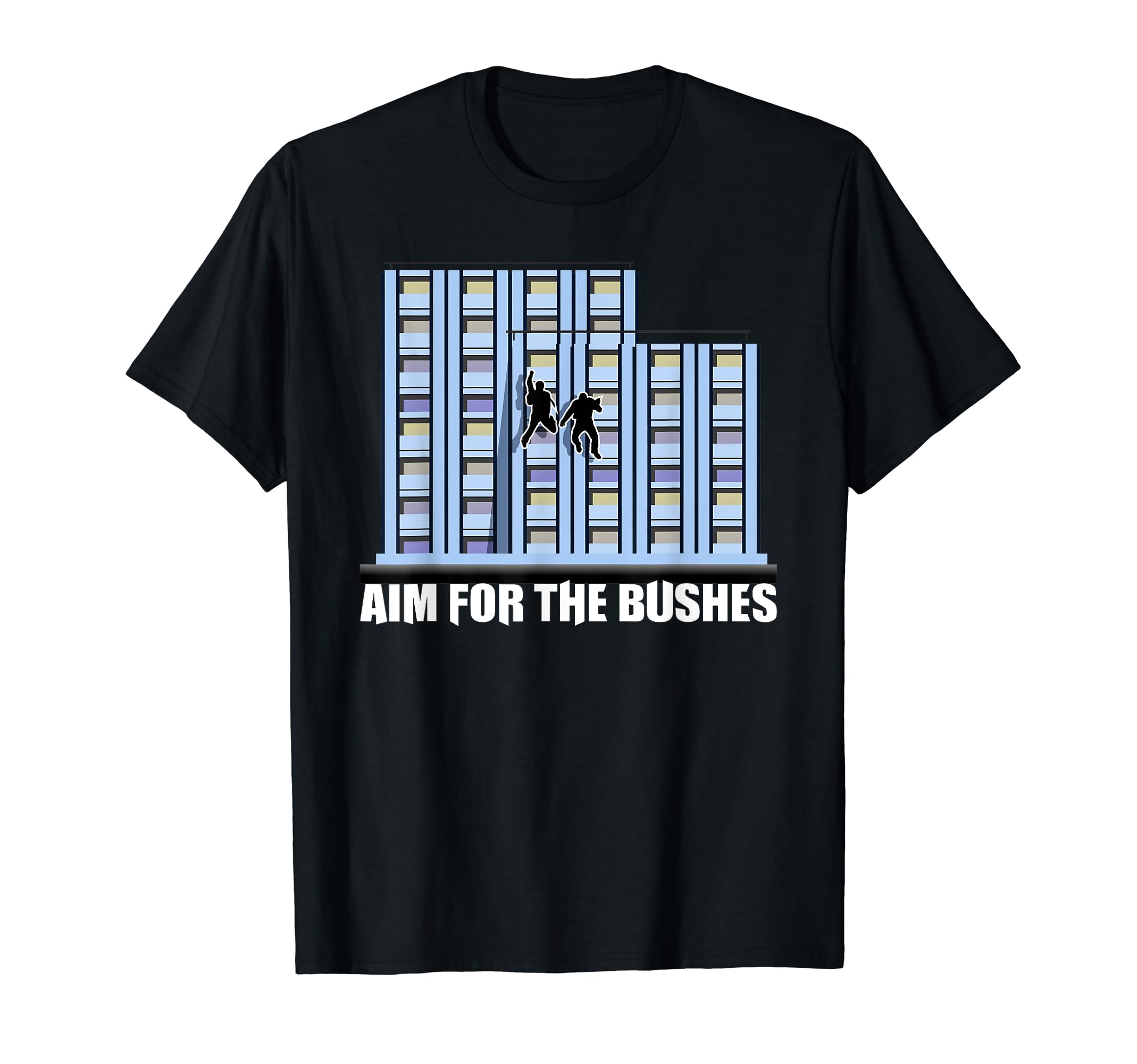
The "Aim for the bushes" meme originates from a climactic, absurdly comedic scene in the 2010 film The Other Guys. It depicts two high-octane police detectives who, rather than descending from a rooftop via a safe route, decide to leap into a thicket of bushes below, mistakenly believing they will survive the fall. The scene serves as a satirical subversion of action movie tropes where heroes perform impossible feats without consequence.
The Cinematic Context: Understanding The Other Guys
To truly understand why "Aim for the bushes" became a cultural touchstone, one must examine the specific scene in Adam McKay’s 2010 action-comedy, The Other Guys. The film stars Will Ferrell and Mark Wahlberg as mismatched New York City detectives. While the movie largely focuses on their mundane desk jobs, the opening sequence introduces two legendary, larger-than-life detectives played by Samuel L. Jackson and Dwayne Johnson.
These two characters, Danson and Highsmith, are the embodiment of every clichéd 1980s and 90s action movie hero. They drive fast cars, destroy city property, and constantly walk away from explosions without looking back. The "Aim for the bushes" moment occurs when they are cornered on a skyscraper rooftop. Facing an insurmountable group of enemies, they look at each other, share a moment of mutual respect, and decide to jump from the building—not into a helicopter or onto a fire escape, but directly toward a small patch of landscaping twenty stories below.
The comedy is derived entirely from the extreme juxtaposition between cinematic expectations and harsh reality. In a standard action film, the hero would land, roll, and keep running. In this film, the characters simply plummet to their deaths, accompanied by a casual, "There goes my hero" soundtrack by the Foo Fighters. The scene serves as a narrative device to transition from the "super-cop" archetype to the reality-grounded, bumbling protagonists, but it struck a chord with audiences for its dark, abrupt, and uncompromising subversion of the "invincible hero" trope.
The Mechanics of the Meme
A meme evolves when a specific moment from media is stripped of its original context and repurposed as a reaction or a shorthand for a specific sentiment. "Aim for the bushes" has become synonymous with a specific type of failure: the "spectacularly stupid" decision.
When people use this meme in 2026, they are rarely referencing the plot of the movie itself. Instead, they are using it to describe situations where:
- Confidence outweighs competence: An individual proceeds with a plan that is doomed to fail because they have miscalculated the "physics" of their environment or their own capabilities.
- Blind faith in a bad idea: When a group or individual makes a massive mistake, but does so with total, unwavering conviction.
- The "Heroic" Fall: Referring to an action taken by someone who thinks they are doing something cool or brave, only to suffer an immediate and total defeat.
In online discourse—whether on platforms like Reddit, X (formerly Twitter), or short-form video apps—the phrase is often used as a comment under videos of people attempting stunts that go wrong, or in political and business threads where someone has proposed an obviously flawed strategy. It functions as a critique of "style over substance," mocking the idea that being confident is the same as being prepared.
Cultural Impact and Longevity
The persistence of the "Aim for the bushes" meme for over fifteen years is a testament to the brevity and clarity of the joke. Unlike memes that rely on complex internal lore or specific video games, this meme is rooted in a universal experience: watching someone attempt something foolish and failing with absolute, unintentional hilarity.
The meme fits into a category of "subversive humor." It acts as a cynical acknowledgment that the real world does not operate on movie logic. While action films have moved toward more grounded, gritty realism in the 2020s, the "Aim for the bushes" moment remains the gold standard for parodying the excesses of the past. It is the ultimate critique of "plot armor"—a writing device where characters survive unlikely scenarios simply because the script says so.
Comparisons of Cinematic Subversion
To better understand the niche of this meme, it is helpful to look at how other films and media have handled similar tropes of the "invincible hero."
| Feature | The Other Guys (Aim for the Bushes) | Traditional Action Movies | Satirical Counterparts |
|---|---|---|---|
| Hero Survivability | Realistic/Deadly | Supernatural/Invincible | Unpredictable |
| Tone | Absurdist/Dark | Triumphant | Cynical |
| Logic | Subverted/Broken | Ignored | Exposed |
| Intent | Satire of excess | Audience escapism | Deconstruction |
As shown in the table above, the "Aim for the bushes" scene functions as the hard limit of audience suspension of disbelief. While traditional action movies require the audience to accept that heroes are inherently lucky, The Other Guys demands that the audience acknowledge that gravity is indifferent to bravery.
How the Meme is Used in 2026
In the digital landscape of 2026, the use of "Aim for the bushes" has become increasingly modular. It is no longer just a reference to a jump; it is used to describe the planning phase of a disaster.
- Corporate Strategy: If a company launches a product without market research and it crashes on day one, a thread might be titled: "The [Company Name] 'Aim for the Bushes' launch."
- Viral Stunt Commentary: When influencers perform stunts that disregard physical safety, the comment section is often flooded with the phrase, implying that they are relying on "hero logic" rather than physical reality.
- Political Commentary: It is occasionally used to describe high-stakes legislative gambles where the proponent expects a miracle (the "bushes") to save them, despite there being no evidence of such an outcome.
The brevity of the quote—four short words—makes it perfect for the fast-paced nature of modern social media. It requires no explanation to those who know the movie, and it serves as a self-explanatory joke to those who don't.
Prerequisites for Understanding the Joke
While the meme is widespread, there is a distinct difference between "knowing" the meme and "understanding" the context. To fully grasp the intent, a user should:
- Recognize the Trope: One must have at least a baseline familiarity with the concept of the "action hero who can do no wrong." Without understanding that the characters involved are meant to be invincible, the humor of them dying in a mundane way is lost.
- Appreciate the Absurdity: The humor is not "funny" in the traditional sense; it is dark. It relies on the viewer appreciating the shock of the abrupt transition from an "epic" moment to a sudden fatality.
- Understand the "Foo Fighters" Factor: Part of the cultural longevity comes from the choice of music. The song "Hero" by the Foo Fighters plays as they jump, adding an ironic layer of gravitas that makes the subsequent thud even more jarring.
Common Misconceptions
There are few misconceptions surrounding the meme, but one that frequently appears is the belief that the characters survived. Because the scene is so brief and happens in the context of an action-comedy, some viewers—particularly those who have only seen the clip on social media—might assume it is a "fake-out" death.
In the film, the characters are definitively killed. Their death is not a plot twist or a setup for a later reappearance; it is the catalyst for the rest of the story. The characters we follow for the remainder of the movie are the "other guys," who are forced to step into the roles left behind by the men who essentially committed suicide via "hero logic."
Another misconception is that the "bushes" were meant to be a real safety device. The characters actually believe they are jumping into something that will break their fall, which highlights their hubris. The humor is not that they were trying to die; it is that they were so confident in their own mythos that they ignored the laws of physics.
Frequently Asked Questions
Is "Aim for the bushes" a direct quote from the movie?
Yes. The dialogue leading up to the jump involves Samuel L. Jackson and Dwayne Johnson staring at the view below and saying, "Aim for the bushes." It is the final, pivotal instruction before their ill-fated leap.
Why do people keep using this meme instead of newer ones?
The meme has reached a "classic" status. Because it perfectly encapsulates the idea of a disastrously confident decision, it doesn't suffer from the "recency bias" that causes other, more topical memes to die out quickly. It addresses a fundamental human behavioral flaw.
Is the movie The Other Guys considered a cult classic?
Yes, it is highly regarded as a cornerstone of the "buddy cop" satire genre. While it performed well at the box office in 2010, its reputation has only grown as the internet solidified the "Aim for the bushes" scene into a permanent part of the digital lexicon.
What should I do if I want to use this meme effectively?
Use it only in situations where someone is making a decision that is both high-confidence and objectively dangerous or flawed. If the situation is simply a mistake or a simple error, the irony of the meme does not apply. It works best when the person acting is clearly trying to look "cool" while doing something foolish.
Is there a specific visual standard for the meme?
While the text "Aim for the bushes" is the primary identifier, the most effective version of the meme is a short, 5-to-10-second GIF or video clip of the jump itself. The visual of the two men jumping, combined with the sudden, flat landing, is what provides the necessary comedic weight.
Final Recommendation for Application
If you intend to use this meme, remember that its power lies in the irony of unearned confidence. It is best utilized as a critique of "main character syndrome"—the tendency for people to act as if they are in an action movie, oblivious to the fact that they live in the real world. Use it sparingly, as its effectiveness is highest when the target's lack of self-awareness is truly egregious. For those looking to explore the source material further, watching the first fifteen minutes of The Other Guys provides the necessary setup to understand why this moment continues to resonate in 2026.