AI-related companies comprise a diverse ecosystem of organizations that develop, deploy, or integrate artificial intelligence technologies into products, infrastructure, and enterprise services. Whether focusing on foundational Large Language Models (LLMs), specialized hardware accelerators, or vertical-specific automation software, these entities represent the primary drivers of modern computational advancement and digital transformation across global industrial sectors.
Categorizing the AI Industry Ecosystem
Understanding the AI landscape requires moving beyond generic labels. By 2026, the industry has matured into distinct tiers, each serving specific functional roles in the production and deployment of intelligent systems. Identifying where a company sits within this hierarchy is the first step for investors, engineers, and procurement specialists.
1. Foundational Model Developers
These organizations occupy the "upstream" portion of the AI supply chain. They invest heavily in massive compute clusters—typically utilizing high-end Graphics Processing Units (GPUs) or custom Application-Specific Integrated Circuits (ASICs)—to train massive neural networks. Companies in this segment focus on the research and development of Large Language Models (LLMs), multimodal foundation models, and generative architectures. Their primary objective is to create the raw "intelligence" or API-accessible capability that other companies build upon.
2. Infrastructure and Hardware Providers
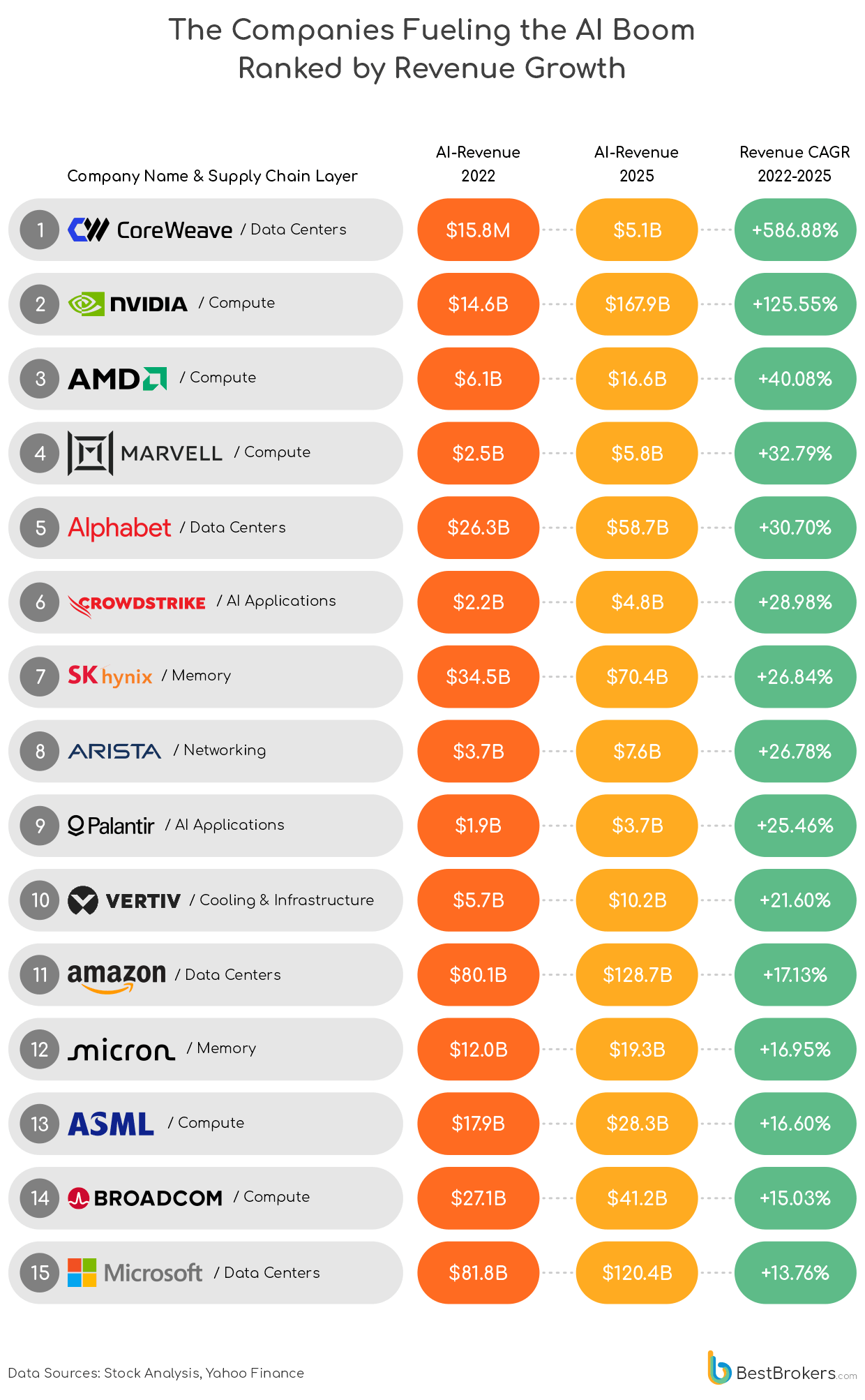
Without the underlying silicon and data center infrastructure, AI would remain theoretical. This tier includes the "picks and shovels" of the AI gold rush. This encompasses companies manufacturing specialized AI-accelerating hardware, cloud service providers offering scalable compute-as-a-service, and firms focused on the energy optimization required to run massive data centers. In 2026, the focus has shifted toward energy efficiency and high-bandwidth memory (HBM) integration to sustain the massive data throughput required by state-of-the-art models.
3. Application and Software-as-a-Service (SaaS) Providers
This is the most visible segment of the AI industry. These companies ingest APIs from foundation models or host their own fine-tuned versions to solve specific business problems. Common domains include automated customer support, predictive analytics in finance, drug discovery in pharmaceuticals, and supply chain optimization. The value proposition here is not the model itself, but the user interface, the integration into existing workflows, and the compliance with industry-specific data regulations.
4. Specialized AI Integration and Consultancy
As AI adoption increases, businesses face a "complexity gap." Integration firms act as bridge builders, helping legacy enterprises transition their data stacks and operational procedures to AI-native environments. These organizations handle the heavy lifting of data cleaning, model deployment, and ongoing fine-tuning, ensuring that AI tools perform reliably within the constraints of real-world business environments.
Comparison of AI Business Models
The following table summarizes the primary operational focus and value proposition for different segments of AI-related companies.
| Category | Primary Offering | Value Driver | Main Cost Driver |
|---|---|---|---|
| Foundation Developers | API access, Model weights | Model accuracy, scale | Compute (GPUs), R&D |
| Hardware Providers | Chips, Server units | Energy efficiency, FLOPs | Fabrication, materials |
| Cloud Infrastructure | Storage, Compute cycles | Latency, uptime, scale | Data center energy, real estate |
| Vertical SaaS | Specialized software | Workflow automation | Software engineering, sales |
| Integration/Consulting | Implementation expertise | System integration | Human expertise, labor |
Operational Challenges and Risks
While AI-related companies enjoy significant growth, they face a unique set of operational and legal hurdles that distinguish them from traditional software firms. Understanding these risks is critical for evaluating the stability and longevity of any partnership or investment.
Regulatory Compliance and Governance
By 2026, international regulatory frameworks regarding AI safety and transparency have become more rigorous. Companies must now navigate complex reporting requirements regarding how their models are trained, the provenance of their training data, and the measures taken to mitigate biases. Organizations that fail to implement robust "AI governance" programs face potential legal liabilities, including significant fines and mandatory system shutdowns in certain jurisdictions.
Data Privacy and IP Protection
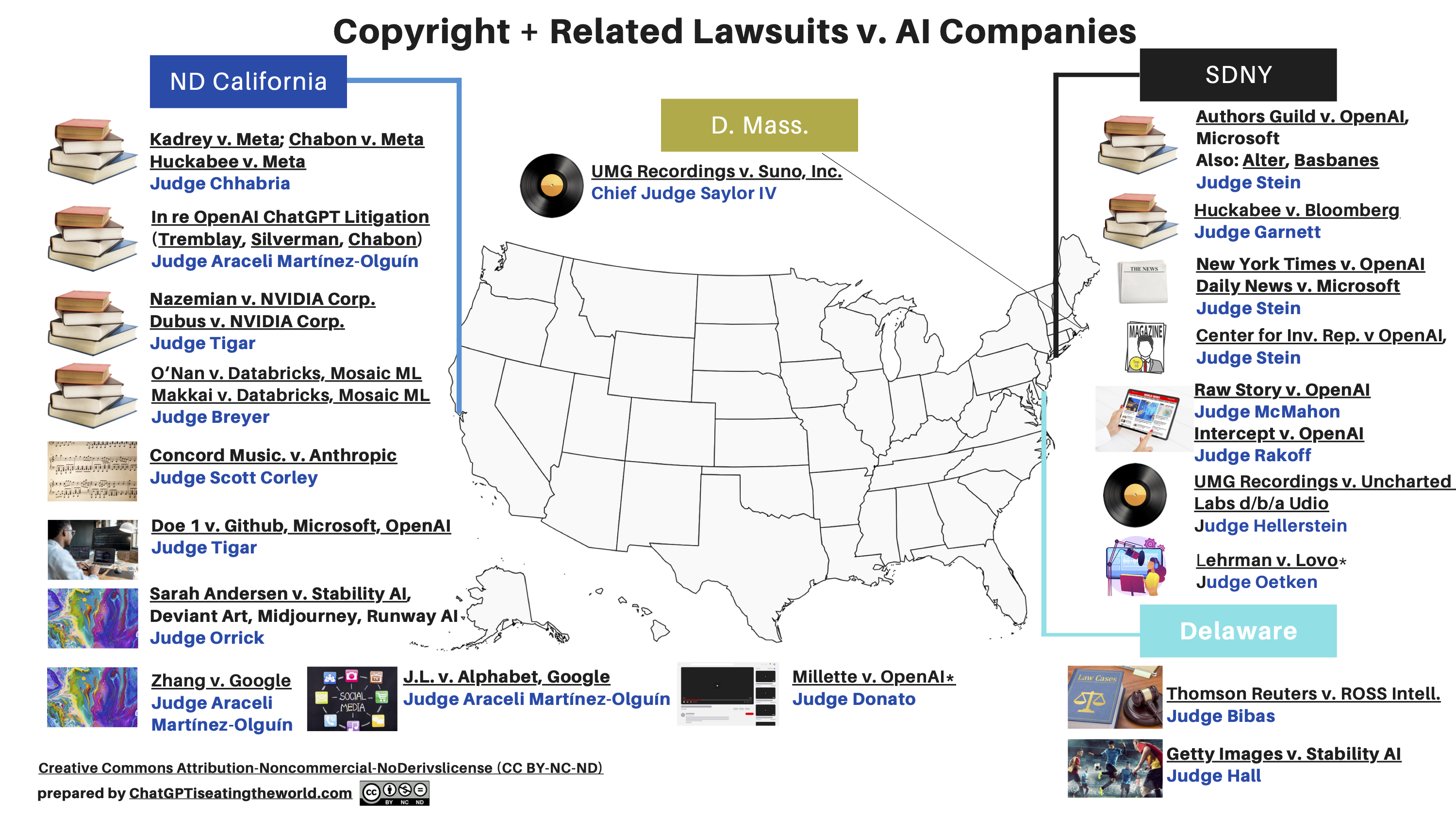
A recurring challenge for AI-related companies is the tension between data utilization and privacy. Companies often struggle to train models on large datasets without infringing on intellectual property or violating user privacy laws like the GDPR (Europe) or local equivalents. This has led to the rise of "privacy-preserving AI," a sub-sector that develops techniques like federated learning and differential privacy. When vetting an AI company, it is essential to ask how they handle proprietary data and whether their model training process respects data provenance.
The Compute Bottleneck and Scalability
The cost of training and running advanced models remains high. While hardware efficiency has improved, the demand for ever-larger models ensures that compute costs remain a primary concern. Companies that rely exclusively on renting third-party compute power face margins that are susceptible to price volatility. Conversely, companies investing in custom silicon face high capital expenditures but potentially better long-term unit economics.
Strategic Selection: How to Evaluate AI Partners
When evaluating an AI-related company, whether as a customer, partner, or investor, you should apply a rigorous set of verification steps. Do not rely solely on marketing claims regarding model performance or "revolutionary" capabilities.
- Verify Provenance of Technology: Determine if the company has built their own proprietary models or if they are simply a "wrapper" around an existing, widely available foundation model. A wrapper company may provide a great interface, but they lack the underlying intellectual property that provides a defensible "moat."
- Review Integration Capabilities: Ask for documentation on API flexibility, latency SLAs (Service Level Agreements), and security protocols. If a company cannot provide a clear path to integrating with your current enterprise resource planning (ERP) or CRM systems, they will likely become a bottleneck rather than an asset.
- Analyze Data Handling: Ask direct questions about data residency. If your business operates in a highly regulated industry like healthcare or finance, you must ensure that your data is not being used to train the provider's general-purpose models unless specifically authorized.
- Evaluate Long-Term Viability: Given the rapid pace of change, check the company's funding status or profitability. The AI sector is currently characterized by high churn; partners that are well-capitalized or have established, recurring revenue streams are significantly lower risk.
Frequently Asked Questions
How do I distinguish between an AI-native company and a traditional company using AI tools?
AI-native companies are built from the ground up with a model-first architecture. Their core value proposition relies on their own proprietary algorithms or unique data pipelines. Traditional companies using AI simply integrate off-the-shelf AI tools to perform existing tasks more efficiently. While both can be effective, an AI-native company often offers greater long-term innovation potential in its specific niche.
What are the main legal risks for companies building AI products in 2026?
The primary risks involve intellectual property infringement (using copyrighted training data), failure to meet transparency requirements for automated decision-making, and non-compliance with regional data sovereignty laws. Companies are increasingly required to provide "model cards" or audits that explain how their models function and how they mitigate known biases.
Is it better to build an internal AI team or buy from an AI-related company?
This depends on your core competency. If your competitive advantage is data unique to your industry, building an internal team to fine-tune models on that data is often the best long-term strategy. If the AI application you need is a commodity—such as general-purpose document summarization or basic customer service automation—buying from an established, specialized AI provider is almost always more cost-effective and faster to implement.
What is the difference between "Generative AI" and "Predictive AI" companies?
Generative AI companies focus on the creation of new content (text, images, code, audio) using transformer-based models. Predictive AI companies focus on analyzing historical data to forecast future events, such as churn prediction, demand forecasting, or maintenance needs. Many modern AI-related companies offer both, but they often prioritize one as their flagship service.
How do I verify the security claims of an AI-related company?
Request a third-party security audit, such as a SOC2 Type II report. In 2026, reputable AI firms will also be able to provide documentation on their red-teaming exercises, which demonstrate how they have tested their models against potential adversarial attacks or prompt injections.
Next Actions for Implementation
If your organization is planning to integrate AI solutions this year, start by creating a "data readiness audit." Before approaching any AI-related company, ensure your internal data is cleaned, structured, and compliant with current privacy standards. An AI model is only as effective as the data it is fed; clean data will save months of troubleshooting and configuration time. Once your data is ready, issue a request for information (RFI) to at least three companies within your target niche, focusing specifically on their API uptime, data security protocols, and total cost of ownership (TCO) beyond the initial license fees.