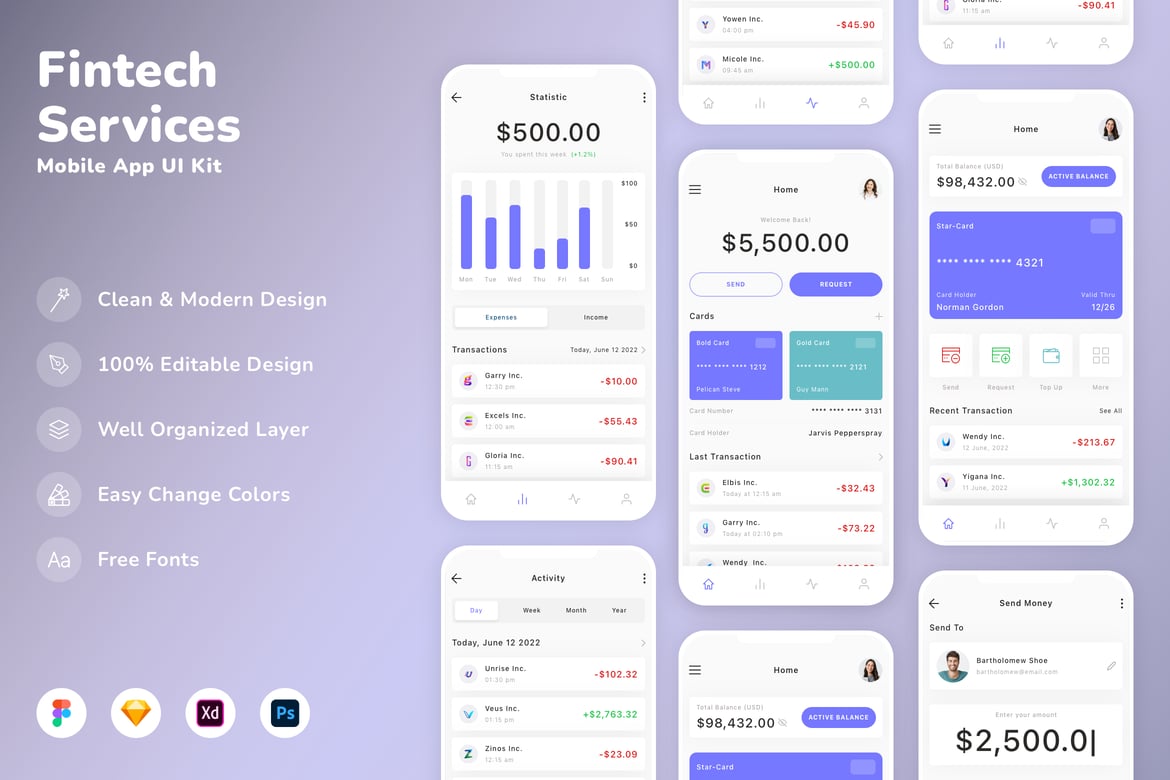
Access fintech platforms and modern API-driven architectures are radically transforming traditional financial services by decentralizing infrastructure, unbundling monolithic banking systems, and redefining how third-party providers plug into legacy ledgers. This shift replaces rigid, bespoke bilateral integrations with standardized, scalable access layers that optimize compliance, lower operational friction, and alter how consumers and enterprises interact with financial capital.
Financial services are undergoing a structural evolution driven by access fintech—a movement centered on reshaping how applications, banks, and end-users interface with core financial infrastructure. Historically, accessing banking capabilities, credit underwriting data, payment rails, and clearing networks required arduous, custom-built point-to-point integrations with legacy institutions. These traditional models created high barriers to entry, limited market competition, and concentrated market power among a handful of tier-one banks and core processors. Today, the rise of specialized access fintech companies has shifted these access models toward modular, API-first ecosystems. This transition impacts developers, compliance officers, banking executives, and corporate treasurers who must navigate a landscape defined by embedded finance, open banking mandates, and granular data privacy regulations.
The Evolution of Financial Infrastructure and Legacy Access Bottlenecks
To understand the current shift in access models, it is essential to examine the historical baseline of financial technology infrastructure. For decades, legacy financial institutions relied on monolithic core banking systems written in decades-old programming languages. These systems operated in isolated silos, making external connectivity difficult, expensive, and fragile.
[Traditional Model] : FinTech App ---> Bespoke Integration ---> Legacy Core (High Cost, Slow) [Modern Access Model] : FinTech App ---> Standardized API Gateway ---> Modular Infrastructure Layer ---> Core Ledger
Under the legacy access model, any non-bank entity wanting to offer financial products had to partner directly with a chartered bank sponsor. This process involved months of legal negotiation, custom data formatting, and maintaining dedicated servers to handle batch-processed file transfers. The friction was immense:
- Prohibitive Capital Requirements: Building and maintaining direct integration pipelines required massive upfront investments in engineering and legal compliance.
- Geographic and Institutional Fragmentation: Accessing payment networks, credit bureaus, and account aggregation required separate contracts and technical schemas for every single partner.
- Slow Time-to-Market: Product iteration cycles took years rather than weeks, effectively shielding incumbent institutions from agile startup competition.
These bottlenecks created an urgent market demand for specialized middleware. Access fintech emerged to abstract away the underlying complexity of legacy banking cores, transforming unstructured data and fractured rails into clean, developer-friendly endpoints.
Core Mechanisms of Modern Access Models
Modern access fintech platforms operate through several foundational architectural and operational pillars. Rather than forcing every market participant to build direct connections to every bank or payment network, these platforms interpose a unified orchestration layer.
Application Programming Interfaces (APIs) and Tokenization
APIs serve as the primary conduits for modern financial access. By standardizing requests and responses, APIs allow third-party applications to check balances, initiate automated clearing house (ACH) transfers, and pull transaction histories in real time. Crucially, access fintechs implement tokenization protocols that shield sensitive account credentials. Instead of storing raw usernames and passwords, applications use cryptographic tokens to interact with consumer accounts, significantly reducing vulnerability to credential-stuffing attacks.
Aggregation and Data Normalization
Account aggregation models allow platforms to harvest financial data across thousands of disparate institutions. However, raw data extracted from credit unions, regional banks, and global institutions varies wildly in schema and taxonomy. Access fintech layers normalize this unstructured data into uniform data dictionaries, ensuring that a transaction labeled "POS Debit" at Bank A matches the semantic equivalent at Bank B. This data normalization is a prerequisite for accurate automated credit underwriting, personal finance management, and fraud detection.
Embedded Finance and Banking-as-a-Service (BaaS)
Embedded finance represents the ultimate evolution of shifting access models. Instead of directing consumers to a traditional bank branch or dedicated banking portal, financial services are integrated directly into non-financial environments—such as enterprise resource planning (ERP) software, e-commerce checkouts, and gig-economy platforms. Banking-as-a-Service providers supply the licensed banking infrastructure behind the scenes, allowing non-bank brands to offer white-labeled checking accounts, debit cards, and commercial lending products seamlessly.
Comparative Analysis of Financial Access Frameworks
Evaluating the transition from legacy integration to modern access fintech requires examining key operational dimensions. The following table contrasts the traditional bilateral approach with contemporary access models across critical business metrics.
| Evaluation Dimension | Legacy Bilateral Access | Modern Access Fintech Model |
|---|---|---|
| Integration Timeline | 6 to 18 months per banking partner | Days to weeks via standardized API libraries |
| Upfront Capital Expenditure | High (custom legal, engineering, and hardware costs) | Low (subscription-based or usage-based pricing models) |
| Data Standardization | Fragmented, unstructured, and institution-specific | Normalized, clean schemas mapped to unified dictionaries |
| Compliance Burden | Handled independently per connection | Inherited infrastructure controls and automated compliance checks |
| Scalability | Linear growth requires exponential engineering effort | Elastic scaling via cloud-native API infrastructure |
| Security Risk Profile | Higher exposure via custom code and stored credentials | Reduced exposure through tokenization and managed vaults |
Regulatory Compliance, Security, and Risk Management
As access fintech platforms intermediate increasingly sensitive financial data and capital flows, regulatory scrutiny has intensified globally. Regulators are hyper-focused on risk management, liability attribution, and consumer data protection.
Open Banking Mandates and Regulatory Frameworks
Regulatory bodies worldwide are institutionalizing open access to financial data. For example, the Consumer Financial Protection Bureau (CFPB) finalized rules under Section 1033 of the Dodd-Frank Act, mandating that financial institutions provide consumers and authorized third parties with secure, free access to their financial data. Similarly, the European Union's Revised Payment Services Directive (PSD2) established rigorous security standards for electronic payments and forced banks to open their interfaces to licensed third-party providers.
The Shared Responsibility Model in Fintech Access
Security within modern access models relies on a shared responsibility framework between the access provider, the application developer, and the end-user.
- Access Providers must maintain high availability, encrypt data in transit and at rest, and adhere to SOC 2 Type II and ISO 27001 standards.
- App Developers are responsible for secure session handling, explicit consumer consent collection, and minimizing data retention.
- End-Users must understand what permissions they grant when connecting their accounts to third-party applications.
Managing Concentration Risk
One of the primary systemic risks introduced by shifting access models is third-party concentration. When hundreds of fintech applications rely on a handful of dominant access aggregators or BaaS enablers, an outage or security incident at a single intermediary can cascade across a vast portion of the financial ecosystem. Consequently, institutional risk managers increasingly require redundancy plans, multi-provider failovers, and rigorous vendor due diligence.
Strategic Advantages for Enterprises and Consumers
The structural shift toward access fintech yields profound benefits for both institutional operators and retail end-users, fundamentally altering market dynamics.
For Enterprises and Software Providers
- Accelerated Time-to-Market: Companies can launch fintech features without securing a banking license or building underlying ledger infrastructure from scratch.
- Optimized Cash Flow Visibility: Automated data ingestion allows corporate treasurers to view global cash positions in real time, improving working capital management.
- New Revenue Streams: Non-financial brands can monetize their existing user bases by offering integrated lending, insurance, and yield-generating savings products.
For Consumers and Small Businesses
- Reduced Friction: Users no longer need to manually input routing and account numbers for micro-deposits or wait days for account verification.
- Enhanced Financial Inclusion: Alternative data models enabled by access fintech allow individuals with thin credit files to access affordable credit based on cash-flow underwriting rather than traditional credit scores.
- Greater Control: Modern consent interfaces empower consumers to revoke third-party app access instantly without contacting their bank.
Implementation Challenges and Common Operational Pitfalls
Despite the advantages, migrating to or building upon modern access fintech infrastructure introduces distinct operational hurdles. Organizations frequently encounter challenges that require careful navigation to avoid project failure.
Screen Scraping vs. Direct API Reliance
Historically, much of account aggregation relied on screen scraping—where software logs into a user's bank account using their actual credentials to extract data. This method is brittle, prone to breaking when banks update their user interfaces, and poses severe security risks. A common pitfall for new market entrants is failing to migrate away from legacy screen scraping toward secure, tokenized API connections (such as OAuth-based flows) before scaling operations.
Navigating Sponsor Bank Dependencies
In the BaaS ecosystem, fintech companies operate under the regulatory umbrella of a charter-holding sponsor bank. If regulatory bodies issue enforcement actions against the sponsor bank—often due to inadequate compliance management systems—the dependent fintechs can have their programs frozen overnight. Companies must perform exhaustive audits of their sponsor bank relationships and establish clear contingency plans.
Managing API Rate Limits and Latency
High-frequency financial applications often run into API rate limits imposed by access aggregators or underlying banking cores. Designing system architectures that do not account for queuing, webhook retries, and asynchronous processing leads to application timeouts and poor user experiences during peak transaction periods.
Frequently Asked Questions
What is an access fintech?
An access fintech is a technology company that provides standardized APIs, middleware, or infrastructure layers enabling third-party applications to connect seamlessly with legacy banking systems, payment rails, and financial data networks.
How do access fintechs protect consumer data?
Access fintechs replace raw banking credentials with cryptographic tokens, encrypt data both in transit and at rest, and utilize secure OAuth protocols. This ensures third-party apps never see or store sensitive account passwords.
What is the difference between screen scraping and API access?
Screen scraping involves software logging into a bank portal using a user's actual username and password to read the screen, which is slow and insecure. API access uses secure, direct, and tokenized communication channels authorized explicitly by the financial institution and consumer.
Why are banking-as-a-service (BaaS) providers important?
BaaS providers supply the regulated banking infrastructure—such as ledger management, FDIC-insurance pass-through, and compliance oversight—allowing non-bank brands and startups to offer financial services without acquiring their own bank charter.
What risks are associated with modern financial access models?
Key risks include third-party concentration risk (where multiple apps rely on a single aggregator), regulatory compliance vulnerabilities tied to sponsor banks, and potential service disruptions caused by API rate limits or legacy system outages.
Conclusion and Recommended Next Actions
The evolution of financial services through access fintech represents a permanent structural shift away from closed silos toward open, modular ecosystems. Organizations looking to capitalize on this transformation must evaluate their technology stacks, assess regulatory exposures, and prioritize secure, tokenized integration models over legacy practices.
To operationalize these insights successfully, technology leaders and financial product managers should take the following prioritized steps:
- Audit Existing Integrations: Inventory all current data aggregation and payment initiation touchpoints to identify dependencies on brittle screen-scraping methods.
- Review Vendor Security Compliance: Ensure all third-party access providers maintain rigorous certifications, including SOC 2 Type II compliance and robust data encryption standards.
- Establish Redundancy Protocols: Design application architectures with multi-provider failovers to mitigate third-party concentration and API downtime risks.
- Monitor Regulatory Developments: Stay aligned with evolving open banking rules, such as CFPB data-sharing guidelines and regional regulatory updates, to maintain ongoing compliance.