Cruise ship top speeds generally range from 18 to 24 knots for modern mega-ships, while specialized vessels like the Queen Mary 2 can reach upwards of 30 knots, highlighting how propulsion technology, hull design, and operational economics dictate maritime velocity.
When travelers picture a massive cruise ship gliding across the open ocean, they often imagine a floating skyscraper moving at lightning speed. In reality, modern cruise ships are engineered for efficiency, passenger comfort, and fuel conservation rather than sheer velocity. Understanding how fast these maritime giants travel requires examining the mechanics of marine propulsion, the hydrodynamic limits of displacement hulls, and the economic realities of the global cruise industry.
Unlike military vessels or high-speed ferries, cruise ships operate on strict schedules that prioritize slow, steady steaming to minimize fuel consumption and emissions. This guide examines seven distinct tiers and examples of cruise ship speeds, explaining the engineering principles, operational strategies, and historical contexts that define how fast these vessels travel.
The Mechanics of Cruise Ship Speed
To understand cruise ship top speeds, it is necessary to examine how these massive vessels measure and achieve velocity. Maritime speeds are measured in knots, where one knot equals one nautical mile per hour (approximately 1.15 statute miles per hour or 1.85 kilometers per hour).
Most modern passenger vessels utilize diesel-electric propulsion systems or advanced azipod thrusters—podded electric propulsion units that can rotate 360 degrees. These systems provide exceptional maneuverability in port and high efficiency at sea. However, unlike cars or aircraft, cruise ships are displacement hulls. This means they push water out of their way rather than riding on top of it. As a result, they are bound by the laws of hull speed, where the force required to increase speed grows exponentially once a certain threshold is reached.
Furthermore, a distinction must be made between service speed and maximum top speed. Service speed is the velocity at which a ship comfortably and efficiently cruises between ports, usually sitting a few knots below its absolute maximum capability. Top speed, on the other hand, is the maximum velocity a vessel can achieve under full power, typically reserved for making up time after a weather delay or in emergency situations.
1. Standard Mega-Ships (18 to 22 Knots)
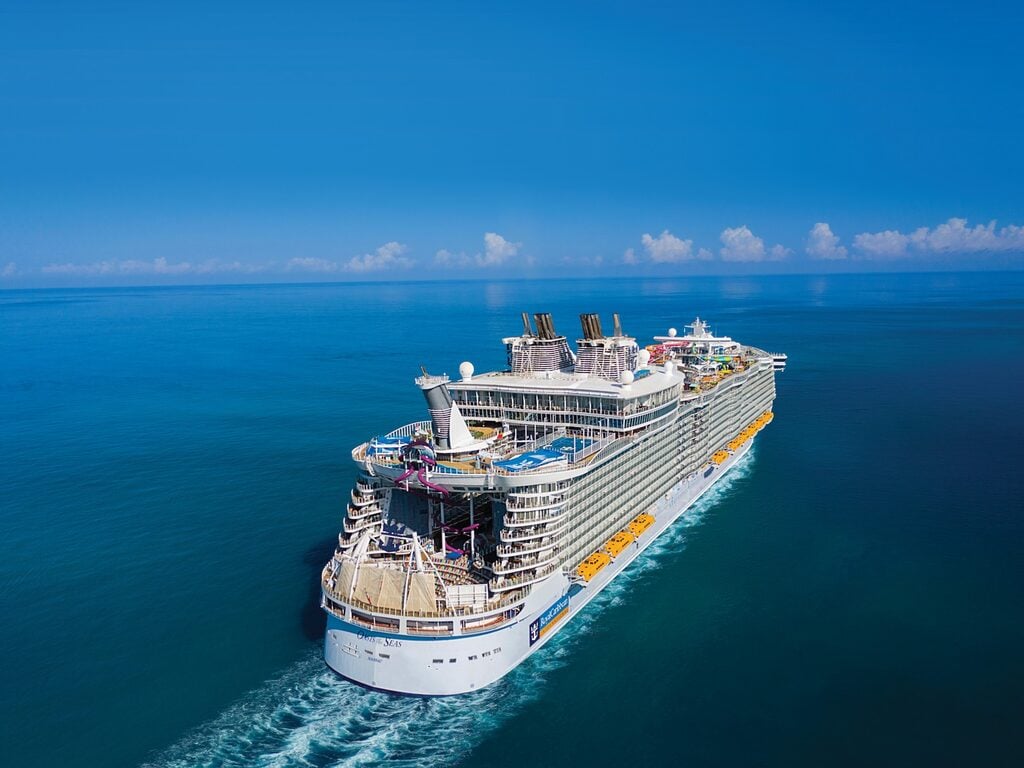
The vast majority of contemporary cruise ships—including massive vessels operated by lines like Royal Caribbean, Carnival Cruise Line, and MSC Cruises—fall into the standard mega-ship category. These ships typically feature top speeds ranging between 18 and 22 knots, with standard service speeds hovering closer to 16 to 19 knots.
Engineering and Efficiency
Mega-ships displace tens of thousands, sometimes over 200,000, gross tons. Propelling a structure of this scale requires immense power, but pushing past 22 knots yields diminishing returns. At higher speeds, fuel consumption spikes dramatically, and engine wear accelerates. Naval architects design these ships to maximize fuel economy over long transatlantic or multi-port itineraries. By maintaining a steady pace of 18 knots, operators can significantly reduce bunker fuel costs and lower carbon emissions.
Operational Impact
An 18-to-22-knot speed range is more than sufficient for standard cruise itineraries. Because most cruises involve short hops between neighboring islands or overnight transits between coastal ports, a ship does not need to rush. The time spent at sea is intentionally prolonged to allow passengers to enjoy onboard amenities, dining, and entertainment.
2. Luxury and Premium Mid-Sized Vessels (19 to 23 Knots)
Luxury and premium cruise lines, such as Oceania Cruises, Celebrity Cruises, and Viking, often operate mid-sized vessels that slightly edge out mega-ships in terms of baseline speed. These ships generally achieve top speeds between 19 and 23 knots.
Purpose and Itinerary Flexibility
Because luxury and destination-focused cruise lines often feature complex itineraries with tight turnarounds in smaller, less commercialized ports, their ships benefit from a slightly higher operational margin. If a vessel encounters rough weather or needs to navigate around an obstruction, having a top speed capability of 23 knots allows the captain to make up for lost time without disrupting the onshore excursion schedule.
Hydrodynamic Refinement
Mid-sized luxury ships often feature sleeker hull designs compared to their blocky, multi-storied mega-ship counterparts. These optimized hydrodynamics reduce water resistance, enabling the vessel to maintain higher speeds with greater fuel efficiency relative to its size.
3. The Transatlantic Speed Record Holder: Queen Mary 2 (30+ Knots)
When discussing cruise ship speeds, one vessel stands completely apart from the modern fleet: Cunard Line’s Queen Mary 2. Commissioned specifically as an ocean liner rather than a conventional cruise ship, the Queen Mary 2 is built to cross the turbulent North Atlantic Ocean on a regular schedule, regardless of weather conditions.
| Vessel Name | Primary Classification | Typical Service Speed | Absolute Top Speed | Propulsion Type |
|---|---|---|---|---|
| Queen Mary 2 | Ocean Liner / Transatlantic | 26 Knots | 30+ Knots | Gas Turbines & Diesel-Electric Azipods |
| Icon of the Seas | Mega-Ship / Cruise | 20–22 Knots | 24 Knots | Liquified Natural Gas (LNG) Azipods |
| National Geographic Explorer | Expedition Vessel | 12–14 Knots | 15 Knots | Diesel-Electric Ice-Strengthened |
| Freedom of the Seas | Mega-Ship / Cruise | 21–22 Knots | 24 Knots | Conventional Propellers & Azipods |
Ocean Liner Engineering
Unlike standard cruise ships designed with large balconies clustered high up on the superstructure—which act like sails in high winds—the Queen Mary 2 features a reinforced, deep-draft steel hull and a streamlined profile. Its propulsion plant combines traditional diesel engines with four massive Rolls-Royce Mermaid azipods, supplemented by gas turbines for high-output surges.
While its normal transatlantic service speed is a brisk 26 knots, the ship is capable of exceeding 30 knots. This high-speed capability is a direct descendant of historical ocean liners, which were subsidized by governments to serve as rapid troop transports or mail carriers during times of need.
4. Expedition and Polar Vessels (10 to 15 Knots)
At the opposite end of the speed spectrum are expedition cruise ships, designed to navigate remote environments such as Antarctica, the Arctic, and the Galapagos Islands. These specialized vessels typically record top speeds between 10 and 15 knots.
Navigating Ice and Restricted Waters
Speed is neither necessary nor safe for expedition vessels. Operating in ice-choked waters requires slow, deliberate navigation to avoid hull damage. These ships feature reinforced hulls (often meeting Polar Code specifications) and specialized bow designs intended to crush or push aside floating ice rather than slice through it at high velocity.
Furthermore, expedition cruises focus on immersive wildlife viewing and shore landings via Zodiac boats. Slow transit speeds allow naturalists and expedition leaders to spot marine life and adjust course safely.
5. River Cruise Vessels (10 to 12 Knots)
While river cruise vessels operate on inland waterways rather than open oceans, they are frequently categorized alongside ocean cruising. River cruise ships generally maintain a cruising speed of 10 to 12 knots relative to the riverbed.
Current Dynamics and Locks
River ships must contend with the complex hydraulics of flowing rivers. When traveling downstream, a river ship's speed over ground is the sum of its engine output plus the speed of the river current. Conversely, when traveling upstream, the engines must fight against the current, reducing the vessel's ground speed significantly.
Because river navigation is strictly regulated by lock systems, bridge clearances, and narrow shipping lanes, high speeds are neither practical nor legally permitted. The goal of a river cruise is leisurely sightseeing, making slow, steady movement ideal.
6. Historical Giants: The Golden Age of Transatlantic Speed (28 to 35+ Knots)
To fully appreciate modern cruise ship speeds, it is instructive to look at the historical context of the mid-20th century. During the golden age of ocean liners, companies competed fiercely for the Blue Riband—an unofficial accolade awarded to the passenger liner that crossed the Atlantic Ocean in regular service with the highest average speed.
Historic Speed Demons
Legendary vessels such as the SS United States, launched in 1952, pushed the boundaries of maritime engineering. The SS United States captured the eastbound transatlantic record with an average speed of 35.59 knots (over 40 mph) and reached a classified top speed estimated to be near 38 or 39 knots.
These speeds were achieved using immensely powerful steam turbines designed with heavy military oversight. However, the advent of commercial jet aviation in the late 1950s rendered high-speed ocean travel economically obsolete, shifting the maritime industry away from speed and toward the leisurely, resort-style cruising we see today.
7. The Modern Eco-Efficient Class (20 to 24 Knots)
The newest generation of cruise ships entering service features cutting-edge propulsion systems powered by alternative fuels such as Liquefied Natural Gas (LNG), alongside advanced hull coatings and air lubrication systems. These vessels typically achieve top speeds between 20 and 24 knots, striking a balance between operational efficiency and modern environmental regulations.
Air Lubrication and Hull Efficiency
To maintain efficient speeds without increasing fuel burn, modern shipbuilders utilize air lubrication technology. By pumping a microscopic layer of air bubbles along the flat bottom of the hull, the ship effectively surfs on a cushion of air, reducing frictional drag between the steel and the water by up to 10 percent.
This technological advancement allows newer mega-ships to maintain comfortable service speeds of 18 to 20 knots while drastically cutting greenhouse gas emissions compared to older vessels of equivalent size.
Factors That Influence Daily Cruise Ship Speeds
A cruise ship rarely travels at its absolute top speed. Captains and marine operations teams continuously adjust velocity based on a variety of operational, environmental, and economic factors.
1. Fuel Economics and Bunker Costs
Fuel represents one of the largest operating expenses for any cruise line. Pushing a ship from 18 knots to 22 knots can increase fuel consumption by 40 percent or more due to hydrodynamic drag. Consequently, cruise lines utilize computer-optimized routing programs to calculate the exact speed required to reach the next port on time while burning the absolute minimum amount of fuel—a practice known in the industry as "slow steaming."
2. Weather and Sea Conditions
Heavy swells, high winds, and ocean currents directly impact ship speed. Headwinds require engines to work harder to maintain a set ground speed, while following seas can boost efficiency. If severe storms block a designated route, the captain may choose to reduce speed and wait out the weather, or open up the throttles to detour around a hurricane or tropical system.
3. Itinerary Padding
Most cruise itineraries include built-in time buffers. If a ship has a short distance to cover between two nearby islands, it will often cruise at a sluggish 10 to 12 knots during the night, effectively acting as a floating hotel drifting gently at sea. This conserves fuel and ensures the ship arrives precisely at its scheduled pilot station in the morning.
Frequently Asked Questions
Why don't cruise ships travel as fast as commercial airplanes?
Airplanes rely on aerodynamic lift to fly through thin air with minimal resistance, whereas cruise ships must push aside dense water, which creates massive hydrodynamic drag. Overcoming water resistance requires exponentially more energy, making high-speed ocean transit economically and environmentally impractical for passenger vessels.
What is the fastest cruise ship currently in service?
The Cunard Line’s Queen Mary 2 is widely recognized as the fastest passenger vessel currently operating regular ocean-crossing voyages, capable of speeds exceeding 30 knots. Among modern resort-style mega-ships, top speeds typically max out around 22 to 24 knots.
Do passengers feel the movement when a cruise ship travels at top speed?
Generally, no. Modern cruise ships are equipped with massive retractable stabilizers—large wing-like fins extending from the sides of the hull below the waterline—that counteract rolling motion. While passengers may hear engine vibration or feel a slight shudder when the ship maneuvers in port, cruising at high speed in open water is remarkably smooth.
How do cruise ships stop quickly if an obstacle appears?
Due to their massive mass and displacement, cruise ships cannot stop quickly. Even with engines put into full reverse and azipod thrusters rotated to act as hydrodynamic brakes, a large mega-ship traveling at 20 knots can take several miles and many minutes to come to a complete halt. This is why navigation relies heavily on advanced radar, automated collision avoidance systems, and vigilant bridge crews.
Can cruise ships increase their speed in an emergency?
Yes. Cruise ships maintain reserve power capacity in their engineering plants. If a medical evacuation is required near the coast, or if the captain needs to evade severe weather, the engineering team can fire up additional diesel generators or gas turbines to push the ship closer to its maximum design speed.
Conclusion and Next Actions
Cruise ship top speeds are carefully calibrated engineering compromises governed by fuel economics, hydrodynamic physics, and passenger comfort rather than a race for velocity. While historic ocean liners once crossed the Atlantic at speeds exceeding 35 knots, modern cruise ships prioritize efficiency, sustainability, and leisurely travel at comfortable service speeds between 18 and 22 knots. When planning your next voyage, understanding these maritime mechanics provides a deeper appreciation of the floating engineering marvels that safely transport travelers across the world's oceans.