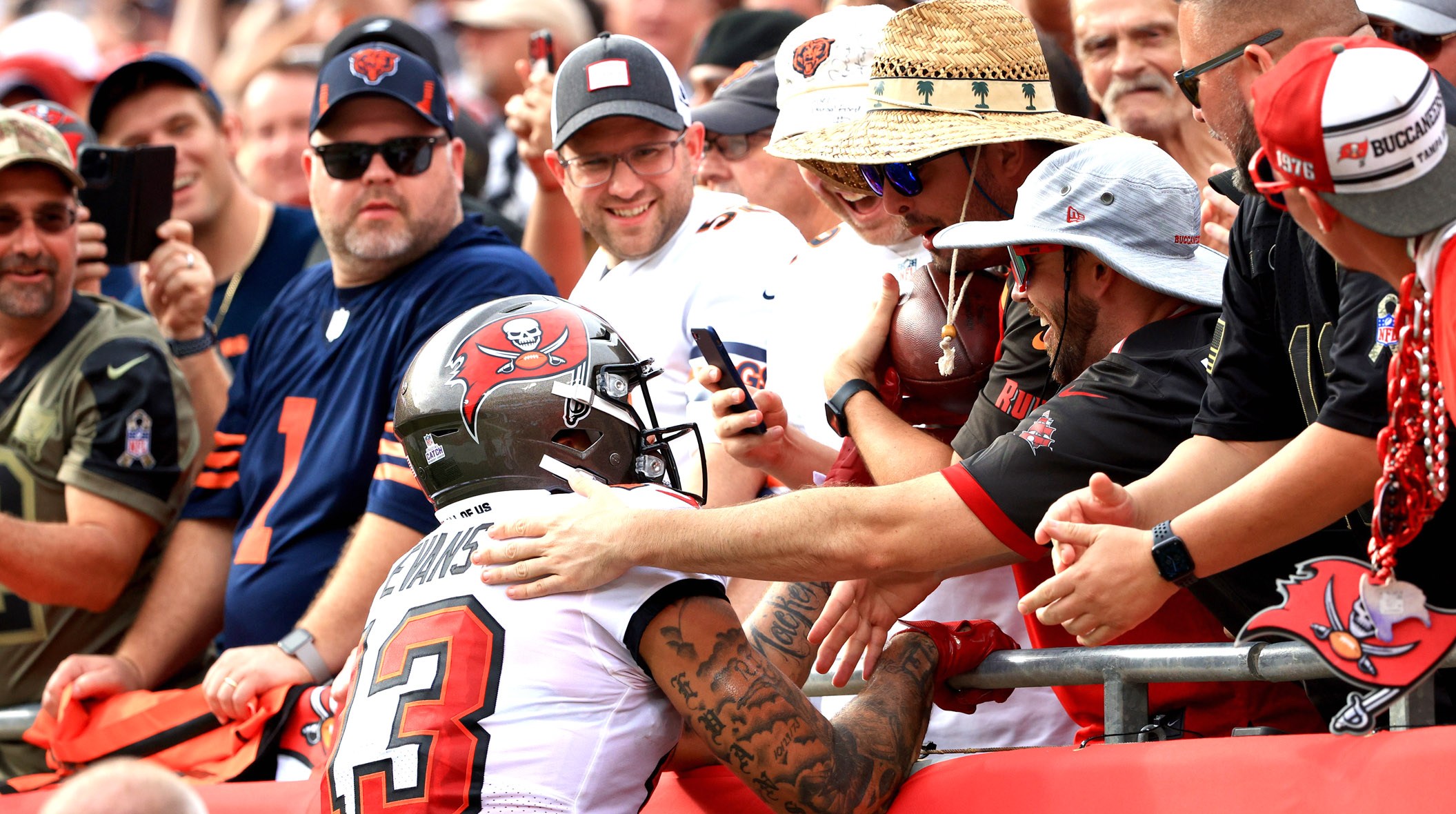
The 600th touchdown pass of Tom Brady’s career, achieved on October 24, 2021, represents a singular moment in professional football history. As the first player in NFL history to reach this milestone, the ball used during the play became an instant artifact, sparking a unique exchange between the quarterback, a fan, and the Tampa Bay Buccaneers organization, highlighting the intersection of sports history and memorabilia valuation.
Contextualizing the Milestone
In the landscape of the National Football League, records are frequently broken; however, the 600-touchdown mark was widely considered an unreachable summit for decades. Tom Brady, playing for the Tampa Bay Buccaneers at the time, eclipsed this number during a game against the Chicago Bears. The touchdown pass was caught by wide receiver Mike Evans, who, in a gesture of fan appreciation, handed the historic ball to a supporter in the front row of the stadium.
This moment was not merely a statistical achievement; it served as a crucible for understanding how modern sports organizations manage high-value assets. The ball was not just a piece of leather and stitching; it was a primary historical witness to the most prolific passing career in the sport's history. When Evans handed the ball to a fan, it inadvertently triggered a logistical challenge for the Tampa Bay Buccaneers' equipment staff, who were tasked with retrieving an item that had suddenly transitioned from a game ball to a high-value collector's piece.
The Logistics of Recovery and Authentication
The process of authenticating and recovering the 600th touchdown ball provides insight into the rigorous standards of the NFL. Authentication is the backbone of the sports memorabilia industry. Without proper chain-of-custody documentation, even the most significant artifacts lose their market viability.
The Chain of Custody
- Field Designation: Before the game, specific balls are prepared and marked for official use. This ensures that the provenance of the ball is tracked from the equipment room to the turf.
- The "Milestone" Tag: During significant games, equipment managers are hyper-aware of potential milestone plays. The 600th touchdown was a focal point of the broadcast and the team’s internal tracking.
- Recovery Protocols: When the ball left the field of play, the team staff had to act quickly. In this instance, a staff member approached the fan, Byron Kennedy, to initiate the retrieval process.
- Negotiation and Compensation: The resolution of the recovery involved a unique arrangement, where the fan received replacement memorabilia and an experience in exchange for returning the official game ball. This interaction underscores how professional teams prioritize the acquisition of historically significant items for their own archives or for the Pro Football Hall of Fame.
Market Valuation of Historic Sports Memorabilia
The value of a ball used to reach a milestone is subjective, yet it follows a market-driven logic based on scarcity, historical weight, and provenance. For collectors, the 600th touchdown ball is a "blue-chip" asset. In 2026, the valuation of such items remains incredibly high because Tom Brady’s career statistics are widely viewed as "unbreakable" in the context of the current game's evolution.
Factors Influencing Memorabilia Value
- Provenance: This is the most critical element. Does the ball have a holographic sticker from the league? Is there photographic evidence of the play? The 600th ball possesses perfect provenance, having been documented on live national television.
- The "Moment" Significance: A touchdown ball is worth more if it marks an all-time record rather than a seasonal personal best.
- Historical Rarity: As the game changes, the volume of passing attempts may fluctuate, but the 600-mark stands as a specific barrier that Brady was the first to cross.
- Condition: In the case of game-used footballs, "game-worn" or "game-used" condition is actually preferred over pristine, "out-of-the-box" condition. Scuffs, grass stains, and signs of use are evidence of the authenticity of the struggle on the field.
| Feature | Importance for Collectors | Impact on Value |
|---|---|---|
| Documented Provenance | Essential | Extreme |
| Photographic Evidence | High | High |
| Milestone Context | Absolute | Maximum |
| Condition (Used) | Standard | Neutral |
The Role of Fans in Sports History
The incident involving the 600th touchdown ball brought the role of the spectator into sharp focus. For decades, fans have sought to keep balls that enter the stands. However, when those balls carry immense historical weight, the relationship between the fan and the team shifts.
The fact that Byron Kennedy, the recipient of the ball, was willing to return it highlights the community aspect of professional sports. It acknowledges that some items are "too big" for private collections and belong to the larger narrative of the sport. This event also set a modern precedent for how teams handle similar requests in the future, establishing a template for compensation that includes authenticated memorabilia, sideline passes, and team-signed gear.
Preservation and Archiving Standards
Once a ball like the 600th touchdown ball is secured, the process of preservation begins. For the Pro Football Hall of Fame and similar institutions, the goal is to stop the natural degradation of the materials.
- UV Protection: Long-term exposure to sunlight causes the leather to fade and the ink used for signatures or markings to bleach.
- Humidity Control: Leather is organic. If the environment is too dry, it cracks; if it is too moist, it can suffer from mold or mildew. Archival storage typically maintains a humidity range between 40% and 50%.
- Handling Procedures: Experts wear cotton gloves to prevent skin oils from damaging the surface of the ball. The oils can cause permanent staining and chemical breakdown of the leather’s finish.
- Documentation: Every time the item is moved or displayed, it is logged. This ensures that the history of the artifact's location remains as robust as its history on the field.
Common Misconceptions About Game-Used Items
Many fans believe that any ball thrown in an NFL game holds significant monetary value. This is a common error in judgment for aspiring collectors. In reality, most balls used during a game are treated as consumables. They are rotated out frequently, and unless they are tied to a specific, statistically significant event, their value remains limited to their intrinsic worth as sports equipment.
The 600th touchdown ball is an outlier because the event was explicitly recognized by the league. Without that recognition, even a ball touched by a legendary player might only command a fraction of the value of a milestone ball. Distinguishing between "game-used" and "milestone-used" is the most important skill for any collector or investor in this space.
Frequently Asked Questions
What makes the 600th touchdown ball more valuable than other game balls?
The value is derived from the fact that it is a historical landmark. Tom Brady was the first quarterback to cross this statistical threshold, making the specific ball used for that play an irretrievable piece of history. Collectors value the item because it is a direct link to the exact moment the record was broken.
How do I know if a piece of memorabilia is authentic?
Authentication relies on the "chain of custody." Legitimate items come with documentation from the NFL or a reputable third-party authentication firm. This documentation tracks the ball from the manufacturer to the league, the game, and eventually to the recipient. Always check for serialized holographic stickers and verified certificates.
Can fans keep balls that are thrown into the stands?
Generally, yes. Most teams allow fans to keep balls that enter the seating area. However, if a ball is designated as a "milestone ball," team security will often prioritize its recovery to preserve history. In those cases, teams typically offer significant compensation to ensure the ball is returned.
What should I do if I think I own a piece of historic sports gear?
If you believe you have an item of historical significance, the first step is to consult a professional authenticator. Do not attempt to clean or restore the item, as this can destroy its value. Provide high-quality photographs to experts and research the specific game or date associated with the item to verify if it coincides with a league-noted event.
Does the condition of the football affect its value?
In the world of professional sports memorabilia, "perfect" is not always better. A football that shows clear signs of being used in a professional game—such as turf pellets or scuffs—is often worth more than a ball that looks brand new. The wear and tear are physical proof of the item's history.
Next Actions for Collectors and Fans
If you are interested in the world of sports memorabilia, the best course of action is to start by understanding the "provenance" of any item you consider for your collection. Follow the official channels of the NFL and the Pro Football Hall of Fame to understand which items are currently being sought after for historical preservation. For those looking to collect, focus on items that have documented history rather than speculative value. Investing in authentication services and professional storage solutions is the only way to protect the long-term value of your collection.