As of 2026, the global 5G wireless market has transitioned from its early deployment phase into a mature infrastructure cycle, with a current service market valuation of approximately $285 billion. Industry analysts forecast a robust compound annual growth rate (CAGR) of 26.8% through 2030, driven by the mass adoption of 5G-Advanced (Release 18), the expansion of private enterprise networks, and the integration of artificial intelligence within the Radio Access Network (RAN).
The State of 5G Wireless in 2026
The 5G landscape in 2026 is defined by the widespread shift from Non-Standalone (NSA) to Standalone (SA) architectures. In the early 2020s, 5G deployments relied heavily on existing 4G LTE core networks to speed up time-to-market. Today, however, tier-1 operators globally have largely migrated to 5G Core (5GC) networks. This shift is critical because only Standalone 5G can fully support the high-performance features originally promised by the technology, such as ultra-low latency and massive machine-type communications.
Market maturity is also visible in device penetration. In most developed economies, 5G-capable smartphones are no longer premium outliers but the standard for all price tiers. Furthermore, the 5G market has bifurcated into two distinct growth engines: the consumer mobile broadband market and the industrial "Industry 4.0" market. While consumer revenue remains the bedrock for carriers, the enterprise sector—encompassing smart manufacturing, logistics, and healthcare—represents the most significant area for new capital expenditure (CAPEX) and revenue growth.
Global Market Size and Multi-Year Forecasts
The trajectory of the 5G market is influenced by the staggered rollout of different spectrum bands and the evolving hardware requirements of 5G-Advanced. Based on current data, the market is expected to follow a consistent upward trend as emerging markets in Southeast Asia, Africa, and Latin America accelerate their infrastructure updates.
Revenue Projections (2024–2030)
- 2024 (Historical Context): The market was valued at approximately $150 billion as North American and European operators completed their initial mid-band coverage.
- 2026 (Current Status): Valuation reaches $285 billion. This surge is attributed to the "second wave" of 5G, characterized by densification (adding more small cells) and the rise of Fixed Wireless Access (FWA).
- 2030 (Forecast): The market is projected to eclipse $750 billion. By this point, 5G will be the dominant global mobile standard, and the first commercial discussions regarding 6G will begin to influence infrastructure planning.
Growth Drivers
The primary catalyst for this sustained growth is 5G-Advanced, codified in 3GPP Releases 18 and 19. 5G-Advanced introduces "AI-native" capabilities to the network, allowing for automated energy saving, improved beam management, and better support for high-mobility scenarios (such as high-speed trains and drones).
Another significant driver is the Reduced Capability (RedCap) specification. RedCap allows for the creation of simpler, cheaper 5G devices that bridge the gap between high-speed smartphones and low-power IoT sensors. This has opened the door for 5G to enter the wearables and industrial sensor markets, which were previously dominated by older 4G or LTE-M technologies.
Market Segmentation by Component and Spectrum
To understand the market size, one must look at the individual segments that comprise the 5G ecosystem. This includes hardware (infrastructure), services (subscriptions), and software (network management and orchestration).
Infrastructure vs. Services
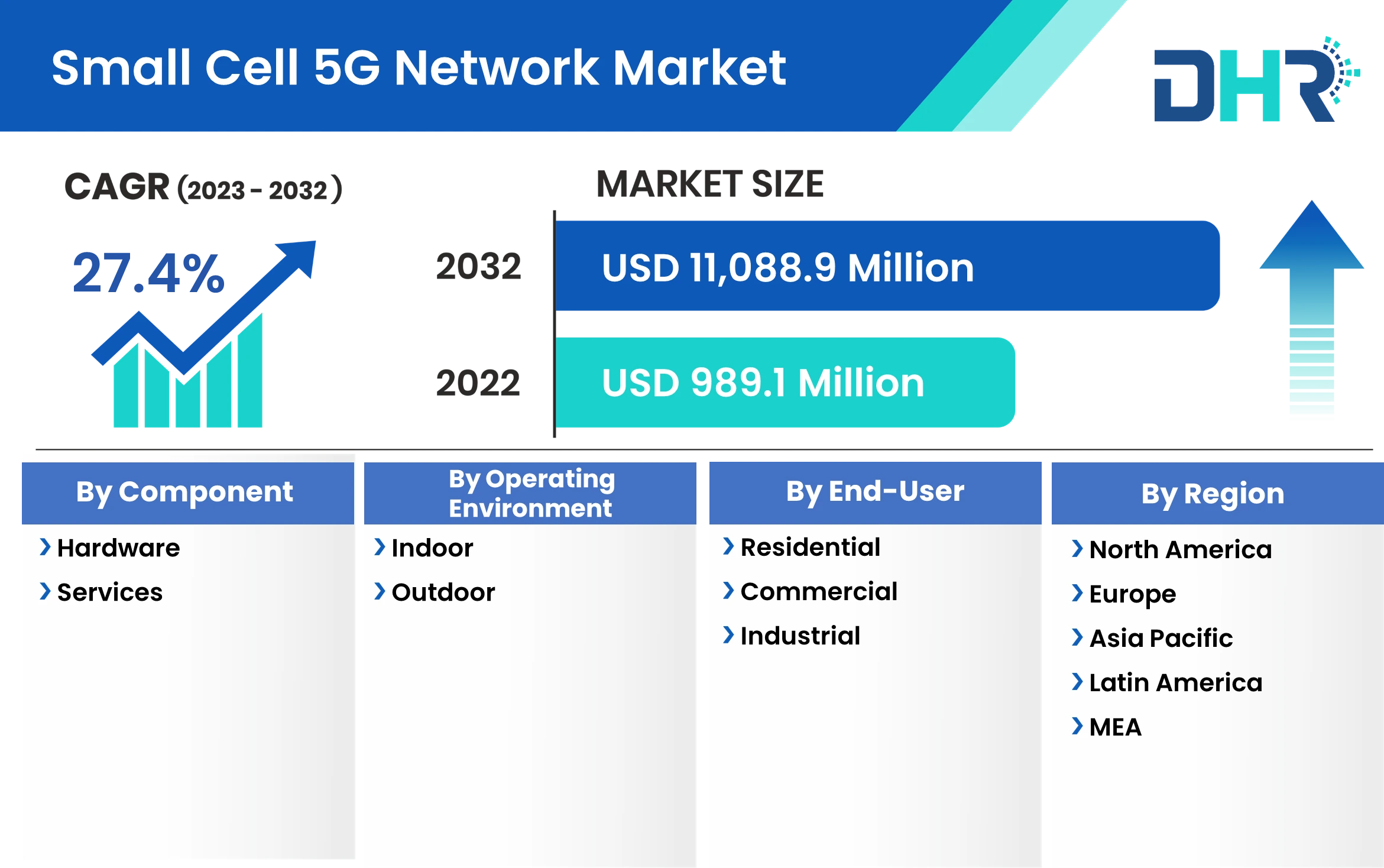
The 5G Services segment remains the largest by value, as it represents the recurring monthly revenue from billions of subscribers and enterprise contracts. However, the Infrastructure segment—comprising macro cells, small cells, and core network equipment—is seeing renewed investment in 2026. This is due to the need for network densification. To maintain 5G speeds in urban environments, operators are moving beyond the large towers (macro cells) and installing thousands of small cells on street lamps and buildings to handle millimeter-wave (mmWave) traffic.
Spectrum Allocation: Sub-6 GHz and mmWave
The market is also segmented by the frequency bands used:
- Sub-6 GHz (Low and Mid-Band): This remains the "workhorse" of the 5G market. It offers a balance of coverage and speed. Most global growth in 2026 is driven by mid-band (3.5 GHz to 4.7 GHz) deployments, which provide the "Goldilocks" zone of performance.
- mmWave (High-Band): While initially slower to adopt due to limited range, mmWave is seeing a resurgence in 2026. It is being deployed in high-density areas like stadiums, airports, and smart factories where massive bandwidth is required for thousands of simultaneous connections.
Regional Market Analysis
The 5G market does not grow uniformly; different regions have adopted different strategies based on regulatory environments and economic priorities.
Asia-Pacific: The Volume Leader
The Asia-Pacific region, led by China, South Korea, and India, continues to be the largest market by volume. China alone accounts for a significant percentage of the world’s 5G base stations. India has emerged as the fastest-growing market in the mid-2020s, skipping several interim technological steps to deploy one of the world’s most advanced Standalone 5G networks. This regional dominance is supported by a robust local manufacturing ecosystem for 5G components.
North America: The Innovation and FWA Hub
In North America, the market is characterized by high average revenue per user (ARPU) and a massive push into Fixed Wireless Access (FWA). FWA has become a legitimate competitor to cable and fiber-optic internet, particularly in suburban and rural areas. By 2026, millions of American households use 5G as their primary home internet connection, significantly expanding the market size beyond mobile phones.
Europe: The Industrial 5G Pioneer
Europe’s growth has been steadier but focused heavily on the industrial sector. Germany, for example, has been a leader in reserving spectrum specifically for private campus networks. This allows automotive manufacturers and chemical plants to build their own 5G networks, independent of public mobile carriers, to ensure data security and reliability.
5G vs. Previous and Future Generations
Understanding the market forecast requires a comparison of 5G’s technical capabilities against its predecessor and the nascent 6G standards.
| Feature | 4G LTE (Legacy) | 5G (Mainstream 2026) | 5G-Advanced (Rel 18+) |
|---|---|---|---|
| Peak Data Rate | 1 Gbps | 10 Gbps | 20+ Gbps |
| Average Latency | 30–50 ms | 5–10 ms | < 2 ms |
| Connection Density | 100k devices/km² | 1 million devices/km² | 2 million+ devices/km² |
| Architecture | Hardware-centric | Software-defined (SDN) | AI-Native / ML-Integrated |
| Primary Use Case | Mobile Web/Video | IoT/FWA/Enhanced Mobile | XR/IIoT/Sensing |
Industry Verticals Driving Investment
The expansion of 5G is increasingly tied to specific industry needs rather than general consumer demand.
Manufacturing and Industry 4.0
The "Smart Factory" is the single largest enterprise vertical for 5G. In 2026, manufacturers use 5G to support Automated Guided Vehicles (AGVs) and "Digital Twins." A digital twin is a real-time virtual replica of a physical factory; it requires the massive data throughput of 5G to mirror every sensor reading and machine movement without delay.
Healthcare and Remote Surgery
While remote surgery was once a futuristic concept, by 2026, 5G-enabled tactile internet is used for specialist consultations and robotic-assisted procedures in remote clinics. The market for 5G in healthcare is growing as hospitals implement private networks to manage the thousands of connected medical devices (IoMT) that monitor patient vitals in real-time.
Automotive and C-V2X
The automotive sector utilizes 5G for Cellular Vehicle-to-Everything (C-V2X) communication. This allows cars to "talk" to traffic lights, pedestrians, and other vehicles. This connectivity is a prerequisite for Level 4 and Level 5 autonomous driving, which rely on low-latency data to make split-second safety decisions.
Technical and Regulatory Challenges
Despite the optimistic forecast, several hurdles remain that could influence the final market size by 2030.
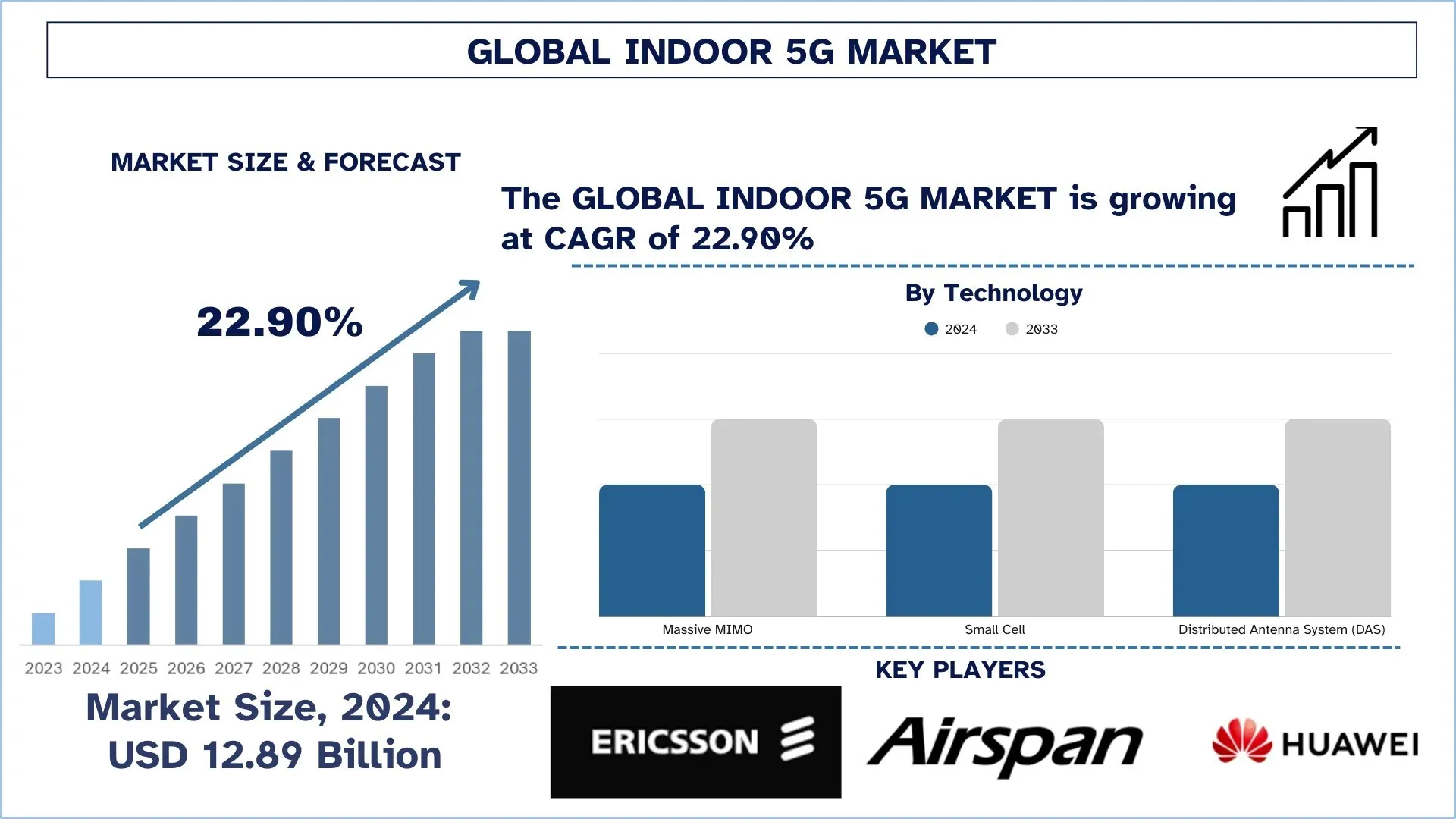
- Power Consumption: 5G base stations, particularly those using Massive MIMO (Multiple Input Multiple Output), consume more power than 4G equipment. Operators are currently investing in "Green 5G" initiatives, using AI to put radio units into sleep mode during low-traffic periods.
- Geopolitics and Supply Chain: The 5G market has been deeply impacted by trade restrictions and the "Clean Network" initiatives that have limited the use of certain vendors in Western markets. This has led to a push for Open RAN (O-RAN), a movement to create interoperable hardware and software so that operators are not locked into a single vendor like Ericsson, Nokia, or Samsung.
- Spectrum Availability: In some regions, the "C-Band" (mid-band spectrum) is still being cleared of legacy satellite users, which can delay the rollout and cap growth in specific markets.
Frequently Asked Questions
What is the difference between 5G and 5G-Advanced in the market forecast?
5G-Advanced, starting with 3GPP Release 18, is a mid-life upgrade to the 5G standard. In terms of market size, it represents a new cycle of investment. It introduces Artificial Intelligence and Machine Learning into the network itself, allowing for better energy efficiency and more precise positioning (within centimeters), which is vital for industrial robotics and augmented reality (AR).
How does Private 5G affect the total market size?
Private 5G networks are dedicated systems built for a single organization, such as a port, mine, or factory. This segment is growing faster than the public carrier market because it addresses specific needs for security and guaranteed bandwidth. It contributes billions to the overall market forecast as enterprises move away from less reliable Wi-Fi systems for critical operations.
Is 5G Fixed Wireless Access (FWA) replacing fiber-optic internet?
In the 2026 market, 5G FWA is not necessarily replacing fiber but acting as a primary alternative in areas where laying fiber is too expensive. It has significantly expanded the 5G market by allowing telecommunications companies to compete in the home broadband sector, providing speeds of 300 Mbps to 1 Gbps over the air.
When will 6G start to impact the 5G market?
While 6G research is well underway in 2026, it is not expected to impact the 5G market size commercially until approximately 2029 or 2030. Current 5G infrastructure is being built with "forward compatibility" in mind, meaning much of the current fiber backhaul and site acquisition will serve as the foundation for 6G at the end of the decade.
What are the main costs associated with 5G deployment for operators?
The largest costs are spectrum licenses (which can cost billions in government auctions), equipment procurement (Massive MIMO antennas and servers), and site engineering (leasing space on buildings and power utility costs). In 2026, a significant portion of the budget is also allocated to software for network slicing, which allows operators to "rent out" virtual portions of their network to different industries.
Strategic Recommendations for Stakeholders
For businesses and investors looking at the 5G wireless market in 2026, the focus should shift from "coverage" to "monetization."
- Invest in Enterprise Verticals: The consumer market is saturated. Growth lies in specialized software and hardware for industrial, healthcare, and automotive applications.
- Monitor Open RAN Developments: As operators look to diversify their supply chains, companies specializing in Open RAN-compliant software and "white-box" hardware are positioned for high growth.
- Prepare for Edge Computing: 5G’s low latency is only useful if data processing happens close to the user. The "Edge Computing" market is intrinsically linked to 5G; investing in small-scale data centers located at the base of 5G towers is a critical next step for infrastructure providers.
- Prioritize 5G-Advanced Upgrades: For network operators, migrating to 5G-Advanced is necessary to reduce operational costs through AI-driven automation, which will be the primary way to maintain margins as data consumption continues to skyrocket.