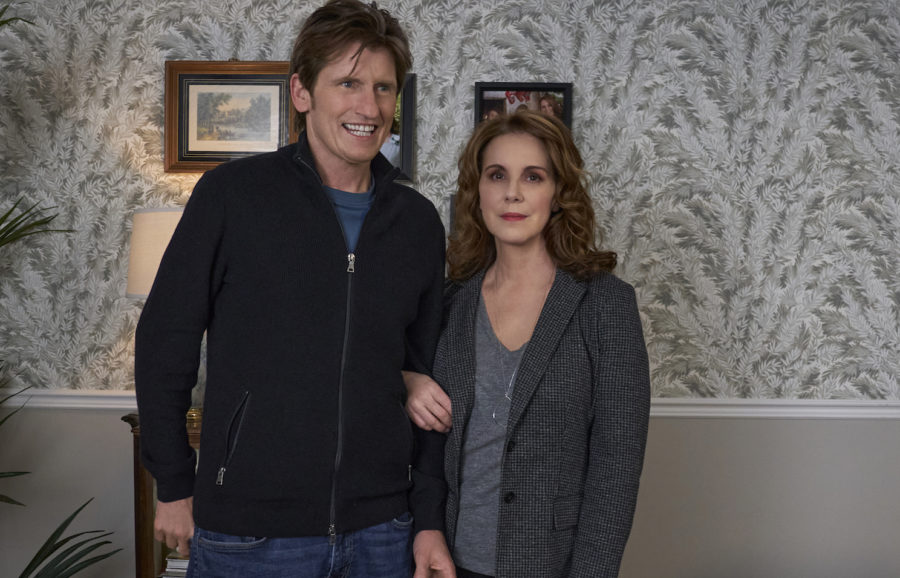
Deciding whether to commit time to the second season of a television series often comes down to balancing character attachment with evolving narrative quality. While The Moodys offered a grounded, relatable comedic tone in its freshman outing, the second season presents several structural and thematic shifts that may alienate viewers who preferred the tighter, localized focus of the show's initial holiday-themed debut.
The Shift from Event-Based Comedy to Ongoing Serialized Drama
The first season of The Moodys was defined by its specific structure: a holiday-centric narrative that centered on a chaotic family gathering. This format provided a natural anchor for the comedy, grounding the characters in a high-pressure environment where dysfunction was both expected and contained. The inherent "ticking clock" of the holiday season forced resolution and character interplay that felt urgent and earned.
In the second season, the show transitions into a more traditional, ongoing sitcom format. This shift removes the logistical limitations that previously helped focus the writers’ room. Without the backdrop of a single, stressful event, the story often meanders, losing the tight pacing that made the first season stand out. Viewers who enjoyed the show specifically for its festive, contained nature may find that the expansion into daily life dilutes the impact of the family’s eccentricities. When the "pressure cooker" element of the holiday season is removed, the characters’ flaws can sometimes feel more grating than endearing, leading to a narrative that feels less like a special event and more like a standard, occasionally aimless, comedy series.
Diminished Returns on Character Arc Progression
A common challenge for comedies that move beyond a limited-run premise is the "status quo" trap. In the first season, the Moodys were defined by a clear set of interpersonal conflicts that were ripe for exploration. By the second season, several of these conflicts are either resolved or, conversely, pushed into repetitive cycles to keep the plot moving.
For many viewers, the progression of Sean Jr., Dan, and Bridget feels less like natural growth and more like a retread of the same ground. The writers frequently revisit the same insecurities and professional failures, which can lead to a sense of stagnation. If you found the character dynamics satisfyingly resolved by the end of the first season, the second season may feel like an unnecessary extension that sacrifices the integrity of those arcs for the sake of producing more episodes. There is a distinct sense that the characters have reached their logical endpoints, and forcing them into new, often contrived situations, weakens the emotional connection established in the premiere season.
The Dilution of Familial Cohesion
The core appeal of The Moodys was the chemistry between the core family unit and the specific tension between the parents, Sean Sr. and Ann, and their adult children. This dynamic was rooted in a shared history and a specific cultural and regional identity. As the show attempts to broaden its scope in the second season to accommodate a longer runtime, it introduces more peripheral characters and subplots.
This expansion often comes at the expense of the screen time shared by the core cast. The intimate, fast-paced dialogue that characterized the first season is frequently interrupted by external storylines that lack the same gravity or humor. For a show whose identity is built almost entirely on family synergy, diluting the focus can make the series feel like a collection of disjointed vignettes rather than a cohesive story about a specific unit. When the family isn't interacting as a whole, the show loses its unique gravitational pull, making the viewing experience feel significantly more generic and less distinctive compared to its predecessor.
Tonal Inconsistency and "Cringe" Overload
Comedy is subjective, but The Moodys leaned heavily into the "cringe" style of humor—a subgenre where discomfort is the primary engine for comedy. In a short, six-episode first season, this tone was manageable and effective because the high stakes of the holidays made the social failures feel high-impact.
However, in the second season, the reliance on cringeworthy behavior without the holiday backdrop can become exhausting. The frequency of awkward misunderstandings and social faux pas increases, and without the sympathetic relief of a shared holiday success or failure, the characters’ actions can start to feel self-sabotaging rather than merely human. If you are not a fan of sustained, awkward, or uncomfortable humor, the second season doubles down on these tropes, making it a difficult watch. What felt like sharp, observational satire in the first outing can occasionally veer into mean-spirited or repetitive territory during the second, creating a tonal dissonance that can be jarring for a loyal viewer.
Competition for Viewing Time
In the current media landscape of 2026, the volume of high-quality streaming content is overwhelming. Choosing what to watch is a finite resource management problem. When comparing The Moodys season two to other contemporary comedies, the series often struggles to justify the investment of time required to finish its expanded episode count.
If you are looking for a show that offers high-concept storytelling, deep character evolution, or groundbreaking humor, the second season of The Moodys may not offer a high enough return on investment compared to newer, more focused series. The show occupies a "middle ground" space—it is not quite a groundbreaking drama, nor is it a laugh-out-loud, rapid-fire sitcom. In a saturated market, there are simply more compelling options that utilize the viewer's time more efficiently and provide a more memorable narrative experience.
| Feature | Season 1 (Holiday) | Season 2 (Standard) |
|---|---|---|
| Pacing | Fast/Urgent | Variable/Meandering |
| Primary Conflict | Holiday stress/Family secrets | Daily life/Repetitive cycles |
| Character Focus | Tight ensemble | Distributed/Peripheral |
| Humor Style | Situational/Pressure-based | Character-driven/Cringe |
| Narrative Goal | Resolution | Continuity |
Frequently Asked Questions
Does the second season of The Moodys have a satisfying conclusion? The second season concludes in a way that attempts to wrap up the threads introduced throughout the series, but it lacks the definitive, poignant closure of the first season. Because it was developed as a more open-ended project, the ending may feel less like a true finale and more like a series of events coming to a halt.
Can I skip to the second season without watching the first? It is highly recommended to watch the first season first. The second season relies heavily on the established relationships and specific character history developed in the initial holiday arc. Skipping the first season would make the motivations and interpersonal tensions in the second season feel opaque and less earned.
Is the comedy style different in season two? The style remains consistent in its "cringe" and dialogue-heavy approach, but it is applied to a broader range of situations. The primary difference is the loss of the holiday constraint, which changes how the humor is contextualized and perceived by the audience.
Is The Moodys considered a "must-watch" comedy? While the show garnered positive reviews for its debut, it is generally considered a niche comedy. It is not widely classified as a "must-watch" essential in the same vein as genre-defining sitcoms. Its appeal is highly dependent on whether you enjoy domestic dysfunction and family-centric dramedies.
Are there major changes to the cast in the second season? The core Moody family returns, but the second season introduces a wider net of side characters and guest appearances to facilitate its longer, non-holiday-specific plotlines. These additions, while functional for the script, often shift the focus away from the primary family members.
Next Steps and Recommendation
If you have already enjoyed the first season, you may find enough residual affection for the characters to justify watching the second. However, if you are looking for a tighter, more impactful narrative, or if your time is limited by the vast array of other options available in 2026, it is entirely reasonable to conclude your experience with the first season. The show peaked with its initial premise, and there is no narrative penalty for treating it as a self-contained, limited-run experience. If you decide to proceed, do so with the expectation that the magic of the holiday setting has been replaced by the routine of serialized television.