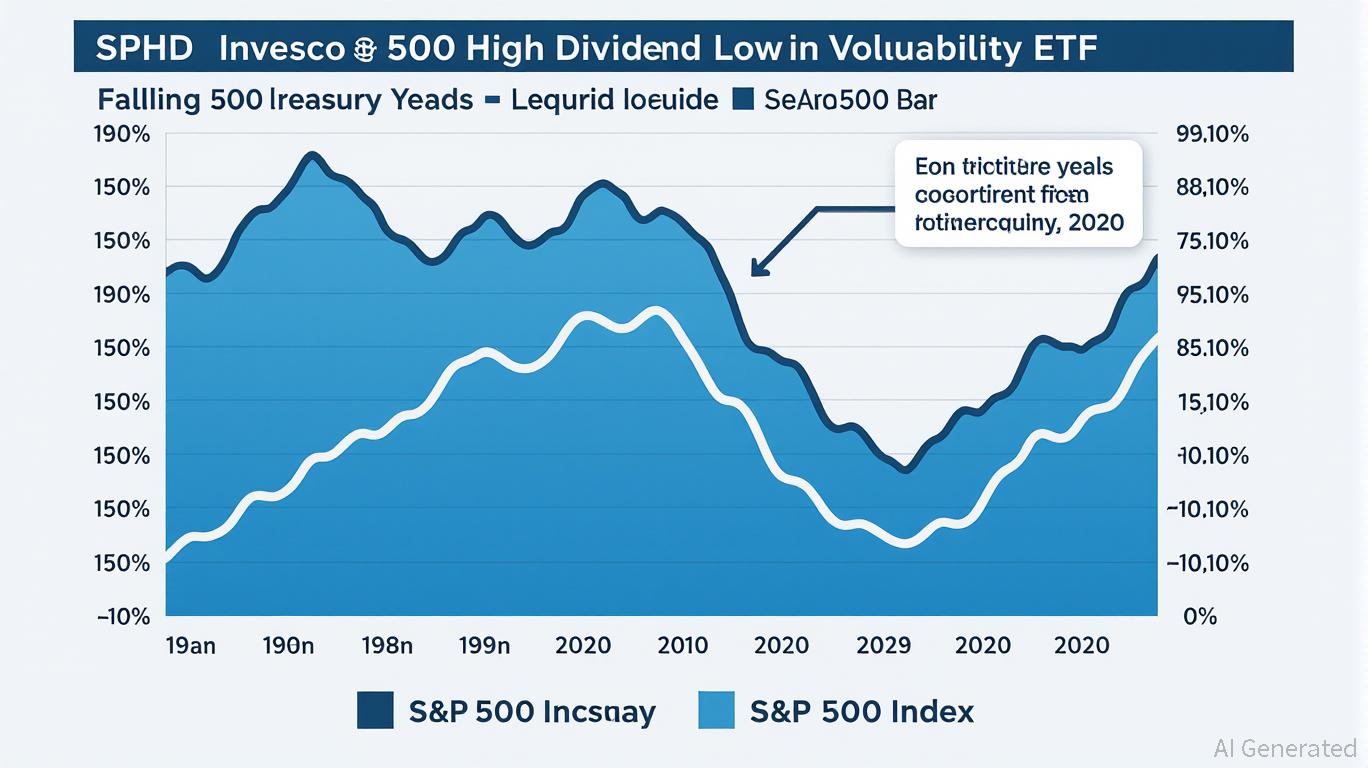
The best high yield dividend ETFs in 2026 prioritize a balance between current income and capital preservation. Based on fund structure, historical yield consistency, and expense ratios, the three top choices are the Schwab US Dividend Equity ETF (SCHD) for quality growth, the JPMorgan Equity Premium Income ETF (JEPI) for maximum monthly income, and the Vanguard High Dividend Yield ETF (VYM) for broad market stability.
Choosing a high-yield dividend Exchange-Traded Fund (ETF) requires more than just looking at the highest percentage yield. In the financial landscape of 2026, investors face a market where interest rate plateaus and sector rotations have made "yield traps"—stocks with high yields due to falling prices rather than fundamental strength—more prevalent. To navigate this, a robust income strategy focuses on the sustainability of the payout and the underlying health of the constituent companies.
Dividend investing serves a dual purpose: providing a liquid stream of cash and acting as a defensive buffer during periods of market volatility. The three funds selected here represent different "flavors" of high-yield investing, ranging from traditional equity selection to advanced derivative-based income generation.
1. Schwab US Dividend Equity ETF (SCHD): The Gold Standard for Quality
The Schwab US Dividend Equity ETF (SCHD) has long been regarded as a cornerstone for dividend investors. Its primary appeal lies not just in the yield it provides, but in the rigorous screening process it uses to ensure that the companies within the fund are financially healthy and capable of growing their payouts over time.
Methodology and Index Tracking
SCHD tracks the Dow Jones U.S. Dividend 100 Index. This index is not a simple collection of the highest-yielding stocks. Instead, it applies a multi-step quality filter. To even be considered, a company must have a minimum of 10 consecutive years of dividend payments. From there, stocks are ranked based on four fundamental characteristics:
- Cash flow to total debt: Ensuring the company isn't over-leveraged.
- Return on equity (ROE): A measure of how effectively management is using shareholder capital.
- Dividend yield: The current payout relative to price.
- Five-year dividend growth rate: Ensuring the "yield" isn't stagnant.
By the time the index is narrowed down to its 100 holdings, the "yield traps" have been largely filtered out. This results in a portfolio that tends to tilt toward Value and Quality factors, which has historically provided excellent risk-adjusted returns.
Why It Excels in 2026
In 2026, the emphasis on cash flow and low debt is paramount. As the economy settles into a post-inflationary steady state, companies with strong balance sheets are better positioned to maintain dividends even if revenue growth slows. SCHD’s low expense ratio—consistently among the lowest in the industry—ensures that more of the dividend income stays in the investor’s pocket rather than being consumed by management fees.
Furthermore, SCHD’s sector caps (limiting any single sector to 25% of the fund) prevent it from becoming overly concentrated in traditionally high-yield but volatile sectors like Energy or over-leveraged sectors like Utilities. This diversification makes it a reliable "set-it-and-forget-it" core holding for an income portfolio.
2. JPMorgan Equity Premium Income ETF (JEPI): The Income Powerhouse
For investors whose primary goal is immediate, high-frequency cash flow, the JPMorgan Equity Premium Income ETF (JEPI) has redefined the high-yield landscape. Unlike traditional ETFs that rely solely on corporate dividends, JEPI utilizes a hybrid strategy to generate "enhanced" yield.
The Mechanism of Enhanced Yield
JEPI is an actively managed fund that combines two distinct strategies:
- Defensive Equity Portfolio: The managers select a subset of stocks from the S&P 500 that exhibit lower volatility than the broader market.
- Equity Linked Notes (ELNs): This is the "secret sauce" of JEPI. The fund invests a portion of its assets in ELNs, which are derivative instruments that wrap together the economic characteristics of selling (writing) out-of-the-money call options.
When the fund "writes" call options, it collects a premium. This premium is then distributed to shareholders as part of the monthly dividend. This allows JEPI to offer yields significantly higher than standard equity funds—often reaching into the 7% to 10% range, depending on market volatility.
Performance and Risk in 2026
In the current 2026 market environment, JEPI is particularly attractive during periods of "sideways" or slightly bearish market movement. Because the fund generates income from volatility (via the options premiums), it can provide a positive return even when the stock market is flat.
However, investors must understand the trade-off: capped upside. Because the fund effectively sells away the potential for huge gains in exchange for immediate cash, JEPI will likely underperform a pure S&P 500 index fund during a roaring bull market. For a retiree or an income-focused investor in 2026, this trade-off is often acceptable in exchange for a massive, monthly paycheck that helps cover living expenses or provides capital for reinvestment into other assets.
3. Vanguard High Dividend Yield ETF (VYM): The Broad-Market Workhorse
If SCHD is about quality and JEPI is about maximum yield, the Vanguard High Dividend Yield ETF (VYM) is about broad-market representation and stability. It is one of the largest and most liquid dividend ETFs in existence, providing exposure to hundreds of US companies characterized by higher-than-average dividend yields.
Strategic Diversification
VYM tracks the FTSE High Dividend Yield Index. Unlike SCHD, which limits itself to 100 stocks, VYM often holds over 400 different companies. This broad diversification significantly reduces "single-stock risk." If one major company in the portfolio cuts its dividend, the impact on the total fund is minimal because it represents only a small fraction of the total weight.
The fund excludes Real Estate Investment Trusts (REITs), which is an important distinction for tax planning. Because it focuses on C-corporations, the dividends are typically "qualified," meaning they are taxed at the lower long-term capital gains rate rather than as ordinary income (depending on the investor's holding period and tax bracket).
Cost Efficiency and Reliability
Vanguard’s non-profit-like structure allows VYM to maintain an incredibly low expense ratio. In 2026, where every basis point of cost matters for long-term compounding, VYM remains a top choice for "core" exposure. It captures the performance of established giants in the Financials, Health Care, and Consumer Staples sectors.
While its yield is generally lower than JEPI’s and its growth profile might be slightly less aggressive than SCHD’s, VYM offers the smoothest ride. It is the ideal choice for an investor who wants a "market-like" return with a yield tilt, without the complexity of derivative strategies or the concentration of a 100-stock index.
Comparative Analysis of Top High Yield ETFs
The following table compares the key metrics for these three ETFs based on their projected status in 2026. Note that yields fluctuate based on market prices and corporate actions.
| Feature | Schwab US Dividend (SCHD) | JPMorgan Equity Premium (JEPI) | Vanguard High Div Yield (VYM) |
|---|---|---|---|
| Primary Goal | Dividend Growth & Quality | Maximum Monthly Income | Broad High-Yield Exposure |
| Yield Type | Traditional Dividends | Dividends + Option Premiums | Traditional Dividends |
| Distribution Frequency | Quarterly | Monthly | Quarterly |
| Number of Holdings | ~100 | ~100-130 | ~450+ |
| Expense Ratio | Ultra-Low (<0.10%) | Moderate (~0.35%) | Ultra-Low (<0.10%) |
| Primary Risk | Sector Concentration | Capped Upside Potential | Broad Market Sensitivity |
| Best For | Long-term compounding | Current income/Retirement | Diversified core holding |
Understanding the Risks of High-Yield Investing
While high-yield ETFs are generally safer than picking individual high-yield stocks, they are not without risk. In 2026, investors should be mindful of several specific factors:
Interest Rate Sensitivity
Dividend-paying stocks, particularly those in "bond-proxy" sectors like Utilities and Consumer Staples, often compete with fixed-income products. If 2026 sees a surprise increase in Treasury yields, high-yield ETFs may experience price pressure as investors migrate toward the safety of government bonds. Conversely, in a falling-rate environment, these ETFs typically see capital appreciation.
Sector Weighting Risks
Most high-yield ETFs are heavily weighted toward Financials and Energy. While these sectors can provide massive dividends, they are also cyclical. A downturn in the banking sector or a crash in oil prices can lead to both a decline in the ETF's share price and a reduction in the total dividend paid out by the fund.
The "Total Return" Fallacy
It is tempting to choose the ETF with the highest yield (like JEPI) and ignore everything else. However, investors must look at "total return"—the combination of yield plus share price appreciation. If an ETF pays a 10% yield but its share price drops by 12%, the investor has lost money. Both SCHD and VYM have historically shown a strong ability to grow their share price alongside their dividends, whereas JEPI is designed to be more price-stable with higher distributions.
How to Integrate These ETFs into a 2026 Portfolio
Strategic allocation depends on where an investor sits in their financial lifecycle.
- The Accumulator (Ages 25-50): These investors should favor SCHD. The combination of dividend growth and capital appreciation provides the best engine for long-term wealth building. Reinvesting those growing dividends creates a powerful compounding effect over decades.
- The Transitioner (Ages 50-60): As retirement approaches, a mix of SCHD and VYM provides a balance of growth and stability. Adding a small "sleeve" of JEPI can begin to boost the income profile without sacrificing too much growth.
- The Income Seeker (Retirees): For those living off their portfolio, JEPI becomes the star player. Its monthly distributions provide a steady paycheck that mimics a salary, while VYM provides the necessary diversification to ensure the portfolio isn't overly reliant on a single strategy.
For more information on ETF structures and regulatory oversight, investors can consult the U.S. Securities and Exchange Commission (SEC) or review the specific prospectuses at Charles Schwab, J.P. Morgan Asset Management, and Vanguard.
Frequently Asked Questions
Are dividends from these ETFs guaranteed?
No. Unlike bond interest, corporate dividends are discretionary. While the companies inside these ETFs (like Coca-Cola, Home Depot, or Chevron) have long histories of payments, they can cut or suspend dividends at any time due to financial hardship. However, the diversified nature of an ETF means that one company's cut is unlikely to eliminate the entire fund's distribution.
Which of these ETFs is the most tax-efficient?
Generally, VYM and SCHD are more tax-efficient for long-term holders because they primarily distribute "qualified dividends," which are taxed at lower rates (0%, 15%, or 20%). JEPI is often less tax-efficient because the income generated from ELNs is typically taxed as ordinary income, which can be as high as 37% depending on your tax bracket. JEPI is often best held in a tax-advantaged account like an IRA or 401(k).
Can I lose my principal investment in a high-yield ETF?
Yes. These are equity-based products. If the stock market crashes, the share price of SCHD, VYM, and JEPI will decline. While they may decline less than the "high-growth" tech-heavy NASDAQ, they are still subject to market risk and are not "safe" in the same way a savings account or a CD is.
Why not just buy the highest-yielding individual stocks?
Buying an ETF provides instant diversification. If you put all your money into three high-yielding stocks and one goes bankrupt, you lose 33% of your capital. If you buy VYM, you own over 400 stocks; if one goes bankrupt, the impact on your total portfolio is negligible.
How often do these ETFs change their holdings?
Most of these ETFs rebalance their portfolios once or twice a year. During these periods, the fund will sell companies that no longer meet the yield or quality criteria and buy new ones that do. This "automated discipline" is one of the primary benefits of using an ETF over individual stock picking.
Practical Next Action
Before investing in any high-yield ETF in 2026, evaluate your current tax bracket and investment horizon. If you need immediate cash for bills, start by researching JEPI and its monthly distribution schedule. If you are looking to build long-term wealth, open a brokerage account and set up an automatic investment plan into SCHD or VYM, ensuring that the "Dividend Reinvestment Plan" (DRIP) is turned on to maximize compounding.