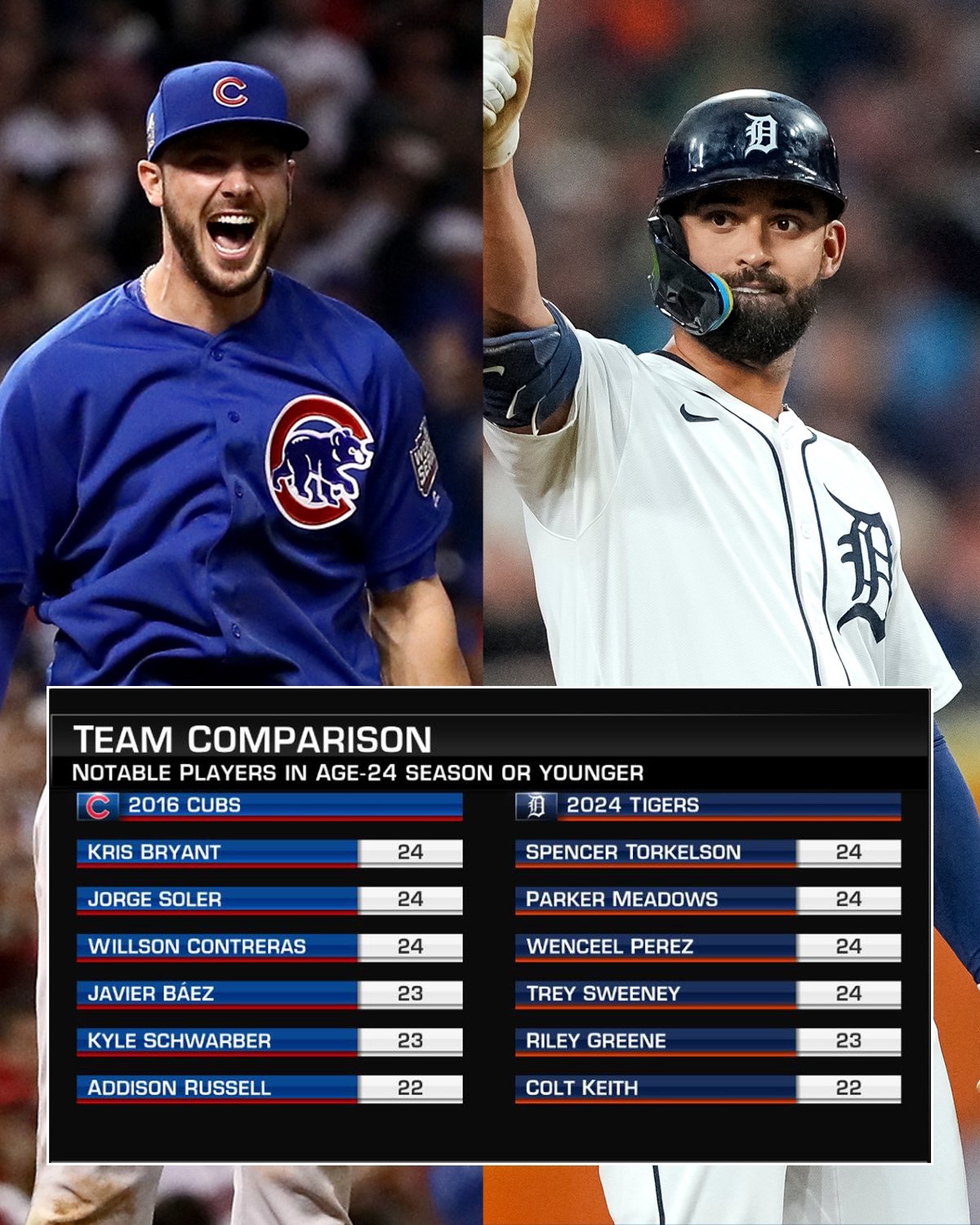
The 2016 Chicago Cubs roster was a masterclass in team construction, blending elite homegrown talent, high-value free agents, and veteran leadership to end a 108-year championship drought. Led by NL MVP Kris Bryant and a historic pitching staff, the team secured 103 regular-season wins and defeated the Cleveland Indians in a legendary seven-game World Series.
As we look back from the vantage point of 2026, the 2016 Cubs remain one of the most statistically dominant and culturally significant teams in Major League Baseball history. Their success was not a product of luck but of a five-year rebuilding plan orchestrated by Theo Epstein and Jed Hoyer, culminating in a roster that led the league in multiple categories, including Defensive Runs Saved (DRS) and Earned Run Average (ERA). To understand the magnitude of their achievement, one must analyze the specific contributions of the infield, the rotation, and the high-stakes mid-season acquisitions that pushed them over the finish line.
The Diamond Core: An Infield of Stars
The 2016 Cubs infield is often cited as the greatest defensive and offensive unit of the 2010s. This group was characterized by extreme versatility, with players frequently rotating positions to accommodate Joe Maddon’s unconventional lineups.
Kris Bryant: The MVP Campaign
In 2016, Kris Bryant solidified his status as the face of the franchise. Following his 2015 Rookie of the Year campaign, Bryant moved between third base and the outfield, providing a 7.7 WAR (Wins Above Replacement) performance. He slashed .292/.385/.554 with 39 home runs and 102 RBIs. Bryant’s ability to run the bases—highlighted by his sprint from first to home in the World Series—was just as vital as his power. In the tenth year since that victory, Bryant’s 2016 season stands as one of the most complete individual performances in Cubs history.
Anthony Rizzo: The Emotional Anchor
If Bryant was the engine, Anthony Rizzo was the heart of the team. Serving as the primary first baseman, Rizzo provided elite defense and consistent power, hitting 32 home runs and driving in 109 runs. His leadership in the clubhouse was essential for maintaining morale during the grueling 162-game season. Rizzo’s "Gold Glove" defense at first base allowed the other young infielders to throw with confidence, knowing he would scoop any errant ball.
The Middle Infield: Russell, Baez, and Zobrist
The middle of the diamond was a defensive vacuum. Addison Russell emerged as an elite shortstop, hitting 21 home runs and providing exceptional range. Meanwhile, Javier Baez became a household name due to his "El Mago" persona, characterized by lightning-fast tags and acrobatic slides.
The signing of Ben Zobrist proved to be the final piece of the puzzle. Zobrist brought a "professional hitter" approach to a young lineup, eventually earning World Series MVP honors. His ability to play second base and the outfield gave Joe Maddon the flexibility to rest players without losing offensive production.
A Historic Starting Rotation
While the hitters grabbed the headlines, the 2016 Cubs’ success was rooted in a starting rotation that led the MLB with a 3.10 ERA. This group provided the stability needed to navigate the National League Central.
Kyle Hendricks: The "Professor"
In a season full of superstars, Kyle Hendricks was the quietest dominant force in baseball. He led the Major Leagues with a 2.13 ERA, utilizing pinpoint command and a devastating changeup rather than elite velocity. Hendricks finished third in the Cy Young voting and started Game 7 of the World Series, illustrating his importance to the staff’s hierarchy.
Jon Lester and Jake Arrieta
Jon Lester acted as the veteran ace the Cubs signed specifically for postseason moments. Lester finished the season with 19 wins and a 2.44 ERA, providing a left-handed foil to the rest of the right-handed staff. Jake Arrieta, the 2015 Cy Young winner, followed up his historic season with 18 wins and a 3.10 ERA. Although he was slightly less dominant than the previous year, his presence gave the Cubs a formidable "Big Three" at the top of the rotation.
Rounding Out the Staff: Lackey and Hammel
The depth of the rotation was its greatest strength. John Lackey was brought in for his "big game" experience, contributing 188.1 innings of 3.35 ERA ball. Jason Hammel provided 15 wins at the back end of the rotation, ensuring that the Cubs rarely faced a "losing streak" due to poor starting pitching. This consistency allowed the bullpen to remain fresh for the postseason.
The Outfield and Catching Dynamic
The Cubs' outfield in 2016 was a blend of defensive specialists and high-OBP (On-Base Percentage) catalysts. The catching situation was equally unique, featuring a three-man rotation that maximized matchups.
- Dexter Fowler: The "You go, we go" catalyst. Fowler’s .393 OBP at the top of the order set the tone for the entire offense. His return to the team in spring training was a pivotal moment for team chemistry.
- Jason Heyward: Despite a career-low offensive year, Heyward’s defense was transformative. He won a Gold Glove and provided the legendary "rain delay speech" in Game 7 of the World Series.
- The Catchers: The trio of David Ross, Willson Contreras, and Miguel Montero was highly effective. Ross provided veteran wisdom for Lester; Montero provided veteran power; and Contreras provided youthful athleticism and a cannon for an arm.
| Player | Position | 2016 WAR | Key Stat/Impact |
|---|---|---|---|
| Kris Bryant | 3B/OF | 7.7 | 39 HR, NL MVP Award |
| Anthony Rizzo | 1B | 5.2 | 32 HR, 109 RBI, Gold Glove |
| Jon Lester | LHP | 5.3 | 19 Wins, 2.44 ERA |
| Kyle Hendricks | RHP | 5.0 | MLB ERA Leader (2.13) |
| Dexter Fowler | CF | 4.2 | .393 On-Base Percentage |
| Ben Zobrist | 2B/OF | 3.3 | World Series MVP |
| Javier Baez | IF | 2.7 | NLCS Co-MVP, Elite Defense |
| Addison Russell | SS | 3.9 | 21 HR, 95 RBI |
The Bullpen and the Chapman Trade
By mid-season, it was clear the Cubs were the best team in the league, but they had one glaring weakness: a high-velocity closer. In July 2016, the front office made a "win-now" move by trading top prospect Gleyber Torres to the New York Yankees for Aroldis Chapman.
The Impact of Aroldis Chapman
Chapman’s arrival changed the geometry of the game for the Cubs. With a fastball consistently hitting 101–103 mph, he allowed Joe Maddon to shorten games to eight innings. Chapman recorded 16 saves for the Cubs with a 1.01 ERA in the regular season. While his heavy usage in the World Series nearly led to a collapse in Game 7, his presence was arguably the difference between a pennant and a championship.
Supporting Relief Pitchers
Before Chapman arrived, Hector Rondon served as a reliable closer. Transitioning to a setup role, Rondon remained effective alongside Pedro Strop, who was the team’s most consistent high-leverage arm for years. The addition of Mike Montgomery from Seattle also proved vital; Montgomery provided long-relief innings and ultimately recorded the final out of the World Series, inducing a ground ball from Michael Martinez.
Strategic Impact and the "Maddon Factor"
The 2016 Cubs were more than just a collection of talent; they were a laboratory for modern baseball strategy. Manager Joe Maddon utilized several "advanced" concepts that are now commonplace in 2026.
- Extreme Defensive Shifting: The Cubs utilized data to position fielders more aggressively than almost any other team in 2016. This resulted in the team leading the league in defensive efficiency.
- Versatility and Rest: Maddon frequently started players at three or four different positions throughout the week. This kept the roster fresh and allowed the Cubs to exploit specific pitching matchups.
- Psychological Management: Maddon’s "Respect 90" and "Try Not to Suck" slogans helped keep a young team loose under the immense pressure of the 108-year drought.
The impact of this strategy was seen in the team's ability to bounce back from a 3-1 deficit in the World Series. The roster was built to withstand pressure, with enough depth to survive injuries to key players like Kyle Schwarber, who famously returned from a torn ACL to hit .412 in the World Series as the Designated Hitter.
Legacy and Long-term Influence
Looking back from 2026, the 2016 Cubs roster serves as the blueprint for "rebuild to contention" strategies. Every player on that 25-man roster became a legend in Chicago. While many of the core players—Bryant, Rizzo, and Baez—eventually moved on to other teams or retired, their collective impact on the city remains.
The 2016 season proved that a "cursed" franchise could be fixed through a combination of high-ceiling drafting and aggressive, calculated spending. The defensive metrics set by that infield are still used by scouts today to evaluate the value of "range" and "IQ" over raw athleticism alone.
Frequently Asked Questions
Who was the 2016 World Series MVP?
Ben Zobrist was named the World Series MVP. He hit .357 during the series, but his most significant contribution was the go-ahead RBI double in the top of the 10th inning of Game 7. His veteran poise was a stabilizing force for the younger hitters throughout the postseason.
How many games did the 2016 Cubs win?
The 2016 Cubs won 103 games in the regular season, finishing 17.5 games ahead of the second-place St. Louis Cardinals in the NL Central. This remains one of the highest win totals in franchise history and the most by any Cubs team since 1910.
Which players were named All-Stars in 2016?
The Cubs had an unprecedented seven All-Stars in 2016. The entire starting infield—Anthony Rizzo, Ben Zobrist, Addison Russell, and Kris Bryant—was voted in by fans, along with center fielder Dexter Fowler. Pitchers Jon Lester and Jake Arrieta were also named to the National League squad.
What happened to Kyle Schwarber during the 2016 season?
Kyle Schwarber suffered a severe knee injury (torn ACL and LCL) in the third game of the regular season. He was expected to miss the entire year. However, in one of the greatest injury returns in sports history, he was cleared to play just in time for the World Series, where he served as the DH and provided several clutch hits.
Who pitched the final out of the 2016 World Series?
Mike Montgomery pitched the final out. He entered the game in the bottom of the 10th inning with a runner on base and two outs. He threw a curveball to Cleveland’s Michael Martinez, who grounded out to third baseman Kris Bryant, who threw to Anthony Rizzo to seal the victory.
Final Recommendation for Historians and Fans
For those looking to further study the impact of the 2016 roster, it is recommended to review the official MLB historical archives and Baseball-Reference for game-by-game statistical breakdowns. Analyzing the "Defensive Runs Saved" (DRS) metrics from 2016 provides the clearest technical picture of why this team was so difficult to beat. Whether you are a casual fan or a professional analyst, the 2016 Cubs remain the gold standard for modern team building and the ultimate example of a roster fulfilling its maximum potential.