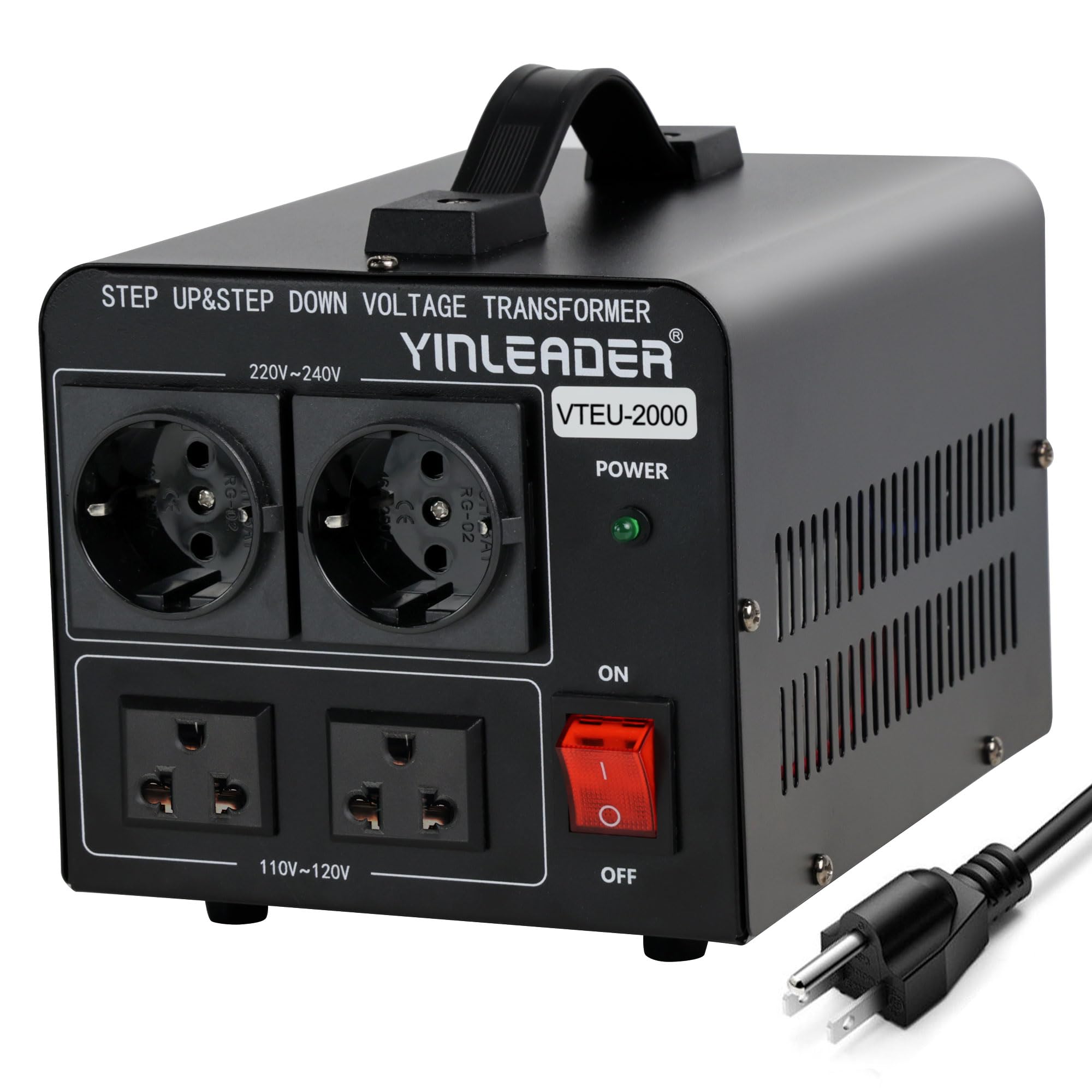
A 110 to 220V step up converter is an electrical transformer designed to increase the input voltage from a standard North American 110V/120V outlet to the 220V/240V level required by international appliances. These devices allow users to operate electronics purchased in Europe, Asia, or Africa within regions like the United States, Canada, or Mexico without damaging the equipment.
Understanding the Need for Voltage Conversion
The global electrical landscape is divided primarily by two different voltage standards. Most of North and Central America, along with parts of South America and Japan, utilize a low-voltage system ranging from 110V to 120V at a frequency of 60Hz. In contrast, the majority of the rest of the world uses a high-voltage system ranging from 220V to 240V at a frequency of 50Hz.
When you bring an appliance designed for a 220V environment into a 110V region, the device will either fail to operate or perform poorly. For example, a heating element will only produce a fraction of its intended heat, and a motor may lack the torque to spin, leading to overheating and potential internal damage. A step up converter bridges this gap by utilizing electromagnetic induction to "step up" the electrical pressure (voltage) to the level the appliance expects.
As we navigate 2026, the demand for these converters remains high due to the global nature of e-commerce and the relocation of expatriates. While many modern consumer electronics like laptops and smartphone chargers are "dual-voltage" (operating on 100-240V automatically), larger appliances such as espresso machines, specialized kitchen tools, professional audio equipment, and industrial machinery still require dedicated voltage conversion.
How Step Up Converters Work: The Science of Induction
At its core, a 110 to 220V step up converter is a transformer. It consists of a magnetic core wrapped with two sets of copper wire coils: the primary winding and the secondary winding.
- Primary Winding: This side connects to the 110V power source. When the alternating current (AC) flows through this coil, it creates a fluctuating magnetic field in the core.
- The Core: Usually made of laminated steel or ferrite, the core directs the magnetic flux toward the second coil.
- Secondary Winding: In a step up transformer, the secondary winding has significantly more turns of wire than the primary winding. The fluctuating magnetic field induces a current in this secondary coil, and because there are more turns, the resulting voltage is higher.
The ratio of the number of turns between the primary and secondary coils determines the voltage increase. To go from 110V to 220V, the secondary coil generally has twice as many turns as the primary.
Choosing the Correct Wattage: The Most Critical Factor
The most common mistake when purchasing a 110 to 220V step up converter is underestimating the required wattage. If you attempt to draw more power than the converter is rated for, you risk blowing a fuse, damaging the converter’s internal circuitry, or even starting an electrical fire.
The "Double the Wattage" Rule
For most applications, experts recommend selecting a converter with a wattage rating that is at least two times higher than the rated wattage of the appliance. This is often referred to as the "Safety Factor."
- Resistive Loads: Devices like lamps or simple heaters consume power consistently. A 20-30% margin is usually sufficient.
- Inductive Loads: Devices with motors, compressors, or heating pumps (such as refrigerators, vacuum cleaners, or power tools) require a massive "surge" of power when they first start up. This start-up wattage can be three to five times higher than the "running" wattage listed on the label.
Wattage Comparison for Common Appliances
| Appliance Type | Typical Wattage | Recommended Converter Capacity |
|---|---|---|
| Electric Toothbrush / Shaver | 5W - 50W | 100W |
| Laptop / Small Game Console | 60W - 150W | 300W - 500W |
| Blender / Food Processor | 300W - 600W | 1500W |
| High-End Espresso Machine | 1200W - 1500W | 3000W |
| Hair Dryer / Heat Gun | 1800W - 2200W | 5000W |
| Air Conditioner / Large Fridge | 2000W+ | 7500W+ (Hardwired) |
Key Features of Modern 2026 Step Up Converters
In 2026, voltage converters have evolved beyond simple heavy boxes. When shopping for a unit, look for these specific safety and convenience features:
1. Toroidal Transformer Technology
Older converters used "EI" square transformers, which are heavy, loud (humming), and inefficient. Modern high-quality converters use toroidal (donut-shaped) transformers. These are more compact, generate less heat, and offer higher efficiency with minimal electromagnetic interference (EMI).
2. Circuit Breaker Protection
Avoid units that rely solely on glass fuses. A modern converter should have a resettable circuit breaker. If the unit overloads, the breaker trips, and you can simply press a button to reset it once the load is reduced.
3. Soft Start Function
High-wattage converters can sometimes trip your home's main circuit breaker the moment you turn them on because of the initial inrush current. A "soft start" feature gradually ramps up the power to prevent these nuisance trips.
4. Digital Load Monitoring
Advanced units now include LED or LCD displays that show the current input voltage, output voltage, and—most importantly—the real-time wattage consumption. This allows you to see exactly how much stress you are putting on the transformer.
5. Grounding and Socket Versatility
Ensure the converter has a properly grounded three-prong plug for the 110V input and a universal or region-specific grounded socket for the 220V output. Using ungrounded adapters with high-voltage equipment is a significant safety hazard.
The Frequency Problem: 50Hz vs. 60Hz
It is vital to understand that a voltage converter does not change the frequency of the electricity. It only changes the voltage.
- North America: 60Hz
- Europe/Asia: 50Hz
If you use a step up converter in the US, your 220V appliance will be receiving 220V at 60Hz. For most modern electronics (like TVs, computers, and chargers), this is not an issue because they use switching power supplies that can handle both frequencies.
However, for devices with AC synchronous motors (such as older record players, analog clocks, or some high-end kitchen mixers), the speed of the motor is timed to the frequency. A 50Hz motor running on 60Hz will spin 20% faster than intended. Furthermore, some specialized industrial motors may overheat if run on the wrong frequency for extended periods. Before connecting a motorized appliance, check the manufacturer's label for "50/60Hz" compatibility.
Safety Precautions and Proper Usage
Operating a high-voltage transformer requires adherence to several safety protocols to prevent accidents.
- Avoid Damp Environments: Transformers generate heat and contain sensitive copper windings. Never use a converter in a bathroom or near a kitchen sink unless it is specifically rated for such environments.
- Ventilation is Essential: Even the most efficient toroidal transformers generate heat during operation. Ensure the converter is placed in an open area with at least 4 inches of clearance on all sides for airflow. Never cover a converter with a cloth or place it inside a sealed cabinet while in use.
- The Power-On Sequence: Always turn the converter on before plugging in or turning on the appliance. This allows the magnetic field in the transformer to stabilize.
- Continuous vs. Intermittent Use: Most consumer-grade converters are rated for intermittent use. If you plan to run a device 24/7 (like a refrigerator), you must significantly over-spec the wattage (at least 3x the appliance rating) to prevent the transformer from slowly cooking itself.
- Check the Ground: Ensure the 110V wall outlet you are using is properly grounded. Without a ground connection, the metal chassis of the converter (and your appliance) could become "live" in the event of an internal fault.
Step Up Converters vs. Travel Adapters
A common point of confusion for travelers is the difference between an adapter and a converter.
- Travel Adapters: These are simple plastic plugs that change the shape of the prongs. They do not change the voltage. If you plug a 220V-only hair dryer into a 110V outlet using only an adapter, it will not work correctly and could be damaged.
- Step Up Converters: These are heavy devices (containing a transformer) that physically change the electrical voltage.
If your device says "Input: 100-240V," you only need a travel adapter. If it says "Input: 220-240V" or "Input: 230V," you absolutely must use a step up converter.
Troubleshooting Common Issues
If your 110 to 220V step up converter is not performing as expected, check the following:
- No Power Output: Check if the circuit breaker on the converter has tripped. Ensure the 110V wall outlet is active by testing it with a lamp.
- Loud Humming or Vibration: This often indicates an overload or that the converter is placed on a surface that resonates. Try reducing the load or moving the unit to a solid floor. Constant loud humming in a toroidal transformer may indicate a "DC offset" in your home's power lines.
- Burning Smell: Turn the unit off immediately. This is a sign of internal insulation failure or significant overheating due to an overload. The converter may be undersized for the appliance you are using.
- Appliance Works Slowly: This happens if the converter is not outputting the full 220V, which can occur if the input 110V line is sagging (common in old buildings with thin wiring).
Frequently Asked Questions
Can I use a step up converter for my 220V electric stove or clothes dryer?
Generally, no. Large appliances like stoves and dryers require extremely high amperage and are typically hardwired into a 240V "split-phase" circuit in North American homes. Portable step up converters are designed for plug-in appliances, usually topping out at 5000W or 7500W. For a stove, you should consult an electrician to install a dedicated 240V circuit.
Is it safe to leave a step up converter plugged in all the time?
While many high-quality converters are designed for long-term use, they still consume a small amount of "no-load" power (phantom load) even when the appliance is turned off. It is best practice to turn off the converter using its own power switch when not in use to save energy and extend the life of the transformer.
Why is my 2000W converter tripping the house breaker even when nothing is plugged into it?
This is due to "inrush current." When a large transformer is first energized, it pulls a massive amount of current for a fraction of a second to establish the magnetic field. If your home uses sensitive "Type B" circuit breakers, they might trip. Using a converter with a "soft start" feature or plugging it into a circuit with a "Type C" (high-lag) breaker can solve this.
Will a step up converter work for a Japanese 100V appliance in the US?
No, that would require a "step down" or a specific "120V to 100V" voltage regulator. While the difference between 100V (Japan) and 120V (US) seems small, using a 100V device on 120V for long periods can shorten the lifespan of the electronics or cause sensitive components to fail.
Can I use a power strip on the 220V output of the converter?
Yes, provided the total combined wattage of all devices plugged into the power strip does not exceed the continuous capacity of the converter. Be aware that the power strip itself must be rated for 220V-250V; using a standard 110V North American power strip on a 220V output is extremely dangerous and can cause the strip's internal surge protectors to explode.
Final Recommendation
When investing in a 110 to 220V step up converter, prioritize safety and overhead. For small electronics and chargers, a 300W to 500W toroidal converter is usually sufficient and portable. For kitchen appliances like mixers or coffee machines, do not settle for anything less than a 3000W heavy-duty unit with a digital display and circuit breaker protection. Always verify the wattage requirements on your appliance’s specification plate and adhere to the "Double the Wattage" rule to ensure a safe and reliable electrical environment for your international equipment.