Oxygen in the form of $1\text{ O}_2$—properly written as $\text{O}_2$ with a subscript, representing a single molecule of diatomic oxygen—is an element, not a compound. It consists exclusively of atoms of a single chemical element (oxygen), bonded together into discrete molecular units, whereas compounds require atoms of two or more different elements chemically combined in fixed proportions.
The Fundamental Distinction: Elements vs. Compounds
To understand why $1\text{ O}_2$ (diatomic oxygen) is classified as an element rather than a compound, it is necessary to examine the fundamental definitions of chemical classification established by modern chemistry and codified by organizations like the International Union of Pure and Applied Chemistry (IUPAC). Matter is categorized based on its atomic composition and the nature of the chemical bonds holding its constituent particles together.
What is a Chemical Element?
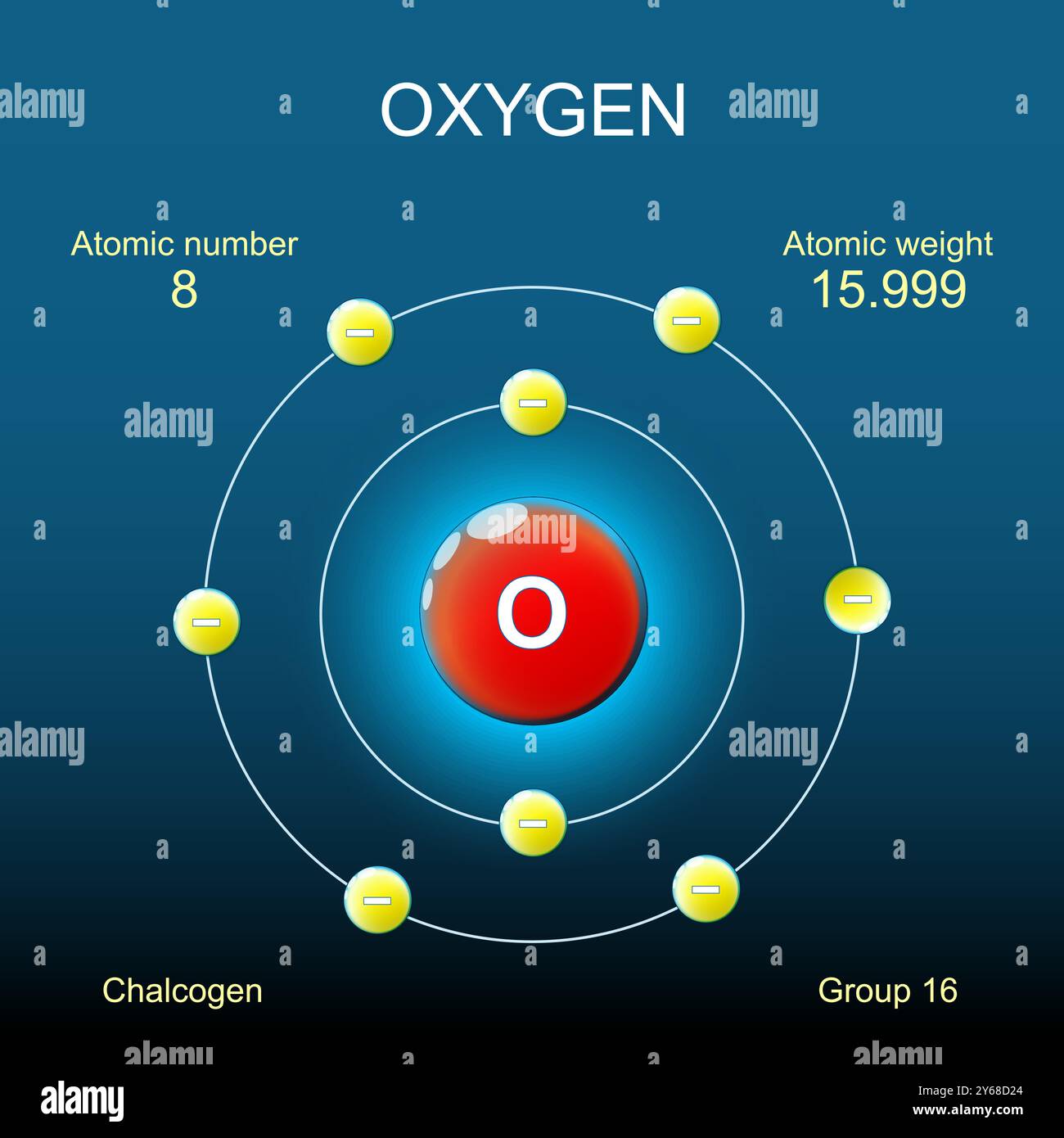
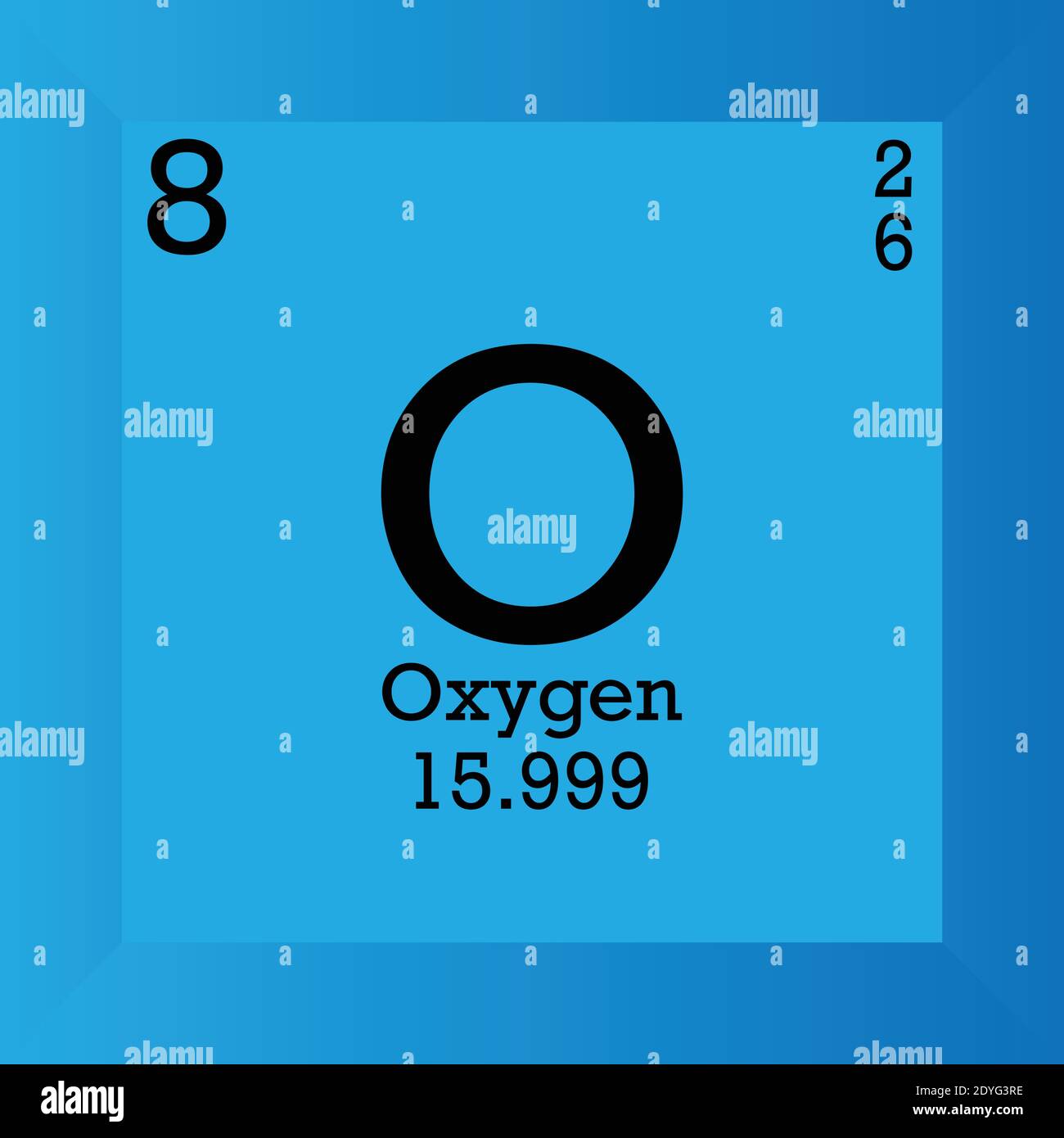
A chemical element is a substance that cannot be broken down into simpler substances by ordinary chemical reactions. Each element is defined by the number of protons in the nuclei of its atoms, known as its atomic number. Oxygen, for example, has an atomic number of 8.
An element can exist as individual atoms (monatomic, such as helium or neon) or as molecules containing two or more atoms of the same element. When two or more identical atoms bond together, the resulting substance is an allotrope or a molecular form of that specific element. Because all atoms within an $\text{O}_2$ molecule share the exact same atomic number (eight protons), the substance remains fundamentally elemental.
What is a Chemical Compound?
A chemical compound, by contrast, is a chemical substance composed of many identical molecules or crystals composed of atoms from two or more different chemical elements held together by chemical bonds. Examples of compounds include:
- Water ($\text{H}_2\text{O}$): Composed of hydrogen and oxygen atoms.
- Carbon dioxide ($\text{CO}_2$): Composed of carbon and oxygen atoms.
- Sodium chloride ($\text{NaCl}$): Composed of sodium and chlorine atoms.
Because $1\text{ O}_2$ molecule contains only oxygen atoms, it fails to meet the fundamental requirement of containing multiple distinct elements. Therefore, it cannot be categorized as a compound.
Structure and Bonding of $\text{O}_2$
Although $\text{O}_2$ is an element, it rarely exists naturally on Earth as isolated, single oxygen atoms ($\text{O}$). Free oxygen atoms are highly reactive free radicals because their outer electron shells are incomplete. To achieve greater chemical stability, two oxygen atoms share electrons, forming a covalent bond.
The Nature of Diatomic Oxygen
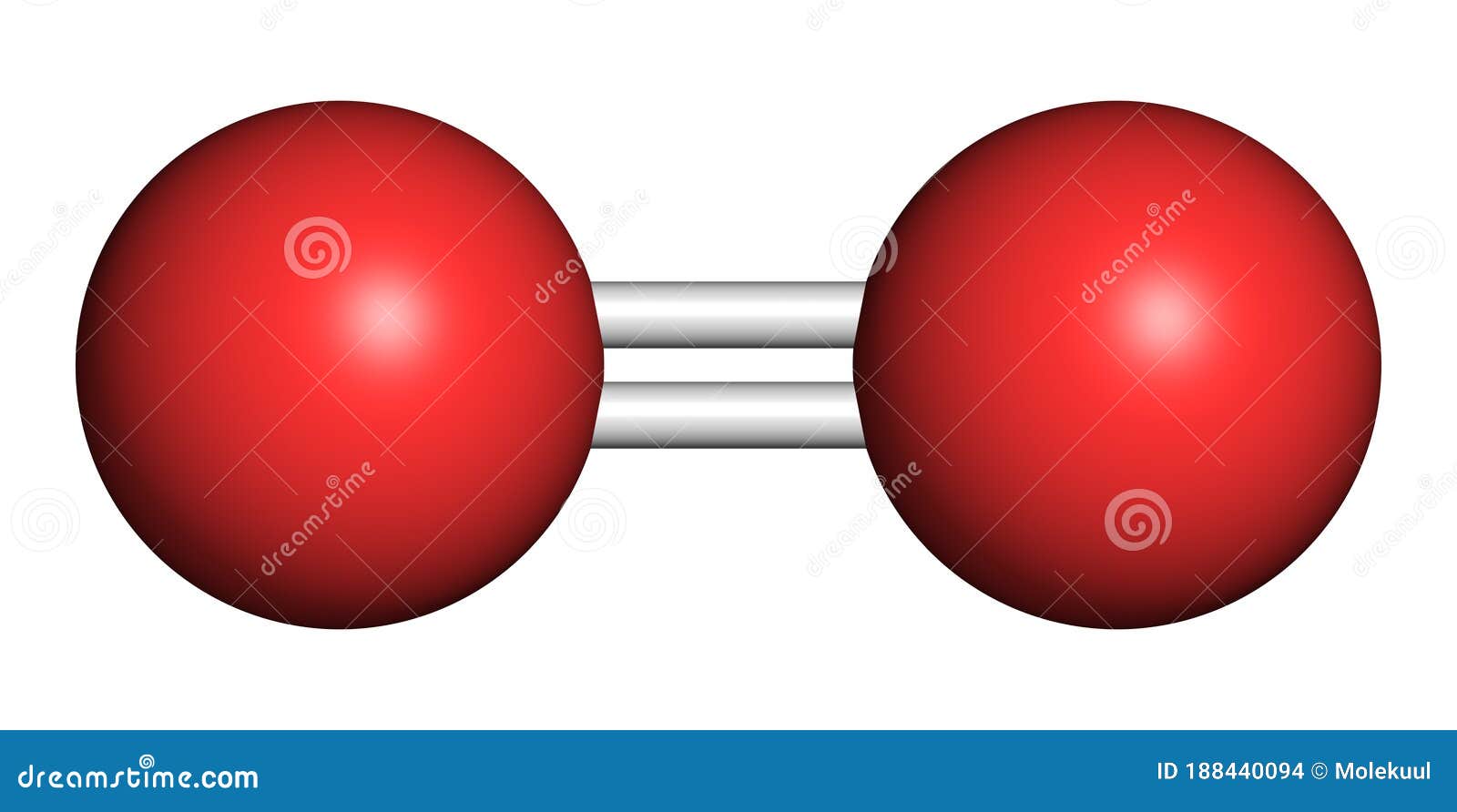
In a standard molecule of oxygen ($\text{O}_2$), the two oxygen atoms share two pairs of electrons, forming a double covalent bond. This configuration satisfies the octet rule for both atoms, resulting in a stable, neutral molecule that makes up roughly 21% of Earth's atmosphere by volume.
| Property | Description |
|---|---|
| Chemical Formula | $\text{O}_2$ |
| Substance Type | Pure Chemical Substance (Elemental) |
| Bond Type | Covalent (Double Bond) |
| Atomic Composition | Two identical oxygen atoms ($Z = 8$) |
| Common State at STP | Colorless, odorless gas |
Physicists and chemists often use the notation "$1\text{ O}_2$" in stoichiometric equations or quantum mechanics to denote a single molecule of diatomic oxygen, differentiating it from molar quantities (such as one mole of $\text{O}_2$, which contains Avogadro's number of molecules). Regardless of whether it is discussed as a single molecule or a bulk gas, its elemental classification remains unchanged.
Allotropes of Oxygen: $\text{O}_2$ vs. $\text{O}_3$
It is helpful to compare diatomic oxygen ($\text{O}_2$) with other forms of the same element to reinforce why molecular composition dictates classification. Oxygen exhibits several allotropes—different structural modifications of an element in the same physical state.
- Diatomic Oxygen ($\text{O}_2$): The standard, stable form of atmospheric oxygen utilized by aerobic organisms for cellular respiration.
- Ozone ($\text{O}_3$): An allotrope consisting of three oxygen atoms bonded together.
Even though ozone ($\text{O}_3$) has a different molecular structure and distinct chemical properties compared to $\text{O}_2$, both are strictly classified as elements, because both are composed entirely of oxygen atoms. Neither substance contains foreign elements, meaning neither can be deemed a compound.
Common Misconceptions Regarding Chemical Formulas
Beginners in chemistry frequently confuse the presence of a subscript in a chemical formula with the presence of multiple elements. This confusion stems from a misunderstanding of subscripts and coefficients in chemical notation.
- Subscripts (e.g., the "2" in $\text{O}_2$): Indicate the number of atoms of that specific element present in a single molecule. In $\text{O}_2$, the subscript 2 means two oxygen atoms are linked together.
- Coefficients (e.g., the "1" in $1\text{ O}_2$): Indicate the number of molecules or moles of that substance in an equation.
A formula featuring multiple capital letters (such as $\text{H}_2\text{SO}_4$) indicates a compound, because each capital letter represents a distinct chemical symbol from the periodic table. A formula containing only one capital letter (such as $\text{O}_2$, $\text{N}_2$, or $\text{S}_8$) represents an elemental substance, regardless of how large the subscript number is.
Frequently Asked Questions
Is $1\text{ O}_2$ considered a molecule?
Yes. A molecule is defined as two or more atoms chemically bonded together. Because $1\text{ O}_2$ consists of two oxygen atoms joined by a covalent bond, it is a diatomic molecule. However, because both atoms are oxygen, it is an elemental molecule rather than a compound.
Why do oxygen atoms bond together as $\text{O}_2$ instead of existing alone?
Single oxygen atoms have six valence electrons and require eight to achieve a stable electron configuration. By sharing four electrons (two pairs) with another oxygen atom, both atoms fill their outer shells, lowering their overall energy state and creating a stable diatomic molecule.
Can an element have subscripts in its chemical formula?
Yes. Many non-metallic elements naturally exist as molecules containing multiple atoms of the same type. Examples include hydrogen ($\text{H}_2$), nitrogen ($\text{N}_2$), fluorine ($\text{F}_2$), chlorine ($\text{Cl}_2$), phosphorus ($\text{P}_4$), and sulfur ($\text{S}_8$). All of these are pure elements, not compounds.
What is the difference between an element and a compound in simple terms?
An element consists of only one type of atom (identified by its atomic number), whereas a compound consists of two or more different types of atoms chemically bonded in fixed ratios. If you look up the substance on the periodic table of elements, it is an element; if it requires combining entries from the periodic table, it is a compound.
Next Steps and Practical Application
When balancing chemical equations or analyzing material safety data sheets, always verify the atomic symbols present in the formula. Remember that molecular complexity (having multiple atoms) does not equate to being a compound. For further study on chemical bonding and molecular geometry, consult authoritative educational resources such as the IUPAC Gold Book or foundational chemistry texts provided by open educational repositories.