Determining the accuracy of narratives surrounding Richard Jewell requires a careful separation of established legal records, judicial findings, and investigative journalism from the dramatized depictions found in popular media. While the central facts of his heroism and subsequent persecution by the FBI and media are well-documented, the nuance lies in how individual accounts balance his personal character against the high-pressure environment of the 1996 Centennial Olympic Park bombing investigation.
The story of Richard Jewell is a complex intersection of public safety, media ethics, and the fallibility of government investigative bodies. To understand whether the "true stories" about him are worth believing, one must first distinguish between the legal reality of his exoneration and the cultural interpretation of his life.
The Foundation: Facts of the 1996 Olympic Bombing
In the early morning of July 27, 1996, Richard Jewell was working as a security guard for the AT&T global pavilion at Centennial Olympic Park in Atlanta. Jewell discovered a suspicious knapsack underneath a bench. After alerting Georgia Bureau of Investigation (GBI) agents and other law enforcement, he played an instrumental role in clearing the area. The pipe bomb inside the bag detonated shortly thereafter. While the blast killed one person and wounded over 100 others, Jewell’s swift actions are widely credited with preventing a much higher casualty count.
For three days, Jewell was hailed as a national hero. However, on July 30, the Atlanta Journal-Constitution (AJC) published a report citing anonymous law enforcement sources who identified Jewell as a suspect. The FBI’s theory, which they leaked to the press, was that Jewell had planted the bomb himself to position himself as a hero—a psychological profile often referred to as a "lone bomber" or "hero complex."
Evaluating the Sources of "Truth"
When asking if the stories surrounding Richard Jewell are "worth believing," it is essential to categorize the available evidence. Information about his life and the investigation originates from three primary tiers:
- Judicial and Official Records: These are the most reliable sources. They include the U.S. Department of Justice’s own review of the FBI’s conduct, which famously scolded the bureau for its "lack of judgment" and for leaking information to the media. These records contain no ambiguity: Richard Jewell was never charged, and he was officially cleared of all suspicion in October 1996.
- Journalistic Investigations: Following the public fallout, outlets like Vanity Fair and various news agencies conducted extensive post-mortems on the investigation. These reports generally agree that the FBI’s reliance on a single, flawed psychological profile led to a tunnel-vision approach that ignored other suspects, most notably Eric Robert Rudolph.
- Dramatized Media: The 2019 film Richard Jewell, directed by Clint Eastwood, brought the story to a new generation. While the film correctly identifies the primary parties and the outcome, filmmakers often condense timelines and simplify character motivations to serve a narrative arc. These should be viewed as interpretations rather than historical transcripts.
Understanding the Media and FBI Dynamics
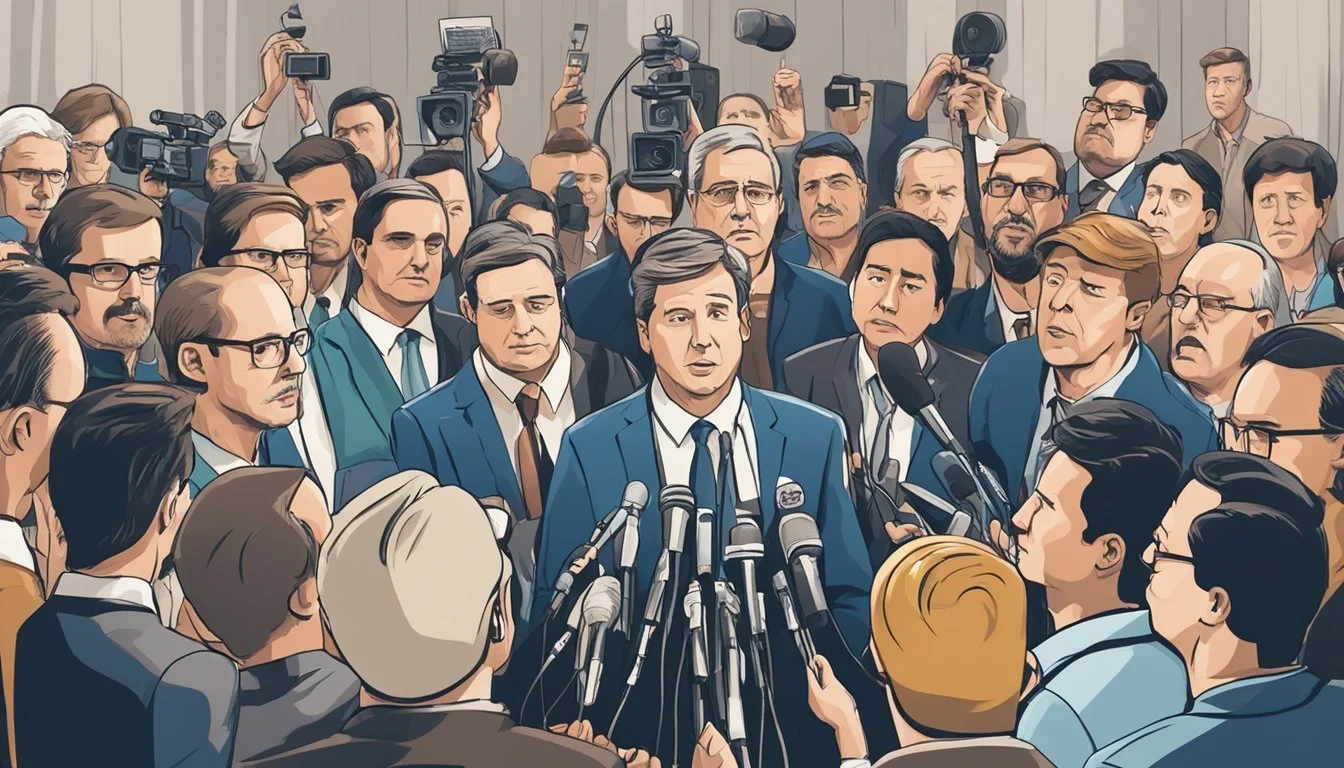
The primary point of contention in most accounts is the speed with which the FBI and the media converged on Jewell as a culprit. The "hero-to-villain" narrative was fueled by a convergence of interests: the FBI needed a lead during a high-stakes international event, and the media was pressured to provide breaking news on the investigation.
The FBI’s strategy of "investigative interviewing"—where they told Jewell they were filming a training video to lure him into a false sense of security—is a documented fact. This specific action is frequently cited by critics as a gross overreach of federal power. When evaluating whether a story is "worth believing," one should look for the inclusion of these procedural failures rather than focusing solely on the emotional rhetoric about Jewell’s personality.
Table: Fact vs. Interpretation in the Richard Jewell Case
| Element | Verified Fact | Common Misconception |
|---|---|---|
| Official Status | Fully exonerated by the Department of Justice in 1996. | That there remained "lingering questions" or a "sealed" suspicion. |
| Bombing Role | Discovered the bag and alerted law enforcement. | That he was the primary suspect in the final investigation. |
| Real Culprit | Eric Robert Rudolph was caught in 2003 and confessed. | That the FBI was right in their initial profiling of Jewell. |
| Media Role | AJC identified him as a target, leading to a frenzy. | That the media reports were based on formal charges. |
| FBI Tactics | Used deceptive interviewing techniques to gain a confession. | That these were standard or necessary protocols. |
The Role of Character in Public Perception
A significant portion of the doubt cast upon Jewell by contemporary accounts involved his personality. Critics and some investigators noted his eagerness to assist law enforcement, his history of police work, and his demeanor. These observations were twisted into "proof" of a personality defect.
When you consume stories about Richard Jewell, assess how the narrator treats his personality. Does the narrative suggest that his "eagerness to serve" was a character flaw, or does it present it as a trait of a dedicated security professional? The former is an interpretation rooted in the very bias that led to his vilification in 1996; the latter is more consistent with the perspective of those who knew him personally, including his mother, Barbara "Bobi" Jewell.
Verification and Credibility
To verify the accuracy of a story you are reading or watching, compare it against the following historical milestones:
- October 26, 1996: The date the U.S. Attorney for the Northern District of Georgia officially informed Jewell he was no longer a target.
- The AJC Lawsuits: Jewell filed several libel lawsuits against news organizations. The fact that many settled is a material indicator of the strength of his case regarding the inaccuracy of the reporting.
- The Rudolph Confession: The 2003 arrest of Eric Robert Rudolph in North Carolina effectively ended any "what if" scenarios regarding the Centennial Park bombing.
If a source fails to mention the eventual capture of Eric Robert Rudolph or the settlement of the libel suits, it is likely omitting crucial context that establishes the reality of the situation.
Why the "Hero" Narrative Persists
The lasting power of the Richard Jewell story lies in its status as a cautionary tale. It serves as a reminder of what happens when the presumption of innocence is discarded in favor of a convenient narrative. This is why it remains a standard case study in journalism ethics classes and legal seminars.
When evaluating whether you should "believe" a story about him, ask yourself if the narrative respects the burden of proof. Stories that frame Jewell as a victim of institutional hubris are generally well-supported by the evidence. Stories that attempt to keep the mystery alive or suggest he was "lucky to get away with it" are usually unsupported by the historical record and rely on the same faulty profiling used by the FBI in 1996.
Common Questions Regarding Richard Jewell
Did Richard Jewell ever work in law enforcement again? Yes. After the investigation concluded, Jewell pursued his dream of becoming a police officer. He worked for several small-town police departments in Georgia, including the Meriwether County Sheriff's Office, until his death in 2007. This career path is often cited as a testament to his genuine commitment to public service.
Were the lawsuits against the media successful? Jewell settled with several major media organizations, including NBC and CNN, for undisclosed amounts. These settlements, while not an admission of guilt, were a significant recognition by those organizations that their reporting on his involvement in the bombing was defamatory and factually incorrect.
What was the "training video" tactic the FBI used? The FBI told Jewell they were interested in interviewing him for a training video about the bombing. They attempted to convince him to waive his Miranda rights under this false pretense. Legal scholars frequently cite this as an example of police overreach and a failure to uphold the rights of a person who had not been charged with a crime.
Was the Olympic bombing his only brush with law enforcement? No, the investigation of Jewell was a singular event regarding the Olympic bombing. While he had a history of being a "difficult" or overly eager employee in past security roles—factors the media exploited to paint him as a suspect—these were administrative issues, not criminal ones.
Is the 2019 film accurate? The film Richard Jewell is widely considered to have captured the emotional truth of his isolation and the unethical nature of the media/FBI pursuit. However, it is a dramatization. Some journalists criticized the film for its portrayal of a specific female reporter, arguing it oversimplified the editorial processes of the time.
Recommendation for Further Research
To gain the most accurate understanding, one should avoid relying on a single piece of media. If you are researching this topic for educational or historical purposes, prioritize reading the Department of Justice's "Report of the Review of the FBI's Investigation of the Centennial Olympic Park Bombing." This document provides a transparent, non-dramatized account of the errors committed.
For those interested in the media perspective, the archival records of the Atlanta Journal-Constitution and the subsequent legal filings regarding the defamation suits offer a clear view of how quickly misinformation can spread and the long-term impact on a person’s life. Richard Jewell’s story is fundamentally one of a man who did the right thing, only to be dismantled by a system that prioritized speed over truth.