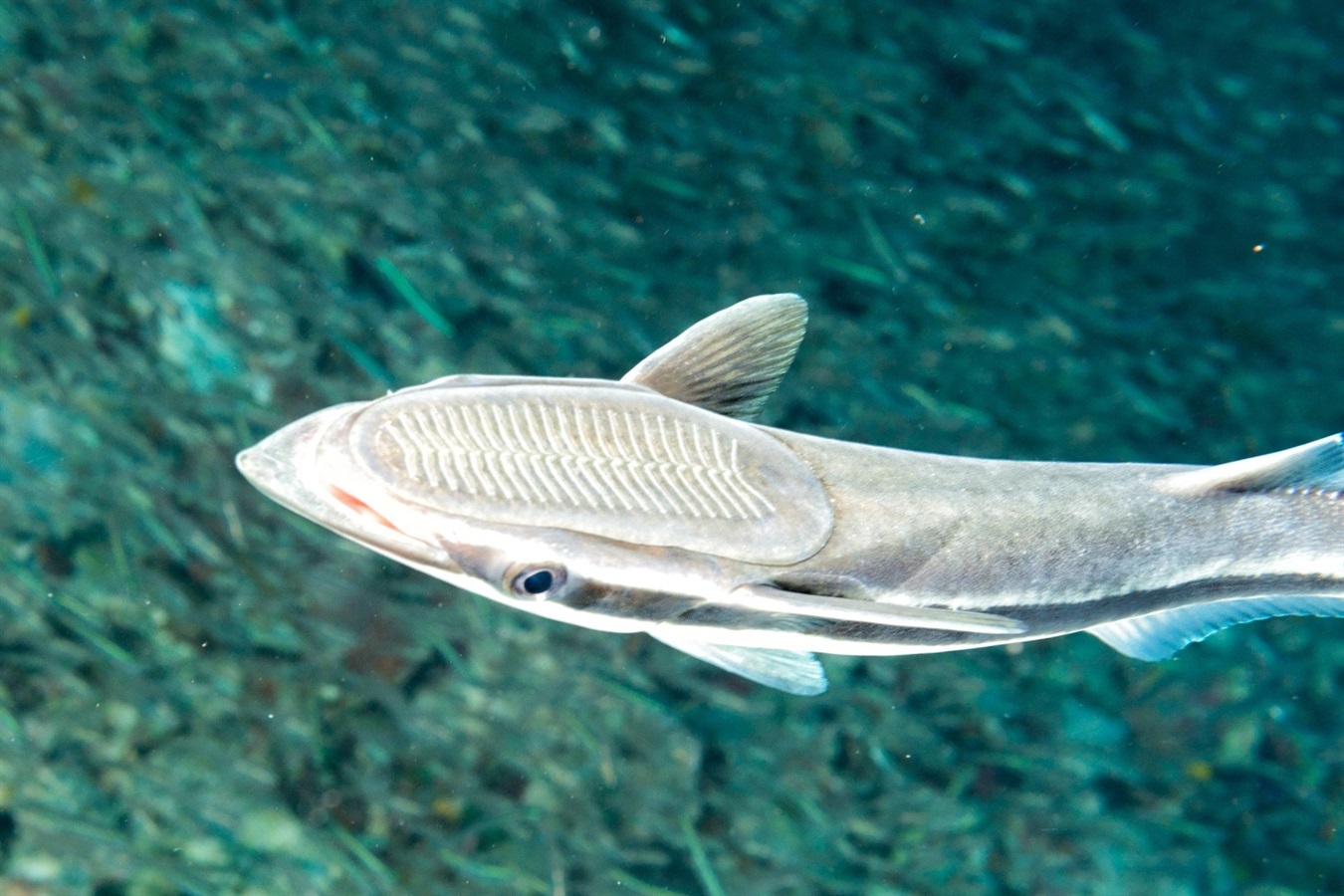
The belief that remora fish are dangerous to humans is a widespread myth rooted in misunderstanding their anatomy and behavior. In reality, remoras are specialized hitchhikers of the ocean, possessing a modified dorsal fin that acts as a suction cup, not a weapon. They pose no physical threat to swimmers, divers, or snorkelers, and they lack the traits required to harm large marine mammals or humans.
Understanding the Remora: Biology and Anatomy
The remora, belonging to the family Echeneidae, is one of nature’s most fascinating examples of commensalism. Often mistaken for a parasite, the remora does not feed on the flesh or blood of its host. Instead, it uses its unique suction disc—a modified dorsal fin located on top of its head—to attach to larger marine animals like sharks, rays, whales, sea turtles, and even boats.
The suction disc is an evolutionary marvel. It consists of a series of lamellae, or slat-like structures, that create a vacuum when the fish presses against a surface. This allows the remora to hitch a ride, conserving energy and gaining protection from predators while feeding on scraps of food left behind by its host or on external parasites found on the host’s skin.
The myth of danger likely stems from the remora’s appearance. Their suction disc can look intimidating to those unfamiliar with marine biology, often mistaken for a predatory apparatus or a parasitic attachment point that might "latch onto" a human. However, the mechanism is strictly designed for transport and scavenging.
Why the Myth Persists
Public perception is often shaped by visual evidence of remoras clinging to large sharks. Seeing a small fish attached to an apex predator creates a psychological association: "If it is attached to a shark, it must be aggressive or predatory." Furthermore, their suction power is strong enough to resist the drag of a shark swimming at high speeds, leading observers to incorrectly assume that if one were to attach to a person, it would be impossible to remove or would cause physical damage.
In reality, a remora’s suction disc is specialized for surfaces like shark skin, which is covered in dermal denticles. Human skin is vastly different, and even if a remora were to attempt to attach to a diver, the suction would be weak, ineffective, and harmless. There is no evolutionary incentive for a remora to attach to a human, as we do not provide a stable, long-term transport surface or a reliable food source.
The Reality of Marine Interactions
When encountering remoras in the wild, whether while scuba diving or snorkeling, the standard behavior is to treat them as neutral observers. They are generally shy and will avoid direct contact with humans. Because they rely on their host for mobility and protection, a lone remora—one that has detached from a host—is often more interested in finding a new, larger host than interacting with a human swimmer.
Divers frequently report that remoras may approach them out of curiosity, occasionally swimming alongside or near them. This is not an act of aggression but rather an assessment. If a remora detects a large, moving object, it might investigate to see if it is a suitable host. If they realize the human is not a shark or a sea turtle, they typically swim away.
Comparison: Remoras vs. Actual Marine Hazards
To understand why the "dangerous" label is a myth, it is helpful to compare the remora with marine life that actually poses risks to humans. The following table highlights the physical differences and behaviors that define genuine marine hazards versus the harmless remora.
| Feature | Remora Fish | Stingray | Moray Eel |
|---|---|---|---|
| Feeding Style | Scavenger / Commensal | Carnivorous | Ambush Predator |
| Defense Mechanism | Evasive swimming | Venomous barb | Sharp teeth |
| Interaction Goal | Transportation | Self-defense | Predation/Defense |
| Danger Level | None | Potential injury | Potential bite |
| Attachment | Suction disc (non-harmful) | N/A | N/A |
As indicated in the table, the remora lacks venomous spines, sharp, serrated teeth, or an aggressive territorial nature. While a shark or an eel might bite in defense or error, the remora has no biological mechanism to deliver a painful or dangerous injury to a human.
Debunking Specific Fears
Common anxieties regarding remora include the idea that they can bite or that their suction disc can tear human skin. These fears are unsupported by marine biological evidence:
- The Biting Myth: Remoras have small teeth, but they are adapted for gripping, not tearing flesh. Their mouths are designed to collect food scraps and tiny crustaceans. They do not possess the jaw strength or the predatory drive to bite a human.
- The Suction Injury Myth: The suction disc is a soft-tissue structure. It exerts pressure by creating a vacuum, but it does not have hooks or barbs. The only sensation a human might feel is a slight tug or pressure, similar to a wet sponge being pressed against the skin.
- The "Attachment" Myth: The myth suggests a remora might "suck onto" a diver’s leg and refuse to let go. Given the texture of human skin—which is smooth compared to the rough skin of a shark—a remora would struggle to maintain a meaningful vacuum on a human, and it would likely detach within seconds.
The Ecological Importance of Remoras
Beyond the myth of danger, it is important to acknowledge that remoras play a role in ocean health. By consuming parasites that live on the skin of large marine animals, they provide a cleaning service. This helps reduce the parasite load on sea turtles and manta rays, contributing to the overall fitness of these species. Removing the fear associated with these fish allows for a more appreciative view of the complex relationships that exist in the marine environment.
For those interested in marine life, seeing a remora is often a highlight of a dive. It indicates the presence of larger, more charismatic megafauna in the area. When you see a remora, look for the shark or turtle it recently vacated.
Addressing Related Questions
Do remoras ever attach to human divers? While rare, it is physically possible for a remora to make contact, but it is not a "latching" event in the way a tick or leech would attach. It is a fleeting, accidental contact that causes no harm and ends almost instantly once the fish realizes the human is not a suitable host.
Are there different types of remoras? Yes, there are several species, such as the common remora, the sharksucker, and the spearfish remora. All share the same general morphology and non-aggressive behavior toward humans.
Should I be afraid if I see a remora while swimming? No. A remora is a signal of a healthy ecosystem. They are not interested in humans and have no predatory drive to attack or harm you. If one approaches, remain calm and observe it; it will move on quickly.
How strong is a remora's suction? The suction is strong enough to allow the fish to stay attached to a shark swimming at high speeds, but it is entirely dependent on the texture and curvature of the host's skin. On human skin, this suction is negligible and cannot cause injury.
Are remoras used in any human activities? Historically, some cultures used remoras for fishing. A line was tied to the fish's tail, and it was released near a turtle or large fish. The remora would attach to the prey, and the fisherman would then reel in both the fish and its catch. This confirms that the fish’s primary drive is to attach to large objects for travel, not to harm other creatures.
Professional Recommendations for Marine Safety
While remora fish are entirely harmless, this does not mean the ocean itself is without risk. When participating in water activities in 2026, adhere to the following safety protocols to ensure a positive experience:
- Maintain Neutral Buoyancy: This prevents accidental collisions with reefs or marine animals.
- Respect Marine Life: Observe all creatures from a distance. Even non-aggressive animals, like the remora, should not be handled or harassed.
- Consult Local Guides: When diving in new areas, local experts can provide context on the marine life you are likely to encounter, helping to dispel myths before they cause unnecessary alarm.
- Prioritize Gear Maintenance: Ensure your diving or snorkeling equipment is in good condition to prevent issues that could lead to panic, which is a far greater risk to divers than any marine creature.
The "danger" associated with remoras is a classic example of how a unique physical trait—in this case, a specialized suction disc—can be misinterpreted as a threat. By understanding their biology, we can replace fear with fascination, recognizing the remora as a harmless, specialized hitchhiker that serves as a vital component of the marine ecosystem. If you encounter one, enjoy the unique opportunity to witness one of nature's most efficient commuters.