Disposable gloves are safe for cooking provided they are explicitly labeled as "food-grade" or "food-safe" and are used according to strict hygiene protocols. While materials like nitrile and polyethylene offer excellent protection against cross-contamination, their safety depends entirely on proper material selection, frequent changes, and the absence of harmful chemical additives like phthalates or powders.
The use of disposable gloves in both professional and home kitchens has become a standard practice for managing food safety. However, as we navigate 2026, the question of whether these gloves are truly "safe" involves more than just a simple yes or no. Safety in this context encompasses three distinct areas: chemical safety (what the gloves are made of), physical safety (how they interact with food and heat), and microbiological safety (how they prevent or contribute to the spread of bacteria).
Understanding the nuances of glove safety ensures that you aren't inadvertently introducing new risks into your kitchen while trying to mitigate old ones. This guide examines the technical specifications, material science, and practical applications of disposable gloves to determine their safety profile for culinary use.
The Definition of Food-Grade Safety Standards
For a glove to be considered safe for cooking, it must meet specific regulatory standards. In the United States, the Food and Drug Administration (FDA) regulates food-contact substances under 21 CFR 177. This regulation ensures that the materials used in the gloves do not leach harmful chemicals into food in quantities that could pose a health risk.
When a manufacturer labels a product as "food-grade," they are testifying that the glove material—whether nitrile, vinyl, or plastic—is made of substances generally recognized as safe (GRAS) for repeated use in food handling. This is crucial because food, particularly fatty or acidic items, can act as a solvent. If a glove is not food-grade, the fats in meat or the acids in citrus could potentially draw out plasticizers or stabilizing chemicals from the glove material and transfer them into your meal.
In 2026, we also see an increased focus on "PFAS-free" certifications. Per- and polyfluoroalkyl substances, often used in manufacturing for their grease-resistant properties, have come under heavy scrutiny. Ensuring your gloves are certified free of these "forever chemicals" is a modern prerequisite for kitchen safety.
Comparing Glove Materials for Culinary Use
Not all disposable gloves are created equal. The material composition determines how the glove reacts to different types of food, temperatures, and physical stress.
Nitrile Gloves
Nitrile is widely regarded as the gold standard for food safety in the kitchen. Made from a synthetic rubber (acrylonitrile-butadiene), nitrile gloves are free of the proteins found in natural rubber latex, making them safe for individuals with latex allergies.
Technically, nitrile is highly resistant to oils, fats, and acids, which are common in kitchen environments. Unlike vinyl, nitrile maintains its structural integrity when exposed to animal fats, meaning it is less likely to degrade or leach chemicals during the handling of raw meats. Furthermore, nitrile offers superior puncture resistance, reducing the risk of a glove fragment ending up in the food—a common physical hazard in high-speed food preparation.
Polyethylene (PE) Gloves
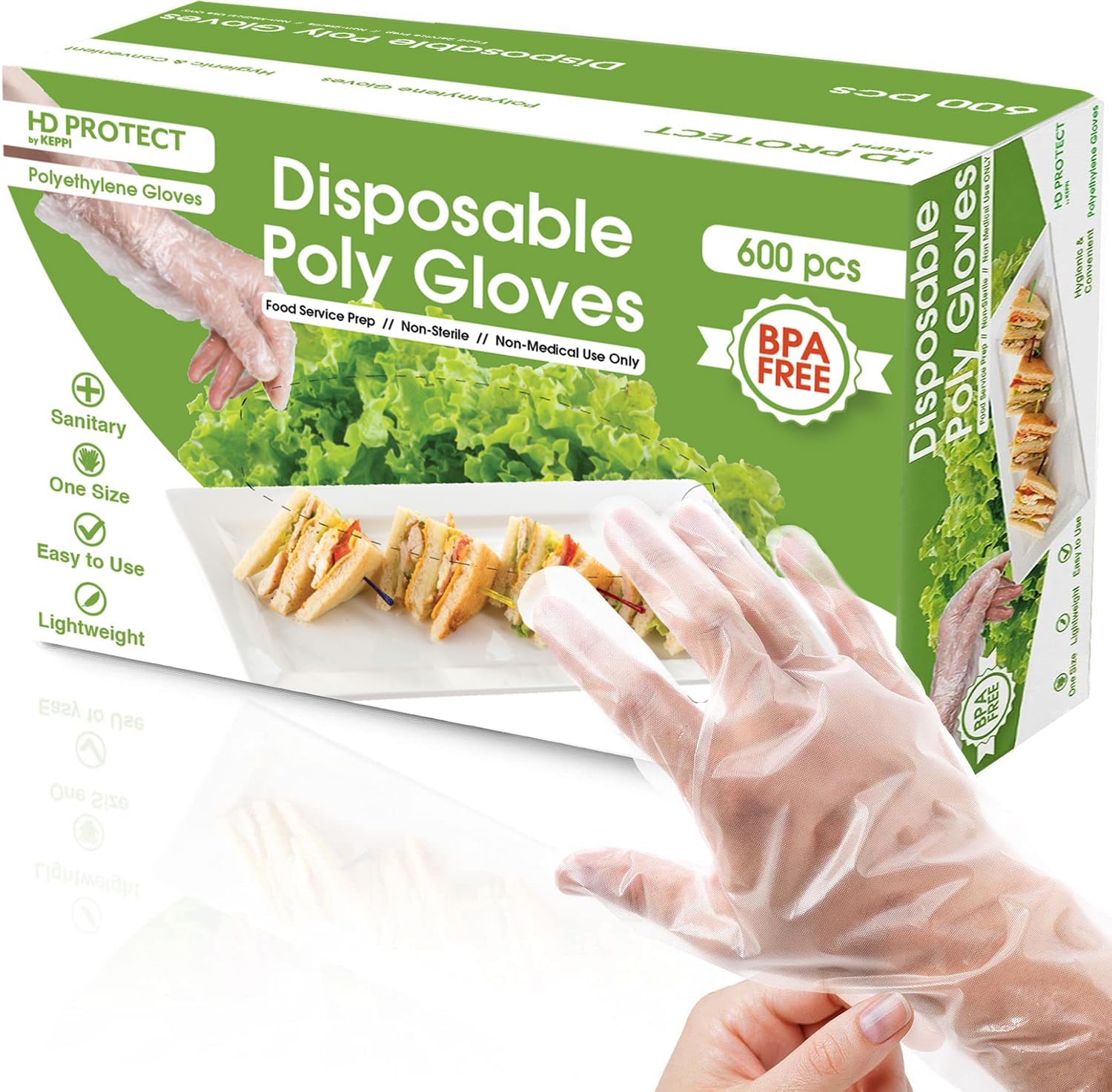
Often referred to as "sandwich gloves," these are loose-fitting, thin plastic gloves. They are generally made from low-density polyethylene. While they are not durable enough for heavy tasks like kneading dough or deboning a chicken, they are remarkably safe for light, short-term contact. Because they contain no accelerators or complex chemical stabilizers, they have a very low risk of chemical migration. Their safety lies in their simplicity, though their lack of a snug fit can sometimes lead to manual dexterity issues.
Vinyl (PVC) Gloves
Vinyl gloves have historically been popular due to their low cost. However, from a technical safety perspective, they are often considered the least desirable option for cooking. Vinyl is naturally brittle and requires the addition of plasticizers, such as phthalates, to make it flexible.
Research has shown that when vinyl gloves come into contact with fatty foods, these plasticizers can migrate more easily than in other materials. While many modern vinyl gloves are now "phthalate-free," they still lack the durability of nitrile. They are prone to "micro-tears" that are invisible to the naked eye but can allow bacteria to pass through.
Latex Gloves
While latex offers the best fit and dexterity, it is increasingly being phased out of food service. The primary safety concern is not chemical leaching, but the transfer of latex proteins to the food, which can trigger severe allergic reactions in sensitive individuals. Many jurisdictions have banned the use of latex in commercial food preparation for this reason.
The Chemical Component: Powder-Free Requirements
A significant safety milestone was reached years ago when the FDA banned the use of powdered gloves in medical and food environments. Historically, cornstarch was used to make gloves easier to put on and take off. However, this powder can be a safety hazard.
In a kitchen, the powder can absorb proteins from the glove (especially in latex) or chemicals from the manufacturing process and carry them onto the food. It can also be an irritant to the respiratory system when gloves are snapped on. As of 2026, all disposable gloves used for cooking must be powder-free to meet safety protocols. If you find older boxes of powdered gloves in storage, they should be discarded rather than used for food prep.
The "Glove Paradox": When Safety Equipment Increases Risk
One of the most misunderstood aspects of disposable glove safety is the "glove paradox." This refers to the phenomenon where wearing gloves leads to a false sense of security, which actually decreases food safety.
When people cook with bare hands, they can feel grease, sticky juices, or dirt, which prompts them to wash their hands frequently. When wearing gloves, the skin's natural feedback loop is interrupted. A cook might touch raw poultry and then move to chopping lettuce without changing the gloves, assuming the gloves are "clean" simply because they are a barrier.
To use gloves safely, you must treat the glove surface exactly like your skin. This means:
- Changing gloves between handling raw proteins and ready-to-eat foods.
- Washing hands before putting on a new pair and after taking an old pair off.
- Discarding gloves immediately if they touch a non-food surface like a phone, a trash can lid, or your face.
Temperature Constraints and Melting Points
Disposable gloves are not heat-resistant. This is a critical safety point for home cooks who might be tempted to use them while working near a stove or handling hot food.
Most nitrile and vinyl gloves begin to soften or lose structural integrity at temperatures as low as 150°F (65°C) to 200°F (93°C). If a glove melts onto food, the food is contaminated and must be discarded. Furthermore, the heat can accelerate the migration of chemicals from the glove material into the food.
For tasks like "pulling" hot pork or handling roasted vegetables, you should use specialized, heavy-duty silicone gloves or cotton liners underneath high-temp-rated food gloves. Never use standard disposable nitrile or vinyl gloves to handle items directly from the oven or fryer.
Material Comparison and Suitability Table
| Material | Allergy Risk | Oil/Fat Resistance | Durability | Best Use Case |
|---|---|---|---|---|
| Nitrile | Low | High | High | Handling raw meat, heavy prep, citrus |
| Vinyl | Low | Low | Medium | Short-term light tasks, low-fat foods |
| Polyethylene | Low | Medium | Low | Sandwich making, plating, light tossing |
| Latex | High | Medium | High | Tasks requiring maximum dexterity (not recommended) |
| Biodegradable Nitrile | Low | High | High | General prep with lower environmental impact |
Environmental and Health Safety in 2026
As of 2026, the safety of disposable gloves is also being measured by their environmental footprint. Traditional nitrile and vinyl are petroleum-based and can take centuries to decompose. The "safety" of our food system is inextricably linked to the safety of our environment.
Newer technologies have introduced biodegradable nitrile gloves that utilize organic additives to attract microbes in landfill environments, allowing the gloves to break down in years rather than decades. These gloves maintain the same food-safe certifications as standard nitrile, providing a dual layer of safety: one for the consumer and one for the planet.
Furthermore, there is a growing awareness of "accelerator-free" gloves. Some people develop contact dermatitis not from the glove material itself, but from the chemical accelerators (like thiurams or carbamates) used to speed up the vulcanization process. If you have sensitive skin, choosing "accelerator-free" nitrile gloves is a safer choice for your personal health.
Best Practices for Safe Glove Use
To ensure that the use of disposable gloves actually improves food safety, follow these technical guidelines:
- Size Matters: A glove that is too large can get caught in kitchen machinery or knives, leading to physical contamination. A glove that is too small is more likely to rip or cause "hand fatigue," leading to mistakes.
- Dry Hands Only: Never put gloves on wet or damp hands. This creates a warm, moist environment between the skin and the glove where bacteria can flourish rapidly. It also makes the gloves more prone to tearing during donning.
- Check for Defects: Before beginning a task, blow a small amount of air into the glove and squeeze it to check for pinhole leaks.
- Avoid Excessive Jewelry: Rings with stones or sharp edges can easily puncture a glove, compromising the barrier and potentially losing a stone in the food.
Frequently Asked Questions
Can I wash and reuse disposable gloves?
No. Disposable gloves are designed for single use only. The structural integrity of the material degrades after contact with water, detergents, and physical friction. Micro-cracks can form, allowing bacteria to lodge in the material where they cannot be effectively sanitized. Reusing them significantly increases the risk of cross-contamination.
Are "industrial-grade" gloves safe for cooking?
Not necessarily. Industrial-grade gloves are designed for handling chemicals, paints, or automotive fluids. They are not required to meet FDA food-contact standards and may contain additives, dyes, or mold-release agents that are not safe for ingestion. Always look for the "Food Safe" icon or FDA 21 CFR 177 compliance on the packaging.
Do disposable gloves contain BPA?
Most high-quality nitrile and polyethylene gloves are BPA-free. Bisphenol A is more commonly associated with rigid plastics (like polycarbonate) and the linings of aluminum cans. However, some low-quality vinyl gloves may still contain various plasticizers. Checking the manufacturer’s technical data sheet (TDS) is the best way to confirm a product is BPA-free.
Why do my hands smell after wearing nitrile gloves?
The smell is usually a combination of the glove’s synthetic material and the sweat trapped against your skin. While the smell is generally harmless, it is a reminder that the environment inside the glove is conducive to bacterial growth on your skin. This is why washing hands after glove removal is just as important as washing them before.
Can I use gloves to handle hot peppers?
Yes, this is one of the safest uses for disposable gloves. Nitrile gloves act as a barrier against capsaicin, the oil in peppers that causes burning. This prevents "jalapeño hand" and ensures you don't accidentally transfer the spice to your eyes or other sensitive areas.
Are black nitrile gloves safer than blue ones?
The color of a nitrile glove is purely a matter of dye and has no inherent impact on safety. Blue is the traditional "food-safe" color because it is easily visible if a piece of the glove accidentally falls into the food (as few foods are naturally bright blue). Black gloves have become popular for aesthetic reasons in BBQ and professional kitchens, but they offer the same chemical protection as blue ones if they are food-grade.
Final Recommendation
For the highest level of safety, choose powder-free nitrile gloves that are explicitly labeled as food-grade. Nitrile provides the best balance of chemical stability, durability, and allergy safety. Use them as a supplement to—not a replacement for—thorough handwashing. Always change gloves between different types of food prep and avoid using them near open flames or high-heat surfaces. By selecting the right material and maintaining a "change-often" mindset, you can ensure that disposable gloves remain a safe and effective tool in your 2026 kitchen.