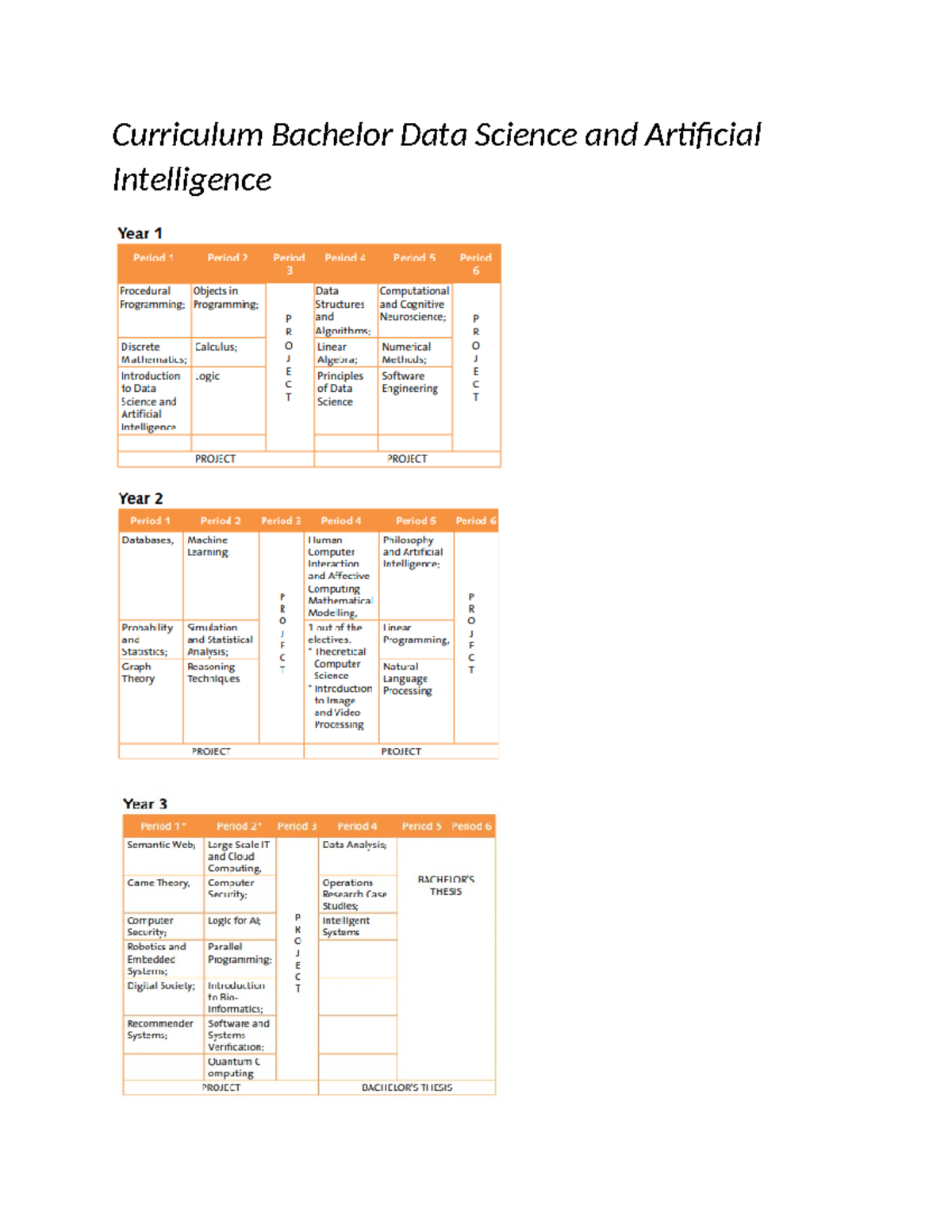
An artificial intelligence open curriculum is a structured, self-directed educational roadmap that utilizes free, high-quality academic resources to achieve proficiency in AI. It sequences rigorous mathematical foundations, Python programming, and machine learning theory before advancing to deep learning and specialized domains like Generative AI, ensuring a university-equivalent education without traditional tuition costs.
The landscape of artificial intelligence in 2026 is defined by rapid architectural shifts and an increasingly high bar for technical entry. While low-code tools have proliferated, the demand for "principled" AI engineers—those who understand the underlying calculus, optimization, and data structures—remains at an all-time high. Following an open curriculum requires discipline, but it offers a transparent, flexible, and comprehensive path to mastering one of the most complex fields in modern science.
The Philosophical Framework of an Open Curriculum
An open curriculum is distinct from a random collection of tutorials. It is designed to mirror the rigor of a Computer Science degree with a specialization in AI. The primary goal is to move the learner from a consumer of AI models to a creator and optimizer of systems.
In 2026, the "Open Source Society University" (OSSU) and similar community-driven initiatives have standardized what constitutes a "complete" path. This path is modular, allowing learners to pivot based on their specific goals—whether that is research, engineering, or product integration—while maintaining a solid core of fundamental knowledge.
Why Rigor Matters in 2026
With the maturity of Large Language Models (LLMs) and autonomous agents, many superficial tasks in AI development have been automated. However, the role of the AI specialist has shifted toward solving "edge cases," ensuring safety, and optimizing model efficiency for edge devices. An open curriculum provides the deep theoretical understanding necessary to troubleshoot these complex issues, which surface-level courses often ignore.
Phase 1: The Mathematical Foundations
One cannot truly understand artificial intelligence without understanding the language it is written in: Mathematics. Many learners attempt to skip this phase, only to hit a "glass ceiling" when they encounter advanced neural network architectures.
Linear Algebra: The Algebra of Tensors
In AI, data is represented as tensors (multi-dimensional arrays). Linear algebra provides the tools to manipulate these structures.
- Core Concepts: Matrix multiplication, determinants, eigenvalues and eigenvectors, singular value decomposition (SVD), and principal component analysis (PCA).
- Recommended Resource: MIT OpenCourseWare - Linear Algebra (18.06) by Gilbert Strang remains the gold standard for conceptual clarity.
Calculus: The Engine of Optimization
Neural networks learn by minimizing an error function. This process, known as backpropagation, is essentially an application of the chain rule from multi-variable calculus.
- Core Concepts: Derivatives, partial derivatives, gradients, and the Jacobian and Hessian matrices.
- Recommended Resource: Khan Academy’s Multivariable Calculus or Professor Leonard’s YouTube series for a more in-depth, classroom-style experience.
Probability and Statistics: Handling Uncertainty
AI is probabilistic by nature. Whether a model is predicting the next word in a sentence or identifying a tumor in an X-ray, it is dealing with likelihoods.
- Core Concepts: Bayes’ Theorem, probability distributions (Gaussian, Bernoulli, Multinomial), hypothesis testing, and maximum likelihood estimation (MLE).
- Recommended Resource: Stanford University - CS109: Probability for Computer Scientists.
Phase 2: Programming and Data Engineering
By 2026, Python remains the undisputed leader in AI development due to its vast ecosystem. However, the focus has shifted toward writing "production-grade" code—code that is efficient, version-controlled, and scalable.
Mastering Python for AI
Learners must go beyond basic syntax. Understanding memory management, decorators, and asynchronous programming is vital for modern AI workflows.
- Essential Libraries: NumPy for numerical computation, Pandas for data manipulation, and Matplotlib/Seaborn for visualization.
- Advanced Tools: Mastering PyTorch or TensorFlow is mandatory. In 2026, PyTorch has become the dominant framework for research and deployment.
Software Engineering Excellence
An AI model is only as good as the system it lives in.
- Version Control: Proficiency in Git and GitHub for collaborative development.
- Containerization: Using Docker to ensure that AI environments are reproducible across different machines.
- Data Pipelines: Understanding how to move data from databases (SQL and NoSQL) into a format suitable for model training.
Phase 3: Classical Machine Learning
Before "Deep Learning" became a household term, classical machine learning provided the foundation for predictive modeling. These algorithms are still widely used for structured data and remain a prerequisite for understanding more complex models.
Supervised vs. Unsupervised Learning
- Regression: Predicting continuous values (e.g., housing prices).
- Classification: Assigning labels (e.g., spam vs. not spam). Key algorithms include Support Vector Machines (SVMs), Random Forests, and Gradient Boosting Machines (XGBoost).
- Clustering: Finding patterns in unlabeled data using K-Means or Hierarchical Clustering.
The Modeling Workflow
The curriculum at this stage focuses on the machine learning lifecycle:
- Feature Engineering: Selecting and transforming variables to improve model performance.
- Model Evaluation: Using metrics like F1-score, Precision-Recall curves, and Mean Squared Error (MSE).
- Cross-Validation: Ensuring the model generalizes well to unseen data.
- Hyperparameter Tuning: Optimizing the "settings" of the algorithm.
Recommended Resource: Coursera - Machine Learning Specialization by Andrew Ng (DeepLearning.AI).
Phase 4: Deep Learning and Neural Networks
This phase represents the heart of modern AI. Deep learning involves training artificial neural networks with many layers to recognize complex patterns.
Architectures and Mechanisms
- Feedforward Neural Networks: The simplest form of artificial neurons.
- Convolutional Neural Networks (CNNs): The standard for computer vision and image recognition.
- Recurrent Neural Networks (RNNs) and LSTMs: Historically used for sequential data, now largely foundational for understanding modern sequence modeling.
- The Transformer Architecture: The breakthrough that enabled LLMs like GPT-4 and its successors in 2026. Understanding "Attention" mechanisms is the most critical task in this phase.
Practical Implementation
The open curriculum emphasizes building these networks from scratch using PyTorch. Learners should implement backpropagation manually once to understand the mechanics before relying on automated libraries.
Recommended Resource: Fast.ai - Practical Deep Learning for Coders. This course is highly regarded for its "top-down" approach, getting students to build models immediately while gradually introducing theory.
Phase 5: Specialized Domains and Generative AI
In 2026, the specialization phase is where learners align their skills with market needs. The AI field has bifurcated into several distinct specializations.
Natural Language Processing (NLP) and LLMs
This is currently the most popular track. It covers how machines understand, interpret, and generate human language.
- Key Topics: Tokenization, word embeddings, fine-tuning pre-trained models (like Llama 3 or 4), and Retrieval-Augmented Generation (RAG).
- Advanced 2026 Topics: Constitutional AI, Reinforcement Learning from Human Feedback (RLHF), and long-context window management.
Computer Vision (CV)
Focuses on enabling computers to see and process visual data.
- Key Topics: Object detection (YOLO), image segmentation, and Diffusion Models (the technology behind AI image generators).
Reinforcement Learning (RL)
Teaching agents to make sequences of decisions to maximize a reward. This is the backbone of robotics and autonomous systems.
- Recommended Resource: Hugging Face Deep Reinforcement Learning Course.
Phase 6: AI Ethics, Safety, and Deployment (MLOps)
The final phase of a comprehensive open curriculum addresses the "real-world" challenges of AI. In 2026, regulatory frameworks like the EU AI Act and various global safety standards require engineers to be well-versed in ethics.
Ethics and Bias
Learners must study how to detect and mitigate bias in training data, ensuring that AI systems do not reinforce societal prejudices. Transparency and "Explainable AI" (XAI) are key components here.
MLOps: Machine Learning Operations
Deploying a model is not the end of the journey. MLOps involves:
- Model Monitoring: Tracking performance decay or "drift" over time.
- Scaling: Serving models to thousands of users using cloud providers (AWS, Google Cloud, or Azure).
- Optimization: Quantizing models to run on mobile phones or low-power hardware.
Comparison of Major Open AI Curricula
| Curriculum Name | Primary Focus | Target Audience | Difficulty | Estimated Time |
|---|---|---|---|---|
| OSSU Computer Science | Full CS Foundation | Absolute Beginners | High | 2+ Years |
| DeepLearning.AI | Theory & Implementation | Intermediate Coders | Medium | 6–12 Months |
| Fast.ai | Practical Application | Software Engineers | Medium | 4–6 Months |
| Hugging Face RL/NLP | Modern GenAI / RL | Advanced Learners | High | 3–5 Months |
| MIT OpenCourseWare | Academic Rigor | Research-Oriented | Very High | Variable |
Frequently Asked Questions
Do I need a degree to get hired in AI in 2026?
While a degree remains a common signal, the industry has shifted significantly toward "proof of competence." A portfolio of original projects, contributions to open-source AI libraries, and a documented journey through a rigorous open curriculum are often accepted by top-tier tech firms. The key is the ability to demonstrate deep technical knowledge during the interview process.
How long does it take to complete an AI open curriculum?
For a dedicated learner with a background in basic mathematics, the core path (Math, Python, ML, and Deep Learning) typically takes 12 to 18 months of consistent study (15–20 hours per week). Mastery of specialized domains like Generative AI may add another 6 months of focused project work.
Is the math really necessary for Generative AI?
Yes. While many APIs allow you to "use" AI without math, you cannot innovate or fix broken systems without it. Understanding the loss functions and optimization gradients is essential for fine-tuning models and managing the "hallucination" issues prevalent in LLMs.
What hardware do I need for this curriculum?
In 2026, many open curricula leverage cloud-based environments like Google Colab or Kaggle Kernels, which provide free access to GPUs. However, for serious deep learning, a local machine with an NVIDIA GPU (16GB+ VRAM) or high-end Apple Silicon is recommended to avoid latency and usage caps.
Can I skip classical Machine Learning and go straight to LLMs?
It is not recommended. Classical ML teaches the fundamentals of data distribution, overfitting, and evaluation metrics. Without these, a learner will struggle to understand why an LLM behaves a certain way or how to properly validate its outputs.
Final Recommendation and Next Actions
The most effective way to approach an artificial intelligence open curriculum is through incremental mastery. Do not attempt to learn everything at once. Start by assessing your current mathematical level. If you cannot explain the intuition behind a derivative, begin with MIT 18.06 (Linear Algebra) and Calculus.
Once your foundation is set, commit to a "Code Every Day" rule. AI is a contact sport; reading about neural networks is no substitute for implementing them. Build a GitHub repository to document your progress, write blog posts explaining complex concepts you’ve learned, and eventually contribute to open-source projects. By 2026, the community is the classroom, and your public contributions are your diploma.