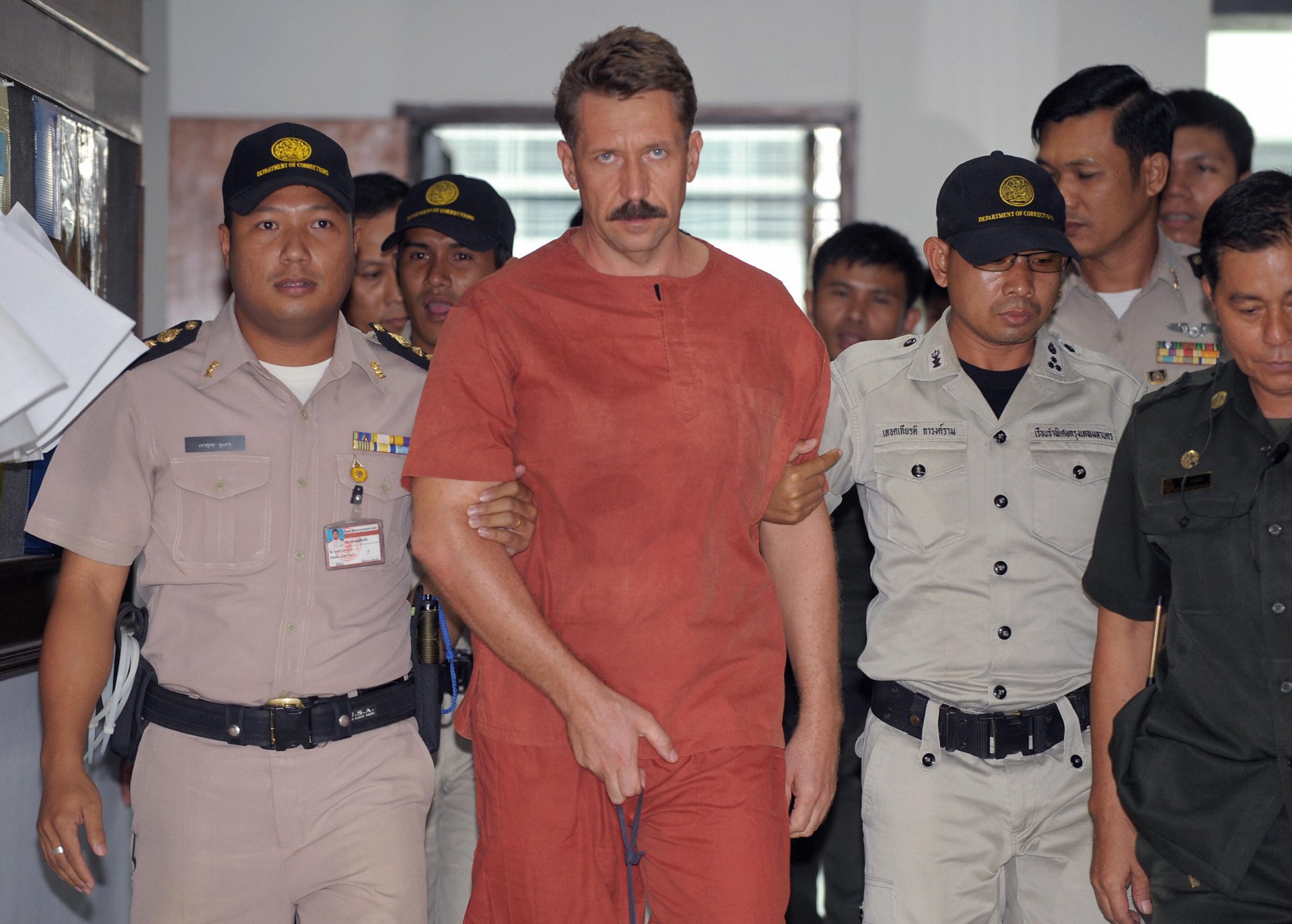
Viktor Bout is a former Soviet military officer turned international arms dealer who became infamous for fueling global conflicts by supplying weapons to warlords and insurgents. Known as the "Merchant of Death," Bout was convicted in the United States in 2011 but returned to Russia in a 2022 prisoner exchange.
Viktor Bout’s name remains synonymous with the dark underbelly of post-Cold War globalization. For over two decades, he operated a sprawling logistics empire that bridged the gap between surplus Soviet weaponry and some of the world’s most brutal civil wars. From the jungles of South America to the deserts of Afghanistan and the blood-soaked diamond fields of West Africa, Bout’s aircraft were the arteries of the global gray market. As of 2026, his legacy continues to influence international discourse on sanctions, arms proliferation, and the complexities of high-stakes geopolitical diplomacy.
The Origins of a Global Network
Viktor Anatolyevich Bout was born in 1967 in Dushanbe, then part of the Soviet Republic of Tajikistan. His early life followed the trajectory of a talented Soviet citizen; he demonstrated a remarkable aptitude for languages, eventually becoming fluent in Russian, English, French, Portuguese, Arabic, and several African dialects. This linguistic prowess, combined with his education at the Military Institute of Foreign Languages in Moscow, positioned him within the Soviet military intelligence apparatus (GRU).
Following the collapse of the Soviet Union in 1991, the massive military infrastructure of the USSR was left in a state of chaos. Thousands of cargo planes sat idle on runways, and warehouses were overflowing with millions of small arms, landmines, and surface-to-air missiles. While the Russian state struggled with the transition to capitalism, Bout saw an unprecedented opportunity. He acquired a fleet of aging Soviet military transport planes—mostly Antonovs and Ilyushins—and established a network of air charter companies.
His business model was deceptively simple but devastatingly effective. By registering his companies in jurisdictions with lax oversight, such as Equatorial Guinea, Liberia, or the Central African Republic, he could move cargo across borders with minimal scrutiny. He didn't just sell weapons; he sold the logistics of war, providing a "one-stop-shop" for groups that were otherwise cut off from the legitimate international arms market.
Fueling the Fires: Major Conflicts and Clients
Bout’s operations were never defined by ideology; they were defined by profit and the ability to pay. During the 1990s and early 2000s, his aircraft were spotted in nearly every major conflict zone on the planet. His ability to bypass United Nations (UN) arms embargos made him a primary target for international investigators, yet his mobility made him nearly impossible to catch.
The African Connection
In West Africa, Bout became a key supplier to Charles Taylor in Liberia and the Revolutionary United Front (RUF) in Sierra Leone. These conflicts were notorious for the use of child soldiers and the trade of "blood diamonds." Bout’s planes would arrive laden with AK-47s and ammunition and depart with crates of gemstones. According to reports from the United Nations Security Council, his involvement was instrumental in sustaining the violence that destabilized the entire region for a decade.
In Angola, he demonstrated his lack of political bias by reportedly supplying both the government and the UNITA rebels at different stages of the civil war. By playing both sides, Bout ensured that the demand for his services remained constant, regardless of who held the upper hand on the battlefield.
Afghanistan and the Middle East
Bout’s reach extended into Central Asia as well. In the mid-1990s, he supplied the Northern Alliance in Afghanistan as they fought the Taliban. However, there is documented evidence that he also facilitated the shipment of military equipment to the Taliban regime itself. This period highlighted the "gray" nature of his work; while he was supplying groups that Western intelligence agencies opposed, he was also occasionally utilized by those same agencies to move non-lethal supplies when it suited their tactical needs.
The Logistics of the "Merchant of Death"
What separated Viktor Bout from a common gunrunner was his sophisticated logistical infrastructure. He did not operate out of back alleys; he operated out of international airports using legitimate-looking air-waybills.
- Shell Companies: Bout utilized hundreds of shell companies, often folding one and opening another within weeks to stay ahead of sanctions.
- Airlift Capacity: At the height of his power, Bout controlled an estimated 60 aircraft. These planes were capable of landing on unpaved, makeshift runways in the middle of the jungle, allowing him to deliver cargo directly to the front lines.
- The "Dual-Use" Strategy: His companies often carried legitimate cargo—such as frozen poultry, flowers, or UN peacekeeper supplies—to provide cover for the illicit weapons hidden in the same hulls.
- Flags of Convenience: By frequently re-registering his planes in different countries, he made it difficult for civil aviation authorities to track the history or ownership of his fleet.
| Conflict Region | Primary Commodities Exchanged | Key Entities Involved | Estimated Impact |
|---|---|---|---|
| West Africa | Weapons for Blood Diamonds | RUF, Charles Taylor | Prolonged civil wars in Liberia/Sierra Leone |
| Angola | Arms for Oil/Diamonds | UNITA, Angolan Govt | Sustained one of Africa's longest conflicts |
| Afghanistan | Small arms, ammunition | Northern Alliance, Taliban | Fueling regional instability pre-2001 |
| Colombia | SAMs for Cash (Attempted) | FARC (DEA Sting) | Led to his eventual capture |
The Manhunt and the Bangkok Sting
For years, Viktor Bout lived in the open in Moscow, protected by his connections to the Russian security services and the lack of an extradition treaty between Russia and the United States. However, his luck changed in 2008. The U.S. Drug Enforcement Administration (DEA) launched an ambitious undercover operation designed to lure Bout out of Russia.
DEA informants posed as representatives of the Revolutionary Armed Forces of Colombia (FARC), a designated terrorist organization. They told Bout they needed sophisticated weaponry, including surface-to-air missiles, to shoot down U.S. helicopters. Believing he was closing a massive deal worth millions, Bout agreed to meet the "buyers" in Bangkok, Thailand.
In March 2008, Thai police, working in conjunction with U.S. agents, arrested Bout in a luxury hotel. The arrest sparked a two-year legal battle over his extradition. Russia fought the extradition fiercely, claiming Bout was a legitimate businessman and a victim of American political persecution. Despite this pressure, the Thai courts eventually ruled in favor of the U.S., and Bout was flown to New York in 2010.
Trial, Conviction, and the 2022 Prisoner Swap
In 2011, Viktor Bout stood trial in a federal court in Manhattan. He was not charged with the many wars he fueled in Africa, as those occurred outside U.S. jurisdiction. Instead, he was charged with conspiracy to kill U.S. citizens and officials, delivery of anti-aircraft missiles, and providing aid to a terrorist organization based on the DEA sting.
Bout was found guilty on all counts and sentenced to 25 years in prison. He was sent to the United States Penitentiary, Marion, a high-security facility in Illinois. For over a decade, Bout remained a cause célèbre in Russia, with the Kremlin repeatedly demanding his release.
The geopolitical landscape shifted dramatically in 2022 following the Russian invasion of Ukraine and the subsequent detention of WNBA star Brittney Griner in Russia on drug charges. In December 2022, after months of intense negotiations, the Biden administration agreed to a one-for-one prisoner exchange. Viktor Bout was swapped for Brittney Griner at an airport in Abu Dhabi, ending his 14-year stint in U.S. custody.
Life in Russia: 2023–2026
Upon his return to Russia, Bout did not fade into obscurity. Instead, he was embraced as a patriot who had withstood "American tyranny." In early 2023, he joined the Liberal Democratic Party of Russia (LDPR), a nationalist political party.
By 2026, Bout has transitioned into a public figure and a political commentator. He frequently appears on state-run media to discuss international relations, often criticizing Western sanctions and advocating for Russian sovereignty. While Western intelligence agencies remain wary of his potential to re-enter the arms trade, his current role appears to be more focused on domestic politics and symbolic defiance of the international legal order.
The "Lord of War" Legacy
Bout’s life served as the primary inspiration for the 2005 film Lord of War, starring Nicolas Cage. While the film took creative liberties, it accurately captured the cynical nature of the international arms trade and the difficulty of prosecuting individuals who operate in the "gray zones" of international law. The film—and Bout’s actual life—remains a core study for students of international relations and criminal justice.
The Broader Impact on International Law
The case of Viktor Bout highlights several critical challenges in the enforcement of international law:
- Jurisdictional Limits: The difficulty of prosecuting individuals for crimes committed in foreign conflict zones remains a major hurdle.
- Sanctions Evasion: Bout’s career demonstrated that as long as there are "flags of convenience" and unregulated airspaces, sanctions will be difficult to enforce.
- The Power of Logistics: His story shifted the focus of international investigators from the manufacturers of weapons to the logistics providers who move them.
- Diplomatic Leverage: The 2022 swap proved that high-profile "state-interest" prisoners can be used as valuable bargaining chips in bilateral diplomacy, a trend that has caused concern among human rights advocates.
Frequently Asked Questions
Why was Viktor Bout called the "Merchant of Death"?
The moniker was coined by Peter Hain, a former British Foreign Office minister, in 2000. Hain used the term during a speech to the British Parliament to describe Bout’s role in fueling the civil wars in Africa. The name stuck and was later used by the DEA and the media to describe his extensive influence on global conflict.
Was Viktor Bout a member of the GRU?
While Bout has often denied being a formal intelligence officer, his background as a Soviet military translator and his ability to acquire military aircraft during the collapse of the USSR strongly suggest he had high-level connections within the GRU (Main Directorate of the General Staff of the Armed Forces of the Russian Federation). Most experts believe his operations were at least tacitly supported by elements of the Russian security services.
What is Viktor Bout's current status in 2026?
As of 2026, Viktor Bout is a free citizen in Russia and an active member of the Liberal Democratic Party of Russia (LDPR). He serves as a political figure and media commentator. While he is under heavy international sanctions and cannot travel to most Western countries, he maintains a high profile within Russia.
How did Viktor Bout's fleet operate without being caught?
Bout used a strategy of constant re-identification. He would change the tail numbers of his planes and the names of his companies frequently. By operating in countries with weak central governments, he could obtain legitimate flight plans for illegitimate cargo. Furthermore, his planes often carried humanitarian or commercial goods alongside weapons, making it difficult for inspectors to justify a full search without specific intelligence.
Was the 2022 prisoner swap controversial?
Yes, the exchange of Viktor Bout for Brittney Griner was highly controversial in the United States. Critics argued that the trade was "unequal," exchanging a convicted international arms dealer for a basketball player held on minor drug charges. Proponents of the deal argued that the U.S. government has a primary responsibility to bring its citizens home from hostile foreign detentions, regardless of the price.
Practical Considerations for International Security
The story of Viktor Bout serves as a reminder that the global arms trade is not just a matter of guns and bullets, but of transportation and finance. To prevent the rise of a future "Merchant of Death," international bodies have emphasized the need for stricter aircraft registration laws and better monitoring of end-user certificates—the documents that supposedly prove where a shipment of weapons is going.
For those tracking international security trends in 2026, the focus has shifted toward the digital equivalent of Bout’s network: the use of cryptocurrencies to fund illicit arms deals and the use of drones to bypass traditional border controls. However, the fundamental lesson of Bout’s career remains: where there is a conflict and a profit to be made, someone will find a way to bridge the gap.