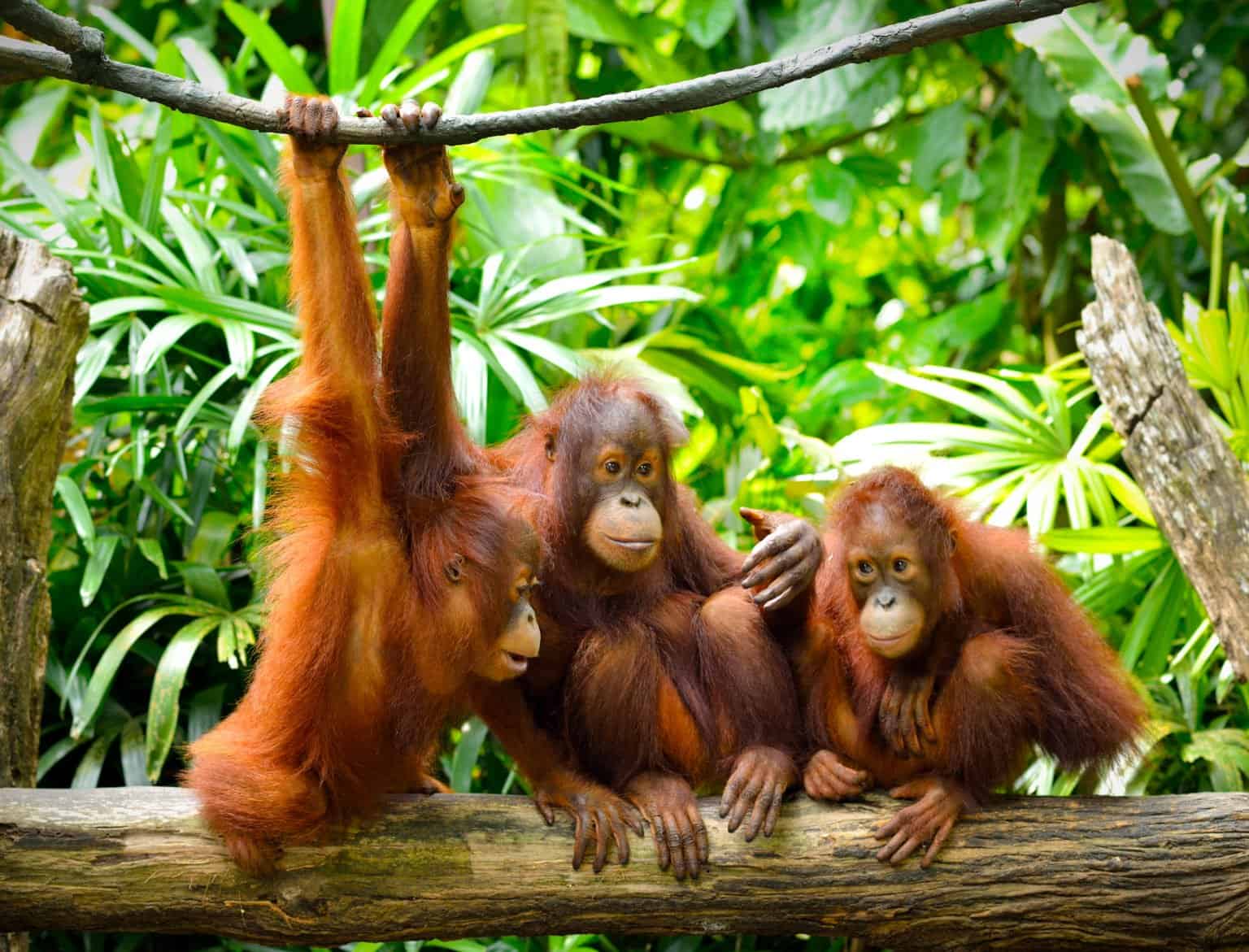
Arboreal animals are creatures specifically adapted to spend the majority of their lives in trees and forests, utilizing vertical habitats for foraging, nesting, and predator avoidance. These species have evolved specialized physical traits—such as prehensile tails, opposable digits, and keen depth perception—to navigate complex canopy environments, which serve as essential ecosystems for maintaining global biodiversity.
The Biological Definition of Arboreality
In zoological terms, an "arboreal" animal is one that possesses adaptations allowing it to live, move, and thrive within the structural complexity of a tree canopy. While some species, such as squirrels or monkeys, are exclusively arboreal, others are semi-arboreal, spending significant time on the ground but relying on trees for safety and food storage.
The arboreal lifestyle is not merely a preference; it is an evolutionary specialization. Living in the canopy provides distinct advantages, such as access to food sources like fruits, leaves, and insects that are unavailable on the forest floor. Furthermore, the canopy offers a natural defense mechanism against ground-dwelling predators. However, this lifestyle requires high energy expenditure and precise motor skills to navigate gaps between branches, leading to the development of unique anatomical structures.
Anatomical Adaptations for Canopy Life
The primary challenge of arboreal life is verticality and the risk of falling. Over millennia, various species have evolved to master this environment through distinct physiological features.
- Prehensile Tails: Many primates, such as spider monkeys, possess tails capable of grasping branches, essentially serving as a "fifth limb" that provides stability while reaching for fruit or traversing precarious limbs.
- Opposable Digits: Specialized hands and feet allow for a power grip, enabling animals to clasp branches securely. This is a hallmark of primates but is also seen in other groups like some species of chameleons.
- Depth Perception: Binocular vision is essential for measuring distances when leaping from branch to branch. Predators and prey alike in the canopy rely on highly developed visual cortices to process three-dimensional space rapidly.
- Climbing Claws and Adhesives: For smaller animals, such as geckos or squirrels, sharp, curved claws provide the necessary friction to cling to bark. Some species have evolved specialized toe pads that utilize Van der Waals forces to adhere to smooth surfaces like leaves.
Ecological Niches in the Forest Stratification
Forests are not monolithic environments; they are organized into distinct layers, each hosting different arboreal communities. Understanding this stratification is critical for researchers and conservationists.
- The Emergent Layer: The very top of the forest, where only the tallest trees reach. It is home to large birds of prey and some highly mobile primates.
- The Canopy Layer: The "living roof" of the forest. This is the most biodiversity-rich zone, containing the majority of arboreal life due to the abundance of light, flowers, and fruits.
- The Understory: The layer beneath the canopy but above the forest floor. It receives limited sunlight and is inhabited by animals adapted to low-light conditions, such as various snakes, amphibians, and specialized insects.
Behavioral Strategies for Survival
Arboreal animals must manage the constant threat of gravity. Their behaviors are often calculated to minimize risk. For instance, many arboreal species exhibit "clambering" locomotion—a slow, deliberate movement pattern that keeps multiple limbs on a branch at all times. This contrasts with terrestrial animals, which often favor speed.
Dietary habits also influence movement. Folivores (leaf-eaters) tend to move more slowly to conserve energy because leaves are nutrient-poor and difficult to digest. In contrast, frugivores (fruit-eaters) may exhibit more erratic, high-energy movement patterns to visit scattered fruit sources throughout the canopy.
Comparison of Arboreal Locomotion Styles
Different animal groups have solved the problem of canopy navigation in vastly different ways. The following table compares common modes of arboreal movement.
| Movement Type | Description | Key Examples | Primary Advantage |
|---|---|---|---|
| Brachiation | Swinging by arms from branch to branch | Gibbons, Spider Monkeys | Rapid transit through the canopy |
| Climbing | Using claws or digits to ascend trunks | Squirrels, Tree Frogs | Access to high-altitude nesting sites |
| Gliding | Using skin flaps to soar between trees | Flying Squirrels, Sugar Gliders | Energy-efficient travel over gaps |
| Leaping | Powerful jumps to bridge large distances | Lemurs, Bushbabies | Predator evasion and quick traversal |
Threats to Arboreal Biodiversity
As of 2026, the primary threat to arboreal species is the fragmentation and loss of forest habitats. Because these animals are highly specialized, they cannot simply move to a new environment if their forest home is destroyed.
Deforestation creates "islands" of canopy. When these gaps become too large, arboreal species—especially those that avoid the ground—become trapped in isolated patches. This leads to reduced genetic diversity, decreased access to food, and increased vulnerability to disease. Conservation efforts now focus on the creation of "wildlife corridors," which are strips of vegetation that connect fragmented forest patches, allowing animals to move safely between canopy areas.
The Importance of Canopy Research
Studying arboreal animals has historically been difficult due to the height and density of the canopy. However, modern 2026 technological advancements, such as drone-based thermal imaging and passive acoustic monitoring, have revolutionized how researchers collect data. Scientists can now track individual movements and population density without the need for invasive physical traps or the dangerous practice of tree-climbing, which was common in earlier decades.
These data sets are crucial for local governments and NGOs tasked with creating land-use policies. By identifying which tree species are essential for specific canopy residents, conservationists can prioritize areas for protection that provide the greatest "ecosystem services."
Frequently Asked Questions (FAQ)
1. Can an animal be arboreal without climbing? Some animals, such as certain species of "flying" mammals (e.g., flying squirrels or sugar gliders), are considered arboreal even though they do not climb in the traditional sense of constant grasping. They spend their entire lives in the trees and use patagia—membranes of skin—to glide between them, rarely touching the ground unless necessary.
2. Why do arboreal animals have long tails? Long, prehensile tails are primarily used for balance and as a stabilizer when the animal is moving through swaying branches. For many primates, the tail acts as a sensory organ and a gripping tool, providing an extra point of attachment that prevents the animal from falling during high-speed maneuvers.
3. Are all forest-dwelling animals arboreal? No. Many forest animals are terrestrial (ground-dwelling) or fossorial (burrowing). A forest ecosystem supports a vertical hierarchy; the forest floor is home to species that forage for roots, tubers, and fallen fruit, while the canopy is home to those that exploit the vertical space.
4. How do arboreal animals get water? Accessing water is a major challenge in the canopy. Many arboreal species obtain water through their diet—by eating succulent fruits or leaves—or by drinking rainwater stored in "tree holes" or the cup-like leaves of epiphytic plants like bromeliads.
5. Why are arboreal species more at risk from climate change? Arboreal species are often "niche specialists." Their specialized physiology limits them to specific humidity, temperature, and vegetation conditions found within the canopy. If climate shifts cause the forest composition to change—for example, if drought causes the canopy to thin or die—these animals cannot adapt to terrestrial life and may face localized extinction.
Recommendation for Further Engagement
To better understand these animals in their natural settings, consider supporting citizen science initiatives that document wildlife sightings via smartphone apps. By recording observations in local forests, you contribute to a global database that helps researchers map the distribution of arboreal species. If you are planning to visit a forest reserve, ensure you stay on marked trails to minimize disturbance to the understory and prevent soil compaction, which can negatively affect the root health of the very trees these animals rely upon.