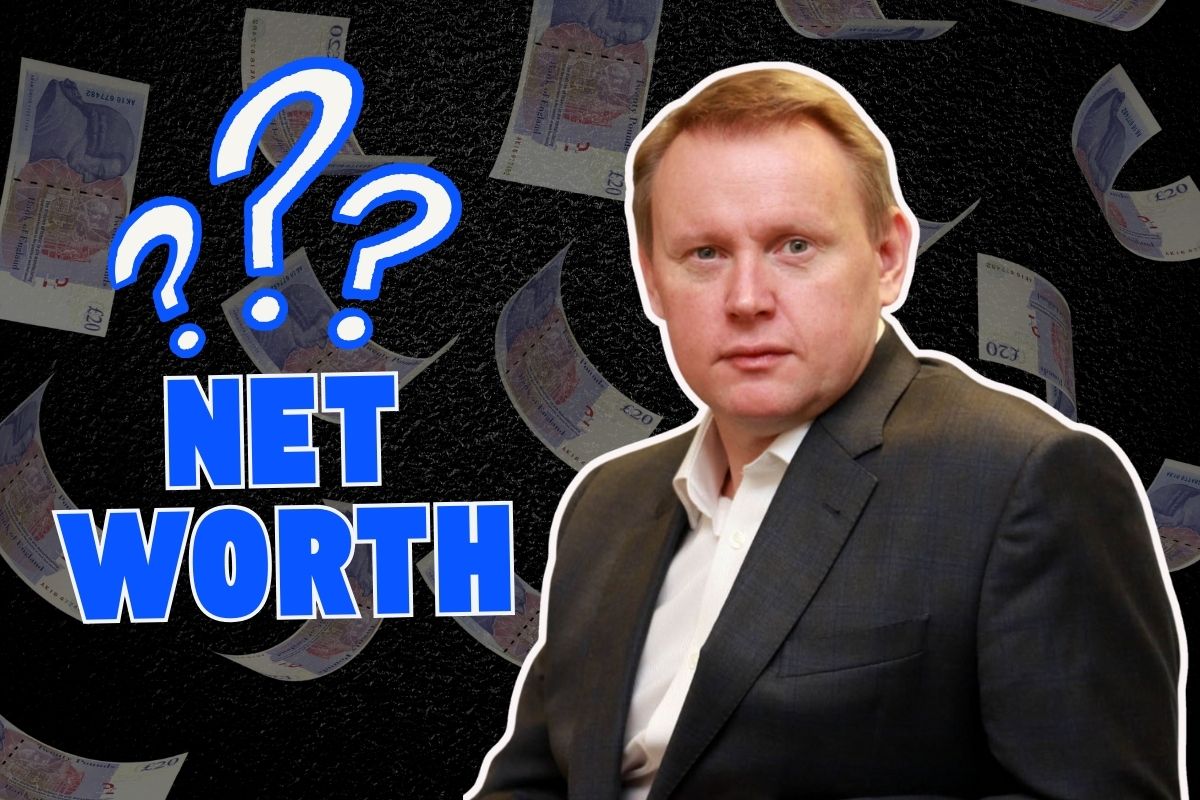
As of 2026, Andrew Conru’s net worth is estimated to be between $500 million and $1.1 billion. This valuation is primarily rooted in the landmark 2007 sale of his company, Various, Inc., for approximately $500 million, supplemented by nearly two decades of diversified private equity investments and academic contributions to the tech sector.
The Foundations of Andrew Conru’s Wealth
To understand Andrew Conru’s net worth in context, one must look beyond a simple dollar figure and examine the structural evolution of the early internet. Conru is not a traditional "celebrity" billionaire; rather, he is an engineer and academic whose wealth was built on identifying social gaps in the early digital landscape. His financial trajectory began at Stanford University, where he earned a PhD in mechanical engineering, a background that influenced his data-driven approach to business.
In the mid-1990s, while most of the world was just discovering the World Wide Web, Conru was already conceptualizing how humans would connect online. He founded several early internet properties that eventually coalesced into Various, Inc. Unlike many of his contemporaries who focused on advertising-based models, Conru’s ventures often relied on subscription-based revenue—a model that proved much more resilient during the "dot-com" crash of 2000.
His primary engine of growth was the FriendFinder network. While today the name is often associated with adult dating, the original scope was much broader, encompassing social networking, general dating, and niche communities. By the mid-2000s, Various, Inc. had become a powerhouse of recurring revenue, which is a key factor in how Conru achieved such a high valuation for his exit.
The Landmark Sale to Penthouse Media Group
The most significant liquidity event in Andrew Conru’s career occurred in 2007. Penthouse Media Group, looking to transition its legacy print brand into the digital age, acquired Various, Inc. for approximately $500 million. This deal was a combination of cash and stock, though the cash component provided Conru with the foundational capital that defines his current financial standing.
This sale was particularly noteworthy for several reasons:
- Market Timing: The deal closed shortly before the 2008 global financial crisis. By securing an exit in 2007, Conru avoided the massive devaluation that hit many tech firms during the Great Recession.
- Infrastructure Value: Penthouse wasn't just buying users; they were buying a proprietary technology stack that Conru’s team had built to handle massive amounts of concurrent traffic and payment processing—a rarity at the time.
- Recurring Revenue: The subscription model used by the FriendFinder sites provided a predictable cash flow that justified a high multiple on earnings.
While the post-acquisition history of the FriendFinder brands involved various corporate restructuring and legal challenges under new ownership, Conru’s financial legacy was secured by the timing and execution of this specific transaction.
Diversification and Private Equity (2008–2026)
Following the sale of Various, Inc., Conru did not retire from the business world. Instead, he transitioned into the role of a sophisticated private investor and venture capitalist. His net worth in the context of 2026 is largely sustained by these "quiet" investments that have matured over the last 15 years.
Conru’s investment philosophy typically favors "unsexy" but highly profitable niches. This includes data centers, real estate, and early-stage SaaS (Software as a Service) companies. By diversifying his capital into these sectors, he has been able to outpace inflation and weather the volatility of the public markets.
Furthermore, his background in mechanical engineering has led him to invest in hardware and robotics startups. These sectors require significant upfront capital but offer exponential returns if the technology becomes standardized. In the current 2026 market, many of these "long-bet" investments in automation and AI-driven hardware have contributed significantly to his overall asset valuation.
Net Worth Comparison: The Early Internet Era
To truly grasp the scale of Andrew Conru’s wealth, it is helpful to compare him to other pioneers of the 1990s and early 2000s. While he may not reach the astronomical heights of Jeff Bezos or Mark Zuckerberg, his financial position is exceptional because he maintained a high level of ownership in his companies before their exit.
| Metric | Andrew Conru (Estimated) | Typical Mid-Level Tech Founder |
|---|---|---|
| Primary Source of Wealth | Early Internet Social Networks | Venture-backed SaaS or Mobile Apps |
| Liquidity Event | $500M Sale (Various, Inc.) | Series C/D Funding or IPO |
| Ownership Stake at Exit | High (Founder-led, low dilution) | Moderate (Diluted by multiple VC rounds) |
| 2026 Estimated Net Worth | $500M - $1.1B | $50M - $250M |
| Strategic Focus | Recurring Revenue / Niche Markets | High Growth / User Acquisition |
This comparison highlights that Conru’s wealth is characterized by stability and independence. Because he did not rely heavily on venture capital in the early days of Various, Inc., he was able to keep a much larger percentage of the sale price compared to modern founders who might only own 10-15% of their company at the time of an exit.
The Role of Philanthropy and Research
In the years leading up to 2026, Conru has become increasingly known for his philanthropic endeavors and his focus on longevity and social progress. While philanthropy usually decreases a net worth figure, it often increases the "contextual value" of a person's financial legacy.
Conru has supported numerous academic and scientific initiatives. His interests often align with his Stanford roots, focusing on how technology can solve fundamental human problems. These contributions include:
- Longevity Research: Supporting studies into the biological processes of aging and how technology can extend the healthy human lifespan.
- Educational Grants: Funding for engineering programs that emphasize entrepreneurship and practical application of mechanical design.
- Environmental Technology: Investments in companies focused on carbon capture and sustainable energy storage.
While these activities are not profit-driven in the traditional sense, they represent a significant deployment of capital that reflects his values. For a billionaire or near-billionaire, wealth is often viewed through the lens of influence—how that money is being used to shape the future of society.
Factors Influencing Net Worth Volatility in 2026
When assessing a private individual's net worth in 2026, several external factors must be considered. Unlike public company CEOs whose wealth is tied to a visible stock price, Conru’s wealth is largely private, making it subject to different valuation pressures.
1. Private Equity Valuations
Much of Conru’s wealth is likely tied up in private equity and venture capital funds. In 2026, the valuation of private companies is heavily influenced by interest rates and the "exit environment." If the IPO market is sluggish, the paper value of these holdings might decrease, even if the underlying businesses are healthy.
2. Real Estate Holdings
Strategic real estate investments in tech hubs like San Francisco, Seattle, and Austin have historically been a hedge against inflation. Any significant shifts in the commercial real estate market—driven by the continued evolution of remote work—would impact the "fixed asset" portion of his portfolio.
3. Intellectual Property and Royalties
As an inventor and engineer, Conru likely holds or has held patents related to internet technologies. Residual income from intellectual property remains a consistent, albeit smaller, contributor to his annual income.
Practical Expert Analysis: The "Founder-Controlled" Advantage
From a financial analysis perspective, Andrew Conru represents the "Founder-Controlled" archetype of wealth. In the early days of the internet, it was possible to bootstrap a company to massive scale without the help of Sequoia or Kleiner Perkins. By doing so, Conru avoided the "preference stacks" and liquidation clauses that often rob modern founders of their wealth during an acquisition.
When Various, Inc. sold for $500 million, a massive portion of that went directly to Conru and his inner circle of early employees. This is why his net worth has remained so high; he started with a "clean" cap table. For current entrepreneurs looking to emulate this success, the lesson is clear: sustainable revenue and high ownership are often better than massive valuations with low equity.
Common Misconceptions About Andrew Conru’s Wealth
There are several frequent misunderstandings regarding how Conru built his fortune and where it stands today:
- "It was all about adult content": While the FriendFinder network included adult sites, the business was actually a pioneer in social networking algorithms and payment processing. The wealth was built on the technology and business model, not just the niche content.
- "He retired after 2007": Conru has remained very active in the tech ecosystem, both as an investor and as a mentor to new generations of engineers.
- "His net worth is all cash": As with any high-net-worth individual, the majority of his wealth is held in illiquid assets, including private company equity and real estate.
Frequently Asked Questions
How did Andrew Conru start his career?
Andrew Conru began his career while studying at Stanford University. He was part of the early wave of internet enthusiasts who saw the potential for digital social connection. His academic background in mechanical engineering provided him with the analytical skills needed to build complex database structures for early social networks.
Was the 2007 sale of Various, Inc. the only major exit?
While the $500 million sale to Penthouse Media Group was the largest and most public exit, Conru has been involved in several smaller acquisitions and mergers over the decades. His strategy often involves incubating niche ideas and selling them once they reach a certain level of profitability.
Is Andrew Conru still involved with AdultFriendFinder?
No, following the sale of Various, Inc. in 2007, Conru moved away from the daily operations of the FriendFinder brands. The company has since gone through different owners and corporate structures, including FriendFinder Networks Inc., which faced its own set of financial challenges and transitions.
What is Andrew Conru’s current focus in 2026?
As of 2026, Conru is primarily focused on venture capital, philanthropy, and scientific research. He is particularly interested in the intersection of technology and human longevity, as well as supporting engineering education through his various foundations and grants.
How does his PhD influence his business decisions?
Conru’s PhD in mechanical engineering from Stanford allows him to approach business with a "first principles" mindset. Rather than following market trends, he often looks at the underlying data and technical feasibility of a project, which has allowed him to succeed in sectors that other investors found too risky or complex.
Final Recommendation for Researchers and Investors
When evaluating the net worth of a figure like Andrew Conru in 2026, it is essential to look at the longevity of the assets. Conru’s wealth is not the result of a single "lucky" moment but rather a disciplined application of engineering principles to the world of business.
For those studying his career, the key takeaway is the importance of ownership and cash flow. By focusing on subscription models and maintaining high equity in his ventures, Conru built a financial foundation that has not only survived but thrived over three decades of internet evolution. To gain a deeper understanding of his current impact, one should follow his philanthropic contributions to longevity science, as these initiatives likely represent where his greatest influence—and much of his capital—is currently being deployed.