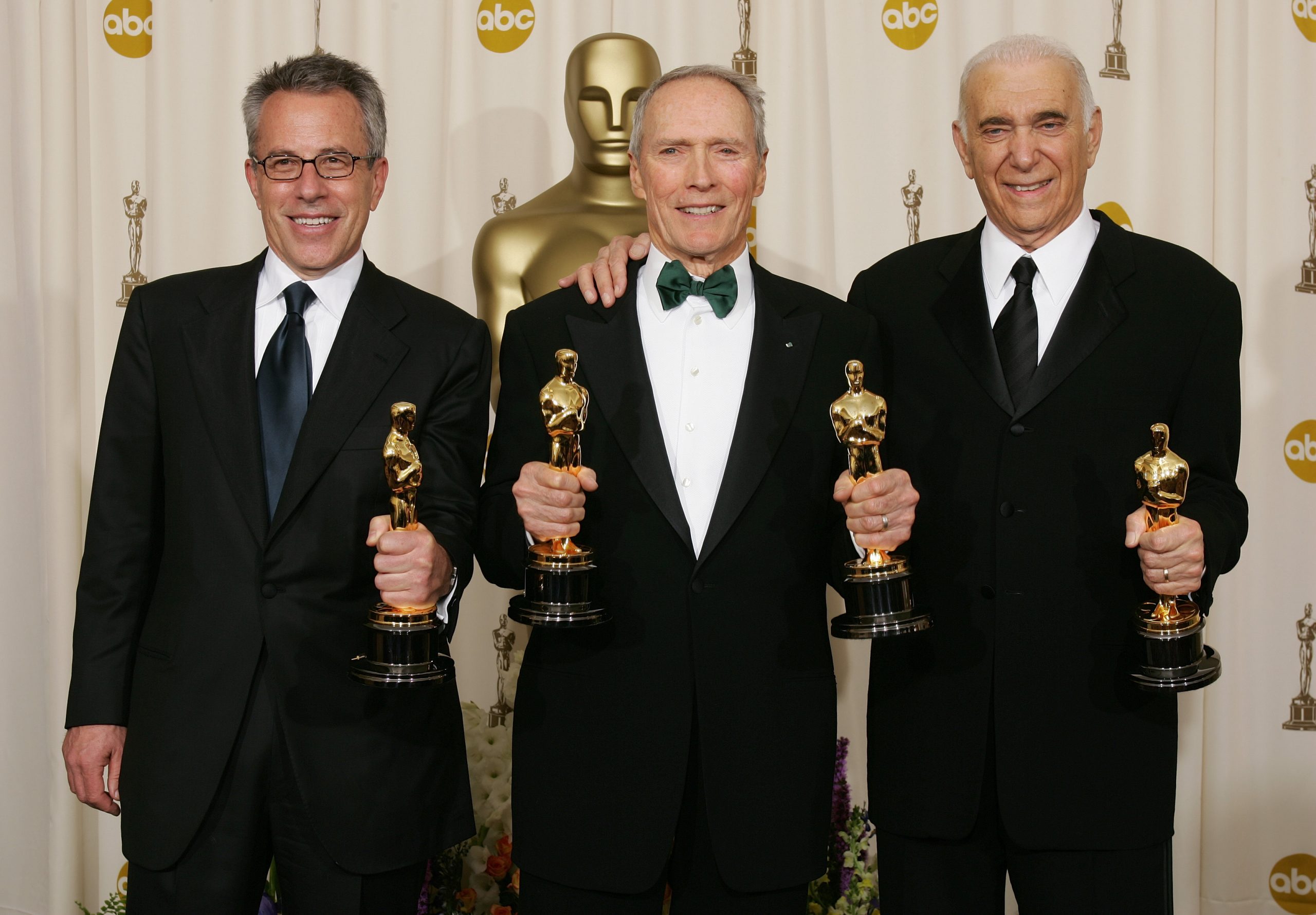
At the time of his passing in 2024, Albert S. Ruddy’s net worth was estimated at approximately $50 million. As a legendary film producer and two-time Academy Award winner for Best Picture, his wealth was built through decades of high-stakes production, lucrative television syndication, and strategic backend participation in cinematic masterpieces like The Godfather and Million Dollar Baby.
Albert S. Ruddy was a rare figure in Hollywood: a producer who possessed the grit to negotiate with the mob, the vision to see potential in discarded scripts, and the longevity to remain relevant across six decades. While many producers are known for a single hit, Ruddy’s career was defined by its incredible range, moving from the slapstick comedy of television to the most respected dramas in film history. By 2026, his estate remains a testament to the enduring value of classic intellectual property and the significant financial rewards afforded to those who control the production of world-class content.
The Architecture of a Career: From Drafting Boards to Hogan’s Heroes
Albert S. Ruddy’s journey into the entertainment industry was unconventional. Born in 1930, he initially studied chemical engineering before switching to architecture at the University of Southern California. This background in architecture often informed his approach to production; he viewed films as complex structures that required a solid foundation, precise planning, and the ability to solve structural problems under pressure.
His first major break came not in film, but in television. Ruddy co-created the hit sitcom Hogan’s Heroes, which premiered in 1965. The show was a massive success, running for six seasons. This project was crucial for his financial trajectory, as television syndication in that era provided a steady stream of passive income. The success of Hogan’s Heroes proved that Ruddy had an eye for "high-concept" ideas that could capture the public imagination, even if they were controversial—a trait that would define his later work.
Producing The Godfather: The Making of a Fortune and a Legend
In the early 1970s, Ruddy was tasked by Paramount Pictures to produce the film adaptation of Mario Puzo’s The Godfather. At the time, the project was considered a significant risk. The budget was tight, the studio was skeptical of director Francis Ford Coppola’s choices, and local organized crime figures were actively trying to shut down production in New York.
Ruddy’s role in navigating these challenges is the stuff of Hollywood legend, later dramatized in the 2022 miniseries The Offer. He famously met with Joe Colombo of the Italian-American Civil Rights League to ensure the production could proceed without interference. While this move cost him his job briefly (before being reinstated by Robert Evans), it secured the film’s authenticity.
The financial success of The Godfather was transformative. It became the highest-grossing film of its time, and as the lead producer, Ruddy earned his first Academy Award for Best Picture in 1973. Beyond the immediate salary, the prestige of The Godfather allowed Ruddy to command higher fees and backend percentages on future projects, which are the primary drivers of wealth for top-tier producers.
Diversification: The Longest Yard and Cannonball Run
Following the success of The Godfather, Ruddy did not limit himself to prestige dramas. He understood the commercial viability of genre films. In 1974, he produced The Longest Yard, a sports comedy-drama starring Burt Reynolds. The film was a major box office hit and spawned multiple remakes, further solidifying Ruddy’s reputation as a producer who could deliver both critical acclaim and commercial profit.
In the 1980s, Ruddy tapped into the zeitgeist of action-comedy with The Cannonball Run (1981). Despite being panned by critics, the film was a massive global success, grossing over $72 million against a modest budget. This era of his career highlights a key component of his net worth: the ability to identify projects with high international appeal. The "Ruddy Morgan Organization," his partnership with Andre Morgan, became a prolific entity during this period, producing films that traveled well across global markets.
The Second Act: Million Dollar Baby and the Second Oscar
Many producers fade away after a few decades, but Ruddy experienced a significant career resurgence in the early 2000s. He championed a project that many studios had rejected: a gritty boxing drama based on short stories by F.X. Toole. That project was Million Dollar Baby (2004).
Partnering with Clint Eastwood, Ruddy managed to get the film made for a relatively lean budget of $30 million. The film was a triumph, earning over $216 million worldwide and winning four Academy Awards, including Best Picture. By winning his second Best Picture Oscar 32 years after his first, Ruddy joined an elite group of producers. This victory wasn't just a trophy; it revitalized the value of his production company and led to new development deals well into his 80s.
Analyzing Albert Ruddy's Net Worth Components
To understand how Ruddy accumulated a $50 million fortune, one must look at the various revenue streams available to a producer of his caliber:
1. Production Fees and "Points"
Top-tier producers receive a "guaranteed" fee for their work on a film, but the real wealth comes from "points" or backend participation. For a film like Million Dollar Baby, which grossed seven times its production budget, the backend payout for a producer like Ruddy would have been in the millions.
2. Television Royalties and Syndication
As the co-creator of Hogan’s Heroes, Ruddy benefited from decades of syndication. Even as the media landscape shifted to streaming, classic television libraries remained valuable assets. These recurring payments provided a financial cushion that allowed him to be selective with his film projects.
3. The Ruddy Morgan Organization
His production company acted as a vehicle for various deals, including consulting and development. Even when he wasn't the primary producer on a film, his company often held rights or received fees for its involvement in the development pipeline.
4. Real Estate and Personal Assets
Ruddy lived a lifestyle consistent with Hollywood royalty but was known for being more pragmatic than some of his contemporaries. His long-term marriage to Wanda McDaniel, a high-ranking executive at Giorgio Armani, meant the couple was a fixture in both the film and fashion worlds, managing a significant portfolio of shared assets and investments.
Summary of Major Career Milestones
The following table outlines the commercial and critical success of Ruddy’s most influential projects, illustrating the foundation of his financial legacy.
| Project Title | Year | Primary Role | Box Office (Approx.) | Major Awards/Impact |
|---|---|---|---|---|
| Hogan's Heroes | 1965–1971 | Co-Creator | N/A (TV) | High syndication value |
| The Godfather | 1972 | Producer | $250M+ | Academy Award (Best Picture) |
| The Longest Yard | 1974 | Producer | $43M | Golden Globe Winner |
| The Cannonball Run | 1981 | Producer | $72M | Massive commercial success |
| Million Dollar Baby | 2004 | Producer | $216M | Academy Award (Best Picture) |
| The Offer | 2022 | Executive Producer | N/A (Streaming) | Chronicled his life's work |
The Impact of "The Offer" on His Final Years
In 2022, the miniseries The Offer was released on Paramount+, detailing the tumultuous production of The Godfather from Ruddy’s perspective. Miles Teller portrayed a young Ruddy, bringing his story to a new generation of viewers.
This series served two purposes for Ruddy’s financial and professional legacy. First, it renewed interest in his back catalog, likely increasing the value of residuals from his earlier work. Second, it cemented his status as a legendary figure in cinema history, ensuring that his name would remain a "brand" in the industry. The series highlighted his unique ability to bridge the gap between the artistic needs of directors and the financial requirements of studios.
Professional Standing in 2026
As of 2026, the industry continues to view Albert Ruddy as a benchmark for the "traditional" producer—a role that has somewhat diminished in the era of corporate-led franchise filmmaking. His estate continues to manage the rights to his various works, and his influence is seen in the way modern independent producers navigate the studio system.
His career overview serves as a blueprint for longevity in a volatile industry. By diversifying between television and film, and between high-brow drama and populist comedy, Ruddy protected himself from the cyclical nature of Hollywood tastes.
Frequently Asked Questions
What was Albert Ruddy’s cause of death?
Albert S. Ruddy passed away on May 25, 2024, at the age of 94. His family confirmed he died peacefully at UCLA Medical Center following a brief illness. He remained sharp and professionally active until very late in his life, often consulted by younger producers for his historical perspective on the industry.
How many Oscars did Albert Ruddy win?
Albert Ruddy won two Academy Awards for Best Picture. The first was for The Godfather (1972) and the second was for Million Dollar Baby (2004). He is one of only nine producers in history to have won two or more Best Picture Oscars at the time of his passing, putting him in the same league as figures like Saul Zaentz and Clint Eastwood.
Who was Albert Ruddy's wife?
Albert Ruddy was married to Wanda McDaniel. They wed in 1981 and remained together until his death. McDaniel was a significant figure in her own right, serving as the Vice President of Giorgio Armani in the United States. She is often credited with pioneering the practice of dressing Hollywood stars in designer clothing for the Oscars, a move that fundamentally changed the relationship between fashion and film.
Did Albert Ruddy have children?
Yes, Albert Ruddy is survived by two children: a son, John, and a daughter, Alexandra. His daughter, Alexandra Ruddy, has also spent time in the film industry, occasionally working alongside her father in production capacities, ensuring the family legacy in entertainment continues.
What was Albert Ruddy’s last film?
Albert Ruddy’s final credit as a producer on a feature film was for Cry Macho (2021), directed by and starring his long-time collaborator Clint Eastwood. This film marked the end of a decades-long professional relationship between the two titans of the industry.
Practical Recommendation for Aspiring Producers
For those looking to emulate Albert Ruddy’s career or understand the business of film, the key takeaway is the importance of intellectual property ownership and creative grit. Ruddy didn't just wait for scripts to arrive; he actively sought out stories and fought to keep them alive.
- Diversify your portfolio: Follow the Ruddy model of moving between television (for stability) and film (for prestige/high upside).
- Focus on "The Fix": Much of a producer's value—and thus their net worth—comes from solving problems that threaten to derail a project.
- Negotiate for backend: Salaries are finite, but percentages of a successful film or show provide wealth that lasts for decades.
- Study "The Offer": While dramatized, the series provides real-world insights into the negotiation tactics and psychological resilience required to produce a masterpiece like The Godfather.