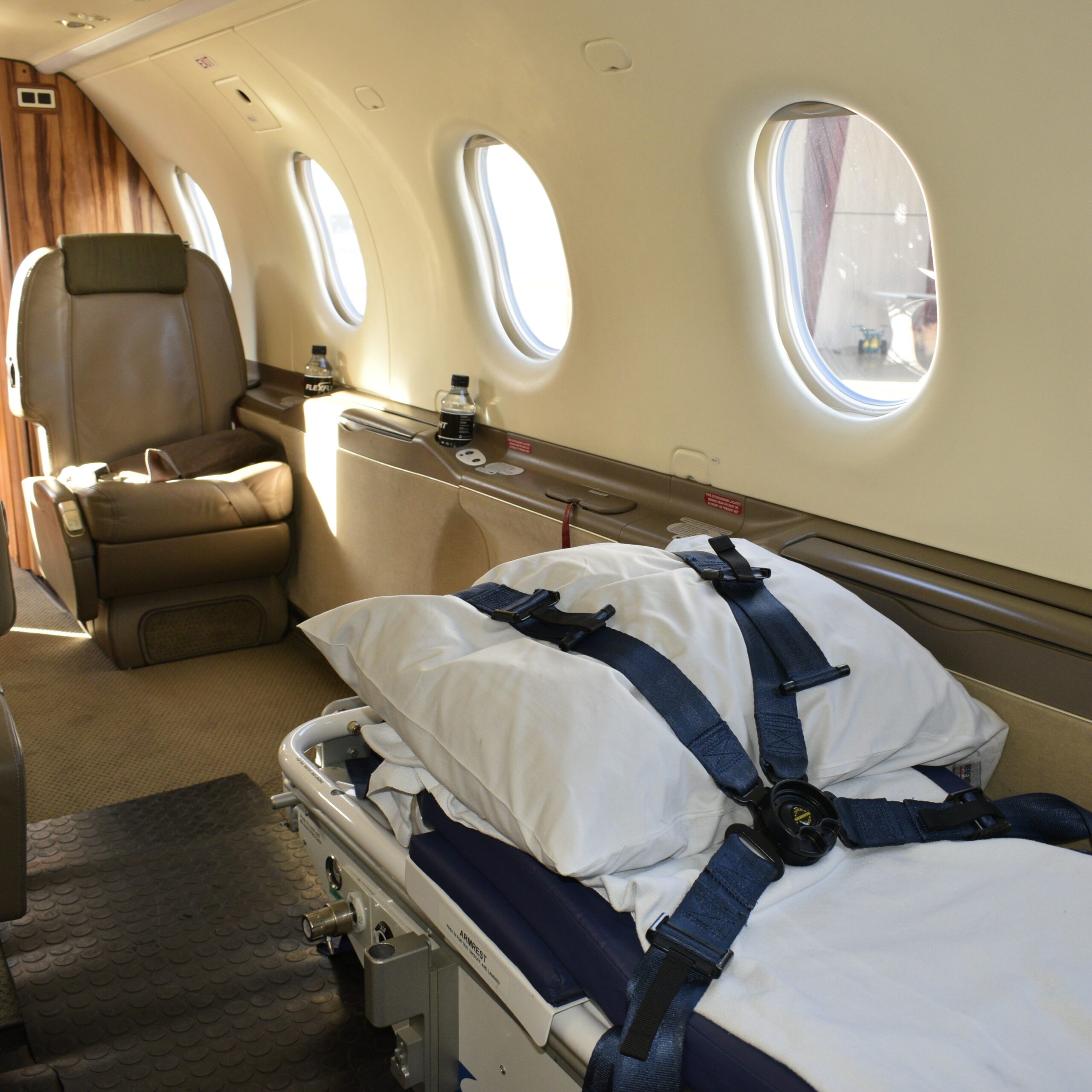
An airplane ambulance provides specialized long-distance medical transportation for patients who require continuous clinical care during transit. These fixed-wing aircraft function as mobile intensive care units, equipped with advanced life-support systems and staffed by specialized medical teams to facilitate safe inter-facility transfers, international repatriations, or emergency evacuations across significant distances.
What is an Airplane Ambulance?
An airplane ambulance, often referred to as a fixed-wing air ambulance, is a pressurized aircraft specifically modified to transport critically ill or injured patients. Unlike medical helicopters (Rotor-wing), which are typically used for short-range "scene-of-accident" responses or local hospital transfers within a 100-mile radius, airplane ambulances are designed for regional, national, and transcontinental distances.
By 2026, the technology integrated into these aircraft has evolved to mirror the capabilities of high-level hospital intensive care units (ICUs). These planes are not merely transport vehicles; they are clinical environments where advanced procedures, including mechanical ventilation, invasive monitoring, and continuous medication titration, can be performed at 30,000 feet. The use of fixed-wing aircraft is preferred for long distances due to their speed, stability in various weather conditions, and ability to maintain a controlled cabin altitude, which is vital for patients with respiratory or neurological conditions.
The Role of Fixed-Wing vs. Rotor-Wing
It is essential to distinguish between the two primary types of air medical transport. While helicopters are the "first responders" of the sky, airplane ambulances handle the logistics of secondary transport.
- Helicopters (EMS): Used for trauma scenes and short hops. They are limited by fuel capacity and are more susceptible to weather delays.
- Airplane Ambulances: Used for stable but high-risk patients needing to move between specialized centers (e.g., a patient moving from a rural hospital to a Mayo Clinic or Cleveland Clinic facility). They offer a smoother ride and more space for specialized medical equipment.
Clinical Indications for Fixed-Wing Transport
Not every patient requiring medical travel needs an airplane ambulance. The decision to utilize this high-level service is usually based on a "fit-to-fly" assessment conducted by the medical director of the transport company in coordination with the sending and receiving physicians.
As of 2026, the primary clinical indications for utilizing an airplane ambulance include:
- Critical Care Requirements: Patients requiring mechanical ventilation, continuous IV infusions (vasopressors, sedation), or high-flow oxygen that exceeds the capacity of commercial airlines.
- Specialized Procedures: Patients with intra-aortic balloon pumps (IABP), Extracorporeal Membrane Oxygenation (ECMO) requirements, or those needing neonatal isolettes.
- Spinal or Orthopedic Stability: Patients who must remain completely supine (flat on their back) and cannot sit in a commercial business-class seat, even with a medical escort.
- Immunocompromised Status: Patients who cannot risk exposure to the pathogens present in a crowded commercial cabin.
- Neurological or Burn Care: Patients requiring strictly regulated cabin pressure to prevent the expansion of gas (pneumothorax) or to manage intracranial pressure.
Onboard Medical Capabilities and Equipment
The interior of a modern airplane ambulance is a marvel of medical engineering. Every square inch is optimized for patient care and safety. The equipment must be flight-certified, meaning it must be shielded to prevent electromagnetic interference with the aircraft's navigation systems and be rugged enough to withstand turbulence.
Essential Medical Hardware
- Advanced Ventilators: Portable units capable of providing various modes of ventilation, including AC, SIMV, and CPAP/BiPAP.
- Multi-parameter Monitors: Devices that track heart rate, 12-lead ECG, SpO2, non-invasive and invasive blood pressure, and end-tidal CO2 (EtCO2).
- Defibrillators and Pacers: Integrated units for cardiac emergencies.
- Infusion Pumps: Multiple channels to manage precise dosages of life-saving medications.
- Medical Oxygen Systems: Large-capacity tanks with backup supplies to ensure several times the required amount for the flight duration.
Specialized Medical Personnel
The standard crew on an airplane ambulance typically includes at least two medical professionals. Depending on the patient's acuity, this team may consist of:
- Flight Nurses (CFRN): Registered nurses with extensive ICU or ER experience and specialized training in flight physiology.
- Flight Paramedics (FP-C): High-level paramedics certified in critical care transport.
- Respiratory Therapists: Often added for complex ventilator-dependent patients.
- Specialist Physicians: In cases of extreme instability or ECMO transport, a board-certified intensivist, neonatologist, or cardiologist may join the flight.
Cost Analysis of Airplane Ambulance Services in 2026
The cost of an airplane ambulance remains a significant consideration for families and facilities. Because these are private flights tailored to a single patient, the expenses are high. In 2026, several factors influence the final invoice.
Key Cost Drivers
- Distance and Fuel: This is the most substantial variable. A domestic flight of 500 miles will cost significantly less than a 4,000-mile international repatriation.
- Aircraft Type: A smaller turboprop (like a King Air 200) is more fuel-efficient but slower than a mid-size jet (like a Learjet 45 or 75). Larger jets are required for transoceanic flights to avoid multiple refueling stops.
- Medical Acuity: A patient requiring a full ECMO team and a physician will incur much higher staffing costs than a stable patient requiring only a nurse and paramedic.
- Ground Ambulance Logistics: The cost typically includes the "bed-to-bed" service, which encompasses the ground ambulances at both the departure and arrival locations.
- Airport Fees: Landing fees, ramp fees, and international handling fees can vary wildly by airport.
| Service Level | Estimated Price Range (USD) | Common Use Case |
|---|---|---|
| Regional (Turboprop) | $15,000 – $25,000 | 200–500 miles; stable ICU patient. |
| Domestic Jet (Light/Mid) | $25,000 – $55,000 | 500–2,500 miles; urgent transfer. |
| International (Continental) | $60,000 – $120,000 | Trans-Atlantic or Trans-Pacific transport. |
| Specialized (ECMO/Neonatal) | $100,000 – $250,000+ | Highly complex, multi-specialist teams. |
Note: These figures represent 2026 industry averages and vary based on current fuel surcharges and availability.
The "Bed-to-Bed" Logistics Process
A reputable airplane ambulance provider manages the entire continuum of care. This is known as bed-to-bed service. The family or hospital should not have to coordinate separate pieces of the journey.
Step 1: Initial Assessment and Quoting
The process begins with a clinical intake. The provider’s medical director reviews the patient’s charts to ensure they are stable enough for transport and to determine the necessary equipment and staff. A comprehensive quote is then provided, which should include all costs from the starting hospital bed to the destination hospital bed.
Step 2: Pre-Flight Coordination
Once the flight is booked, the provider coordinates with the sending facility for a "discharge summary" and with the receiving facility to ensure a bed is ready. They also secure all necessary ground transportation. For international flights, the provider handles customs clearances and "Medif" (Medical Information Form) clearances if any part of the journey involves commercial segments.
Step 3: Transport Day
On the day of the flight, the medical team arrives at the patient’s bedside. They perform a physical assessment and transition the patient to their specialized stretcher. The patient is moved by ground ambulance to the aircraft. During the flight, the team provides continuous monitoring and care.
Step 4: Handover
Upon landing, a waiting ground ambulance takes the patient and the flight team to the receiving facility. The process is not complete until the flight team provides a formal clinical handover to the receiving nurses and doctors, ensuring a seamless transition of care.
Insurance and the "No Surprises Act"
In 2026, the landscape of air ambulance billing is heavily influenced by the No Surprises Act (NSA). Originally implemented in the early 2020s, this legislation was designed to protect patients from "balance billing" when they are forced to use an out-of-network air ambulance provider during an emergency.
For emergency airplane ambulance services, the law generally mandates that insurance companies pay a "qualifying payment amount" and prevents the provider from billing the patient for the difference between the charged amount and the insurance payment. However, many fixed-wing transports are considered "scheduled" or "non-emergency" inter-facility transfers. In these cases, the NSA might not offer the same level of protection.
It is vital to check with the insurance provider for Pre-Authorization. Many commercial policies will only cover airplane ambulance transport if it is deemed "medically necessary"—meaning the destination facility offers a life-saving treatment that the current facility cannot provide, and no other form of transport (like ground ambulance) is safe.
International Medical Repatriation
When an individual falls ill or is injured in a foreign country, the complexities of airplane ambulance transport increase exponentially. International repatriation involves navigating different languages, varying medical standards, and complex aviation permits.
Providers specializing in international work must have a deep understanding of Global Flight Coordination. This includes:
- Overflight Permits: Permission to fly through the airspace of various countries.
- Visa Coordination: Ensuring the medical crew and any accompanying family members have the right to enter or transit through specific nations.
- Language Services: Utilizing medical translators to communicate with local doctors in the foreign country.
- Currency and Payment: Handling international wire transfers and varying tax structures.
For many travelers, "Travel Insurance" with a medical evacuation rider is the only way to offset these six-figure costs. Without insurance, families often have to rely on private funds or crowdfunding to facilitate a return to their home country.
Standards and Accreditation to Look For
Because the air ambulance industry is highly specialized, it is important to verify the credentials of a provider before booking. You should look for companies that go beyond the basic aviation requirements.
- FAA Part 135 Certification: This is the legal requirement for any company operating on-demand air charter in the United States. It ensures the aircraft is maintained to high commercial standards.
- CAMTS Accreditation: The Commission on Accreditation of Medical Transport Systems (CAMTS) is the gold standard for medical quality. Accreditation indicates that the company meets rigorous standards for medical equipment, crew training, and safety protocols.
- EURAMI Accreditation: Similar to CAMTS, the European Aeromedical Institute (EURAMI) provides accreditation that is highly regarded for international and European providers.
Frequently Asked Questions
Can a family member fly with the patient on an airplane ambulance?
In most cases, yes. Most airplane ambulances (especially mid-size jets) have space for one or two passengers to accompany the patient. However, this is always at the discretion of the flight crew, as the patient’s medical needs take priority. In highly critical cases or when excessive medical equipment is required, passenger space may be limited.
How long does it take to arrange an airplane ambulance?
For domestic flights within the same country, a flight can often be launched within 4 to 24 hours. International missions usually require more time—typically 24 to 72 hours—due to the need for international permits, customs coordination, and complex crew scheduling.
Is an airplane ambulance the same as a "Life Flight"?
"Life Flight" is a brand name that has become a generic term for air medical transport, much like "Kleenex" for tissues. While many people use the term to refer to helicopters, it can also apply to fixed-wing services. The primary difference is the aircraft type and the distance of the mission.
What if the patient is too unstable to fly?
The medical director of the air ambulance company will make the final call. If a patient is actively hemorrhaging or has an unsecured airway, the transport may be delayed until they are stabilized. The goal is to ensure the patient's condition does not deteriorate due to the stresses of flight, such as G-forces during takeoff or changes in atmospheric pressure.
Does Medicare or Medicaid cover airplane ambulance services?
Medicare Part B may cover air ambulance services if they are deemed medically necessary and the patient’s condition requires immediate and rapid transport that ground transportation cannot provide. However, coverage is often limited to the "nearest appropriate facility." Medicaid coverage varies significantly by state but generally follows similar strict necessity guidelines.
Practical Recommendations
When faced with the need for an airplane ambulance, the process can feel overwhelming. To ensure the highest level of safety and financial protection, follow these steps:
- Request a Written Quote: Ensure the quote is "all-inclusive" (bed-to-bed) to avoid hidden fees for ground ambulances or fuel surcharges.
- Verify Accreditation: Ask if the provider is CAMTS or EURAMI accredited.
- Consult the Insurance Case Manager: Contact your insurance company immediately to understand your coverage limits and start the pre-authorization process.
- Confirm Medical Staffing: Ask specifically about the credentials of the medical team assigned to your flight.
- Review the Aircraft Details: Ensure the aircraft is a pressurized jet if the patient has respiratory or neurological issues, as turboprops often fly at lower altitudes where turbulence is more frequent.
Choosing an airplane ambulance is a critical decision that balances clinical necessity with significant financial investment. By focusing on accredited providers and clear communication between the sending and receiving medical teams, families can ensure their loved ones receive the highest standard of care during one of life's most vulnerable moments.