Addressing gaps in cloud security requires a systematic approach of continuous visibility, automated remediation, and the strict enforcement of identity-centric controls. Organizations must synchronize their security posture with the shared responsibility model, utilizing Cloud-Native Application Protection Platforms (CNAPP) to bridge the distance between infrastructure misconfigurations and runtime application vulnerabilities.
Cloud environments are dynamic, ephemeral, and increasingly complex. As we operate in 2026, the shift toward multi-cloud architectures and serverless computing has expanded the attack surface beyond traditional perimeter defenses. Identifying and closing security gaps is no longer a periodic audit requirement; it is a foundational operational necessity. When security teams fail to address these gaps, they leave the door open for data breaches, regulatory fines, and catastrophic operational downtime.
Understanding the Anatomy of Cloud Security Gaps
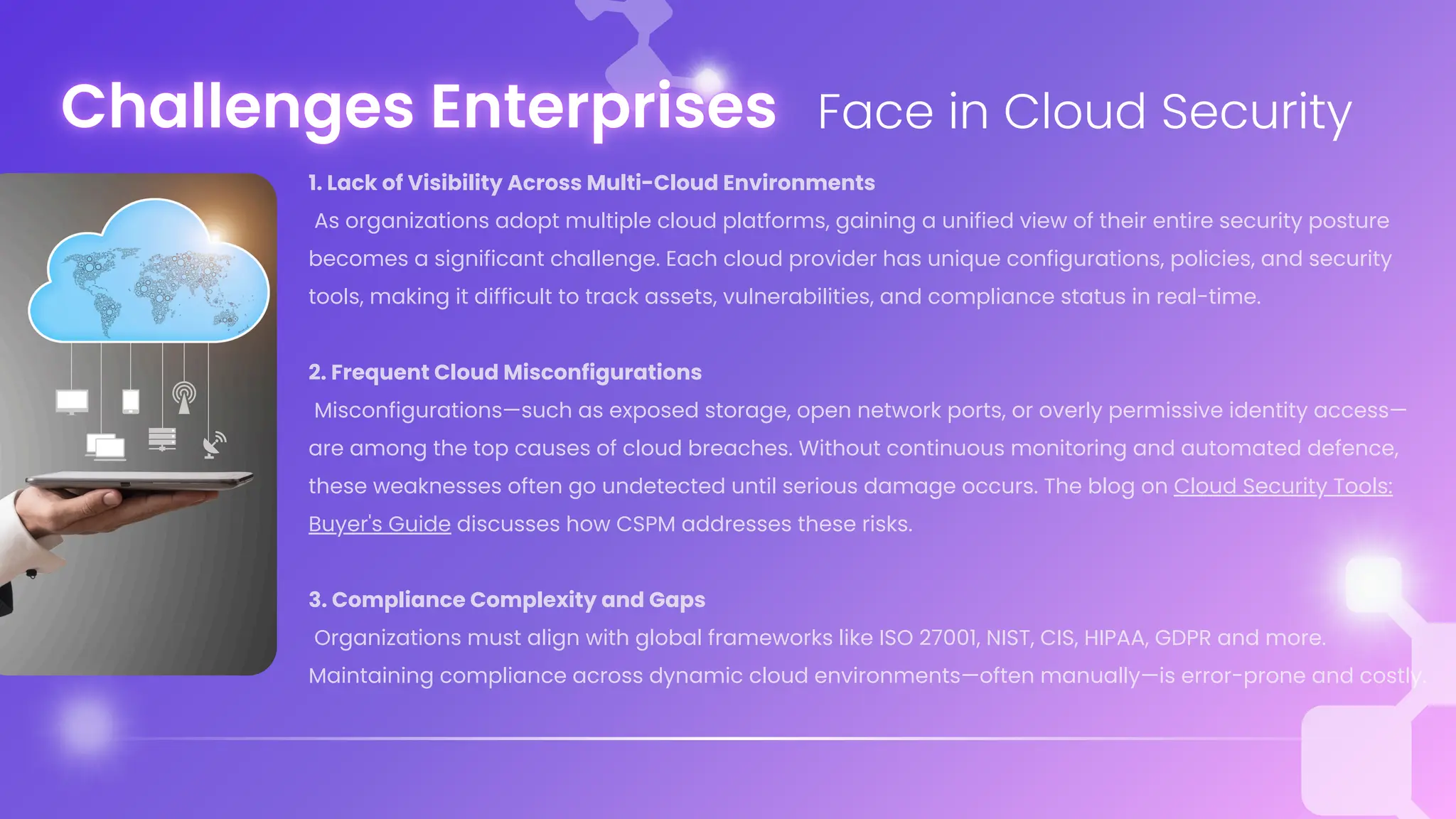
A "gap" in cloud security represents any discrepancy between the intended security posture and the actual state of the environment. These discrepancies often arise from the speed of deployment, where DevOps teams prioritize velocity over rigorous security checks. To address these gaps effectively, one must first categorize them into three primary domains: visibility, configuration, and identity.
The Visibility Gap occurs when IT and security teams lose track of the assets deployed across various cloud service providers (CSPs). In 2026, "Shadow IT" has evolved into "Shadow Cloud," where developers spin up ephemeral instances or storage buckets for testing and forget to decommission them. Without a centralized inventory, these orphaned assets become unpatched, unmonitored entry points for attackers.
The Configuration Gap is perhaps the most prevalent. It involves settings that deviate from best practices, such as publicly accessible S3 buckets, unrestricted SSH ports, or disabled logging. Despite the maturity of cloud platforms, misconfigurations remain a leading cause of data exposure because the sheer volume of settings across different services—compute, storage, and networking—is difficult to manage manually.
The Identity Gap centers on the over-provisioning of permissions. In a cloud-native world, identity is the new perimeter. Gaps occur when users, services, or "machine identities" are granted more privileges than necessary (violating the Principle of Least Privilege). Over time, "permission creep" allows an attacker who compromises a single low-level service to move laterally and escalate privileges throughout the entire cloud infrastructure.
The Evolution of the Shared Responsibility Model in 2026
To address gaps, an organization must understand where its responsibility begins and the provider's ends. The Shared Responsibility Model is the framework that dictates these boundaries. While CSPs like AWS, Azure, and Google Cloud are responsible for the security of the cloud (the hardware, global infrastructure, and physical facilities), the customer is responsible for security in the cloud.
In 2026, this model has become more nuanced with the rise of Managed Kubernetes and Function-as-a-Service (FaaS). In these models, the provider manages more of the underlying stack, but the customer remains responsible for data sensitivity, identity management, and the security of the application code itself. A common mistake is assuming that "serverless" means "security-less." On the contrary, serverless architectures require more granular focus on API security and event-trigger authorization.
Failure to align internal security policies with the provider's specific implementation of the shared responsibility model is a fundamental gap. Organizations must verify that their internal controls—such as encryption at rest and in transit—are correctly applied to the services they consume.
Identifying and Remediating Technical Misconfigurations
Addressing configuration gaps requires moving away from manual spot-checks toward automated Cloud Security Posture Management (CSPM). CSPM tools continuously monitor cloud environments against industry benchmarks such as those provided by the Center for Internet Security (CIS).
Infrastructure as Code (IaC) Scanning
One of the most effective ways to close configuration gaps is to move security "left" into the development phase. By scanning Infrastructure as Code (IaC) templates (e.g., Terraform, CloudFormation, Bicep) before they are deployed, organizations can prevent misconfigurations from ever reaching production. This proactive approach identifies issues like unencrypted volumes or overly permissive security groups at the time of code commit.
Automated Remediation
In a high-velocity environment, human intervention is often too slow. Modern security strategies involve automated remediation, where the CSPM tool not only identifies a gap—such as an open port—but also triggers a script to close it immediately. While this requires careful tuning to avoid breaking production workflows, it is the only way to maintain a consistent security baseline at scale.
Addressing the Identity and Access Management (IAM) Gap
In 2026, identity management has moved beyond human users to include a massive ecosystem of service accounts, bots, and automated workflows. These machine identities often have long-lived credentials that are rarely rotated, creating a massive security gap.
Implementing CIEM
Cloud Infrastructure Entitlement Management (CIEM) is a specialized category of security tools designed to manage these identities. CIEM analyzes the actual usage of permissions versus the granted permissions. If a service account has "Administrator" access but only ever performs "Read" operations on a specific database, the CIEM tool will flag this gap and recommend a right-sized policy.
Just-In-Time (JIT) Access
To further reduce the identity attack surface, organizations are adopting Just-In-Time access. Instead of having persistent "standing" privileges, developers and administrators are granted elevated permissions only when needed and for a limited duration. This eliminates the risk of compromised credentials being used for malicious activity long after a task is completed.
Data Security Posture Management (DSPM)
Data is the ultimate target of most cloud attacks. Traditional security focuses on the container or the network, but Data Security Posture Management (DSPM) focuses on the data itself. Addressing gaps in data security involves:
- Data Discovery: Identifying where sensitive data (PII, PHI, IP) resides across the multi-cloud environment.
- Data Classification: Automatically labeling data based on its sensitivity.
- Lineage Tracking: Understanding how data flows between services to ensure it doesn't move from a secure zone to an insecure one.
The most dangerous gap in data security is "dark data"—unclassified information that exists outside the purview of the security team. By implementing DSPM, organizations can ensure that encryption and access controls follow the data, regardless of where it is stored or moved.
Comparison of Cloud Security Layers and Responsible Parties
The following table outlines the common layers where security gaps occur and identifies who is primarily responsible for addressing them under the modern shared responsibility model.
| Security Layer | Potential Gap | Primary Responsibility | Mitigation Strategy |
|---|---|---|---|
| Physical/Hardware | Faulty hardware, physical breach | Cloud Service Provider | Provider audits (SOC2, ISO 27001) |
| Network Infrastructure | Unprotected endpoints, open ports | Customer (IaaS/PaaS) | Micro-segmentation, WAF, VPC Flow Logs |
| Operating System | Unpatched vulnerabilities, root access | Customer (IaaS) | Automated patch management, EDR |
| Identity & Access | Over-privileged accounts, weak MFA | Customer | CIEM, MFA enforcement, JIT Access |
| Application Code | SQL injection, insecure APIs | Customer | SAST/DAST, API Gateways, RASP |
| Data/Content | Unencrypted data, public access | Customer | DSPM, KMS encryption, Data classification |
Integrating Security into the DevOps Pipeline (DevSecOps)
The gap between security teams and developers is often the most difficult to bridge. In a traditional "siloed" model, security acts as a gatekeeper, slowing down deployments. To address this, security must be integrated directly into the CI/CD pipeline—a practice known as DevSecOps.
Security as Code
Security as Code involves defining security policies in a machine-readable format. These policies can then be automatically enforced during the build process. For example, a policy might state that "No container image can be deployed if it contains a Critical CVE." By automating this check, security becomes a seamless part of the developer workflow rather than a final, manual hurdle.
Continuous Monitoring and Feedback
Closing the gap also requires a feedback loop. When a security vulnerability is found in production, the details should be automatically fed back to the development team's ticketing system (e.g., Jira). This ensures that the root cause—be it a coding error or a configuration mistake—is addressed at the source, preventing the same gap from reappearing in future releases.
Compliance and Governance Gaps
For regulated industries, such as healthcare and finance, a security gap is also a compliance gap. Regulatory frameworks like NIST SP 800-53 or the EU's DORA (Digital Operational Resilience Act) require strict adherence to specific controls.
Addressing governance gaps involves moving from "point-in-time" compliance to "continuous compliance." Instead of preparing for an annual audit, organizations use automated tools to generate real-time reports on their compliance status. If a configuration change moves the environment out of compliance with GDPR or HIPAA, the system immediately alerts the compliance officer. This continuous oversight ensures that gaps are closed as soon as they are opened.
Frequently Asked Questions
What is the most common cause of cloud security gaps?
The most common cause remains human error, specifically misconfigurations. As cloud environments grow in complexity, the probability of a developer or administrator making a mistake in a security group setting or an S3 bucket policy increases. Automation through CSPM and IaC scanning is the primary defense against these errors.
How does multi-cloud architecture affect security gaps?
Multi-cloud environments significantly increase the risk of security gaps because each provider (AWS, GCP, Azure) uses different terminology, APIs, and security models. Maintaining a consistent security posture across these disparate platforms is difficult without a centralized management layer that abstracts these differences into a single "pane of glass."
Is encryption enough to close data security gaps?
While encryption is essential, it is not a silver bullet. Gaps often exist in key management. If encryption keys are stored insecurely, or if access to those keys is over-privileged, the encryption itself can be bypassed. Comprehensive data security requires combining encryption with robust IAM and Data Security Posture Management (DSPM).
What role does AI play in addressing cloud security gaps in 2026?
In 2026, AI is used both defensively and offensively. On the defensive side, AI-powered security tools can analyze vast amounts of log data to identify anomalous patterns that suggest a zero-day exploit or a sophisticated lateral movement. AI also helps in "auto-remediation" by predicting the impact of a security patch before it is applied.
How can small organizations address gaps without a large security budget?
Small organizations should focus on "Security Hygiene" and leveraging native provider tools. Most CSPs offer foundational security services (like AWS Security Hub or Azure Advisor) at a low cost. Prioritizing MFA enforcement, disabling unused services, and using managed services (PaaS) instead of raw infrastructure (IaaS) can close many significant gaps with minimal investment.
Moving Forward: Next Steps for Security Leaders
Addressing gaps in cloud security is a continuous journey of improvement. To move forward, organizations should prioritize the following actions:
- Conduct a Cloud Audit: Use a CSPM tool to get an immediate, comprehensive view of your current security posture across all cloud environments.
- Enforce Multi-Factor Authentication (MFA): Ensure that MFA is mandatory for every single user and service account. This is the single most effective way to close identity-related gaps.
- Adopt a Zero Trust Architecture: Move away from the idea of a "trusted network." Treat every request as if it originates from an untrusted source, requiring continuous verification of identity and device health.
- Invest in Training: Ensure that both development and security teams are trained on the specific cloud platforms they use. A lack of platform-specific knowledge is a major contributor to configuration gaps.
By shifting from reactive patching to proactive, automated governance, organizations can stay ahead of the evolving threat landscape and ensure their cloud journey remains secure and resilient.