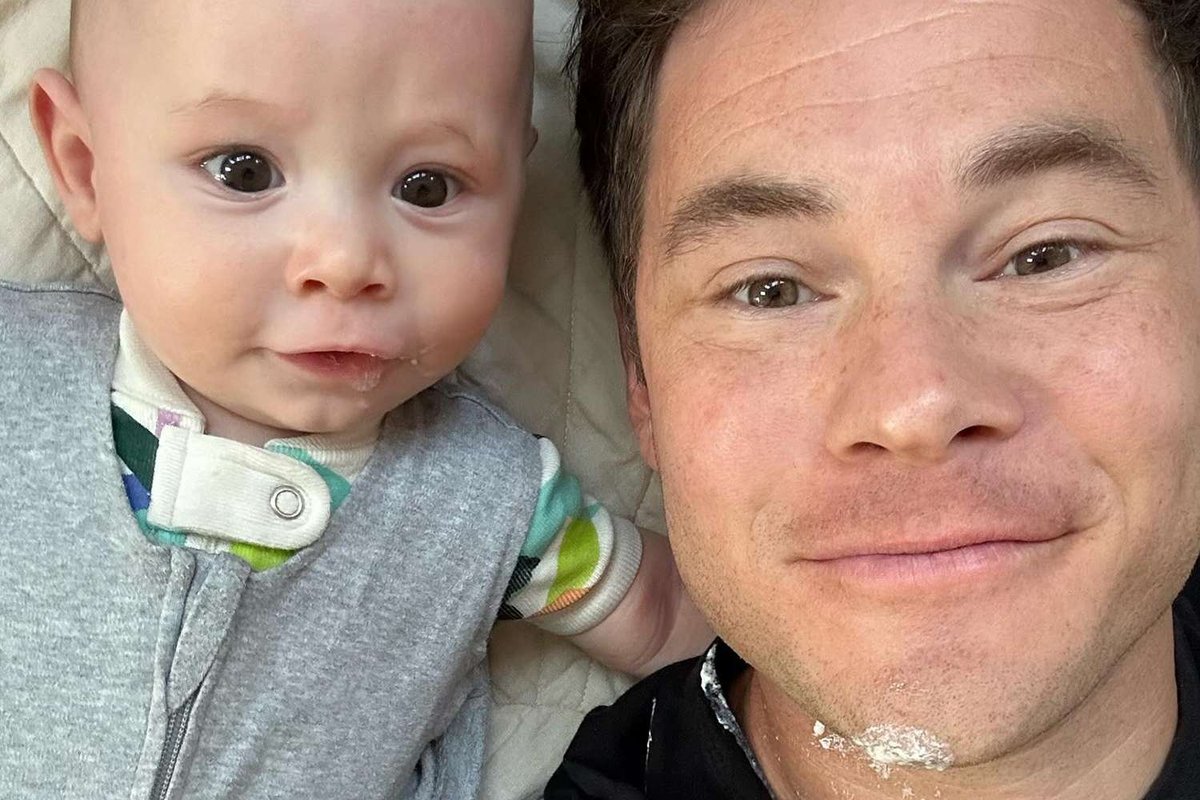
Adam DeVine’s prominent leg scars are the result of a near-fatal accident in June 1995, when he was 11 years old. Struck and dragged by a 42-ton cement truck while riding his bicycle in Omaha, Nebraska, DeVine suffered massive lower-body trauma, underwent more than 25 surgeries, and spent years in physical therapy re-learning to walk.
The 1995 Cement Truck Accident: What Happened in Omaha
In June 1995, 11-year-old Adam DeVine was doing what millions of children do during summer break: riding his bicycle down a residential street in Omaha, Nebraska, heading to a local convenience store to buy a frozen slushie. As he attempted to cross a busy intersection while walking his bicycle, a fully loaded 42-ton cement truck struck him.
The immediate mechanics of the collision saved his life while simultaneously causing catastrophic lower-body trauma. The bicycle took the brunt of the truck’s initial impact, preventing the massive heavy vehicle from rolling directly over his vital thoracic and abdominal organs. However, the force of the impact pinned DeVine underneath the truck, dragging him along the asphalt before the driver could bring the multi-ton vehicle to a complete stop.
Emergency medical services (EMS) arrived rapidly at the scene to find severe trauma focused predominantly on his lower extremities. The friction and pressure of the collision stripped away extensive layers of skin, muscle tissue, and fascia, exposing bone and causing acute systemic shock. Medical personnel stabilized him at the scene before rushing him to a regional trauma unit, where doctors placed him in a medically induced coma to manage acute systemic pain, stabilize his vital signs, and prevent immediate traumatic shock from causing organ failure.
For two weeks, DeVine remained unconscious while surgical teams worked continuously to assess the structural damage. Both of his legs sustained multiple compound fractures, widespread soft-tissue tearing, severe arterial damage, and acute surgical risk of amputation. In addition to his leg injuries, the traumatic compression caused collapsed lungs and widespread infection risks from street debris ground into open wounds.
Medical Recovery, Surgeries, and Physical Rehabilitation
The medical journey that followed the initial accident was extraordinary in its clinical complexity and physical demands. Over a multi-year period, DeVine underwent more than 25 separate surgical procedures aimed at reconstructive repair, tissue salvage, bone stabilization, and scar revision.
Accident (June 1995) ➔ Medically Induced Coma (2 Weeks) ➔ 25+ Reconstructive Surgeries ➔ Intensive Physical Therapy ➔ Functional Mobility Restoration
The primary clinical focus during the early surgical phase was limb salvage. Doctors fought to prevent infection—a major threat given the amount of particulate matter introduced into open wounds during the crash—and to revascularize damaged tissues. Reconstructive surgeons utilized skin grafts pulled from unaffected parts of his torso and upper body to rebuild the outer dermal layers of his legs. Bone grafts and internal hardware were required to realign the crushed structural framework of his lower legs.
The Surgical Milestones
- Debridement and Infection Control: Initial surgeries focused on cleaning deep tissue wounds, removing necrotic tissue, and extracting embedded road debris to minimize life-threatening sepsis.
- Limb Salvage and Bone Alignment: Orthopedic surgeons used pins, rods, and external fixation devices to reassemble shattered bones across both legs.
- Soft-Tissue Reconstruction and Skin Grafting: Plastic surgeons performed extensive dermatological grafts, moving healthy skin layers to cover exposed muscular structures and bone.
- Scar Revision and Contracture Release: Subsequent procedures addressed joint contractures—where severe scar tissue pulls skin tight and limits joint movement—allowing for functional leg flexion.
Following the acute surgical interventions, DeVine faced a daunting physical therapy regimen. Bound to a wheelchair for nearly two years, he lost significant muscle mass and motor control in his lower extremities. Re-learning to walk required rebuilding neuromuscular connections, stretching dense, inelastic scar tissue, and enduring intense physical discomfort.
Pediatric physical therapy required daily exercises to prevent the newly grafted skin from contracting to the point of permanent immobility. Despite initial medical warnings that he might never walk unassisted again, years of rigorous rehabilitation allowed him to regain full mobility, though extensive scar tissue remains visible across both legs from the knees down to the ankles.
The Psychological Impact and How Scars Shaped His Comedy Career
Navigating early adolescence with severe physical scarring and a pronounced limp presented profound emotional and psychological challenges. Returning to middle school in a wheelchair, adorned with dynamic surgical braces and extensive scarring, made DeVine an immediate target for unwanted attention, staring, and childhood teasing.
Rather than withdrawing socially, DeVine developed a defensive coping mechanism that ultimately defined his professional life: humor. Recognizing that peers felt uncomfortable or curious around his altered physical appearance, he intentionally used self-deprecating comedy and dynamic storytelling to control the narrative.
By making jokes about his situation before others could comment, he neutralized potential bullying and deflected tension. Comedy became an emotional shield and a tool for social connection. He began crafting comedic skits, doing impression work, and performing stand-up in high school and local venues, building the improvisational agility that later made him a household name.
Physical Trauma & Visible Scars ➔ Social Friction & Bullying Risk ➔ Defensive Humor Coping Mechanism ➔ Early Performance & Stand-up ➔ Professional Acting Career
In multiple media interviews, including appearances on The Off Camera Show and Armchair Expert with Dax Shepard, DeVine has reflected on how those traumatic years built his psychological resilience. He has noted that enduring years of pain, physical uncertainty, and social self-consciousness eradicated his fear of public rejection or stage fright. Auditioning for Hollywood roles felt manageable compared to the ordeal of undergoing dozens of surgeries and re-learning basic motor functions.
Public Perception, Transparency, and Body Positivity
Unlike many Hollywood performers who attempt to conceal surgical marks, skin grafts, or physical asymmetry, Adam DeVine has consistently embraced his scars throughout his television and film career.
In projects like comedy series Workaholics and movies such as Pitch Perfect, The Off-Roaders, and Mike and Dave Need Wedding Dates, DeVine frequently appears in shorts or swim trunks without cosmetic concealment. His refusal to cover his legs with body makeup or digital editing has made his visible physical history a natural part of his onscreen persona.
Concealment (Traditional Hollywood) vs. Authentic Display (Adam DeVine) ------------------------------------------------------------------------ • Heavy body makeup • Unaltered physical appearance • Digital retouches • Normalization of severe scars • Wardrobe limitations • Full range of comedic physical roles
By presenting his scarred legs openly on major film sets and global television broadcasts, DeVine has inadvertently become a public figure for body positivity and trauma survival. Fans and pediatric surgery patients around the world regularly contact him to express appreciation for his uninhibited physical confidence. He demonstrates that severe pediatric trauma, physical scarring, and structural limb differences do not prevent a person from reaching the summit of mainstream entertainment.
Summary of Adam DeVine’s Trauma and Surgical Timeline
The following table summarizes the key milestones, medical interventions, and long-term outcomes associated with Adam DeVine’s childhood accident and recovery:
| Timeline / Phase | Key Medical Event or Experience | Clinical & Physical Details | Long-Term Significance |
|---|---|---|---|
| June 1995 | Cement Truck Collision | Struck and dragged by a 42-ton cement truck while walking a bike in Omaha, NE. | Caused extensive lower-body crush injuries, bone fractures, and soft-tissue loss. |
| Initial Hospitalization | Medically Induced Coma | Placed in a two-week coma to prevent fatal shock and manage extreme pain. | Stabilized vital organs, reduced acute systemic shock, and allowed initial surgical assessment. |
| Reconstructive Phase | 25+ Surgical Operations | Included debridement, bone pinning, soft-tissue repair, and skin grafting. | Successfully achieved limb salvage, preventing double amputation of lower legs. |
| Rehabilitation Period | 2+ Years of Physical Therapy | Used a wheelchair; completed daily contracture stretches and gait retraining. | Restored full independent walking ability, exceeding original medical expectations. |
| Adolescence & Early Career | Social Adaptation via Humor | Used comedy to manage public staring and peer comments regarding visible scars. | Sparked interest in stand-up comedy, improv, and acting as a long-term profession. |
| Mainstream Success | Hollywood Transparency | Displays legs un-edited in film/TV roles (Workaholics, Pitch Perfect). | Serves as an inspirational figure for trauma survivors and pediatric patients. |
Pediatric Lower-Extremity Trauma and Reconstructive Surgery Context
Understanding the clinical reality of Adam DeVine’s scars requires examining how pediatric orthopedic and plastic surgery operated during the mid-1990s. Pediatric severe lower-extremity trauma presents unique surgical hurdles compared to adult trauma, primarily because a child’s bones and skin tissues are still actively growing.
Skin Grafts and Scar Tissue Maturation
When deep dermis and subcutaneous fat layers are destroyed by friction burns or crushing forces, plastic surgeons must perform autologous skin grafting. This process involves harvesting split-thickness or full-thickness skin sheets from a donor site (such as the thighs, back, or abdomen) and applying them to the cleaned wound bed.
- Hypertrophic Scarring: Grafted skin and deep wound sites often form thick, raised scar tissue due to excess collagen deposition during healing.
- Contracture Formation: Unlike normal skin, mature scar tissue lacks elasticity. As a growing child develops, tight scar tissue can pull on nearby joints, severely restricting range of motion unless surgically released or routinely stretched.
- Pigmentation Differences: Skin grafts typically retain the pigmentation and texture characteristics of donor sites, creating permanent visual variance from surrounding uninjured tissue.
For an 11-year-old child undergoing growth spurts, scar contractures frequently require repeated revision surgeries throughout adolescence to ensure the skin expands alongside skeletal lengthening. DeVine’s high number of surgeries (over 25) reflects this ongoing process of surgical release, tissue management, and hardware removal as his body grew into adulthood.
Medical Note: This article provides historical and biographical context based on publicly available statements and established clinical principles. It is not intended as medical advice. Individuals recovering from severe trauma or undergoing scar revision should consult board-certified orthopedic and plastic surgery specialists.
Practical Takeaways for Trauma Survivors and Families
Adam DeVine’s journey offers actionable insights for individuals navigating severe physical injury, pediatric trauma recovery, or visible body scarring:
- Prioritize Long-Term Rehabilitation Consistency: Re-learning motor control requires persistent adherence to physical therapy. Preventing joint contractures around scar tissue demands daily mobility exercises long after initial hospital discharge.
- Develop Adaptive Psychological Strategies: Processing visible physical changes is an ongoing emotional journey. Utilizing creative outlets—whether comedy, writing, art, or athletics—helps individuals regain narrative agency over their physical identity.
- Seek Specialized Pediatric Reconstruction Care: For young trauma patients, continuous follow-up with orthopedic and pediatric plastic surgeons is essential to monitor bone growth plates and scar tissue elasticity through major growth spurts.
- Normalize Physical Differences: Embracing visible scars rather than treating them as flaws to hide promotes personal self-acceptance and challenges societal standards around physical perfection.
Frequently Asked Questions
Why does Adam DeVine have scars on his legs?
Adam DeVine’s leg scars are the result of a severe childhood accident in June 1995. At age 11, he was hit and dragged by a 42-ton cement truck in Omaha, Nebraska, resulting in extensive crushed bones, soft-tissue loss, and skin graft surgeries.
How old was Adam DeVine when he was hit by a cement truck?
Adam DeVine was 11 years old at the time of the accident. The collision occurred during his summer vacation while he was walking his bicycle across a street.
Did Adam DeVine lose his legs in the accident?
No, Adam DeVine did not lose his legs, though doctors initially feared amputation might be necessary due to the severity of the crush trauma. Over 25 surgical operations and intensive physical therapy successfully saved his limbs and restored his ability to walk.
How did Adam DeVine's accident influence his comedy career?
Returning to school in a wheelchair with visible scars made DeVine an target for staring and teasing. He began using comedy and self-deprecating humor as a defense mechanism to make people comfortable, which ultimately inspired his passion for stand-up comedy and acting.
Does Adam DeVine hide his scars in movies and TV shows?
No, Adam DeVine does not cover his scars with makeup or request digital editing in his screen appearances. He routinely wears shorts and swim trunks in movies like Pitch Perfect and shows like Workaholics, publicly embracing his natural physical appearance.
How many surgeries did Adam DeVine have on his legs?
Adam DeVine underwent more than 25 surgical procedures over several years. These operations included wound cleaning (debridement), structural bone alignment, skin grafting, and scar tissue contracture releases.
Conclusion
Adam DeVine’s leg scars represent a profound story of physical survival, surgical dedication, and psychological resilience. From suffering catastrophic trauma beneath a 42-ton cement truck at age 11 to enduring more than two dozen operations, his path to recovery required exceptional perseverance. By transforming the emotional friction of physical trauma into a successful comedy career and remaining completely uninhibited about his appearance on screen, DeVine continues to demonstrate how visible scars can become a symbol of strength, authenticity, and survival.