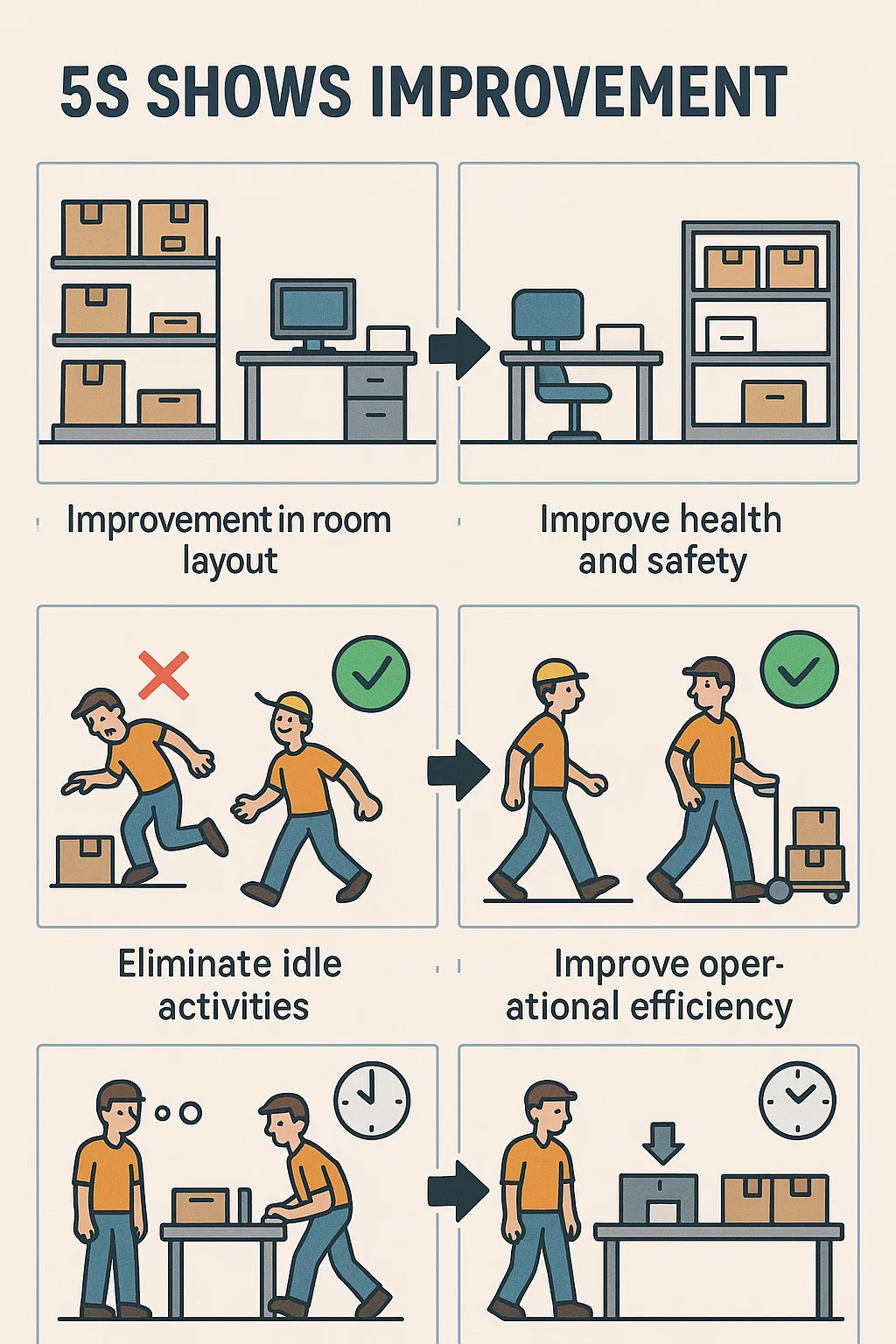
The 5S rules provide a systematic framework for workplace organization and efficiency through five Japanese terms: Sort, Set in Order, Shine, Standardize, and Sustain. This methodology reduces waste, improves safety, and increases productivity by ensuring that every tool, material, and piece of information has a designated, logical place within the workflow.
Workplace efficiency is rarely the result of a single grand gesture; rather, it is the product of disciplined, repeatable habits. In the landscape of 2026, where lean operations and hybrid work environments demand maximum output with minimal waste, the 5S methodology remains the gold standard for organizational excellence. Originating from the Toyota Production System (TPS), 5S is more than just a "housekeeping" initiative. It is a foundational pillar of Lean manufacturing and Kaizen (continuous improvement) that transforms a chaotic environment into a streamlined, visual workspace.
By implementing 5S, organizations can identify "Muda" (waste) that often goes unnoticed in a cluttered environment. This includes wasted motion, unnecessary inventory, and time spent searching for tools. When 5S is applied correctly, it creates a safer, more pleasant environment for employees and provides a clear signal of professional discipline to stakeholders and customers.
The Evolution of 5S: From the Factory Floor to 2026 Modern Offices
While 5S was born in the industrial manufacturing sector, its application has expanded significantly. As of 2026, the principles are equally relevant in healthcare facilities, software development studios, and even remote digital environments. The core challenge remains the same: how to manage resources so that value-added work can proceed without interruption.
The transition from physical 5S to "Digital 5S" represents a major shift in how we view workplace efficiency. In a modern context, a workspace is no longer just a desk or a workbench; it is a collection of cloud-based directories, communication channels, and project management tools. The 5S rules provide the logic needed to govern these environments just as effectively as they do a physical production line.
The First Rule: Sort (Seiri) – Eliminating the Unnecessary
The first step in the 5S journey is Sort, which involves a critical evaluation of everything in the work area. The objective is to distinguish between what is necessary for the current work and what is not. In many workplaces, "just-in-case" hoarding leads to a buildup of obsolete tools, expired materials, and redundant paperwork that physically and mentally slows down the team.
The Red Tagging Process
A common technical approach to Sorting is the "Red Tag" system. Items that are of questionable necessity are marked with a red tag and moved to a designated holding area. These tags typically record the item name, the date it was tagged, the person responsible, and the reason for the tag.
If the items remain unused after a predetermined period—often 30 days in standard 2026 industrial guidelines—they are permanently removed, sold, or recycled. This process prevents emotional attachment from overriding operational logic. Sorting also applies to the digital realm, where "data rot" (redundant, obsolete, or trivial data) can bloat systems and impede search efficiency.
Criteria for Retention
To successfully Sort, teams must establish clear criteria. Questions should include:
- Does this item serve a specific purpose in the daily or weekly workflow?
- If this item were removed, would it stop production or decrease quality?
- Is there a more efficient version of this item available?
The Second Rule: Set in Order (Seiton) – Optimizing Workflow through Ergonomics
Once the clutter is removed, the remaining items must be arranged so they are easy to use, easy to find, and easy to return. Set in Order is rooted in ergonomics and time-motion studies. The goal is to minimize "non-value-added movement," such as walking across a room to find a specific wrench or clicking through five folders to find a project brief.
Visual Management and Labeling
A hallmark of a 5S-compliant workspace is visual management. This involves using floor markings, shadow boards, and color-coded labels to indicate where items belong. Shadow boards, for instance, provide a visual outline of a tool; if the tool is missing, the void is immediately apparent, signaling a break in the standard process.
In 2026, many organizations have integrated IoT (Internet of Things) sensors into their "Set in Order" phase. Smart shelving can alert managers when inventory levels are low or when a high-value tool has not been returned to its station. The primary rule here is "a place for everything and everything in its place."
Frequency of Use Mapping
Items should be placed according to how often they are used:
- Direct Reach: Tools used every few minutes.
- Workstation Proximity: Materials used daily.
- Storage Area: Equipment used weekly or monthly.
- Off-site/Deep Storage: Items used seasonally or for historical reference.
The Third Rule: Shine (Seiso) – Cleaning as a Form of Inspection
The Shine phase is often misinterpreted as simple janitorial work. In a professional 5S context, "Shining" means cleaning the workspace to the point where problems become visible. When a machine is covered in grease and dust, a small oil leak might go unnoticed until the engine fails. If the machine is kept pristine, that same leak is spotted instantly.
Preventive Maintenance through Cleaning
Cleaning serves as a proactive inspection. As employees clean their tools and workstations, they are encouraged to look for wear, damage, or misalignments. This bridges the gap between general operations and maintenance. By making "Shine" a daily five-minute habit, companies often see a significant reduction in unexpected equipment downtime.
The Psychological Impact
A clean environment also has a profound impact on employee morale and safety. Slip-and-fall hazards are eliminated, and the psychological "broken window theory" is reversed—employees are more likely to respect and maintain a workspace that is clearly cared for. In 2026, the Occupational Safety and Health Administration (OSHA) continues to emphasize that cleanliness is a prerequisite for a safe work environment.
The Fourth Rule: Standardize (Seiketsu) – Creating Repeatable Success
The first three steps of 5S are relatively easy to perform as a one-time "blitz." However, without Standardize, the workspace will inevitably return to its original state of chaos. This rule focuses on establishing the procedures and schedules that ensure Sort, Set in Order, and Shine are performed consistently.
Standard Operating Procedures (SOPs)
Standardization involves creating visual checklists and SOPs that define who is responsible for which tasks and when they should occur. These should be posted publicly in the work area. In modern 2026 facilities, these are often displayed on digital tablets at each workstation, allowing for real-time tracking of 5S compliance.
Integration into the Workday
Standardizing means 5S is no longer an "extra" task; it is part of the job description. For example, the last 10 minutes of a shift may be officially designated for 5S activities. This prevents the "we're too busy to clean" excuse, as the organization acknowledges that organization is essential to being "busy" effectively.
The Fifth Rule: Sustain (Shitsuke) – Building a Culture of Continuous Improvement
Sustain is widely considered the most difficult of the 5S rules. It requires a shift in organizational culture where every employee, from the CEO to the front-line worker, takes ownership of the system. Sustaining 5S means that the standards are followed without being told and that there is a mechanism for correcting lapses.
Auditing and Recognition
Regular audits are the engine of sustainability. These are not meant to be punitive but rather to identify areas where the current standards are failing or where more training is needed. Audit scores should be shared transparently. Many high-performing organizations in 2026 use gamification, where teams compete for "5S Excellence" awards, fostering a sense of pride in their environment.
The Role of Leadership
Management must lead by example. If supervisors walk past a misplaced tool without correcting it, the system begins to degrade. Sustaining the 5S rules requires constant reinforcement and the willingness to evolve the standards as the business grows or changes.
Comparing the 5S Stages and Their Impacts
To understand how these rules interact, the following table outlines the focus and result of each stage within a typical 2026 organizational framework.
| 5S Rule | Japanese Term | Core Action | Primary Outcome |
|---|---|---|---|
| Sort | Seiri | Remove unnecessary items | Increased space and reduced clutter |
| Set in Order | Seiton | Organize necessary items | Reduced search time and better ergonomics |
| Shine | Seiso | Clean and inspect area | Early fault detection and improved safety |
| Standardize | Seiketsu | Develop rules and SOPs | Consistency across shifts and departments |
| Sustain | Shitsuke | Cultural discipline | Long-term efficiency and employee pride |
The Intersection of 5S and Safety (The "6th S")
While not part of the original Japanese framework, many modern organizations have adopted a "6S" model by adding Safety as a dedicated pillar. However, practitioners of the original 5S argue that safety is the natural byproduct of the first five rules.
A "Sorted" area has no tripping hazards. A "Set in Order" area ensures heavy items are stored at waist height to prevent back injuries. A "Shined" area reveals leaks and cracks before they cause accidents. By focusing on the 5S rules, an organization inherently creates a safer environment, which is a critical metric for 2026 insurance compliance and labor relations.
Digital 5S: Organizing the 2026 Virtual Workspace
In 2026, the concept of a "workplace" frequently extends to digital file structures and communication platforms like Slack, Microsoft Teams, or custom ERP systems. Applying 5S to digital assets follows the same logic:
- Sort: Delete or archive old drafts, duplicate files, and unused software licenses.
- Set in Order: Create a logical, standardized folder hierarchy and naming convention (e.g., YYYY-MM-DD_ProjectName_Version).
- Shine: Regular "link checks" and clearing out temporary cache files or bloated "General" channels.
- Standardize: Document the data management policy so every new hire knows where to save files.
- Sustain: Monthly digital cleanup hours and automated alerts for non-compliant file naming.
Measuring ROI: The Financial Impact of Organizational Discipline
Implementing 5S is an investment of time and resources. To justify this in a 2026 budget, managers often point to several Key Performance Indicators (KPIs):
- Floor Space Recovery: Organizations often find they can reduce their physical footprint by 10-20% simply by sorting and organizing.
- Reduced Lead Times: By eliminating time spent searching for tools or info, projects move through the pipeline faster.
- Lower Maintenance Costs: Early detection during the "Shine" phase prevents expensive emergency repairs.
- Employee Retention: Workers are statistically more likely to remain at a company that provides a clean, organized, and professional atmosphere.
The National Institute of Standards and Technology (NIST) provides various resources on how Lean methodologies like 5S contribute to small and medium-sized enterprise (SME) competitiveness by lowering overhead.
Common Pitfalls in 5S Implementation
Despite its simplicity, many 5S initiatives fail within the first six months. The most common reasons include:
- Treating it as a "Cleaning Event": If 5S is only done when a VIP visitor is coming, it is not 5S. It must be a daily operational standard.
- Lack of Resources: Employees cannot "Shine" if they aren't provided with cleaning supplies, or "Set in Order" if they don't have shelving or label makers.
- Top-Down Dictation: If employees aren't involved in deciding where tools should go (Set in Order), they will likely ignore the new system because it doesn't fit their actual workflow.
Frequently Asked Questions
What is the most important of the 5S rules?
While all five are interdependent, Sustain is often cited as the most critical because it prevents the system from collapsing. Without sustainability, the efforts put into the first four rules are eventually wasted as the workplace reverts to its previous state.
How much does it cost to implement 5S?
The initial costs are generally low, primarily involving labor hours for sorting and the purchase of basic organizational supplies like labels, paint, and shelving. In 2026, the ROI typically offsets these costs within the first quarter through improved productivity and reduced waste.
Can 5S be applied to a remote or hybrid team?
Absolutely. For remote teams, 5S focuses on the digital environment (Digital 5S) and the home office setup. Companies often provide a "5S Home Kit" or guidelines to help remote workers maintain a professional and efficient workspace, which helps bridge the gap between home and corporate standards.
Does 5S improve employee safety?
Yes. By removing clutter (Sort), defining clear paths (Set in Order), and identifying leaks or hazards through cleaning (Shine), 5S directly addresses the root causes of many workplace accidents.
How often should 5S audits be conducted?
In the early stages, weekly audits are recommended to build the habit. Once the culture is established, monthly or quarterly surprise audits by a cross-functional team are usually sufficient to maintain standards.
Practical Recommendations for 5S Success
To begin your 5S journey in 2026, start with a "Pilot Area." Choose a single department or workstation that is particularly disorganized but has a high impact on your workflow. Document the "Before" state with photos and time-motion data (e.g., how long it takes to find a specific tool).
Follow the 5S rules in order. Once the pilot is successful, the visible improvements in efficiency and morale will serve as the best internal marketing for a company-wide rollout. Remember that 5S is not a destination but a continuous process of refinement. As your business changes, your 5S standards must evolve with it to ensure long-term workplace efficiency.