Finding running shoes that accommodate wide feet without causing blisters, numbness, or pressure points can be a frustrating challenge for runners who require extra room in the toe box and midfoot. Selecting the right wide running shoe involves evaluating specific widths like 2E for men and D for women, or extra-wide options like 4E, alongside cushioning, stability features, and arch support to ensure a comfortable and injury-free stride.
Understanding Wide Feet Running Shoes and Sizing
When shopping for running shoes for wide feet, standard medium widths—designated as "D" for men and "B" for women—often cause uncomfortable compression along the lateral and medial sides of the foot. Over the course of a long run, feet naturally swell and spread under impact, compounding the restriction of a narrow toe box. This can lead to common running injuries such as black toenails, blisters, bunions, and plantar fasciitis.
Shoe manufacturers typically scale widths using standardized industry sizing codes. For men, wide is denoted as 2E, while extra-wide is 4E or even 6E in select specialty models. For women, standard wide is D, and extra-wide is 2E. It is crucial to recognize that sizing up in length to accommodate width rarely works; doing so shifts the shoe's flex point and arch contour away from the natural anatomy of the foot, potentially causing new discomfort and stability issues.
Furthermore, finding the right pair requires understanding the difference between volume and width. Some runners have low-volume feet that are simply broad, while others have high-volume feet that require a higher instep and deeper upper construction. Reviewing the top-rated models available on the market helps isolate which shoes excel in toe-box width, upper flexibility, and structured support.
1. Brooks Ghost 17 (Wide & Extra-Wide Options)
The Brooks Ghost series has long been a staple for neutral runners, and the iteration features specialized sizing that caters exceptionally well to runners requiring extra space. Available in both 2E (wide) and 4E (extra-wide) for men, and D (wide) for women, the Ghost balances plush cushioning with a reliable, structured fit.
Performance and Cushioning
Equipped with responsive midsole technology, the Ghost 17 delivers a balanced ride that is neither too soft nor overly firm. The transition zone from heel to toe feels seamless, making it an excellent daily trainer for high-mileage road runners. The engineered mesh upper is pliable, allowing the forefoot to expand naturally without feeling constrained by synthetic overlays.
Pros and Cons
- Pros:
- True-to-size width grading in multiple options (2E and 4E).
- Durable rubber outsole with excellent traction on pavement.
- Balanced cushioning suitable for daily training and recovery runs.
- Cons:
- The engineered mesh, while breathable, can feel slightly warm during peak summer months.
- Not designed for severe overpronation (lacks aggressive stability features).
2. New Balance Fresh Foam X 1080v13
New Balance is widely recognized as an industry leader in accommodating diverse foot shapes, and the Fresh Foam X 1080v13 is arguably one of the most accommodating maximum-cushion shoes on the market. It is offered in wide (2E) and extra-wide (4E) for men, and wide (D) for women.
Comfort and Upper Construction
The standout feature of the 1080v13 is its thick slab of Fresh Foam X midsole, which provides a plush, pillow-like underfoot feel. Unlike brands that simply widen the midsole platform while keeping the upper tight, New Balance designs the upper using a soft, stretch-knit fabric. This material adapts dynamically to the contours of wide forefeet and bunions, eliminating friction points.
Pros and Cons
- Pros:
- Exceptionally soft and plush cushioning for high-impact protection.
- Highly accommodating stretch-knit upper adapts to foot swelling.
- Available in true extra-wide (4E) options.
- Cons:
- The high stack height and ultra-soft foam can feel slightly mushy for runners who prefer a firm, responsive push-off.
- The outsole rubber is thin in certain wear zones, which may affect long-term durability on rough asphalt.
3. Asics Gel-Kayano 31 (Stability for Wide Feet)
Runners who require both a wide platform and reliable stability for overpronation often struggle to find options that do not squeeze the arch. The Asics Gel-Kayano 31 addresses this by offering dedicated wide widths (2E for men, D for women) paired with advanced structural guidance features.
Stability and Support
The Gel-Kayano 31 utilizes a balanced guidance system rather than a rigid, traditional posting wedge, making it comfortable for neutral runners and moderate overpronators alike. The base of the shoe is naturally broad, providing a stable landing platform that prevents the foot from spilling over the edges of the midsole.
Pros and Cons
- Pros:
- Excellent stability features for overpronation without compromising width.
- Generous platform width through the midfoot and heel.
- High-durability AHARPLUS outsole rubber handles high mileage well.
- Cons:
- Heavier than neutral daily trainers due to the added stability elements.
- Firm underfoot feel compared to pure maximalist cushion shoes.
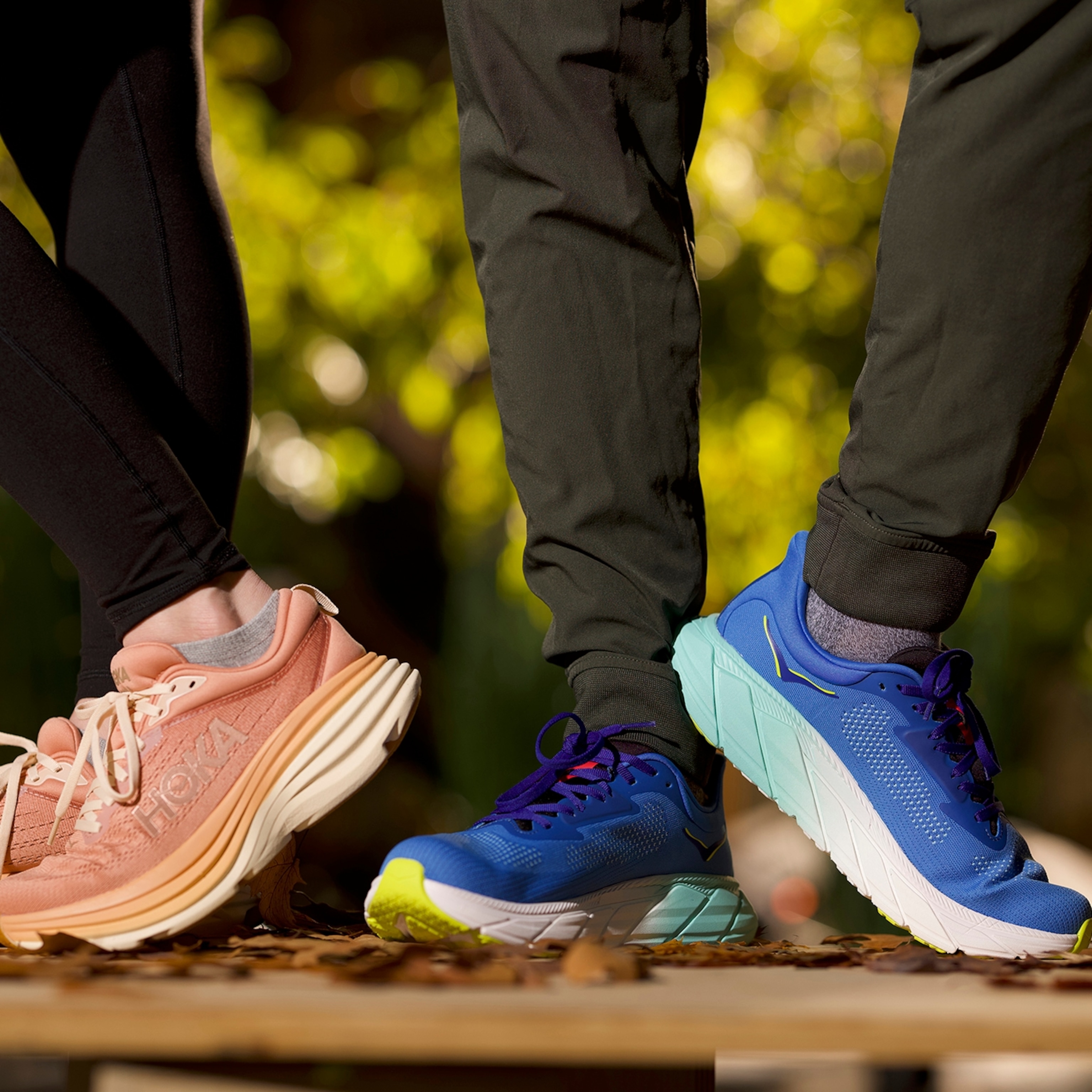
4. Hoka Bondi 8 (Maximal Cushioning and Broad Base)
Hoka is famous for its oversized maximalist midsoles, and the Bondi 8 is built on an inherently wide platform that naturally suits runners who need extra room. In addition to the standard volume build, Hoka offers select colorways in dedicated wide (2E for men, D for women) configurations.
Platform Geometry and Ride
The secret to the Bondi 8’s success for wide feet lies in its-meta rocker geometry and wide footprint. The platform flares out significantly beneath the foot, creating a stable cradle that distributes body weight evenly. The memory foam collar and padded tongue wrap the top of the foot securely, preventing heel slippage even when the forefoot is given ample room to splay.
Pros and Cons
- Pros:
- Exceptionally wide base platform provides inherent stability.
- Maximum cushioning absorbs heavy impact, ideal for recovery and walking.
- Plush collar and tongue construction enhance overall step-in comfort.
- Cons:
- Bulky aesthetic and heavy weight compared to streamlined trainers.
- The maximalist stack height takes time to get used to for runners transitioning from low-profile shoes.
5. Saucony Ride 17 (Responsive Daily Trainer)
For runners who want a more traditional, agile road running shoe without excessive cushioning or heavy stability elements, the Saucony Ride 17 offers a reliable alternative. It is available in wide widths (2E for men, D for women) and delivers a snappy, versatile ride.
Responsiveness and Fit
The Ride 17 features responsive foam that provides an energetic bounce with every toe-off. The toe box is shaped to follow the natural splay of the toes, and the midfoot wrap locks the foot securely to the footbed to prevent sliding during sharp turns or faster intervals.
Pros and Cons
- Pros:
- Versatile performance suitable for daily miles, tempo runs, and gym use.
- Secure heel lock combined with a roomy forefoot.
- Durable rubber placement in high-wear zones.
- Cons:
- Firmer ride may not appeal to runners seeking maximum shock absorption.
- Extra-wide (4E) options are not available; limited strictly to 2E/D wide sizing.
Comparative Overview of Top Wide Running Shoes
| Shoe Model | Primary Category | Men's Widths Available | Women's Widths Available | Best Suited For |
|---|---|---|---|---|
| Brooks Ghost 17 | Neutral Daily Trainer | Medium, Wide (2E), Extra-Wide (4E) | Medium, Wide (D) | Versatile road running and durability |
| New Balance 1080v13 | Maximal Cushion | Medium, Wide (2E), Extra-Wide (4E) | Medium, Wide (D) | Ultra-plush comfort and stretch uppers |
| Asics Gel-Kayano 31 | Stability / Support | Medium, Wide (2E) | Medium, Wide (D) | Overpronation and structural guidance |
| Hoka Bondi 8 | Maximal Cushion | Medium, Wide (2E) | Medium, Wide (D) | Maximum shock absorption and broad base |
| Saucony Ride 17 | Lightweight Trainer | Medium, Wide (2E) | Medium, Wide (D) | Responsive, energetic daily training |
Key Factors to Evaluate When Buying Wide Running Shoes
Choosing the right pair requires looking beyond the basic size label on the box. Runners should evaluate how the shoe interacts with their specific foot morphology and running mechanics.
1. Upper Material Flexibility
Synthetic overlays welded onto the sides of a running shoe can act as restrictive bands that pinch wide feet, regardless of the stated width sizing. Look for shoes utilizing engineered mesh, knit fabrics, or seamless internal construction. These materials stretch and conform to the widest parts of the foot without creating friction blisters.
2. Midsole Platform Width
Some brands offer wide sizing by simply expanding the upper volume while keeping the underlying midsole platform relatively narrow. This can cause the foot to overhang the midsole edges, leading to premature breakdown of the shoe and lateral instability. Examine the underside of the shoe to ensure the footprint itself is broad and supportive.
3. Heel Lock and Midfoot Security
While a wide toe box is essential for forefoot splay, the heel and midfoot must remain secure. If the heel slips out of the collar with every step, runners will develop painful friction blisters. Look for models with structured heel counters, gusseted tongues, and runner's knot lacing capabilities to maintain a secure lockdown.
Frequently Asked Questions
Can I just buy a half-size or full-size up instead of a wide width?
Buying a larger size increases the length of the shoe rather than the width. This misaligns the shoe's flex grooves with the natural bending point of your foot, which can cause arch pain, heel slippage, and toe rubbing against the front of the shoe. Always select your true length in a dedicated wide (2E/4E or D) sizing option.
How do I know if I need a 2E wide or a 4E extra-wide shoe?
If your feet regularly hang over the edges of standard medium-width (D for men, B for women) insoles, or if you experience numbness and pinky-toe pain during runs, you need a 2E wide. If a 2E shoe still leaves red pressure marks along the sides of your midfoot or compresses your bunions, stepping up to an extra-wide 4E model is recommended.
Do wide running shoes wear out faster than standard widths?
Wide running shoes do not inherently wear out faster, but their lifespan depends on how well the upper material contains your foot. If your foot spills significantly over the edges of the midsole platform, the lateral sidewalls of the foam will compress and degrade prematurely compared to a properly supported footbed.
Should I remove the factory insole if my wide shoes feel tight?
Removing the factory insole can temporarily increase internal volume, but it strips away crucial impact attenuation, moisture management, and arch support designed into the shoe. If a shoe requires you to remove the insole to fit comfortably, the model is likely the wrong shape or width for your foot.
Are wide running shoes heavier than standard shoes?
Wide running shoes are typically fractionally heavier than their standard counterparts because they incorporate slightly more upper material and broader foam platforms. However, the weight difference is negligible—usually amounting to less than an ounce—and is well worth the trade-off for pain-free running mechanics.
Final Recommendation
For runners seeking the most adaptable fit across varying foot shapes, the New Balance Fresh Foam X 1080v13 offers the best combination of stretch-knit uppers and true extra-wide options. Runners prioritizing durability and a balanced road feel should opt for the Brooks Ghost 17, while those managing overpronation will find superior structural guidance in the Asics Gel-Kayano 31. Always test new shoes in the afternoon or evening when your feet are naturally at their largest to ensure an accurate fit.