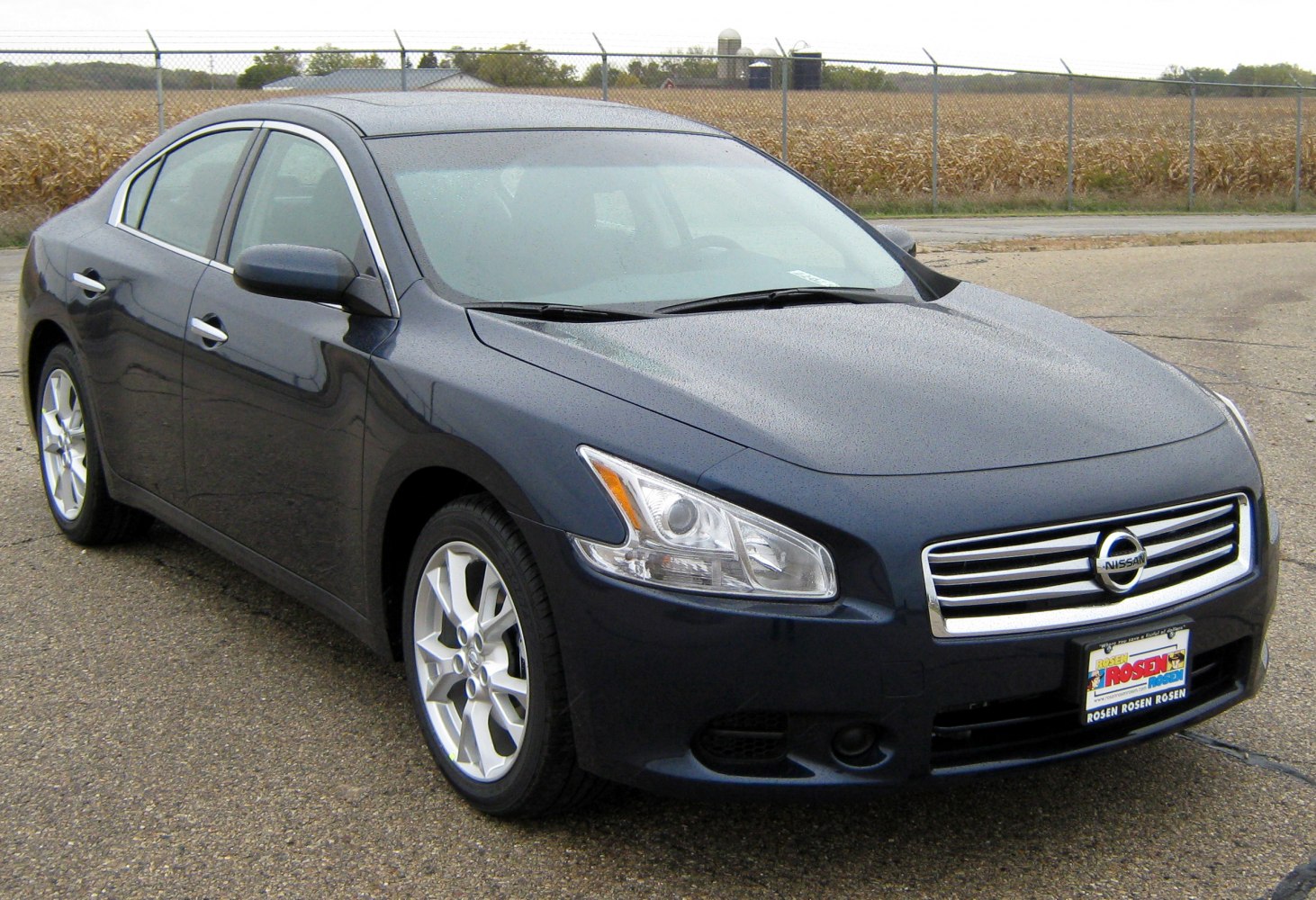
The 2012 Nissan Maxima delivers an EPA-estimated fuel economy of 19 MPG in the city, 26 MPG on the highway, and 22 MPG combined. Powered by a 3.5-liter V6 engine and a Continuously Variable Transmission (CVT), its efficiency reflects its positioning as a "4-Door Sports Car" rather than an economy-focused sedan.
The Technical Foundation of the 2012 Nissan Maxima’s Efficiency
To understand the gas mileage of the 2012 Nissan Maxima, one must first look at the mechanical architecture that defines it. As part of the seventh generation (A35) Maxima, which spanned from 2009 to 2014, the 2012 model was engineered during an era where Nissan was heavily invested in balancing high-displacement V6 performance with the emerging requirements for better fleet-wide fuel averages.
The heart of the 2012 Maxima is the VQ35DE 3.5-liter DOHC 24-valve V6 engine. In this specific iteration, the engine produces 290 horsepower and 261 lb-ft of torque. While this provides the "sport" in its 4-Door Sports Car (4DSC) marketing, it also places a significant demand on fuel. The VQ series is legendary for its smoothness and power delivery, but it is not inherently a "sip-not-gulp" engine.
The transmission is a key factor in the Maxima's timeline of fuel economy. By 2012, Nissan had fully committed to the Xtronic CVT (Continuously Variable Transmission). Unlike a traditional geared automatic, the CVT can adjust its effective gear ratio infinitely to keep the engine in its most efficient power band. On the highway, this allowed the 2012 Maxima to cruise at relatively low RPMs, contributing to its 26 MPG rating. However, the friction and heat management inherent in early-2010s CVT technology meant that city driving still saw a significant drop-off to 19 MPG.
EPA Ratings vs. Real-World Expectations in 2026
As of 2026, many 2012 Nissan Maximas have transitioned into the "high-mileage" category. When these vehicles were new, the EPA ratings were the gold standard for comparison. However, as the vehicle ages, real-world fuel economy often fluctuates based on mechanical wear and maintenance history.
Standard EPA Estimates
- City: 19 MPG
- Highway: 26 MPG
- Combined: 22 MPG
In 2026, owners often report a slight degradation in these figures if the vehicle has not been meticulously maintained. Common issues like carbon buildup on the intake valves, aging oxygen sensors, and degraded catalytic converters can drop the combined average to 18–20 MPG. Conversely, drivers who utilize high-quality synthetic oils and maintain proper tire pressure find that the 3.5L V6 remains surprisingly consistent even after 14 years on the road.
The 2012 Maxima also features a 20.0-gallon fuel tank. With a combined average of 22 MPG, this provides a theoretical cruising range of approximately 440 miles per tank. For long-distance travelers in 2026, this remains a respectable figure, though it is now outperformed by modern hybrids and turbocharged four-cylinder engines that dominate the current mid-size and full-size sedan markets.
A Timeline of Maxima Fuel Economy: How the 2012 Model Fits
The 2012 Nissan Maxima sits in a transition period in automotive history. To see the "timeline of fuel economy," we must compare the 2012 model to its predecessors and its successors. This illustrates how Nissan attempted to squeeze more efficiency out of a large-displacement V6 before eventually redesigning the platform.
| Generation / Year | Powertrain | City MPG | Highway MPG | Combined MPG |
|---|---|---|---|---|
| 6th Gen (2004–2008) | 3.5L V6 / 5-Speed AT or CVT | 17 | 23 | 19 |
| 7th Gen (2012 Maxima) | 3.5L V6 / Xtronic CVT | 19 | 26 | 22 |
| 8th Gen (2016–2023) | 3.5L V6 / Improved CVT | 20 | 30 | 24 |
| Modern Equiv. (2024+) | Turbocharged/Hybrid Options | 28+ | 38+ | 32+ |
The jump from the 6th generation to the 7th generation (which includes the 2012 model) saw a measurable increase in efficiency. This was largely due to the refinement of the Xtronic CVT and better aerodynamic tuning. The 2012 model benefitted from a drag coefficient of approximately 0.33, which was quite competitive for a wide-bodied sedan at the time.
However, the timeline shows that by the time the 8th generation arrived in 2016, Nissan had found ways to push the same 3.5L V6 engine to 30 MPG on the highway through better thermal management and a revised CVT with a wider ratio spread. The 2012 model, therefore, represents the "middle ground" of Maxima efficiency—superior to the thirsty models of the early 2000s, but lacking the refinements of the final gasoline-only generations.
The Role of Premium Fuel in Maximizing MPG
A frequent point of confusion for 2012 Nissan Maxima owners is the fuel requirement. Nissan officially recommended Premium Unleaded fuel (91 octane or higher) for the 2012 Maxima. While the car's ECU (Engine Control Unit) can adjust timing to run on regular 87 octane, doing so has a direct impact on both performance and fuel economy.
When running on regular fuel, the knock sensors detect lower octane and retard the ignition timing to prevent engine pinging. This results in a loss of horsepower (dropping below the rated 290 hp) and, more importantly, a decrease in fuel efficiency. Owners in 2026 often find that the 10-15% increase in price for premium fuel is partially offset by the 2-3 MPG improvement seen during highway cruising. Furthermore, premium fuels often contain higher concentrations of detergents, which help keep the fuel injectors of an older VQ35DE engine clean, preserving the spray pattern necessary for efficient combustion.
Factors That Influence the 2012 Maxima's Gas Mileage
As we analyze this vehicle's fuel economy timeline, we must account for the variables that cause individual cars to deviate from the EPA's laboratory numbers. In 2026, these factors are more critical than ever for used car buyers.
1. Transmission Health and CVT Fluid
The Xtronic CVT in the 2012 Maxima relies on hydraulic pressure and a steel belt. If the CVT fluid is old or has been overheated, the transmission may experience "slip," where the engine RPMs rise without a corresponding increase in wheel speed. This inefficiency directly wastes fuel. Nissan recommended changing the "NS-2" CVT fluid every 60,000 miles, though many experts in 2026 suggest a 30,000-mile interval for aging units to maintain peak efficiency.
2. Aerodynamics and Exterior Condition
The 2012 Maxima's highway mileage of 26 MPG is highly dependent on its aerodynamic profile. Missing underbody shields, damaged front air dams, or even the addition of large aftermarket roof racks can increase the drag coefficient significantly. At highway speeds (70+ MPH), air resistance is the primary consumer of fuel; even small changes to the car's exterior can drop the highway MPG into the low 20s.
3. Wheel and Tire Selection
The 2012 Maxima came with 18-inch or optional 19-inch wheels. The 19-inch wheels, found on the Sport Package, typically use wider, stickier tires. While these improve handling, they increase rolling resistance and weight. For those prioritizing the timeline's maximum fuel economy, the 18-inch wheels with low-rolling-resistance tires are the optimal choice.
Comparative Analysis: 2012 Maxima vs. 2012 Competitors
To accurately place the 2012 Maxima in the timeline of fuel economy, it is helpful to look at how it fared against its primary rivals in the "near-luxury" and full-size sedan segments during its release year.
| 2012 Vehicle | Engine Type | City/Hwy/Combined |
|---|---|---|
| Nissan Maxima | 3.5L V6 | 19 / 26 / 22 |
| Toyota Avalon | 3.5L V6 | 19 / 28 / 23 |
| Acura TL | 3.5L V6 | 20 / 29 / 23 |
| Buick LaCrosse | 3.6L V6 | 17 / 27 / 21 |
| Chrysler 300 | 3.6L V6 | 19 / 31 / 23 |
The Maxima was largely in line with the Toyota Avalon and Acura TL for city driving but trailed slightly on the highway. The Chrysler 300’s 31 MPG highway rating was achieved through an 8-speed automatic transmission, which at the time offered a broader range than Nissan's CVT. This comparison shows that while the Maxima was competitive, its focus on "sportiness" and aggressive throttle mapping meant it sacrificed 1-2 MPG compared to more comfort-oriented or technologically advanced rivals of the same year.
Maintaining 2012 Maxima Efficiency in 2026
If you are operating a 2012 Nissan Maxima in 2026, maintaining its place on the fuel economy timeline requires proactive mechanical care. The following steps are essential for ensuring the vehicle does not become a "gas guzzler" in its later years:
- Mass Air Flow (MAF) Sensor Cleaning: A dirty MAF sensor can send incorrect data to the ECU, causing the engine to run "rich" (using too much fuel). Cleaning this every 30,000 miles is a low-cost way to preserve MPG.
- Spark Plug Replacement: The VQ35DE uses iridium-tipped spark plugs designed for 100,000 miles. However, by 2026, many 2012 models are on their second or third set. Using the correct OEM-spec plugs ensures a complete burn in the combustion chamber.
- Tire Pressure Monitoring: The Maxima is a heavy car, weighing approximately 3,550 lbs. Running tires even 5 PSI low can decrease fuel economy by 1-2%.
- Suspension Alignment: Because the Maxima is often driven spiritedly, the alignment can drift. Misaligned wheels drag across the pavement rather than rolling freely, which creates significant resistance.
Modern Perspectives on the 2012 Maxima's Consumption
In 2026, the 22 MPG combined average of the 2012 Maxima is often viewed through a different lens than it was in 2012. With the rise of electric vehicles (EVs) and high-efficiency hybrids, a car that requires premium fuel and delivers 22 MPG is considered relatively expensive to operate.
According to the U.S. Department of Energy, the average fuel cost for a 2012 Maxima over 15,000 miles (assuming current 2026 fuel prices) is significantly higher than a modern compact or mid-size crossover. However, for enthusiasts, the trade-off is the driving experience. The 2012 Maxima remains one of the last "big" sedans to offer a naturally aspirated V6 that feels mechanical and responsive, a trait that many 2026 models have replaced with small-displacement turbo engines and muffled exhaust notes.
FAQs
Does the 2012 Nissan Maxima really require premium gas?
Nissan recommends 91 octane or higher for the 2012 Maxima to achieve its rated 290 horsepower and 22 combined MPG. While the car can run on 87 octane without immediate damage, the engine's computer will reduce performance, and you will likely notice a 5-10% decrease in gas mileage.
How can I improve the highway MPG on my 2012 Maxima?
The best ways to improve highway fuel economy are to ensure your tires are inflated to the door-jamb specification (usually 33 PSI), use cruise control to avoid erratic throttle inputs, and ensure the engine's air filter is clean. At 2026 maintenance standards, ensuring your CVT fluid is fresh also helps minimize power loss through the drivetrain.
Is the 2012 Maxima more fuel-efficient than the 2012 Altima?
No. The 2012 Altima was available with a 2.5L 4-cylinder engine that achieved much higher fuel economy (approx. 23 city / 32 highway). Even the V6 version of the Altima was slightly more efficient than the Maxima due to the Altima's lower curb weight and different transmission tuning.
Why does my 2012 Maxima get worse mileage in the winter?
Winter fuel blends typically contain less energy per gallon than summer blends. Additionally, the 3.5L V6 takes longer to reach its optimal operating temperature in cold weather, during which time the engine runs a "richer" fuel mixture. Increased use of heaters, defrosters, and winter tires also contributes to lower winter MPG.
What is the typical gas mileage for a high-mileage 2012 Maxima?
A well-maintained high-mileage 2012 Maxima should still achieve close to 20-21 MPG combined. If your vehicle is getting less than 17 MPG combined, it likely has a mechanical issue such as a sticking brake caliper, a failing thermostat, or a clogged catalytic converter.
Practical Recommendation
For those looking to optimize the 2012 Nissan Maxima’s gas mileage in 2026, the most effective action is a comprehensive sensor and fluid audit. Start by replacing the engine air filter and cleaning the Mass Air Flow sensor. If the vehicle has over 100,000 miles, consider replacing the upstream Oxygen (O2) sensors, as they often become "lazy" before they actually trigger a Check Engine Light, leading to poor fuel mapping. Finally, always use a high-quality synthetic 5W-30 oil to reduce internal engine friction. While the 2012 Maxima will never compete with modern hybrids, these steps will ensure it stays at the top of its original fuel economy timeline.