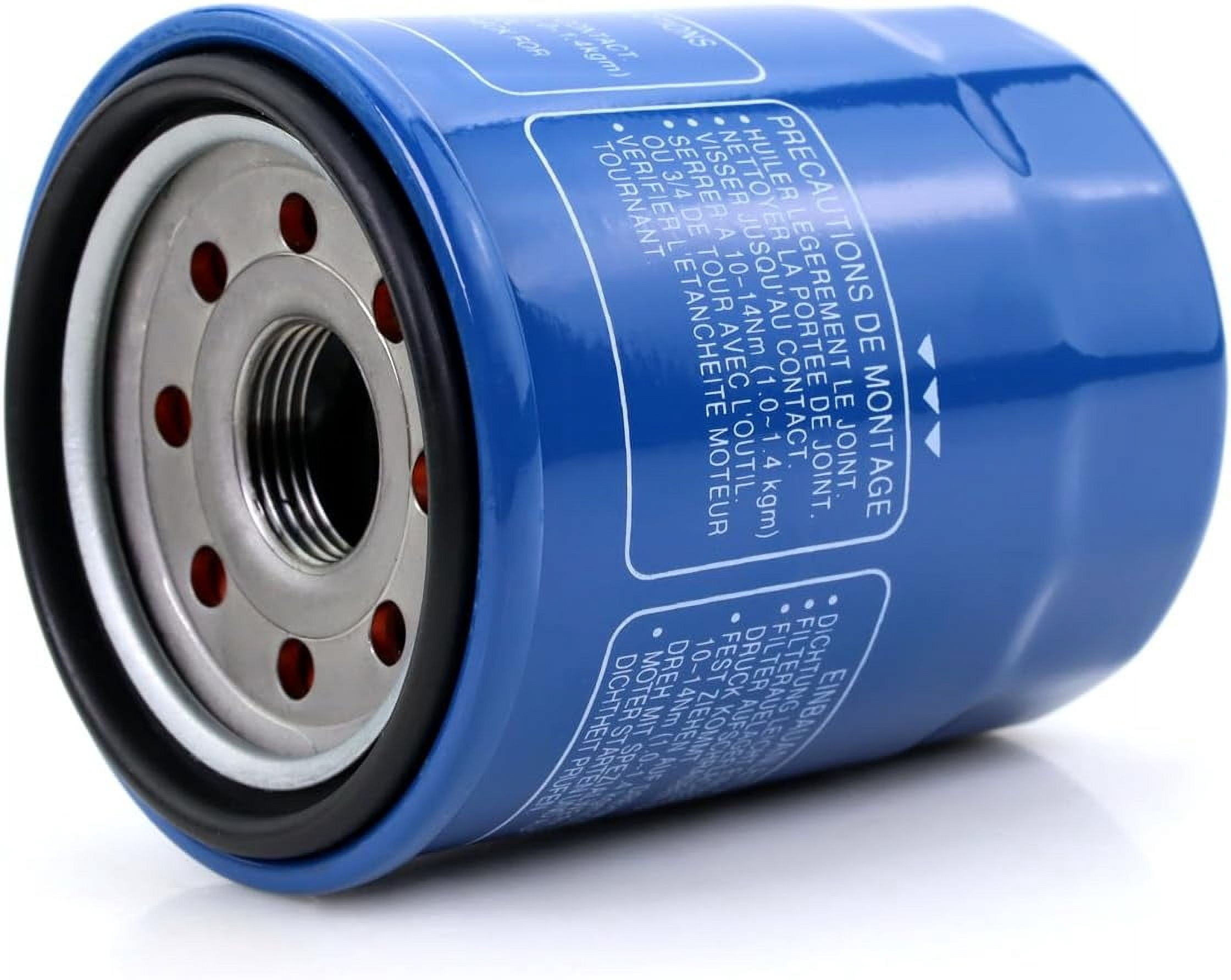
Choosing the right oil filter for a 2010 Honda CR-V is essential for maintaining engine longevity, ensuring proper oil pressure, and protecting internal components from abrasive contaminants. The 2010 Honda CR-V features the 2.4-liter K24Z1 (or K24Z2/K24Z4 variants depending on regional emissions) inline-four engine, a powerplant known for durability but sensitive to proper lubrication and clean filtration media. When evaluating oil filter choices for this specific model, owners encounter a wide landscape of options ranging from factory Original Equipment Manufacturer (OEM) filters to heavy-duty aftermarket alternatives engineered for extended drain intervals or high-efficiency particle trapping. Understanding the physical dimensions, internal bypass valve settings, anti-drain back valve quality, and filtration media types helps vehicle owners navigate choices like Honda OEM (manufactured by Fram or Filtech), Wix, Mobil 1, K&N, and Bosch. This comparison details the construction, performance tradeoffs, and practical selection criteria to help you choose the best filter for your maintenance routine.
Understanding the 2010 Honda CR-V Oil System Specifications
The 2.4-liter engine in the 2010 Honda CR-V utilizes a spin-on style oil filter. The physical thread size for this application is typically M20 x 1.5, with a standard gasket outer diameter designed to seal flush against the engine block mounting pad. Unlike some modern cartridge-style filters, spin-on filters integrate the metal canister, filtration media, anti-drain back valve, and bypass valve into a single self-contained unit.
When replacing the oil filter on a 2010 Honda CR-V, matching the correct bypass relief valve pressure is critical. Honda engines operate with specific oil pressure tolerances, and the internal bypass valve ensures that if the filter becomes saturated or oil viscosity is exceptionally high during cold-weather startups, oil continues to flow to the engine rather than starving the valvetrain. Most aftermarket and OEM filters specified for this vehicle feature a bypass valve opening pressure set between 8 to 12 PSI.
Another vital internal component is the anti-drain back valve—usually constructed of nitrile rubber or silicone. This valve prevents oil from draining out of the filter and back into the oil pan when the engine is turned off. For the 2010 Honda CR-V, where the filter mounts horizontally or at a slight angle depending on chassis clearance, a high-quality anti-drain back valve eliminates dry starts by ensuring oil is immediately available to the engine upon ignition.
Original Equipment Manufacturer (OEM) vs. Aftermarket Filters
When examining filter choices, the primary philosophical divide lies between factory OEM filters and aftermarket alternatives. For decades, Honda has sourced its filters from two primary manufacturing partners for the North American market: Filtech (based in Indiana) and Fram (Honeywell). While both carry the official Honda part number (historically transitioning through numbers like 15400-PLM-A01 to 15400-PLM-A02), experienced technicians and enthusiasts often note physical and structural differences between them.
The Filtech-manufactured OEM filter is widely regarded by enthusiasts for its heavier metal housing, consistent pleat count, and robust internal cardboard-endcap or metal-endcap construction, paired with a reliable rubber anti-drain back seal. The Fram-manufactured Honda OEM filter (often designated with a "A02" suffix) tends to be slightly lighter in weight, utilizing fiber end caps and a somewhat smaller internal surface area. Despite these manufacturing variations, both meet Honda's strict engineering specifications for filtration efficiency and structural integrity under normal driving intervals.
Opting for an OEM filter guarantees exact compatibility with factory pressure relief thresholds and physical clearance constraints. The 2010 Honda CR-V engine bay provides adequate room around the filter mounting location near the front-bottom of the engine block, but straying into oversized aftermarket filters requires careful verification of frame and exhaust clearance.
Leading Aftermarket Filter Brands Compared
The automotive aftermarket offers numerous filtration options designed to outperform standard OEM specifications in areas like particle retention capacity, synthetic media durability, and extended service intervals.
Wix Filters (Wix 51356 / Wix XP 51356XP)
Wix is renowned for its traditional paper-cellulose blend media (standard line) and wire-backed fully synthetic media (Wix XP line). The standard Wix 51356 features a robust metal base plate, coil spring bypass valve, and a silicone anti-drain back valve in many applications. For owners practicing extended oil change intervals (such as 7,500 to 10,000 miles using synthetic oil), the Wix XP line provides reinforced synthetic media capable of trapping microscopic particles down to smaller micron ratings without breaking down under continuous high-temperature exposure.
Mobil 1 Extended Performance (M1-110A)
The Mobil 1 M1-110A is a heavy-duty synthetic filter engineered specifically to complement extended-drain synthetic motor oils. It utilizes a synthetic-blend or fully synthetic filtration media reinforced with a fiberglass backing, achieving high filtration efficiency (often rated at 99% efficiency at 30 microns or greater). It features a heavy-duty canister wall designed to withstand burst pressures far exceeding normal operating ranges and includes a silicone anti-drain back valve that resists hardening and cracking over years of heat cycles.
Bosch Premium (3323)
Bosch Premium filters use a fused cellulose and glass blend media designed to provide high dirt-holding capacity while maintaining low restriction to oil flow. The Bosch 3323 is a popular fitment for the 2010 Honda CR-V, offering a sturdy internal metal center tube and a silicone anti-drain back valve. It represents a balanced middle ground for drivers seeking OEM-like reliability with upgraded internal sealing materials.
K&N Performance Gold (HP-1010)
K&N filters are easily identifiable by their heavy-duty canister design and the 1-inch nut welded onto the end plate, which simplifies removal with a standard wrench socket. While popular for performance applications and ease of maintenance, K&N filters utilize a resin-impregnated cellulose/synthetic blend media designed for high flow rates. They are robustly constructed, though typically priced at a premium compared to standard standard-duty filters.
Feature Comparison of Popular 2010 Honda CR-V Oil Filters
| Filter Brand & Model | Media Type | Anti-Drain Back Valve | Bypass Valve Setting | Best Suited For |
|---|---|---|---|---|
| Honda OEM (Filtech/Fram) | Cellulose / Synthetic Blend | Nitrile / Rubber | Factory Spec (~10 PSI) | Standard factory maintenance intervals |
| Wix 51356 | Cellulose Blend | Nitrile Rubber | 8-11 PSI | Everyday driving, standard oil changes |
| Wix XP 51356XP | Wire-Backed Synthetic | Silicone | 8-11 PSI | Extended drain intervals (synthetic oil) |
| Mobil 1 M1-110A | Synthetic Blend / Fiberglass | Silicone | OEM Spec | Maximum filtration efficiency & longevity |
| Bosch Premium 3323 | Cellulose & Glass Blend | Silicone | OEM Spec | Balanced daily performance and protection |
| K&N HP-1010 | Cellulose / Synthetic Blend | Nitrile / Rubber | OEM Spec | Easy removal via welded nut, high flow |
Evaluating Filtration Efficiency, Micron Ratings, and Flow
When comparing oil filter choices, understanding the balance between filtration efficiency and oil flow is critical. Filtration efficiency is measured by a filter's ability to capture particles of a specific size, expressed in microns. A particle of 20 to 40 microns is roughly visible to the naked eye, while microscopic wear particles range from 5 to 15 microns.
High-efficiency synthetic filters (like the Mobil 1 M1-110A or Wix XP) trap a higher percentage of smaller particles (down to 10–20 microns) compared to basic economy filters. However, tighter filtration media can theoretically increase flow restriction if not engineered correctly. Fortunately, modern premium filters utilize synthetic fibers laid out in a multi-layer matrix that captures contaminants without creating an excessive pressure drop across the filter element.
For a 2010 Honda CR-V operating under normal commuting and highway conditions, standard cellulose blend filters provide adequate protection when changed at recommended 5,000-mile intervals. If you utilize full synthetic oil and practice extended change intervals up to 7,500 or 10,000 miles, investing in a wire-backed synthetic media filter is necessary to prevent media degradation over extended exposure to hot engine oil.
Common Mistakes and Installation Best Practices
Selecting the right filter is only half the battle; proper installation ensures zero leaks, optimal pressure, and easy removal during the next service.
- The Double-Gasket Trap: One of the most frequent errors during oil filter replacement on spin-on applications is leaving the old rubber O-ring gasket stuck to the engine mounting pad. When a new filter is screwed on over the old gasket, oil will rapidly force its way out under pressure, leading to catastrophic oil loss. Always inspect the mating surface of the engine block to ensure it is clean and bare before installing a new filter.
- Lubricating the Gasket: Always dip a clean finger in fresh engine oil and smear a thin film across the rubber gasket of the new filter prior to installation. This lubricates the seal, prevents the rubber from binding or tearing, and ensures the filter can be unthreaded easily during the next oil change.
- Over-Tightening: Oil filters should generally be tightened by hand until the gasket makes firm contact with the engine block, plus an additional 3/4 to 1 full turn. Using filter wrenches to tighten a filter can crush the internal components, distort the gasket, or make future removal nearly impossible.
- Checking Compatibility: Ensure the specific aftermarket part number corresponds correctly to an M20 x 1.5 thread pitch and matches the physical diameter clearance of the 2010 Honda CR-V engine compartment. Using a filter with incorrect thread engagement can strip the mounting stud or cause immediate blowout.
Frequently Asked Questions
Can I use any oil filter that physically screws onto my 2010 Honda CR-V?
No. While many filters with an M20 x 1.5 thread pitch may physically screw onto the engine mounting pad, internal bypass valve pressures, anti-drain back valve quality, and physical dimensions vary widely. Always select a filter specifically cross-referenced for the 2.4L Honda engine to ensure correct oil pressure regulation and clearance.
How often should I change the oil filter on a 2010 Honda CR-V?
The oil filter should be replaced with every oil change. For conventional oil, this is typically every 3,000 to 5,000 miles. If you use high-quality synthetic oil and a synthetic-media filter designed for extended intervals, filters can typically remain in service for 7,500 to 10,000 miles, following your oil manufacturer's guidance.
Do premium synthetic filters improve engine performance?
Premium filters do not increase horsepower or fuel economy. Instead, they protect engine longevity by capturing smaller wear particles more efficiently and maintaining structural integrity over longer service intervals or severe driving conditions (such as towing, idling, or extreme temperatures).
Why do some filters have a metal nut on the end while others do not?
Filters like the K&N Performance line feature a welded 1-inch nut on the end canister primarily for convenience, allowing technicians to use a standard socket wrench for installation and removal. Standard filters rely on traditional band wrenches or filter pliers, which function equally well if proper workspace clearance is available.
Is an OEM Honda filter better than aftermarket options?
OEM Honda filters engineered by Filtech are exceptionally reliable, perfectly matched to the engine's relief pressures, and cost-effective. However, high-end aftermarket synthetic filters like Mobil 1 or Wix XP offer superior particle retention and durability specifically beneficial for extended oil change intervals.
Summary Recommendation
For standard maintenance schedules on a 2010 Honda CR-V using conventional or synthetic-blend oil at 5,000-mile intervals, sticking with the Honda OEM (Filtech) filter or a reliable standard aftermarket option like the Wix 51356 or Bosch Premium 3323 provides optimal value and verified compatibility. If you run full synthetic oil and practice extended change intervals up to 10,000 miles, upgrade to a heavy-duty synthetic-media filter such as the Mobil 1 M1-110A or Wix XP 51356XP to ensure sustained filtration efficiency and robust silicone sealing throughout the entire service window.