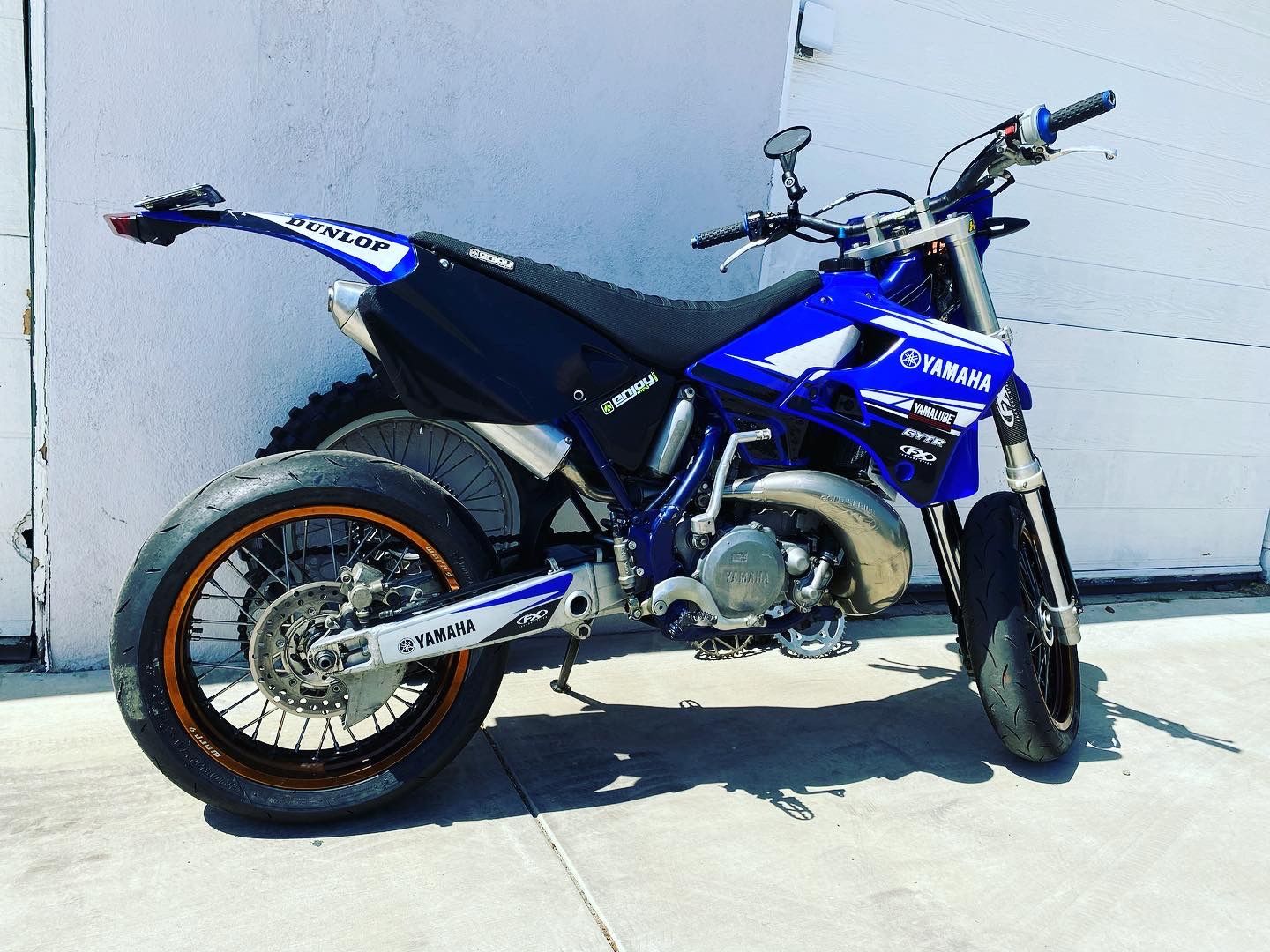
A 2 stroke Yamaha street bike represents an era of lightweight, high-output motorcycle engineering characterized by razor-sharp power-to-weight ratios, distinctive exhaust notes, and mechanical simplicity. Spanning legendary models like the RZ350 and various RD series displacements, these machines combined Grand Prix racing technology with road-legal requirements, leaving an indelible mark on motorcycling history.
The Evolution of Yamaha Two-Stroke Street Motorcycles
The lineage of Yamaha two-stroke street machines traces back to an era when simplicity, high-revving performance, and aggressive powerbands defined lightweight and middleweight motorcycling. Unlike their four-stroke counterparts that relied on complex valvetrains, multiple camshafts, and heavier engine blocks, Yamaha's two-stroke street offerings extracted maximum explosive power from every piston stroke.
Yamaha’s entry into the high-performance two-stroke market gained momentum through its racing successes in international road racing and motocross. The engineering philosophies developed on Grand Prix tracks—such as port timing optimization, expansion chamber design, and lightweight chassis architecture—gradually trickled down to production street bikes. Throughout the 1960s, 1970s, and 1980s, riders sought out these motorcycles for their exceptional acceleration, ease of maintenance, and visceral riding experience.
As emissions regulations tightened globally during the late 1980s and 1990s, the mass production of two-stroke street bikes faced mounting regulatory hurdles. Unburned hydrocarbons and oil combustion byproducts made it increasingly difficult for manufacturers to pass stringent environmental standards. Consequently, major Japanese manufacturers phased out two-stroke street legal machines in favor of cleaner-burning four-stroke engines. However, the engineering footprint left by these bikes remains a high-water mark in motorcycle history, celebrated by enthusiasts and collectors worldwide.
Iconic Models in the Yamaha Two-Stroke Street Lineup
Understanding the cultural and mechanical significance of Yamaha's two-stroke street machines requires examining the specific models that defined the genre. Across various displacements, certain motorcycles achieved iconic status due to their performance capabilities and racing pedigree.
The RD Series (Yamaha RD250, RD350, and RD400)
The Yamaha RD (Race Developed) series served as the quintessential middleweight street bike of the 1970s. Evolving from earlier air-cooled DS and R-series motorcycles, the RD350 introduced advanced porting and the Yamaha Torque Induction System (YTIS), which utilized reed valves to improve low-end and mid-range throttle response.
- RD250: A popular entry-to-mid-level machine offering nimble handling and a forgiving powerband, widely used by commuters and weekend canyon carvers alike.
- RD350: Known affectionately as the "giant killer," this air-cooled twin punched well above its weight class, regularly outperforming much larger displacement four-stroke motorcycles of the era.
- RD400: Introduced later in the decade, the RD400 increased displacement to offer smoother torque delivery, featuring electronic ignition and cast alloy wheels on later variants.
The RZ Series (Yamaha RZ350)
The pinnacle of production two-stroke street performance arrived with the liquid-cooled Yamaha RZ350 (marketed as the RD350LC in Europe and other regions). The "LC" designation stood for Liquid Cooled, a vital technological leap that allowed tighter manufacturing tolerances, higher compression ratios, and sustained high-RPM operation without the risk of thermal seizure.
The RZ350 featured the Yamaha Power Valve System (YPVS). This electronically controlled exhaust valve varied the exhaust port height dynamically based on engine RPM, smoothing out the notoriously peaky powerband of traditional two-stroke engines. At low RPMs, the valve closed to preserve torque; at high RPMs, it opened fully to maximize top-end horsepower. The RZ350 also holds the distinction of being one of the first street bikes to feature standard catalytic converters in certain markets, such as California, to comply with early emissions standards.
Technical Specifications and Comparative Overview
To appreciate the mechanical differences between the most prominent Yamaha two-stroke street variants, reviewing their core factory specifications provides valuable context regarding their evolution.
| Model | Engine Type | Cooling | Induction | Fuel Delivery | Power Output (Claimed) | Wet Weight |
|---|---|---|---|---|---|---|
| Yamaha RD350 (1973) | Air-cooled 2-stroke parallel twin | Air | Reed Valve | Dual Mikuni VM28SC carburetors | 39 hp @ 7,500 RPM | ~143 kg (315 lbs) |
| Yamaha RD400 (1976) | Air-cooled 2-stroke parallel twin | Air | Reed Valve | Dual Mikuni carburetors | 40 hp @ 7,000 RPM | ~160 kg (353 lbs) |
| Yamaha RZ350 (1984) | Liquid-cooled 2-stroke parallel twin | Liquid | Reed Valve / YPVS | Dual Mikuni VM26SS carburetors | 59 hp @ 9,000 RPM | ~148 kg (326 lbs) |
Engineering Principles of Yamaha Two-Stroke Street Engines
The mechanical appeal of a 2 stroke Yamaha street bike lies in its thermodynamic simplicity and high specific output. Unlike a four-stroke engine that requires two full crankshaft rotations (four piston strokes) to complete intake, compression, power, and exhaust cycles, a two-stroke engine completes these phases in a single crankshaft rotation (two piston strokes).
Scavenging and Porting
Without mechanical poppet valves, camshafts, or timing chains, the Yamaha two-stroke engine relies on precision-machined ports carved into the cylinder walls. As the piston travels downward during the power stroke, it uncovers the exhaust port, allowing spent gases to escape. Shortly thereafter, it uncovers transfer ports, allowing pressurized fresh air-fuel mixture from the crankcase to rush into the combustion chamber.
Yamaha engineers optimized this scavenging process through computational modeling and empirical track testing. Proper port shape, height, and angle ensure that fresh charge displaces exhaust gases efficiently while minimizing the loss of unburned fuel straight out the exhaust pipe.
Lubrication Systems: Autolube
Early two-stroke engines required premixing two-stroke oil directly into the gasoline tank at a precise ratio. To make street motorcycles more user-friendly, Yamaha developed the Autolube system in the 1960s.
The Autolube system utilizes a dedicated oil pump driven directly by the engine crankshaft. This pump meters injection oil dynamically based on engine speed and throttle opening, delivering oil directly into the intake tract or main bearings. This innovation eliminated the hassle of manual premixing at gas stations, reduced smoke during low-speed cruising, and extended spark plug life.
Riding Dynamics and Performance Characteristics
Riding a vintage Yamaha two-stroke street machine requires a distinct set of skills and an appreciation for analog motorcycle dynamics. The riding experience is defined by several mechanical realities:
- The Powerband Hit: Without variable valve timing on older models (or prior to YPVS actuation), power delivery is relatively docile at lower RPMs, followed by an aggressive, sudden surge of acceleration when the engine enters its optimal expansion chamber resonance zone.
- Weight-to-Power Advantage: Because the engine components are exceptionally lightweight, handling feels flickable and responsive. Changing lines mid-corner requires minimal steering input compared to heavier four-stroke inline-fours of the same era.
- Engine Braking: Two-stroke engines offer significantly less natural engine braking than four-stroke motorcycles due to the lack of valvetrain resistance. Riders must rely heavily on physical braking systems (discs and drums) rather than rolling off the throttle to slow down.
Maintenance, Restoration, and Ownership Considerations
Maintaining a vintage two-stroke street bike in contemporary times requires specialized mechanical knowledge, access to OEM or aftermarket reproduction parts, and careful attention to preventive maintenance.
Top-End Rebuilds
Pistons, rings, and wrist pin bearings are wearable items that require periodic inspection and replacement. Because two-stroke engines operate at high thermal loads and rely on oil suspended in the fuel-air charge for internal lubrication, top-end overhauls are routine maintenance tasks rather than emergency repairs. Owners typically monitor compression test figures and listen for piston slap or mechanical rattle.
Crankshaft Seals and Air Leaks
A critical vulnerability in older two-stroke street bikes is the condition of the internal crankshaft oil seals. If these rubber seals harden or crack, the engine can draw ambient air past the seals into the crankcase, leaning out the air-fuel mixture. A lean running condition causes elevated combustion temperatures, leading to severe engine damage, such as piston seizure or burned-through aluminum crowns. Regular leak-down testing of the crankcase is an essential diagnostic procedure for responsible owners.
Exhaust Carbon Buildup ("Dross")
The combustion of two-stroke oil inevitably leaves carbon deposits inside the expansion chambers and exhaust ports. Over decades of operation, this carbon buildup restricts exhaust flow, robbing the engine of top-end power. Owners frequently clean expansion chambers using specialized chemical solvents, thermal scorching methods, or mechanical scraping to restore factory exhaust scavenging efficiency.
Frequently Asked Questions
Can you still register a vintage two-stroke Yamaha street bike for road use?
Yes, provided the motorcycle was originally manufactured and titled as a street-legal vehicle and meets the historical registration requirements of your local jurisdiction. Many regions grandfather older vehicles into historic or classic vehicle registries, though owners must ensure all safety equipment, lighting, and registration paperwork remain valid.
What kind of oil should be used in a Yamaha Autolube system?
Modern semi-synthetic or fully synthetic two-stroke injection oil formulated specifically for motorcycles is recommended. Avoid using outboard marine two-stroke oil (TC-W3), as marine formulations are engineered for water-cooled engines operating at lower, constant temperatures and do not provide adequate high-temperature lubrication for high-revving air- or liquid-cooled street motorcycle bearings.
Why do two-stroke street bikes smoke?
Smoke is an inherent byproduct of the total-loss lubrication design, where two-stroke oil is injected into the combustion chamber to lubricate the cylinder walls, piston rings, and bearings before being burned out through the exhaust. While modern synthetic oils burn much cleaner and produce less visible smoke than vintage mineral oils, some smoke—especially upon cold startup—is entirely normal.
How does the YPVS system work on models like the RZ350?
The Yamaha Power Valve System (YPVS) uses a barrel-shaped valve positioned at the top of the exhaust port. An electronic servomotor, controlled by a small CDI box, rotates the valve based on engine RPM signals. At low RPM, the valve lowers into the exhaust tract to increase effective port length and boost torque. As RPM climbs, the valve rotates open to enlarge the exhaust window, enabling maximum horsepower production at high engine speeds.
Are replacement parts difficult to find for older Yamaha RDs and RZs?
While original factory (OEM) parts are increasingly scarce, a robust aftermarket and specialist restoration network exists globally. Dedicated suppliers manufacture reproduction bodywork, electrical components, gaskets, pistons, and clutch assemblies, making it entirely feasible to restore and maintain these motorcycles.
Conclusion and Next Action
Owning, riding, or restoring a 2 stroke Yamaha street bike offers a direct connection to a golden age of uncompromised motorcycle engineering. Whether you are evaluating a potential project bike purchase, sourcing hard-to-find YPVS components, or preparing a classic RD350 for a weekend club ride, prioritizing mechanical inspections—specifically regarding crankcase seals, oil pump calibration, and carburetor jetting—will ensure reliable and exhilarating performance. Begin your journey by consulting model-specific service manuals and connecting with dedicated vintage motorcycle enthusiast communities to source verified technical documentation and parts support.