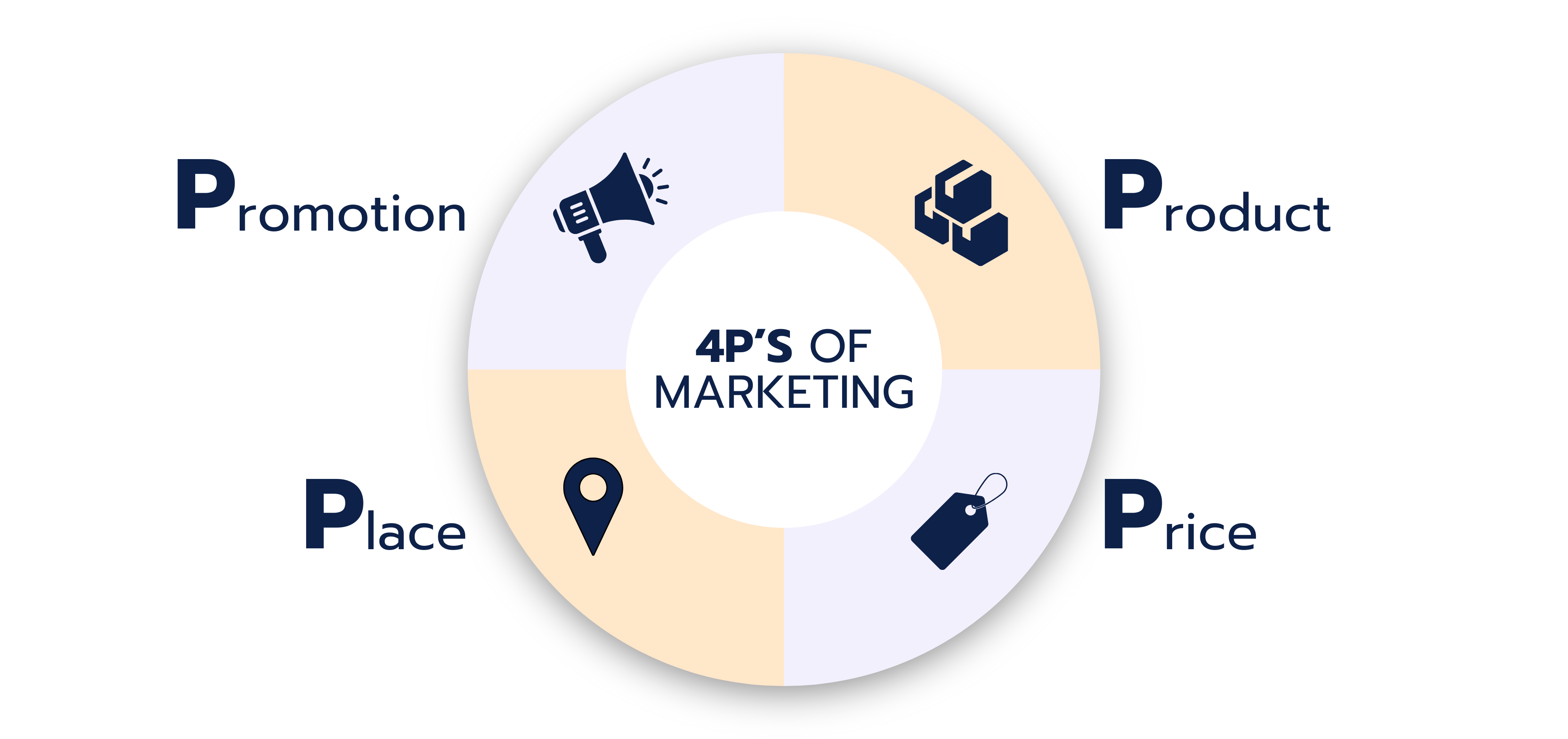
Mastering the 4P framework—Product, Price, Place, and Promotion—requires a structured approach that moves beyond basic theoretical definitions into rigorous market analysis, financial alignment, multichannel distribution, and integrated communications. This guide outlines a 12-step implementation roadmap for strategic brand positioning and sustainable market execution.
The 4P framework, originally popularized by E. Jerome McCarthy and later codified by Philip Kotler, serves as the foundational bedrock of tactical marketing strategy. Whether you are launching an entirely new product line into a competitive market segment or attempting to revitalize an underperforming legacy asset, the 4Ps provide a comprehensive lens through which every commercial decision must be filtered. However, treating these four elements as isolated silos is one of the most common pitfalls in modern business strategy. True mastery involves orchestrating these variables so that they reinforce one another, creating a cohesive value proposition that resonates with target consumers while protecting margins and capturing market share.
Moving from textbook theory to actionable expertise demands discipline, empirical testing, and continuous cross-functional alignment. The following twelve sequential steps break down the entire lifecycle of applying the 4P framework, ensuring that every operational choice directly supports your overarching business objectives.
Step 1: Define Your Core Target Audience and Market Segment
Before you can manipulate any variable within the 4P framework, you must establish an unshakeable understanding of the audience you intend to serve. Market segmentation involves dividing a broad target market into subsets of consumers who share common needs, desires, and purchasing behaviors.
To execute this effectively, go beyond basic demographic markers such as age, gender, and geographic location. Incorporate psychographic data (values, lifestyle choices, attitudes) and behavioral metrics (brand loyalty, usage rate, desired benefits). Conduct primary research through focus groups, customer interviews, and surveys, supplemented by secondary data from industry reports and macroeconomic trends.
Your objective is to build detailed buyer personas that represent your ideal customers. Every subsequent decision regarding product features, pricing thresholds, distribution channels, and promotional messaging will trace back to the pain points and preferences documented in these personas. Without this foundational clarity, your 4P strategy will lack focus, leading to wasted capital and misaligned messaging.
Step 2: Formulate and Refine the Product Strategy
The first "P"—Product—encompasses everything you are offering to the market to satisfy consumer needs or solve specific problems. This includes physical goods, digital software, services, or hybrid offerings. Mastering this step requires you to look past the core product and examine the entire product lifecycle and value architecture.
Begin by defining the core benefit the customer is buying, then layer on the actual product (design, quality level, branding, packaging, and features) and the augmented product (warranty, customer support, delivery terms, and installation services). Ensure your product development process is iterative. Establish feedback loops with early-stage users or beta testers to identify usability friction points, structural defects, or missing features.
Furthermore, evaluate your product portfolio strategy. Determine whether you are pursuing a differentiation strategy (offering unique features that justify a premium) or a cost-leadership strategy (optimizing for efficiency and accessibility). Document product specifications thoroughly to ensure engineering, design, and marketing teams share a unified vision.
Step 3: Establish Pricing Architecture and Value Metrics
Pricing is the only element in the 4P framework that generates revenue; all other elements represent costs. Therefore, mastering price requires a delicate balance between capturing maximum value and maintaining competitive viability within your target market segment.
Begin by analyzing your cost structure, including fixed costs (overhead, R&D, administrative expenses) and variable costs (materials, direct labor, shipping). This establishes your absolute pricing floor. Next, evaluate competitor pricing matrices and substitutes to understand the ceiling dictated by the market. However, the most critical element of modern pricing strategy is customer-perceived value.
Select an appropriate pricing model based on your product type and industry norms:
- Cost-Plus Pricing: Adding a standard markup to total production costs.
- Value-Based Pricing: Setting prices primarily on the consumer's perceived value of the product rather than historical production costs.
- Competitor-Based Pricing: Benchmarking prices against direct market rivals.
- Dynamic or Tiered Pricing: Adjusting price points based on usage tiers, feature access, or real-time market demand (common in SaaS and subscription models).
Factor in discounting strategies, payment terms, and psychological pricing tactics, ensuring your pricing structure communicates the intended quality level of your brand.
Step 4: Map and Optimize the Place (Distribution) Strategy
Place refers to how your product moves from the manufacturer or creator into the hands of the end consumer. Choosing the right distribution channels dictates your market reach, customer acquisition costs, and brand perception.
Evaluate your distribution options across direct and indirect models:
- Direct-to-Consumer (D2C): Selling directly through your own e-commerce website or physical storefronts, giving you full control over customer data, branding, and margins.
- Wholesale and Retail Partners: Leveraging established brick-and-mortar or online retail networks to achieve rapid scale and broad market penetration.
- B2B Intermediaries: Utilizing distributors, agents, or value-added resellers (VARs) to navigate complex enterprise procurement cycles.
Analyze channel conflict risks, logistics requirements, inventory turnover rates, and warehousing costs. A master marketer ensures that the physical or digital environment where the product is purchased aligns seamlessly with the product's price and brand promise. Selling a luxury good in a discount environment, for instance, erodes brand equity regardless of product quality.
Step 5: Design an Integrated Promotion Plan
Promotion encompasses all the communication tactics used to inform, persuade, and remind your target audience about your product. To master this pillar, you must move away from disjointed advertising tactics and build an Integrated Marketing Communications (IMC) strategy.
Blend the core elements of the promotional mix strategically:
- Advertising: Paid media channels (search engine marketing, social media ads, programmatic display, television, or print) designed to build broad awareness.
- Public Relations (PR): Earning media coverage, managing brand reputation, and securing thought-leadership placements.
- Sales Promotion: Short-term incentives (discount codes, flash sales, bundle deals, loyalty points) designed to accelerate purchase decisions.
- Direct Marketing and Email: Personalized communication flows nurtured over time to retain existing customers and drive repeat transactions.
- Content Marketing and SEO: Establishing organic authority by publishing high-value educational resources that address buyer intent.
Ensure that every promotional channel reinforces the same core message, visual identity, and value proposition established in your audience research phase.
Step 6: Align the Four Ps for Internal Consistency
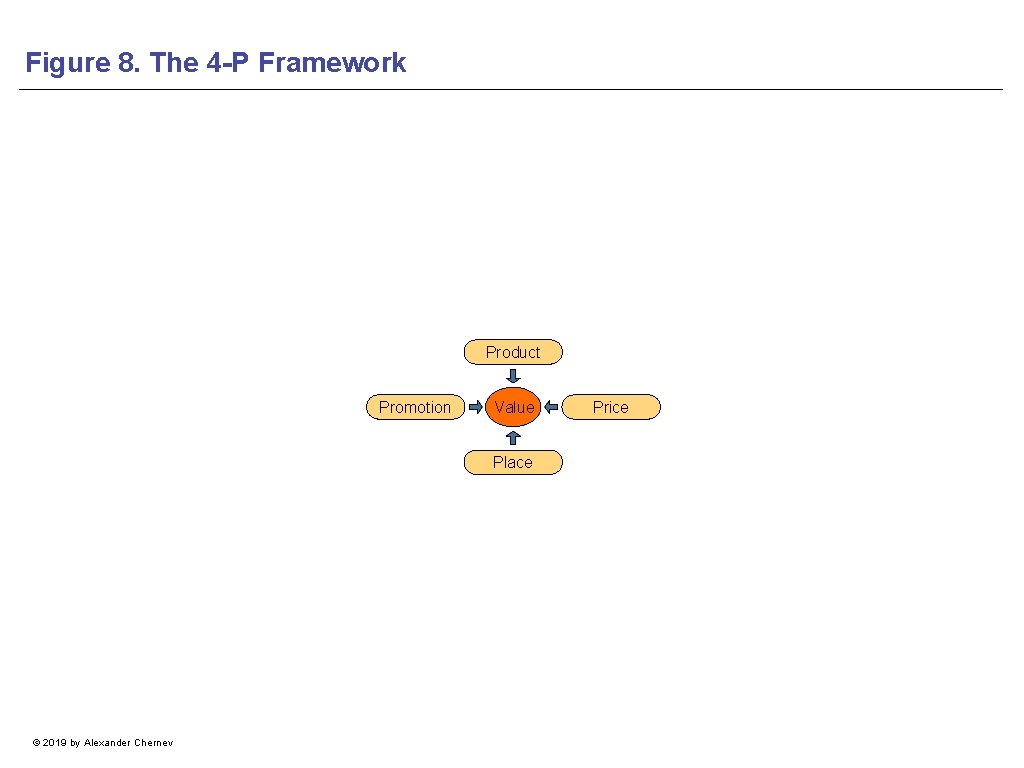
The most critical realization in mastering the 4P framework is that no single "P" operates in a vacuum. A strategic misalignment among the four elements will immediately undermine your market performance.
Consider the interplay of these variables:
- If you raise the Product quality significantly by utilizing rare materials and expert craftsmanship, your Price must increase to reflect that value. This higher price point will restrict your Place strategy to high-end boutiques or specialized online platforms, and your Promotion must focus on exclusivity and heritage rather than mass discounts.
- Conversely, a low-cost, mass-market Product requires competitive Pricing, widespread Place distribution across supermarkets or discount chains, and high-volume Promotion emphasizing accessibility and everyday value.
Conduct cross-functional audits to verify that your marketing mix presents a unified front. If your sales team is discounting heavily while your brand campaigns trumpet luxury exclusivity, your internal misalignment is actively confusing the market.
Step 7: Conduct Competitor Benchmarking and Gap Analysis
Even the most internally sound 4P strategy will fail if it does not account for the competitive landscape. Systematic benchmarking allows you to identify where rivals are vulnerable and where your offering provides differentiated value.
Perform a granular competitor matrix analysis across all four dimensions:
| Framework Dimension | Competitor A Strategy | Competitor B Strategy | Your Brand Strategic Advantage |
|---|---|---|---|
| Product | Feature-heavy, complex UI | Minimalist, streamlined UX | Modular customization with simplified onboarding |
| Price | High enterprise subscription | Freemium with low entry tier | Transparent mid-market tier with flexible scaling |
| Place | Enterprise direct sales force | Self-serve digital checkout | Hybrid self-serve onboarding with dedicated account managers |
| Promotion | Outbound trade shows and PR | Inbound content and SEO | Community-driven advocacy and targeted webinars |
Use this matrix to uncover "white space"—unmet market needs or underserved consumer segments that your competitors are ignoring. Tailor your 4P adjustments to exploit these specific gaps.
Step 8: Build Financial Projections and Unit Economics
Marketing strategy cannot exist independently of financial reality. To master the 4P framework, you must translate your tactical decisions into hard financial models that prove commercial viability.
Calculate your Customer Acquisition Cost (CAC) based on your promotional spend and sales overhead. Compare this against your Customer Lifetime Value (LTV), which is driven by your pricing model, product retention rates, and upsell opportunities. A sustainable business model typically targets an LTV-to-CAC ratio of 3:1 or higher.
Furthermore, model your gross margins after factoring in the cost of goods sold (COGS) and distribution fees associated with your chosen "Place" channels. If your pricing strategy leaves insufficient margin to cover your promotional expenses and operational overhead, you must either renegotiate supplier costs, adjust your pricing architecture, or streamline your distribution channels before going to market.
Step 9: Execute a Controlled Pilot Launch
Deploying a major 4P strategy across an entire global market simultaneously is high-risk. Master strategists utilize controlled pilot launches, soft rollouts, or regional test markets to validate their hypotheses before committing substantial capital.
Select a representative subset of your target market—such as a specific geographic region, a targeted user cohort on your email list, or a secondary product category—to test your marketing mix. Monitor key performance indicators (KPIs) closely during this phase:
- Conversion rates across different pricing tiers.
- Customer acquisition velocity through various promotional channels.
- Initial product satisfaction scores and return/churn rates.
- Logistical efficiency and fulfillment times across distribution partners.
Treat the pilot launch as an empirical experiment designed to surface unforeseen friction points in your strategy.
Step 10: Establish KPIs and Continuous Tracking Mechanisms
Once your full rollout is underway, mastery requires rigorous data collection and performance monitoring. You cannot manage what you do not measure. Establish a balanced dashboard of key performance indicators corresponding to each pillar of the framework.
- Product KPIs: Net Promoter Score (NPS), customer retention rate, feature adoption rate, and product return or defect frequency.
- Price KPIs: Average Order Value (AOV), gross profit margin, price realization rate, and discount dependency ratio.
- Place KPIs: Channel inventory turnover, stockout frequency, partner sales velocity, and fulfillment cost per unit.
- Promotion KPIs: Return on Ad Spend (ROAS), cost per lead (CPL), organic traffic growth, and brand sentiment metrics.
Review these metrics on weekly, monthly, and quarterly cadences to distinguish between short-term tactical anomalies and long-term strategic shifts.
Step 11: Adapt to Market Feedback and Pivot Tactically
Markets are dynamic ecosystems influenced by macroeconomic fluctuations, shifting consumer preferences, technological innovations, and aggressive competitor maneuvers. A rigid adherence to an initial 4P plan will lead to obsolescence.
When performance metrics signal underperformance or external conditions change, apply agile adjustments to specific elements of the framework:
- If your Promotion is generating high traffic but low conversions, the issue may lie in an uncompetitive Price or a Product page that fails to clearly communicate its core value.
- If your Place channel partners are failing to move inventory, you may need to introduce targeted Sales Promotions or update product packaging to stand out on crowded shelves.
Maintain a culture of continuous optimization where hypotheses are tested, data is analyzed, and tactical adjustments are made swiftly without losing sight of overarching brand goals.
Step 12: Scale and Evolve the Marketing Mix Over Time
The final step in mastering the 4P framework is managing its evolution across the product lifecycle. As a product moves from introduction to growth, maturity, and eventually decline, your marketing mix must transform accordingly.
During the Introduction phase, focus heavily on Promotion to build awareness and Product refinement based on early user feedback. As you enter the Growth stage, expand your Place distribution channels to capture surging demand while optimizing production efficiency to protect margins. In the Maturity stage—where market saturation occurs—competition intensifies, requiring tactical shifts in Pricing (such as bundled offerings or promotional discounts) and product line extensions to maintain market share. Finally, in the Decline phase, prune unprofitable distribution channels, minimize promotional expenditures, and prepare to transition capital into next-generation products.
By treating the 4P framework not as a static checklist, but as a living, breathing ecosystem of strategic variables, you position your organization for sustained competitive advantage.
Frequently Asked Questions
What is the 4P framework in marketing?
The 4P framework is a foundational marketing model consisting of Product, Price, Place, and Promotion. It provides a structured checklist and strategic lens that businesses use to define their value proposition, target market, and operational tactics to achieve commercial objectives.
How do the 4Ps influence one another?
The 4Ps are deeply interconnected; a change in one variable forces adjustments in the others. For example, positioning a product as a luxury item (Product) demands a high price point (Price), exclusive distribution networks (Place), and sophisticated, prestige-driven messaging (Promotion). Misalignment among these elements creates brand confusion.
Can the 4P framework be applied to service businesses?
Yes. While originally designed for physical goods, the 4P framework is easily adapted to service industries, software-as-a-service (SaaS), and digital enterprises. In a service context, the "Product" represents the service offering and user experience, "Price" is the subscription or fee structure, "Place" is the digital access portal or service delivery channel, and "Promotion" covers digital marketing and client acquisition strategies.
What are the limitations of the 4P framework?
The primary limitation of the traditional 4P model is its inside-out perspective, focusing heavily on company-controlled variables rather than holistic customer experience. This is why modern marketers often expand it into the 7Ps (adding People, Process, and Physical Evidence) or pair it with customer-centric frameworks like the 4Cs (Customer value, Cost, Convenience, and Communication).
How often should a company review its 4P strategy?
A comprehensive review of the 4P strategy should occur annually, or whenever major market disruptions occur, such as a sharp shift in economic conditions, the introduction of disruptive technologies, or aggressive moves by key competitors. Tactical metrics, however, should be monitored continuously on weekly and monthly dashboards.