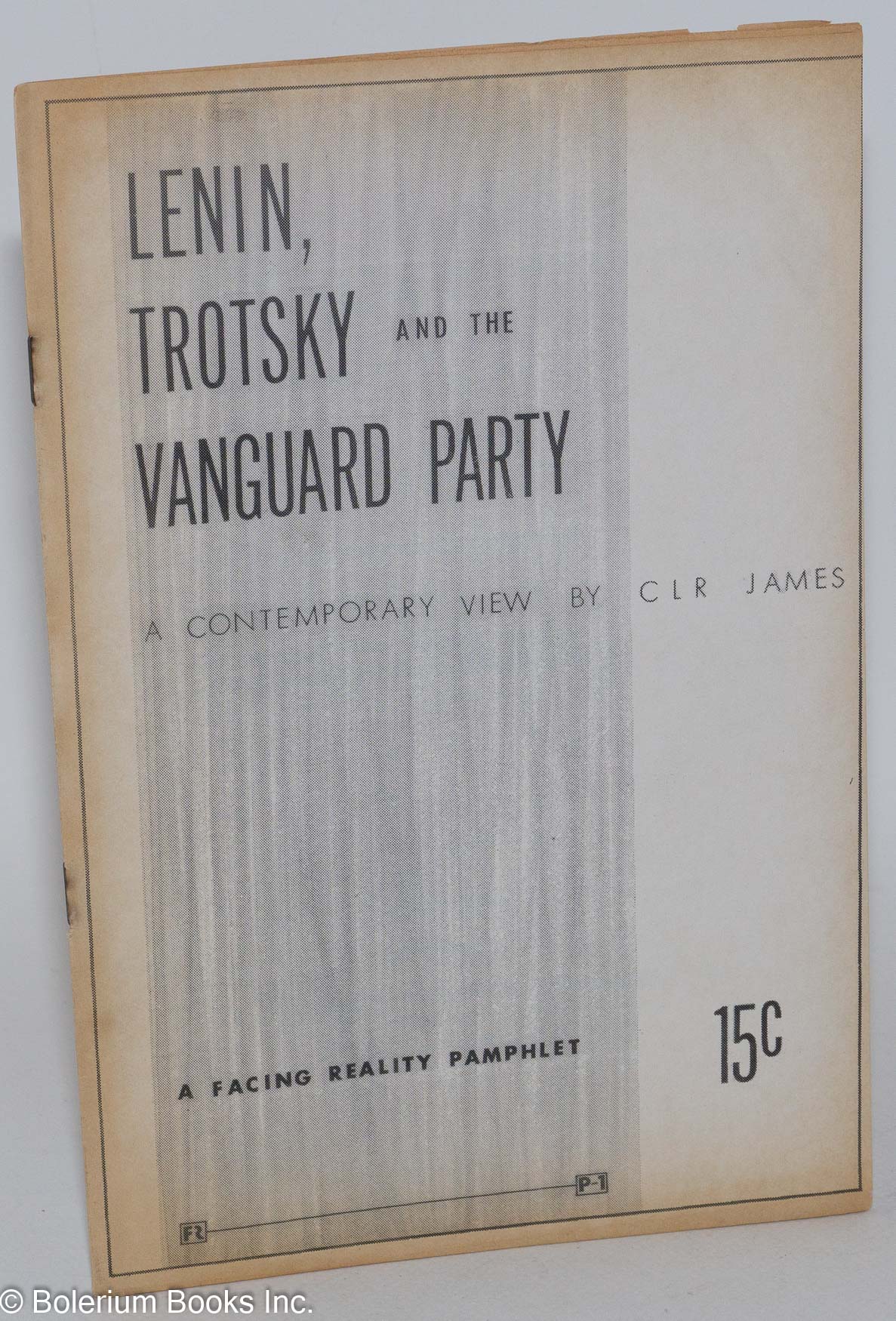
A vanguard party is a centralized organization of advanced, politically conscious revolutionaries intended to guide the broader working class toward the overthrow of capitalism and the establishment of socialism. Operating on principles of democratic centralism, this core leadership cadre acts as the strategic brain of the revolutionary movement, bridging the gap between spontaneous labor strikes and systematic political transformation.
Defining the Vanguard Party: Core Concepts and Terminology
To understand what a vanguard party is, one must first examine its foundational political theory. The term "vanguard"—derived from the French avant-garde, meaning the foremost part of an advancing army—was integrated into Marxist-Leninist political theory to describe a specialized group of professional revolutionaries.
In broad terms, a vanguard party is built on the premise that the working class, under the daily pressures of survival within a capitalist system, naturally develops trade union consciousness rather than revolutionary socialist consciousness. Trade union consciousness leads workers to fight for better wages, shorter hours, and improved working conditions within the existing economic framework. However, it does not inherently lead them to challenge the ownership of the means of production or the political power of the bourgeoisie.
To bridge this gap, revolutionary theorists argued for the creation of a tightly knit organization dedicated to studying political economy, mastering strategy, and maintaining theoretical clarity. This party acts as the conscious element of the class struggle, distilling complex political realities into actionable guidance for the masses.
Democratic Centralism: The Operational Engine
The primary organizational mechanism of a vanguard party is democratic centralism. This principle combines internal democracy with strict operational unity.
- Democratic Component: All members have the right to openly debate policy, elect leadership bodies, and vote on party resolutions during party congresses and local meetings.
- Centralist Component: Once a decision is reached by a majority vote, the entire membership is expected to carry out that decision with absolute discipline, even if individual members disagreed during the debate phase.
Proponents of democratic centralism argue that this structure prevents endless internal factionalism and allows the organization to act swiftly and decisively under hostile political conditions, such as state repression or underground operations. Critics, however, contend that this model inherently concentrates power at the top, effectively stifling genuine internal dissent and paving the way for authoritarian control.
Historical Origins and Theoretical Evolution
The concept of the vanguard party did not emerge in a vacuum; it evolved out of 19th-century European socialist movements and found its most influential articulation in the Russian Empire at the turn of the 20th century.
Karl Marx, Friedrich Engels, and Early Precedents
While Karl Marx and Friedrich Engels did not explicitly map out a blueprint for a modern vanguard party, they laid the groundwork in The Communist Manifesto (1848). They asserted that communists form the most advanced and resolute section of working-class parties globally, pushing all others forward because they possess a theoretical understanding of the movement's conditions, path, and general results.
However, as mass socialist parties grew in Europe—most notably the Social Democratic Party of Germany (SPD)—they often devolved into parliamentary reformism. They focused heavily on electoral politics and trade union negotiations, drifting away from revolutionary objectives. This reformist trend frustrated radical theorists who believed European capitalism was entering a destructive imperialist phase requiring immediate, systemic disruption.
Vladimir Lenin and What Is to Be Done?
The definitive theoretical architecture of the vanguard party was formulated by Vladimir Lenin in his 1902 pamphlet, What Is to Be Done?. Writing in the context of autocratic Tsarist Russia, where open political organizing, free press, and trade unions were illegal, Lenin argued that a mass, loosely organized party was unviable and vulnerable to police infiltration.
Lenin maintained that the working class, left to itself, could not generate a socialist ideology. Socialist theory, he argued, was instead developed by educated intellectuals from the propertied classes who had mastered philosophy, history, and economics. These intellectuals, joined by advanced workers, would form a professional cadre capable of leading the broader labor movement.
"Without revolutionary theory there can be no revolutionary movement... The role of vanguard fighter can be fulfilled only by a party that is guided by the most advanced theory." — Vladimir Lenin, What Is to Be Done?
This formulation created a distinct division between the "vanguard" (the professional revolutionary leadership) and the "rear-guard" (the broader working class and peasantry). The party's task was to take the spontaneous grievances of the masses and channel them into a coordinated, politically focused assault on the state apparatus.
Core Characteristics and Structural Mechanics
A functioning vanguard party typically exhibits specific structural traits that separate it from traditional bourgeois political parties or reformist social-democratic organizations.
| Structural Feature | Description | Strategic Purpose |
|---|---|---|
| Professional Cadre | Full-time, dedicated revolutionaries trained in theory, agitation, and organization. | Ensures continuity, tactical expertise, and resilience against state repression. |
| Democratic Centralism | Open internal debate followed by absolute unity in public action. | Balances participatory input with decisive execution and organizational cohesion. |
| Theoretical Rigor | Continuous study of Marxist-Leninist or allied revolutionary theory and political economy. | Prevents ideological drift, opportunism, and capitulation to reformist pressures. |
| Mass Fronts and Satellites | Specialized auxiliary organizations targeting specific demographics (youth, women, tenants, trade unions). | Broadens the party’s social base and connects core leadership to wider popular struggles. |
| Clandestine Operations | Underground cells, secure communication networks, and compartmentalized structures. | Protects leadership and infrastructure from police surveillance and state crackdowns. |
The Relationship Between the Party and the Masses
A central point of discussion in vanguard politics is the dynamic between the party and the masses. A vanguard party does not substitute itself for the working class; rather, it aims to raise the political consciousness of the working class so that the masses can liberate themselves.
To achieve this, the party utilizes the tactic of the "united front" and engages in day-to-day struggles alongside workers. By proving its dedication and tactical competence in minor battles—such as strikes for better safety standards or protests against rent increases—the vanguard earns the trust of the broader populace. Once trust is established, the party attempts to steer these local economic struggles toward broader political objectives, such as changing government policy or seizing state power.
Historical Applications and Case Studies
The vanguard party model has been adopted, adapted, and tested across various global contexts, yielding starkly different historical outcomes.
The Russian Revolution (1917)
The Bolshevik Party, led by Vladimir Lenin and Leon Trotsky, represents the quintessential historical example of a vanguard party successfully seizing state power. Operating under severe Tsarist censorship, the Bolsheviks maintained an underground network of professional revolutionaries. During the chaos of World War I, economic collapse, and the February 1917 revolution, the Bolsheviks systematically utilized slogans like "Peace, Land, and Bread" to connect with war-weary soldiers, peasants, and factory workers. By October 1917, the party had successfully mobilized Soviets (workers' councils) to overthrow the provisional government, establishing the world's first socialist state.
The Chinese Communist Party (CCP)
Under the leadership of Mao Zedong, the vanguard model underwent a significant strategic shift. Recognizing that China was predominantly agrarian rather than industrial, Mao adapted Marxist-Leninist theory to focus on the peasantry instead of urban factory workers. The CCP built a peasant-based guerrilla army and established rural base areas, eventually surrounding the cities and seizing power in 1949. This demonstrated that the vanguard party model could be adapted to non-industrialized colonial and semi-colonial societies.
Post-Colonial and Anti-Imperialist Movements
Throughout the mid-20th century, anti-colonial liberation movements in Africa, Asia, and Latin America frequently adopted vanguard party structures. Organizations such as Fidel Castro's 26th of July Movement in Cuba, the Viet Cong in Vietnam, and the African National Congress (ANC) in South Africa utilized disciplined, centralized political-military organizations to wage protracted struggles against colonial powers or domestic dictatorships. However, many of these movements later transitioned away from orthodox Marxist-Leninist vanguardism as global geopolitics shifted in the late 20th century.
Criticisms, Controversies, and Theoretical Debates
Despite its historical successes in seizing power, the vanguard party model has faced profound criticisms from anarchists, democratic socialists, and liberal political scientists.
The Substitutionist Critique and Bureaucratization
One of the earliest and most prominent critics of Leninism was the Polish-German Marxist Rosa Luxemburg. While sharing revolutionary goals, Luxemburg warned as early as 1904 that Lenin’s ultra-centralized approach fostered a dangerous dynamic where the Central Committee substituted itself for the working class. She argued that true socialist liberation cannot be engineered from above by professional intellectuals; it must be the self-conscious, messy, and democratic creation of the working masses themselves.
Similarly, critics point out that the centralization required for a vanguard party often degenerates into bureaucratic authoritarianism. When power is concentrated in a tight cadre, dissent is frequently labeled as counter-revolutionary, leading historically to purges, political repression, and the suppression of workers' self-management, as seen during the Stalinist era in the Soviet Union.
Elitism and Democratic Deficit
Liberal and democratic theorists argue that the vanguard model is inherently elitist. By asserting that the working class possesses only "trade union consciousness" and requires an external intelligentsia to guide them, the theory demeans the intellectual capacity of ordinary people. Furthermore, the lack of institutionalized checks and balances in democratic centralism makes peaceful transitions of power impossible, frequently resulting in single-party dictatorships.
Summary and Practical Significance
A vanguard party is a highly disciplined, centralized political organization designed to provide ideological clarity and strategic leadership to working-class revolutionary movements. Rooted in the theoretical works of theorists like Vladimir Lenin, the model emphasizes professional revolutionaries, democratic centralism, and the elevation of spontaneous labor struggles into systemic political challenges. While historically responsible for major 20th-century political transformations in Russia, China, and elsewhere, the model remains intensely controversial due to its susceptibility to bureaucratization, internal authoritarianism, and the substitution of elite rule for genuine mass democracy.