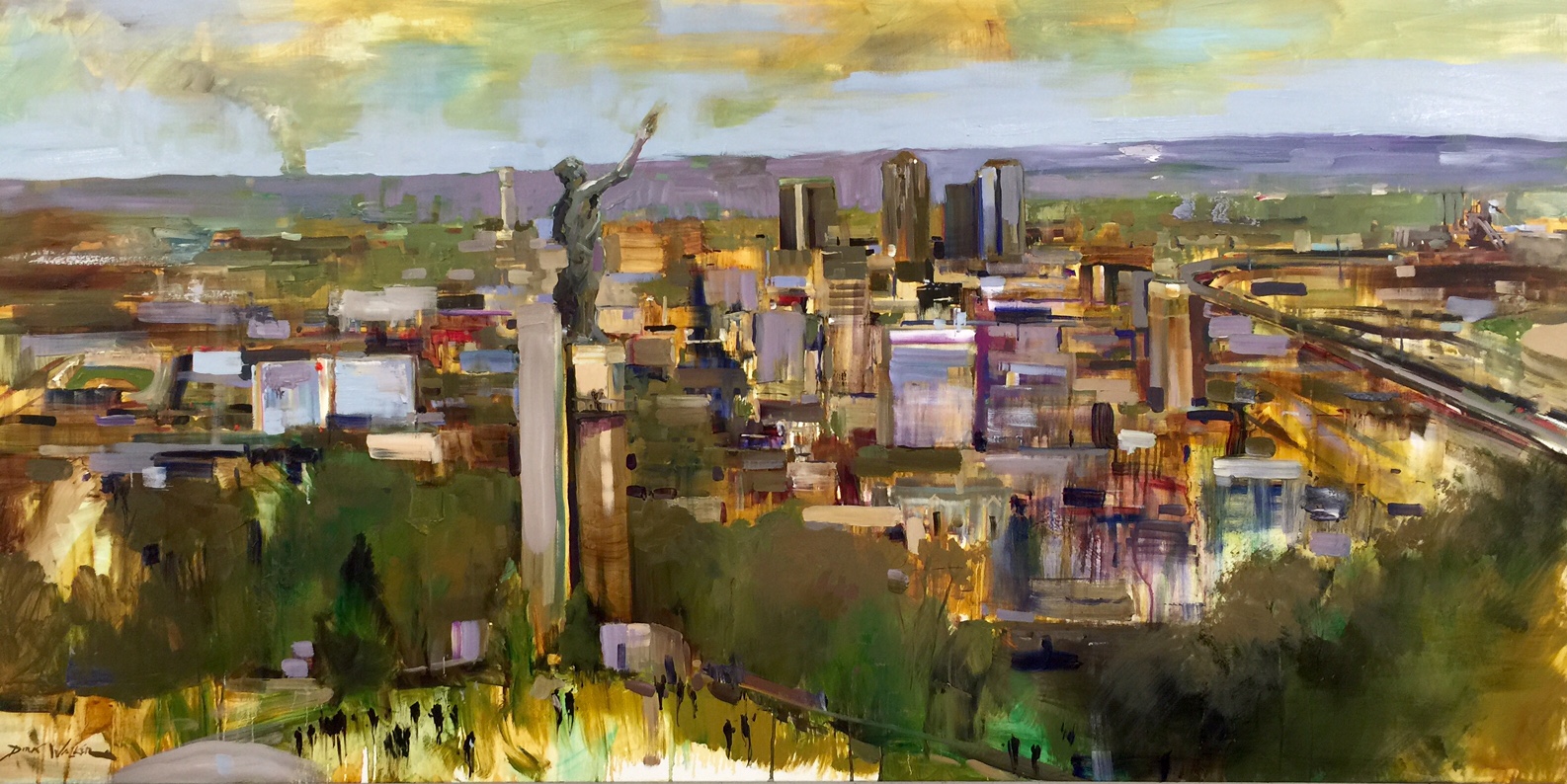
To understand a Birmingham painting in context, one must examine the intersection of the city’s industrial heritage, the radical "Birmingham School" of art, and the world’s preeminent collection of Pre-Raphaelite works. These paintings reflect a unique tension between the grime of the "city of a thousand trades" and the ethereal, handcrafted beauty of the Arts and Crafts movement.
The study of Birmingham art is not merely an aesthetic pursuit; it is an exploration of how a city transformed by the Industrial Revolution sought to find its soul through color, canvas, and craftsmanship. Whether you are viewing a Victorian masterpiece at the Birmingham Museum and Art Gallery (BMAG) or a contemporary mural in Digbeth, the "context" is always the same: a relentless drive for progress ("Forward") tempered by a deep-seated respect for the artisan.
The Socio-Economic Crucible of Birmingham Art
To view any significant Birmingham painting, one must first understand the environment in which it was conceived. By the mid-19th century, Birmingham was the manufacturing powerhouse of the British Empire. Unlike the textile-dominated cities of the North, Birmingham specialized in "small metal trades"—buttons, pens, jewelry, and guns. This created a unique social structure: a vast middle class of highly skilled independent artisans rather than just a few wealthy mill owners and a mass of unskilled laborers.
This "artisan" culture provided the fertile ground for the Birmingham School of Art. The city's leaders believed that for Birmingham’s manufactured goods to compete globally, they needed to be beautiful as well as functional. Thus, art in Birmingham was never an elitist afterthought; it was viewed as an essential component of the city’s economic and moral health.
The Influence of John Ruskin and William Morris
The context of Birmingham art is inseparable from the philosophies of John Ruskin and William Morris. Ruskin’s belief that art should be "true to nature" and Morris’s insistence on the dignity of manual labor resonated deeply in Birmingham. The city became a stronghold for the Arts and Crafts movement, which sought to bridge the gap between "fine art" (painting) and "applied art" (manufacturing).
When looking at a Birmingham painting from the late 19th century, you are often looking at a piece of a larger puzzle. Many Birmingham painters were also stained-glass designers, jewelers, or metalworkers. This multidisciplinary approach is the defining context of the region's output.
The Birmingham School of Art and the Pre-Raphaelite Connection
The most significant historical context for Birmingham painting is its association with the Pre-Raphaelite Brotherhood (PRB). While the movement began in London, it found its spiritual and institutional home in Birmingham.
Edward Burne-Jones: The Local Hero
Edward Burne-Jones, born in Bennett’s Hill in 1833, is the central figure in this narrative. His work represents the pinnacle of the "Birmingham style"—dreamlike, highly detailed, and deeply influenced by medievalism. In 2026, his influence remains visible across the city, most notably in the staggering stained-glass windows of St. Philip’s Cathedral.
Burne-Jones’s paintings, such as The Star of Bethlehem (the largest watercolor of the 19th century, housed in BMAG), must be understood as a reaction against the industrial soot of his birthplace. The "context" here is escapism through beauty. His figures are often melancholic and androgenous, existing in a world of myth that stood in stark contrast to the steam engines and factories of the Victorian Midlands.
The Birmingham Museum and Art Gallery (BMAG)
The institutional context of these paintings is the Birmingham Museum and Art Gallery. Opened in 1885, the museum was funded by the profits of industry and designed to "provide a center for the artistic life of the city." As of 2026, following extensive multi-year renovations that modernized the Victorian building while preserving its historic soul, the museum continues to house the world’s most important collection of Pre-Raphaelite art.
| Artistic Movement | Key Characteristics in Birmingham | Notable Artists |
|---|---|---|
| Pre-Raphaelite | Vivid colors, botanical accuracy, medieval themes, moral narratives. | Edward Burne-Jones, Dante Gabriel Rossetti. |
| Birmingham School | Strong outlines, tempera paint, focus on craftsmanship and "flat" decorative styles. | Joseph Southall, Arthur Gaskin, Georgie Gaskin. |
| Modernism/Post-War | Abstracted industrial forms, urban realism, social commentary. | Peter Phillips, David Bomberg (taught in Birmingham). |
| Contemporary | Street art, digital integration, multicultural identity. | Various Digbeth-based collectives. |
Analyzing Key Masterpieces in Context
To truly understand "a Birmingham painting," we should look at specific examples that encapsulate the city's identity.
1. The Last of England by Ford Madox Brown
While Brown was not a Birmingham native, this painting is one of the jewels of the Birmingham collection. Painted between 1852 and 1855, it depicts a couple leaving England forever on an emigrant ship.
- The Context: The mid-19th century was a period of mass emigration due to economic hardship. The painting's round format (tondo) creates a sense of claustrophobia, mirroring the cramped conditions of the ship.
- The Birmingham Link: The city's own growth was fueled by migration, and the painting resonated with a local population that understood the precariousness of industrial life.
2. The Star of Bethlehem by Edward Burne-Jones
Commissioned specifically for the Birmingham Museum, this massive watercolor is a feat of technical endurance.
- The Context: The use of watercolor on such a scale was an act of defiance against the "heavy" oil paintings favored by the Royal Academy in London.
- The Birmingham Link: It was a gift to the city from its own citizens, symbolizing the collective ownership of art.
3. The Works of Joseph Southall and the Tempera Revival
Joseph Southall, a leading figure of the Birmingham Group of Artist-Craftsmen, chose to paint in egg tempera, a medium that had been largely abandoned since the Renaissance.
- The Context: This was a radical rejection of modern, mass-produced oil paints. It required the artist to mix their own pigments with egg yolk—a slow, meticulous process.
- The Birmingham Link: This dedication to the "process" of making is the ultimate expression of the Birmingham artisan spirit.
The 2026 Perspective: Viewing Art in a Modern City
As we navigate 2026, the context of Birmingham painting has expanded to include the city’s status as one of the most diverse and youngest cities in Europe. The "Birmingham painting" of today is as likely to be found on a brick wall in the Custard Factory as it is in a gilded frame.
The Restoration of the Birmingham Museum and Art Gallery
The completion of the BMAG "Unlocking the Doors" project in the mid-2020s has fundamentally changed how these paintings are viewed. The context is now one of relevance and accessibility. Curators have re-contextualized the Victorian collections to acknowledge the complex history of the British Empire—recognizing that the industrial wealth that funded these beautiful paintings was often tied to colonial exploitation.
The Rise of the Digbeth Scene
The neighborhood of Digbeth provides a contemporary "context" for Birmingham art. Known for its street art, the area functions as an open-air gallery. These works are often temporary, reflecting the fast-paced, digital nature of the 21st century, yet they maintain the traditional Birmingham focus on bold lines and social relevance.
Technical Specifications: Mediums and Preservation
The physical context of Birmingham paintings involves a high level of technical mastery. The Birmingham School was famous for reviving ancient techniques.
- Egg Tempera: Used by Joseph Southall and his circle. It produces a luminous, matte finish that does not yellow with age, unlike oil. It requires a rigid support, usually a wooden panel prepared with gesso.
- Stained Glass Cartoons: Many Birmingham "paintings" were actually "cartoons"—full-scale drawings for stained glass windows. These required the artist to think in terms of lead lines and light transmission.
- Preservation in 2026: Modern conservation at BMAG utilizes non-invasive hyperspectral imaging to analyze paint layers. This allows conservators to see the "pentimenti" (changes made by the artist) without touching the surface, providing a deeper historical context of the artist's creative process.
How to Experience Birmingham Art (A Practical Guide)
If you are seeking to explore Birmingham paintings in context, follow these steps to ensure a comprehensive understanding of the subject.
Step 1: Start at the Birmingham Museum and Art Gallery (BMAG)
Located in Chamberlain Square, this is the essential starting point. Admission to the permanent collection remains free as of 2026, though special exhibitions may require a fee (typically £12–£18).
- Action: Head to the Pre-Raphaelite galleries. Look for the "Birmingham School" section to see the transition from oil to tempera.
Step 2: Visit St. Philip’s Cathedral
A five-minute walk from the museum, the cathedral houses four of Edward Burne-Jones’s greatest stained-glass windows.
- Action: View them in the morning or late afternoon when the light highlights the "Birmingham red" and deep blues that the local artisans were famous for.
Step 3: Explore the Barber Institute of Fine Arts
Located at the University of Birmingham (Edgbaston campus), this gallery provides the broader European context.
- Action: Compare the Birmingham works with the Barber’s collection of Monets, Degas, and Botticellis to see how the local "artisan" style fits into the global art history timeline.
Step 4: Walk the Digbeth Art Trail
Experience the 2026 evolution of the Birmingham painting.
- Action: Look for murals that incorporate "augmented reality" (AR) elements, which can be viewed through a smartphone to provide layers of digital context about the artist and the work’s meaning.
Frequently Asked Questions
What exactly is the "Birmingham School" of art?
The Birmingham School refers to a group of artists and craftsmen working in the city between 1880 and 1930. They were characterized by their commitment to the Arts and Crafts movement, a preference for medieval and mythological subjects, and the use of traditional techniques like egg tempera and woodcut printing. They emphasized the "decorative" quality of art over photographic realism.
Why does Birmingham have so many Pre-Raphaelite paintings?
The collection is a result of the city’s civic pride during the Victorian era. Wealthy industrialist families and the municipal government believed that workers should have access to high-quality art. They focused on the Pre-Raphaelites because the movement’s emphasis on "honest labor" and "truth to nature" aligned with Birmingham’s industrial and non-conformist religious values.
Are these paintings still relevant in 2026?
Absolutely. The context of these paintings has evolved. Today, they are studied not just for their beauty, but for what they reveal about the Industrial Revolution, gender roles in the Victorian era, and the environmental impact of urban growth. The 2026 museum displays often pair these historic works with contemporary responses from local diverse communities.
Can I buy a "Birmingham painting"?
While the major historical works are in public collections, there is a thriving market for Birmingham art. Contemporary painters in the city continue to produce work that reflects the urban landscape. Galleries in the Jewelry Quarter and Digbeth are the primary locations for purchasing modern works that carry on the city’s artistic tradition.
Who is the most famous Birmingham painter?
Sir Edward Burne-Jones is widely considered the most famous. He was a leading figure of the second generation of Pre-Raphaelites and had a profound influence on European Symbolism. His childhood in Birmingham’s industrial center was a major factor in his development of a dreamlike, mythological style.
Final Recommendations for Enthusiasts
To fully appreciate a Birmingham painting in context, do not view it in isolation. Read about the Lunar Society to understand the scientific and philosophical roots of the city's innovation. Visit the Back-to-Back houses (National Trust) to see the living conditions of the people who worked in the factories. Finally, observe the architecture of the city—from the Victorian Gothic of the Law Courts to the futuristic curves of the Selfridges building.
The context of Birmingham art is a story of a city constantly reinventing itself while refusing to forget the value of the human hand. Whether it is a 19th-century tempera panel or a 21st-century digital mural, the heart of the Birmingham painting remains its connection to the people, the labor, and the "Forward" spirit of the city.