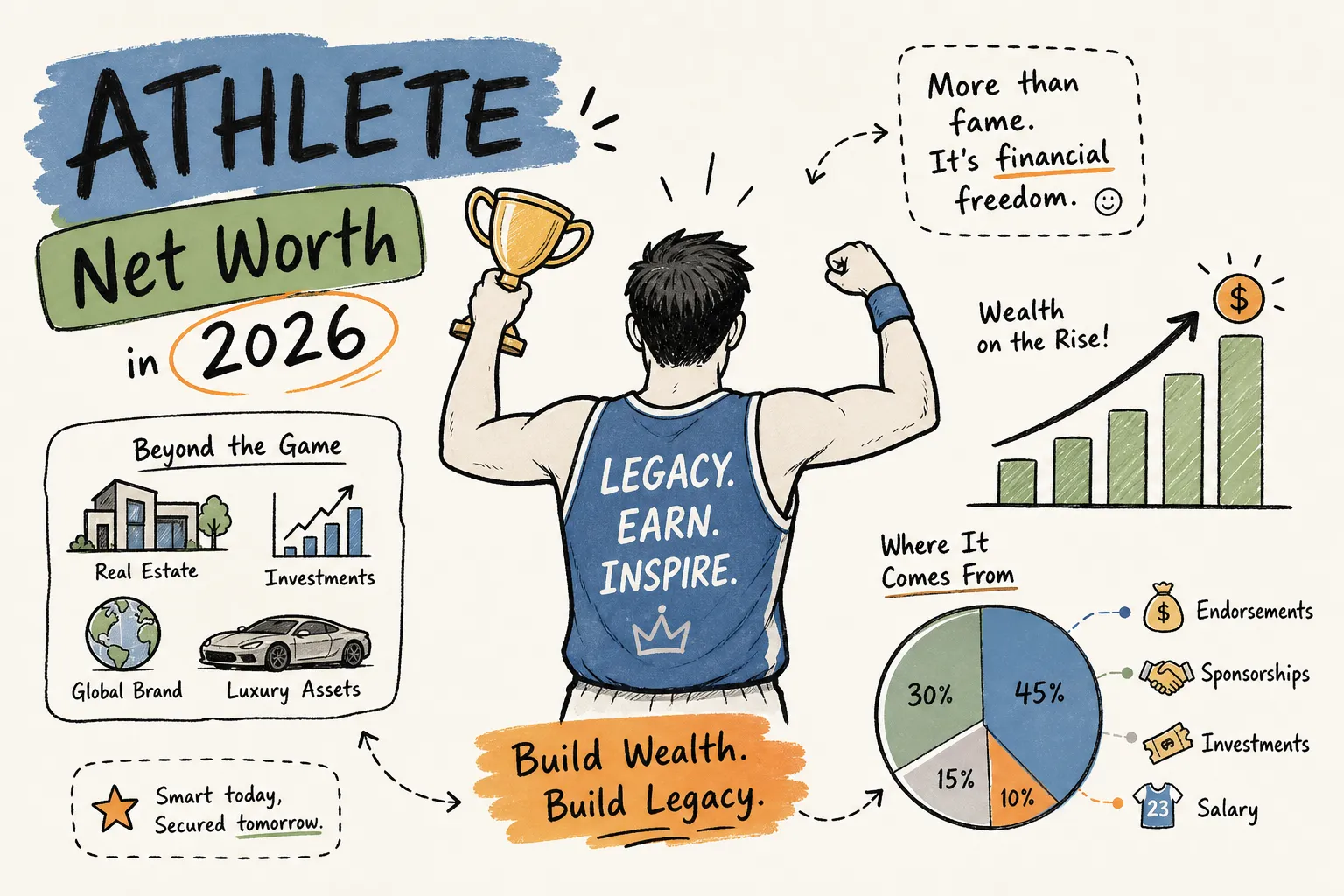
Professional athletes often experience low net worth due to a combination of short career lifespans, lack of financial literacy, and "lifestyle creep." Despite high-grossing contracts, the reality of high taxation, agent fees, and predatory investment schemes can quickly deplete assets, leaving many athletes in financial instability shortly after their professional careers conclude.
The paradox of the high-earning athlete with a low net worth is one of the most studied phenomena in sports economics. In 2026, even with the proliferation of Name, Image, and Likeness (NIL) deals and increased financial education programs, the structural and psychological barriers to wealth preservation remain formidable. Understanding this issue requires moving beyond the headlines of "extravagant spending" and examining the systemic financial pressures unique to the professional sports industry.
The Statistical Reality of Athlete Wealth
For decades, the narrative of the "broke athlete" has been supported by jarring statistics. While the exact figures fluctuate, historical data from organizations like Sports Illustrated and various players' unions have suggested that a significant percentage of professional athletes face financial distress within five years of retirement.
In the context of 2026, low net worth is defined not just by an absence of cash, but by a lack of liquidity and a high debt-to-asset ratio. Many athletes may appear wealthy through "conspicuous consumption"—luxury vehicles, high-end real estate, and designer apparel—yet possess a negative net worth when their liabilities are tallied against their actual ownership stakes. The "window of earning" for a professional athlete is remarkably narrow, often lasting between three to six years, while the wealth generated must frequently support a lifestyle for the remaining fifty to sixty years of the individual's life.
Primary Drivers of Financial Instability
The journey from a multi-million dollar signing bonus to a low net worth is rarely the result of a single mistake. Instead, it is typically a "death by a thousand cuts" scenario driven by several overlapping factors.
Lifestyle Creep and Status Signaling
Lifestyle creep occurs when an individual’s discretionary spending increases as their income rises. For athletes, this is often exacerbated by the pressure to maintain a certain "image" synonymous with professional success. In 2026, social media remains a primary driver of this pressure. The need to signal status through expensive assets often leads to the purchase of depreciating goods. Unlike a diversified stock portfolio, a fleet of luxury cars loses value the moment they leave the lot, contributing to a declining net worth even while the athlete is still earning.
The "Family and Friends" Tax
One of the most significant, yet least discussed, drains on an athlete's wealth is the financial support of a broad social circle. Athletes coming from disadvantaged backgrounds often feel a profound sense of "survivor's guilt," leading them to fund businesses for friends or provide a primary income for extended family members. These expenditures are rarely structured as formal loans or investments; they are outflows that provide no return, effectively acting as a permanent tax on the athlete’s net income.
Predatory Financial Advice and Unvetted Investments
Athletes are frequently targets for "get-rich-quick" schemes and unvetted private equity deals. Because many athletes lack formal financial training, they may rely on advisors who are not fiduciaries—meaning they are not legally obligated to act in the athlete's best interest. By 2026, while regulations have tightened, athletes still find themselves invested in illiquid assets like restaurants, nightclubs, or speculative technology ventures that fail at high rates, wiping out significant portions of their net worth.
Structural Barriers to Wealth Accumulation
Even the most disciplined athlete faces structural hurdles that make wealth accumulation more difficult than for a high-earning corporate executive.
Tax Complexity and the "Jock Tax"
Professional athletes are subject to some of the most complex tax filing requirements in the world. The "Jock Tax" is a common term for income tax levied by states and even some cities against visitors earning money in that jurisdiction. An NFL player may have to file tax returns in over a dozen different states each year. Furthermore, because their income is earned in a very high bracket over a short period, they pay the maximum effective tax rate without the benefit of "income smoothing" over a 40-year career.
Professional Fees and Deductions
When a public report states an athlete signed a $10 million contract, the net amount reaching their bank account is significantly lower. After federal and state taxes (often totaling 40-50%), agent fees (typically 3-5%), and union dues, the "take-home" pay is often less than half of the headline figure. If the athlete has not accounted for these deductions, they may over-leverage themselves based on the gross contract value, leading to a liquidity crisis.
Short Career Lifespans
The average career in the NFL is approximately 3.3 years; in the NBA, it is roughly 4.5 years. This brevity means that an athlete must save a much higher percentage of their income than a traditional worker. To maintain a modest lifestyle post-retirement, an athlete might need to save 70% to 80% of their after-tax income—a feat that is psychologically difficult for a young adult in their early 20s.
Comparative Earnings and Wealth Retention Metrics
The following table illustrates the typical financial pressures across different major sports leagues, highlighting why certain athletes are more prone to low net worth status.
| Sport | Average Career Length | Est. Tax & Fee Deduction | Wealth Retention Challenge |
|---|---|---|---|
| NFL | 3.3 Years | 45% - 55% | Non-guaranteed contracts and high injury risk. |
| NBA | 4.5 Years | 40% - 50% | High peer pressure for status signaling/spending. |
| MLB | 5.6 Years | 40% - 50% | Long minor league periods with low pay preceding "the big contract." |
| NHL | 5.0 Years | 45% - 55% | Complex international tax implications for foreign players. |
| MLS | 3.2 Years | 35% - 45% | Lower average salaries making "lifestyle creep" more dangerous. |
Note: These figures are estimates based on standard 2026 professional sports contract structures and tax obligations.
The Psychological Aspect of Spending
The transition from a student-athlete (with virtually no income) to a professional (with millions) creates a "windfall effect." Psychologically, individuals who receive a sudden influx of wealth are more likely to view that money as "play money" rather than "earned capital." This leads to a disconnect between the current lifestyle and the future financial reality.
Moreover, many athletes operate under the "illusion of permanence." They assume that the next contract is guaranteed or that their earning power will continue into their 30s and 40s. When an injury or a coaching change abruptly ends a career, the athlete is often left with high fixed costs—mortgages, car payments, and staff salaries—and no income stream to support them, resulting in a rapid collapse of net worth.
Post-Career Transition Risks
The period immediately following retirement is the most volatile for an athlete’s net worth. Without the structured environment of a professional team, many athletes struggle with their identity and turn to expensive hobbies or "business ventures" to fill the void.
- Lack of Career Skills: Many athletes have focused exclusively on their sport since childhood. Without a college degree or alternative professional training, their "second act" earnings are often a fraction of their sports salary.
- Health Costs: Professional sports take a toll on the body. Long-term medical expenses for joint replacements, neurological issues, or chronic pain can drain even a well-managed retirement fund.
- Divorce and Legal Fees: High-stress career transitions often correlate with high divorce rates. The division of assets and ongoing alimony or child support payments can permanently reduce an athlete's net worth.
Modern Preventative Strategies in 2026
By 2026, several interventions have been implemented to combat the "athletes low net worth" trend. While these have helped, they are not foolproof.
- Financial Literacy Programs: Most major leagues now mandate financial boot camps for rookies. These programs cover basic accounting, the importance of fiduciaries, and the mechanics of compound interest.
- The Rise of NIL Education: Since the legalization of Name, Image, and Likeness deals, athletes are being exposed to business contracts while still in college. This "early exposure" is intended to prepare them for the larger sums they will handle as professionals.
- Lock-up Periods and Annuities: Some agents and unions now advocate for contracts that include mandatory contributions to deferred compensation plans or annuities that cannot be accessed until the athlete reaches age 35 or 40.
Frequently Asked Questions
Why do athletes go broke so quickly?
The primary reason is the mismatch between a very short earning window and a long life-expectancy. When combined with high taxes, agent fees, and a lifestyle that costs hundreds of thousands of dollars a month to maintain, the capital is exhausted before the athlete can transition to a new career.
Do NIL deals help or hurt an athlete's long-term net worth?
In 2026, NIL deals are seen as a double-edged sword. They provide early capital and business experience, which can be beneficial. However, they also introduce young athletes to "lifestyle creep" even earlier, potentially setting a baseline of spending that is unsustainable if they do not make it to the professional level.
What is the most common "bad investment" for athletes?
Private equity in the hospitality industry—specifically restaurants and nightclubs—is the most common source of lost wealth. These businesses have high failure rates and require significant operational expertise that most athletes do not possess.
How much of a contract does an athlete actually keep?
As a general rule, an athlete will take home roughly 45% to 50% of their gross contract value. The rest is distributed among federal and state taxes, agent commissions, and mandatory union or pension contributions.
Are there leagues with better wealth-retention rates?
Leagues with fully guaranteed contracts, such as the NBA and MLB, generally see better wealth retention than the NFL, where contracts are often non-guaranteed and careers are shorter. However, the spending habits of the individual remain the most significant variable.
Practical Recommendations for Wealth Preservation
For athletes or those advising them, the path to avoiding a low net worth status involves three non-negotiable steps:
- Hire a Fiduciary: Only work with financial advisors who are legally bound to act in your best interest. Check their history for any disciplinary actions or conflicts of interest regarding "in-house" investment products.
- Establish a "Burn Rate": Determine a monthly budget that is sustainable based on a conservative estimate of the career’s length, not the total contract value. Treat the "net" income as the only money that exists.
- Diversify into Liquid Assets: Avoid tying up the majority of wealth in illiquid private businesses. Prioritize low-cost index funds, high-quality bonds, and real estate that provides immediate cash flow rather than speculative appreciation.
Ultimately, an athlete's net worth is not determined by how much they earn, but by how much they keep. In the high-stakes environment of 2026 professional sports, financial survival requires as much discipline off the field as athletic performance requires on it.
Disclaimer: This article is for informational purposes only and does not constitute professional financial or legal advice. Consult with a qualified professional regarding individual financial situations.