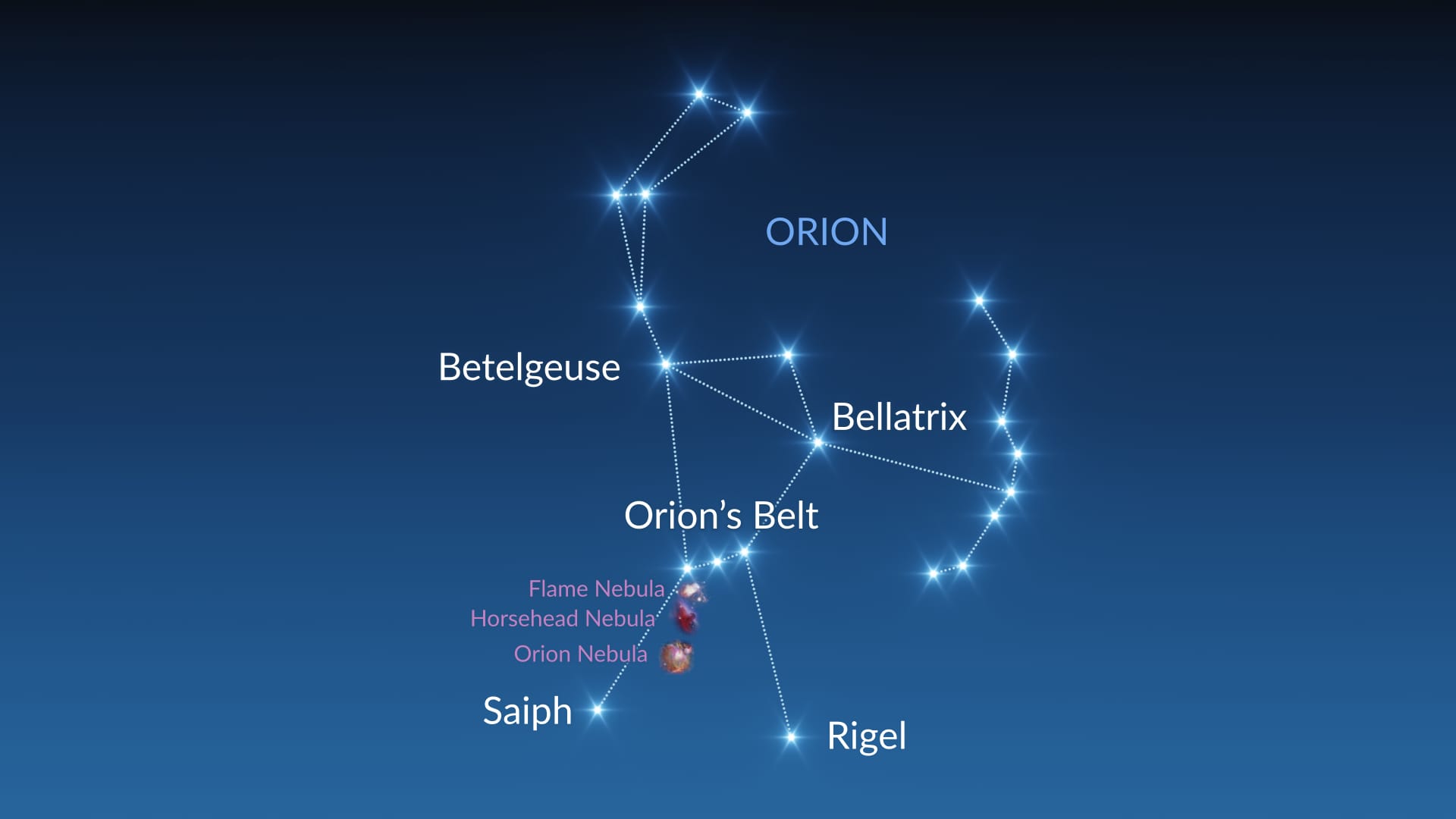
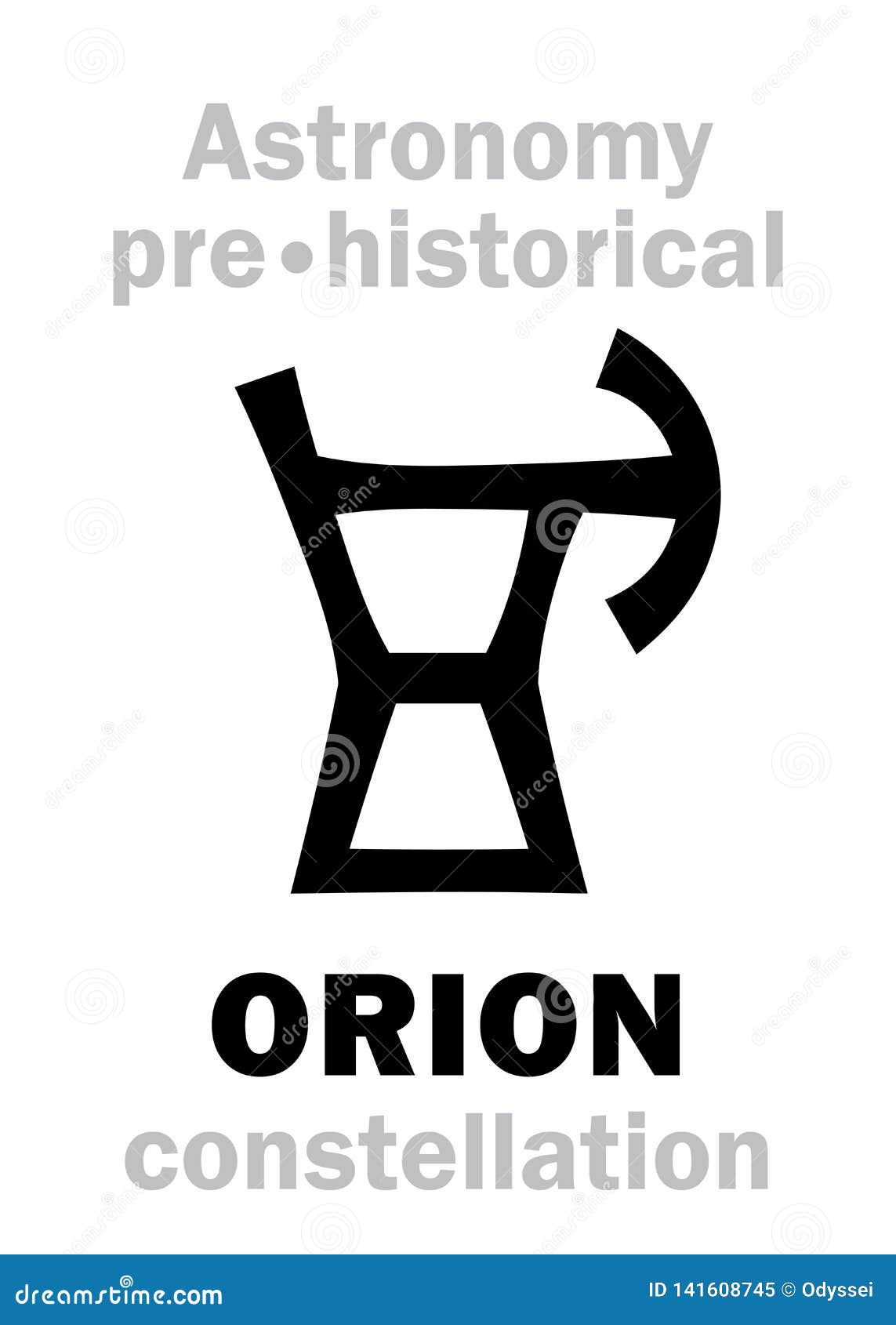
In astrology, the Orion constellation serves as a vital framework for interpreting "Fixed Stars," offering specific insights into a native's ambition, honors, and potential for leadership. Unlike the twelve zodiac signs, Orion's primary stars—including Betelgeuse and Rigel—interact with natal charts through precise conjunctions, often indicating significant worldly success or abrupt shifts in fortune.
As we navigate the astrological landscape of 2026, the constellation Orion remains one of the most culturally and technically significant groupings in the celestial sphere. While the Sun does not pass directly through Orion—meaning it is not a member of the tropical zodiac—its stars are projected onto the ecliptic, primarily within the sign of Gemini. For practitioners of both traditional and modern astrology, an overview of Orion is essential for understanding the "Fixed Star" influences that provide a layer of destiny and character nuance beyond the standard planetary aspects.
The Astronomical Context and Astrological Projection
Orion, known as "The Hunter," is positioned on the celestial equator. Because of its location, it is visible from almost every part of the globe, which contributed to its nearly universal recognition in ancient cultures. In technical astrology, we use the process of ecliptic projection to determine where these stars fall in a 360-degree natal chart.
By 2026, the precession of the equinoxes has moved the major stars of Orion further into the late degrees of Gemini. Because stars move at a rate of approximately one degree every 72 years, their positions are relatively "fixed" compared to the fast-moving planets, but their long-term shift is a crucial calculation for accurate chart reading. Most of Orion’s prominent stars currently occupy the second and third decans of Gemini.
The Nature of Orion's Energy
The overarching archetype of Orion is that of the hunter, the giant, and the warrior. Historically, Orion is associated with great strength, an adventurous spirit, and a certain degree of arrogance or "hubris" that can lead to a downfall. In a natal chart, a strong Orion influence—such as a personal planet (Sun, Moon, Mercury, Venus, Mars) or an angle (Ascendant or Midheaven) conjunct an Orion star—suggests an individual who is driven to achieve greatness.
Ptolemy, the second-century astrologer, classified the stars of Orion as having the nature of Mars and Jupiter. This combination is potent; it suggests the expansive, lucky qualities of Jupiter blended with the assertive, competitive, and sometimes aggressive qualities of Mars. This makes Orion a constellation of action, leadership, and public recognition.
Major Fixed Stars of Orion and Their Meanings
To provide a comprehensive astrology Orion overview, one must look at the specific stars that make up the figure of the Hunter. Each star carries a distinct "signature" or frequency that alters the expression of the planet it touches.
Rigel (Beta Orionis)
Positioned at the Hunter's left foot, Rigel is one of the most beneficial stars in the constellation. By 2026, its ecliptic position is approximately 17° 06' Gemini.
- Astrological Nature: Jupiter and Mars.
- Influence: Rigel is associated with honors, wealth, and lasting success. Unlike some of Orion’s other stars, Rigel tends to provide a more stable foundation for achievement. It is often found in the charts of great educators, scientists, and those who achieve success through technical skill and knowledge.
- Key Themes: Prosperity, inventive mind, civil honors, and mechanical ability.
Betelgeuse (Alpha Orionis)
Marking the Hunter’s right shoulder, Betelgeuse is a massive red supergiant. In 2026, it sits at approximately 29° 01' Gemini.
- Astrological Nature: Mars and Mercury.
- Influence: Betelgeuse is a star of massive success, often bringing military or political honors. It signifies "unprecedented fame." However, because it is essentially a Martian star, the success can be volatile. If the individual lacks integrity, the "fall from grace" can be as spectacular as the rise.
- Key Themes: Brilliance, wealth, war honors, and potential for sudden ruin if misused.
Bellatrix (Gamma Orionis)
The "Female Warrior," located on the left shoulder. In 2026, it is positioned at approximately 21° 13' Gemini.
- Astrological Nature: Mars and Mercury.
- Influence: Bellatrix favors women and those who must fight for their position. It often indicates a "shadow" or a period of struggle before a great triumph. It provides a sharp, analytical mind and the courage to speak one's truth.
- Key Themes: Quick decision-making, military success, and the risk of accidents to the eyes or through sudden temper.
The Belt of Orion (The Three Kings)
The three stars of the belt—Alnitak, Alnilam, and Mintaka—are often interpreted together. They sit around 22° to 24° Gemini.
- Alnitak (Zeta Orionis): Often associated with persistence and strength.
- Alnilam (Epsilon Orionis): The middle star, associated with fleeting honors and a "passing" fame unless supported by other aspects.
- Mintaka (Delta Orionis): Associated with good fortune and a charitable nature.
Orion in the Natal Chart: Conjunctions and Angles
To utilize this overview in a practical sense, an astrologer looks for conjunctions within a very tight "orb" (usually no more than 1° to 1.5°). Because fixed stars do not have their own light in the same way planets "act," they are considered "passive" until a planet or an angle "activates" them.
Conjunction with the Ascendant (ASC)
If Rigel or Betelgeuse is rising at the moment of birth, the individual often possesses a commanding presence. They may appear larger than life and are often propelled into leadership roles early. There is an inherent "star power" here, but also a need to manage the ego.
Conjunction with the Midheaven (MC)
This is the most powerful position for Orion stars. It suggests that the native’s career will be marked by the qualities of the Hunter. A conjunction with Betelgeuse on the MC can signify a world-renowned reputation. A conjunction with Rigel suggests a career in academia, high-level technology, or large-scale commerce.
Conjunction with the Sun or Moon
- Sun: High ambitions, vital energy, and a drive for legacy. The native wants to be "the first" or "the best" in their field.
- Moon: Emotional resilience and a protective nature. However, it can also lead to a restless or "hunting" spirit in domestic life, never quite feeling settled.
Technical Data: Orion Fixed Star Reference (2026)
The following table provides the projected ecliptic positions and primary characteristics of Orion's stars for the 2026 epoch. Note that these degrees are rounded for general reference; precise calculations should use current ephemeris data.
| Star Name | 2026 Longitude (Approx.) | Nature (Ptolemaic) | Key Astrological Influence |
|---|---|---|---|
| Rigel | 17° 06' Gemini | Jupiter / Mars | Honors, wealth, education, and prosperity. |
| Bellatrix | 21° 13' Gemini | Mars / Mercury | The "Female Warrior," quick wit, strategic success. |
| Mintaka | 22° 39' Gemini | Jupiter / Saturn | Discretion, good fortune, and charitable acts. |
| Alnilam | 23° 44' Gemini | Jupiter / Saturn | Fleeting honors, public prominence, transience. |
| Alnitak | 24° 57' Gemini | Jupiter / Mars | Persistence, strength, and military achievement. |
| Saiph | 26° 40' Gemini | Jupiter / Saturn | Authority, solemnity, and potential for hard work. |
| Betelgeuse | 29° 01' Gemini | Mars / Mercury | Great fame, wealth, success, but risk of downfall. |
Historical and Mythological Foundations
Understanding Orion requires a look back at its mythological roots, which inform its modern interpretation. In Greek mythology, Orion was a giant hunter who boasted he could kill every animal on Earth. This hubris led Gaia to send a scorpion to kill him—which is why the constellations Orion and Scorpius are never in the sky at the same time.
In Ancient Egypt, Orion was identified as Sah, the manifestation of Osiris, the god of the afterlife and rebirth. The stars of Orion’s belt were famously aligned with the pyramids of Giza (the "Orion Correlation Theory"). This adds a spiritual, "monumental" layer to Orion stars; they aren't just about physical success, but about building something that outlasts the physical body.
The Orion Nebula (M42) and Modern Astrology
Often overlooked in basic overviews is the Orion Nebula, located in the "Sword" of Orion. In traditional astrology, nebulae were often associated with "blindness" or "clouded vision," both physically and metaphorically. Modern psychological astrology interprets the Nebula (positioned around 24° Gemini in 2026) as a point of creative gestation—a place where new ideas are born out of chaos, but where the path forward may initially be unclear.
Practical Considerations for 2026
When analyzing Orion stars in 2026, practitioners must distinguish between Ecliptic Conjunctions and Parans.
- Ecliptic Conjunctions: This is the method most common in western astrology software. It looks at the star's position projected onto the zodiac. If your Sun is at 29° Gemini, it is conjunct Betelgeuse.
- Parans (Paranatellonta): This is an older, more complex method that looks at whether a star is rising, setting, culminating, or on the IC at the same time a planet hits one of those four points. Parans are often considered more potent by traditional fixed-star specialists because they account for the star's actual visibility on the horizon.
Common Mistakes in Interpretation
- Ignoring the Orb: Fixed stars do not act like planets. A 5-degree orb is too wide. Keep your analysis to within 1 degree of the star's longitude for the most accurate results.
- Over-emphasizing Negative Traits: While stars like Bellatrix or Betelgeuse have warnings attached to them, they are primarily markers of high energy. Whether that energy is constructive or destructive depends on the rest of the chart and the native's choices.
- Confusing Zodiac Signs with Stars: Being a "Gemini" is a solar personality trait. Having the Sun conjunct "Rigel" is a specific destiny marker. They are two different layers of the same chart.
Frequently Asked Questions
Is Orion a zodiac sign?
No, Orion is not a zodiac sign. The zodiac consists of twelve constellations that fall along the ecliptic (the path the Sun takes through the sky). Orion is located near the ecliptic but the Sun does not pass through it. However, its stars are projected onto the zodiac sign of Gemini for astrological calculation.
How do I find if Orion stars are in my chart?
To find Orion stars in your natal chart, you need to look at the degrees of Gemini. Specifically, check if you have any planets or angles (ASC, DESC, MC, IC) between 16° and 30° Gemini. If a planet is within one degree of the longitudes listed in the table above, that Orion star is influencing that planet.
What does it mean if my Sun is conjunct Betelgeuse?
Sun conjunct Betelgeuse (around 29° Gemini) is one of the most powerful placements for career success and public recognition. It suggests a life where you may achieve great things or reach the "top" of your chosen field. However, it requires significant character strength to maintain that position, as the Mars-nature of the star can lead to impulsiveness or conflict.
Are the influences of Orion stars permanent?
In astrology, fixed stars are considered part of the "natal promise"—the potential you are born with. While they don't change, they are "activated" at different times in your life by planetary transits. For example, when Jupiter transits 29° Gemini, it may trigger the "fame" potential of your natal Betelgeuse.
Why is Rigel considered "better" than Betelgeuse?
"Better" is subjective, but in traditional astrology, Rigel is associated with Jupiter/Mars (expansion and energy), which tends to bring success that is easier to maintain. Betelgeuse is Mars/Mercury, which is sharper, faster, and more volatile. Rigel is often linked to wisdom and learning, while Betelgeuse is linked to raw power and sudden events.
Recommendation for Further Study
For those looking to deepen their understanding of Orion in astrology, the next step is to move beyond simple conjunctions and explore Fixed Star Parans. This requires specialized software or manual calculation of the star's rising and setting times at your specific birth location. Additionally, studying the works of Bernadette Brady or Reinhold Ebertin can provide a more technical and psychological depth to how these ancient "markers of fate" manifest in the modern world.
As we move through 2026, pay close attention to transits through the latter half of Gemini. These transits will activate the Orion stars for the entire population, often correlating with major technological breakthroughs, military shifts, or the rise of significant world leaders.