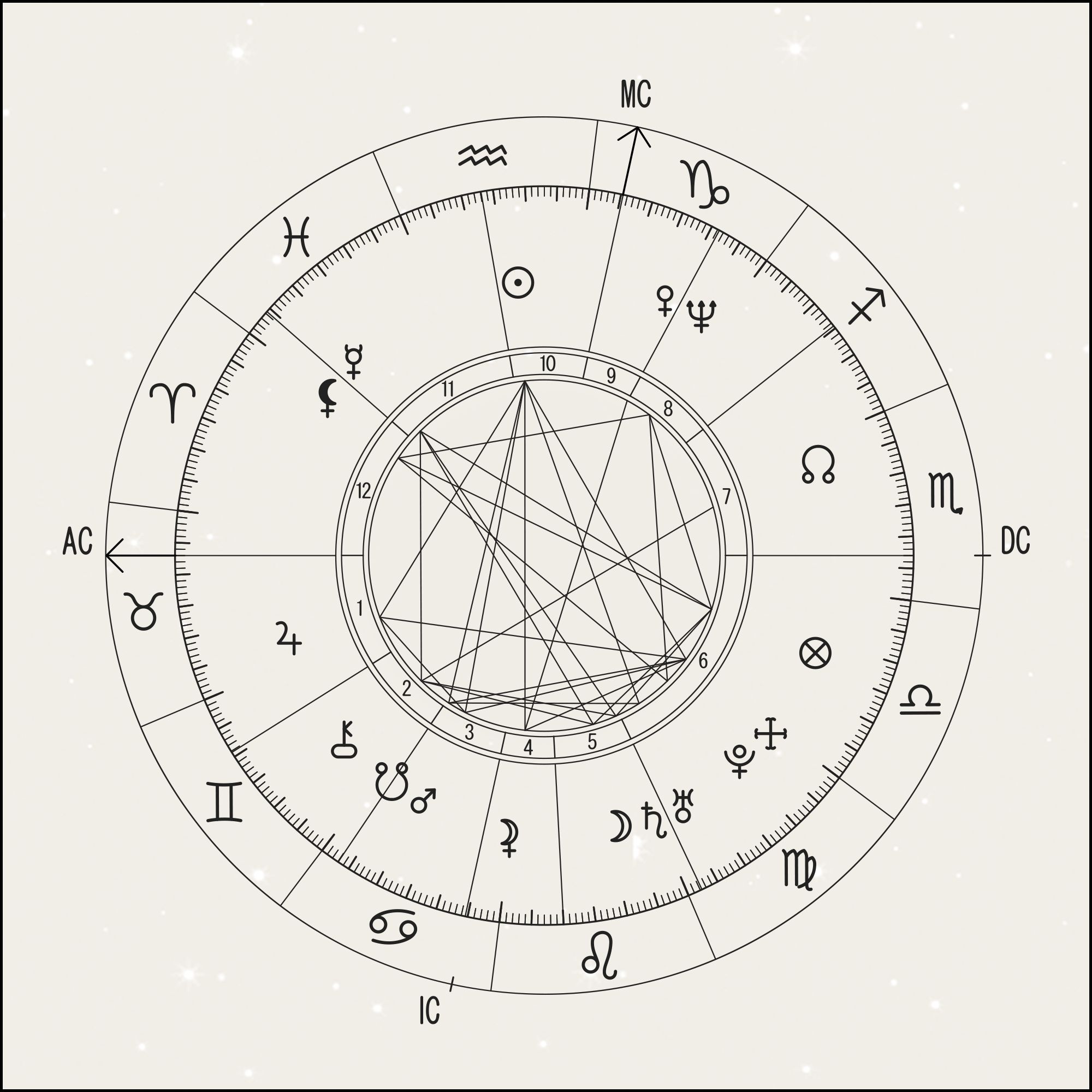
An astrology chart, commonly referred to as a natal or birth chart, is a sophisticated astronomical map depicting the exact positions of celestial bodies at the moment of an individual's birth from a specific geographic location. It serves as a symbolic blueprint for personality, potential life paths, and psychological archetypes.
To the uninitiated, an astrology chart looks like a complex geometric web of symbols, lines, and numbers. However, this "map of the sky" is a logical system based on the intersection of astronomy and symbolic interpretation. In 2026, with the advancement of high-precision astrological software and mobile applications, calculating these maps is instantaneous, but understanding the foundational mechanics remains essential for accurate interpretation. This guide breaks down the essential components of the astrology chart map, providing a clear pathway for beginners to navigate their celestial data.
The Mathematical Foundation: The 360-Degree Circle
The astrology chart is represented as a 360-degree circle, reflecting the Earth’s 365-day journey around the Sun (the ecliptic). This circle is divided into several layers of information, each serving a specific purpose in the "map." The outer rim contains the 12 zodiac signs, while the inner sections are divided into 12 "houses."
At its core, the chart is a 2D representation of a 3D space. The horizontal line running through the center of the chart represents the horizon. Anything above this line was visible in the sky at the moment of birth, while anything below it was beneath the Earth and not visible to the naked eye. The vertical line, known as the Meridian, represents the highest point in the sky (the Midheaven) and the lowest point (the Imum Coeli). Understanding this orientation is the first step in reading the map.
The Celestial Alphabet: The Ten Primary Planets
In astrology, "planets" is a catch-all term that includes the Sun and the Moon (technically luminaries) and the major bodies of our solar system. Each planet represents a different functional part of the human psyche—the "What" of the chart.
- The Sun: Represents the core identity, ego, and life force. It is the center of the individual's "solar system."
- The Moon: Governs the emotional landscape, subconscious needs, and domestic life. It reflects how we nurture ourselves and others.
- Mercury: The planet of communication, intellect, and logistics. It describes how an individual processes information and expresses thoughts.
- Venus: Represents values, aesthetics, romance, and social harmony. It indicates what we find attractive and how we relate to others.
- Mars: The drive for action, physical energy, and assertion. It describes the "warrior" spirit and how we pursue our desires.
- Jupiter: Symbolizes expansion, luck, philosophy, and higher learning. It points to where we seek growth and abundance.
- Saturn: Represents structure, responsibility, discipline, and limitation. It often indicates areas where we must work hard to achieve mastery.
- Uranus: The planet of innovation, rebellion, and sudden change. It marks where we are unconventional.
- Neptune: Governs dreams, spirituality, illusion, and the collective unconscious. It represents our higher ideals and creative escapism.
- Pluto: Symbolizes transformation, power, and the process of "death and rebirth." It deals with deep psychological shifts.
The Archetypal Filters: The Twelve Zodiac Signs
If the planets are the "actors" in a play, the zodiac signs are the "costumes" they wear or the "roles" they play. The signs provide the behavioral style and flavor to a planet's energy. Each sign belongs to one of four elements and one of three modalities, which provides a structured way to understand their nature.
Elements and Modalities Table
| Sign | Element | Modality | Primary Keyword |
|---|---|---|---|
| Aries | Fire | Cardinal | Initiative |
| Taurus | Earth | Fixed | Stability |
| Gemini | Air | Mutable | Versatility |
| Cancer | Water | Cardinal | Nurturing |
| Leo | Fire | Fixed | Expression |
| Virgo | Earth | Mutable | Analysis |
| Libra | Air | Cardinal | Balance |
| Scorpio | Water | Fixed | Intensity |
| Sagittarius | Fire | Mutable | Exploration |
| Capricorn | Earth | Cardinal | Ambition |
| Aquarius | Air | Fixed | Innovation |
| Pisces | Water | Mutable | Compassion |
Fire signs (Aries, Leo, Sagittarius) are characterized by enthusiasm and spontaneity. Earth signs (Taurus, Virgo, Capricorn) focus on practical results and tangible reality. Air signs (Gemini, Libra, Aquarius) prioritize intellectual exchange and social connection. Water signs (Cancer, Scorpio, Pisces) are driven by emotional depth and intuition.
The modalities—Cardinal, Fixed, and Mutable—describe how these signs act. Cardinal signs start things, Fixed signs sustain things, and Mutable signs adapt things.
The Twelve Houses: The "Where" of Life
The astrology chart map is divided into 12 segments called houses. While the zodiac signs rotate through the sky every 24 hours, the houses remain fixed relative to the Earth’s rotation. Each house represents a specific area of life or a theater of experience.
- First House (Ascendant/Rising): Self-image, physical appearance, and the first impression we make on others.
- Second House: Personal finances, values, and self-worth.
- Third House: Communication, siblings, local travel, and early education.
- Fourth House (IC): Home, family, roots, and the private self.
- Fifth House: Creativity, romance, children, and pleasure.
- Sixth House: Daily routines, health, work environment, and service.
- Seventh House (Descendant): Partnerships, marriage, and open enemies.
- Eighth House: Shared resources, transformation, intimacy, and the occult.
- Ninth House: Higher education, philosophy, long-distance travel, and law.
- Tenth House (Midheaven/MC): Career, public reputation, and worldly ambitions.
- Eleventh House: Friendships, groups, hopes, and social causes.
- Twelfth House: Solitude, the subconscious, hidden enemies, and spiritual transcendence.
The calculation of these houses depends heavily on the chosen "house system." In 2026, the Placidus system remains the most popular in Western astrology, though the Whole Sign system is seeing a significant resurgence among traditional and Hellenistic practitioners for its geometric simplicity and clarity in predicting life events.
Aspects: The Geometry of Relationship
Aspects are the mathematical angles formed between planets on the chart map. They indicate how different parts of the psyche communicate with one another. If Mars is at a 90-degree angle to Saturn, there is a "square," suggesting friction between the desire for action (Mars) and the need for caution (Saturn).
- Conjunction (0°): Two planets are side-by-side. Their energies blend together, creating a powerful focus of energy.
- Sextile (60°): A harmonious aspect that suggests opportunity and ease, though it requires some effort to activate.
- Square (90°): A dynamic, tense aspect that creates challenges and stimulates growth through conflict.
- Trine (120°): The most auspicious aspect, representing a natural flow of talent and luck between planetary energies.
- Opposition (180°): Two planets sit across the circle from each other. This creates a "tug-of-war" effect, requiring balance and compromise.
These aspects are calculated with an "orb," which is the margin of error allowed for the angle to still be considered effective. For example, if a Sun-Moon trine is technically 122 degrees, most astrologers would still consider it a trine because it falls within a 5-to-8-degree orb.
The Ascendant: The Most Critical Point
The Ascendant, or Rising Sign, is the sign that was rising over the eastern horizon at the exact moment of birth. It is arguably the most important point in an astrology chart map because it establishes the structure of the entire house system.
Because the Earth rotates one degree every four minutes, the Ascendant changes signs approximately every two hours. This is why having an accurate birth time is vital. Without it, the "map" cannot be oriented correctly, and the planetary placements within the houses cannot be determined. The Ascendant represents the "lens" through which an individual views the world and the "mask" they show to the public.
Technical Requirements for Generating an Accurate Chart
To generate an astrology chart map in 2026, a practitioner needs three specific pieces of data:
- Birth Date: The month, day, and year.
- Birth Time: The exact hour and minute (preferably from a birth certificate).
- Birth Location: The city and state/country to determine the latitude and longitude.
Modern tools automatically adjust for Daylight Saving Time and time zone changes throughout history. However, verifying the source of the birth time is the first step in troubleshooting an inaccurate chart reading. A "noon chart" (used when time is unknown) can show the signs and aspects of the planets but cannot provide accurate house placements or the Ascendant.
Practical Interpretation: Putting it All Together
Reading an astrology chart is the art of synthesis. One does not simply look at "Mercury in Gemini" in isolation. Instead, an astrologer looks at Mercury in Gemini in the 3rd House, forming a trine to Jupiter in Aquarius.
This synthesis follows a specific formula: Planet (The Function) + Sign (The Style) + House (The Setting) + Aspect (The Relationship).
For example, if someone has Venus (Planet) in Taurus (Sign) in the 2nd House (Setting) trine Saturn (Aspect), they might be someone who finds pleasure in building tangible wealth and values long-term financial security, with a disciplined approach to their relationships.
Common Mistakes in Chart Analysis
Beginners often fall into the trap of "fragmented reading," where they look up the meaning of each planet individually and feel overwhelmed by contradictions. Human beings are inherently contradictory, and the chart map reflects this.
Another common error is ignoring the Lunar Nodes. These are not physical bodies but mathematical points where the Moon’s orbit crosses the ecliptic. The North Node represents the soul's direction and growth, while the South Node represents past patterns and comforts. Incorporating these points is essential for a "purpose-driven" reading of the map.
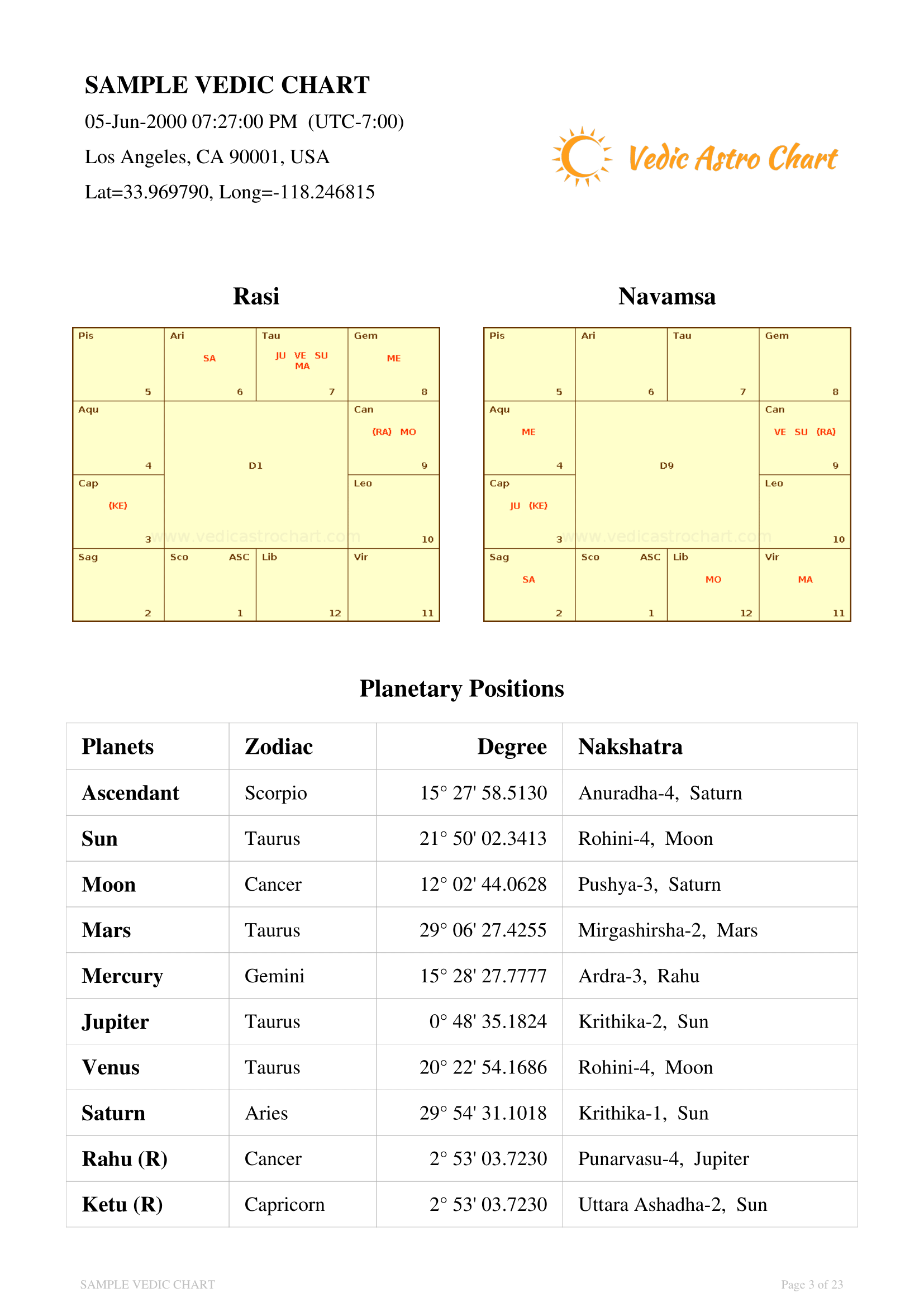
Finally, ensure you are using the correct zodiac system. Most Western astrology uses the Tropical Zodiac, which is aligned with the seasons (the equinoxes and solstices). The Sidereal Zodiac, used in Vedic astrology, is aligned with the actual fixed constellations. While both are valid systems, they will produce different "maps," and one should stick to the rules of a single system during a specific analysis to avoid confusion.
Next Steps for Beginners
Once the basics of the map are understood, the next step is to observe the "Transits." This involves looking at where the planets are currently located in the sky (the 2026 positions) and comparing them to your original birth chart map. This practice, known as predictive astrology, helps identify current life themes and timing for specific actions.
For those looking to deepen their knowledge, practicing on the charts of well-known public figures or friends can help solidify the symbolic associations. The goal of the astrology chart map is not to predict a fated future, but to provide a tool for self-awareness and conscious navigation of life’s cycles.
Frequently Asked Questions
What if I don't have my exact birth time?
Without an exact birth time, you can still generate a "Solar Sign" chart or a "Noon" chart. This will accurately show your planetary signs (like your Moon sign and Venus sign) and most aspects. However, you will not be able to determine your Rising Sign (Ascendant) or which houses the planets occupy. For a full map analysis, some astrologers offer "rectification," a process of reverse-engineering your birth time based on major life events.
Is the astrology chart map the same as a horoscope?
In technical terms, a "horoscope" (from the Greek horoskopos, meaning "observer of the hour") refers to the entire chart map. However, in popular culture, "horoscope" has come to mean the short Sun-sign predictions found in media. A true astrology chart map is personalized and far more complex than a general Sun-sign forecast.
Why do some charts look different on different websites?
This is usually due to the "House System" settings. Different systems (Placidus, Koch, Whole Sign, Campanus) divide the 360-degree circle differently. While the planets will remain in the same zodiac signs, they may shift between houses depending on the system used. Beginners are generally advised to start with Placidus or Whole Sign.
Are the "Twelve Houses" the same as the "Twelve Signs"?
No, though they share the same number. Signs are sections of the sky based on the Earth's orbit around the Sun (the ecliptic). Houses are sections of the sky based on the Earth's rotation on its axis. Signs represent how energy is expressed, while houses represent where in your life that energy manifests.
Can I change my astrology chart?
No, your natal chart is a fixed snapshot of the moment you were born. It represents your inherent potential and "factory settings." However, you have free will in how you choose to express those energies. Furthermore, "Progressed Charts" and "Transits" show how you evolve and grow over time, but they always relate back to the original natal map.