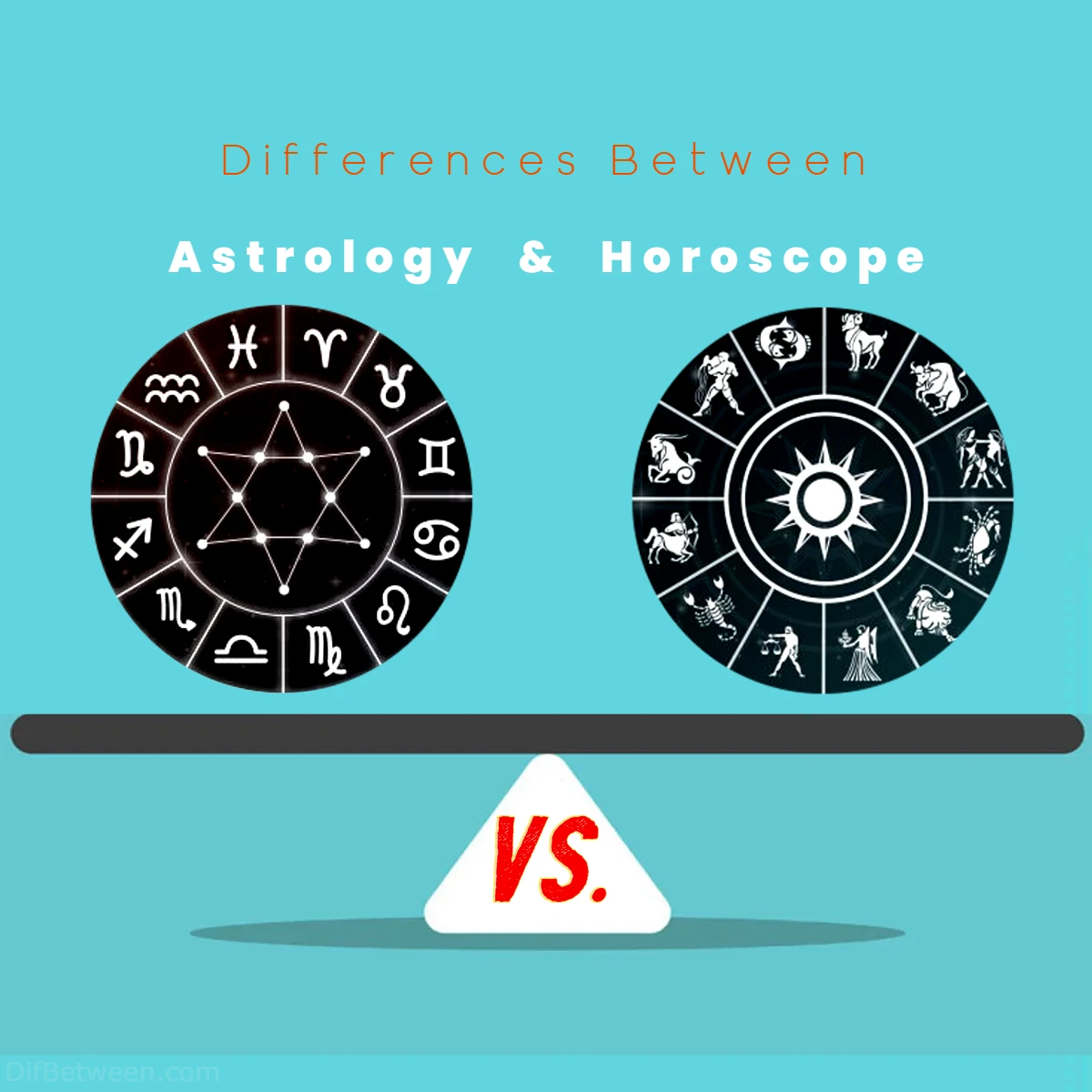
An online horoscope is a digitally generated astrological map or forecast that interprets the positions of celestial bodies based on specific time and geographical data. By utilizing precise algorithms and astronomical databases, these tools calculate the geometric relationships between planets—known as aspects—to provide personalized insights into an individual's character, timing, and life potential.
In 2026, the accessibility of sophisticated astrological data has transformed the traditional "daily column" into a high-precision diagnostic tool. Whether you are using a web-based calculator or a mobile application, understanding the underlying definitions and technical aspects is essential for navigating the complex world of modern digital astrology.
Defining the Online Horoscope in the Modern Era
To understand an online horoscope, one must first distinguish it from the generic "sun-sign" columns found in legacy media. While those columns offer broad archetypal advice based solely on the month of birth, a true online horoscope—often called a birth chart or natal chart—is a comprehensive snapshot of the entire sky at the exact second of an individual's first breath.
The digital transition has revolutionized this practice. Historically, an astrologer would spend hours consulting mathematical tables called an Ephemeris and performing long-form trigonometry to determine house cusps and planetary degrees. Today, online platforms use the Swiss Ephemeris, a high-precision collection of data used by professional developers to ensure that the positions of the sun, moon, and planets are accurate within a fraction of a second of arc.
An online horoscope serves as a blueprint. It translates astronomical coordinates into a symbolic language. The "online" component refers to the delivery system: the user inputs their birth date, time (to the minute), and location (latitude and longitude), and the software instantly produces a wheel-shaped diagram. This diagram is divided into twelve sections (houses) and populated by various symbols (planets and signs), all connected by lines (aspects).
The Core Components of a Digital Chart
Before delving into the "aspects," it is vital to understand the three primary layers that every online horoscope calculator must process:
1. The Planets (The Actors)
In astrology, the "planets" include the Sun and Moon (the Luminaries) along with Mercury, Venus, Mars, Jupiter, Saturn, Uranus, Neptune, and Pluto. Each represents a specific psychological function. For example, Mercury governs communication and intellect, while Mars governs drive and physical energy. Online tools track these bodies' movements in real-time, allowing for "transit" reports that compare current planetary positions to your birth positions.
2. The Signs (The Costumes)
The twelve signs of the Zodiac represent the "how" of the equation. They are the 30-degree segments of the ecliptic that provide the elemental and modal qualities to the planets residing within them. Online horoscopes categorize these into:
- Elements: Fire (energy/spirit), Earth (practicality/form), Air (intellect/social), and Water (emotion/intuition).
- Modalities: Cardinal (initiating), Fixed (sustaining), and Mutable (adapting).
3. The Houses (The Stages)
The twelve houses represent different areas of life, such as career, relationships, and health. The calculation of these houses is the most technical part of an online horoscope. Most online tools default to the Placidus House System, but many advanced users now prefer the Whole Sign House System for its clarity in predictive work. The accuracy of the house placements depends entirely on the precision of the birth time provided.
Key Aspects: The Geometry of the Soul
In the context of an online horoscope, "aspects" refer to the specific angular distances between two planets on the 360-degree zodiacal wheel. These angles determine whether the relationship between two planetary energies is harmonious, challenging, or neutral. Online horoscopes typically visualize these as colored lines in the center of the chart wheel.
The concept of the Orb is crucial here. An orb is the "margin of error" allowed for an aspect to be considered active. For instance, if two planets are 88 degrees apart, a digital tool may still count them as being in a "Square" (90 degrees) because they fall within a 2 to 8-degree orb.
The Major (Ptolemaic) Aspects
Digital astrology primarily focuses on the five major aspects identified by the second-century astronomer Ptolemy.
Conjunction (0°)
A conjunction occurs when two planets are at approximately the same degree of the same sign. In an online reading, this is often interpreted as a "blending" of energies. The two planets act as a single unit. If the planets are compatible (like Venus and Jupiter), it is highly beneficial. If they are contradictory (like Mars and Saturn), it can create intense internal pressure.
Sextile (60°)
The sextile is a harmonious aspect occurring between planets in compatible elements (e.g., Fire and Air). Online interpretations view the sextile as an "opportunity." It is not as powerful as a trine; it requires conscious effort to activate. It represents a talent or a supportive circumstance that the individual can choose to utilize.
Square (90°)
The square is a point of high tension. It occurs between planets of the same modality (Cardinal, Fixed, or Mutable) but different elements that do not naturally get along. In a digital horoscope, squares are often flagged as "challenges" or "blocks." However, they are also the primary drivers of growth and achievement, providing the friction necessary to build character.
Trine (120°)
The trine is the most favorable aspect. It connects planets in the same element (e.g., three Earth signs). Online reports describe trines as "natural gifts" or "flow." The energy moves effortlessly between the planets involved, often creating a sense of ease or luck in those specific life areas.
Opposition (180°)
An opposition occurs when two planets are across the wheel from each other. This creates a "tug-of-war" dynamic. In online relationship astrology (synastry), oppositions are common between partners, representing the "other" who mirrors what we lack. Internally, an opposition requires balance and compromise between two opposing needs.
Technical Accuracy and Interpretation Algorithms
One of the most significant advancements in online horoscopes as of 2026 is the refinement of interpretation algorithms. Early digital horoscopes relied on "canned" text fragments that often felt contradictory. Modern systems use weighted logic to synthesize the chart.
For example, if a user has a "Sun Square Saturn" (restriction) but also a "Sun Trine Jupiter" (expansion), a high-quality online tool will not simply list both. It will analyze which aspect is "closer" (the tighter orb) and how the respective planets are dignified by their signs. This level of technical depth ensures that the final definition of the user's personality is nuanced rather than generic.
| Aspect Type | Degree | Symbol | Quality | Psychological Impact |
|---|---|---|---|---|
| Conjunction | 0° | ☌ | Neutral/Intense | Concentration of energy; unification of two functions. |
| Sextile | 60° | ⚹ | Harmonious | Openings; ease of communication; potential for skill. |
| Square | 90° | □ | Challenging | Internal conflict; external obstacles; push for action. |
| Trine | 120° | △ | Harmonious | Natural talents; luck; effortless integration of traits. |
| Opposition | 180° | ☍ | Challenging | Projection onto others; need for balance; polarities. |
Why Birth Time is the "Key" to Online Accuracy
A common mistake when using online horoscope services is the omission of an accurate birth time. Without the time, the software cannot calculate the Ascendant (Rising Sign) or the house placements.
The Ascendant is the sign that was rising on the eastern horizon at the moment of birth. It changes approximately every two hours. In an online horoscope, the Ascendant determines the "Chart Ruler" and sets the entire structure of the twelve houses. Without it, the "online horoscope definition" reverts to a "Solar Chart," which is significantly less accurate as it places the Sun on the first house cusp regardless of the actual time of day.
For those without an official birth certificate, "Rectification" is the process used to work backward from major life events to find the likely birth time. While some AI-driven online tools in 2026 attempt to automate this, it remains a task best suited for professional consultation or highly specialized software.
Selecting a Reliable Online Astrology Platform
With the proliferation of astrology apps, it is important to distinguish between "entertainment-grade" and "professional-grade" tools. A professional-grade online horoscope platform should provide:
- Customizable House Systems: Ability to switch between Placidus, Koch, Whole Sign, and Campanus.
- Ephemeris Source: Clear indication that they use the Swiss Ephemeris for calculations.
- Aspect Grids: A visual matrix showing the exact orbs for every relationship between planets.
- Transit Tracking: The ability to overlay current planetary positions onto the natal chart.
- Privacy Standards: In 2026, data privacy is paramount; users should ensure their birth data is encrypted and not sold to third-party advertisers.
Reputable sources for these calculations include Astrodienst, which has set the industry standard for decades, and Astro-Seek, known for its extensive database and user-friendly tools.
Common Misinterpretations of Online Data
A primary risk of online horoscopes is the "fragmentation" of information. Because software breaks a chart down into a list of aspects, users may focus on one "bad" aspect (like a Venus-Saturn square) and ignore the broader context.
In professional astrology, this is known as "synthesis." A digital tool might tell you that your Mars in Aries makes you aggressive, but if that Mars is in the 12th house and squared by Neptune, that aggression might be entirely internalized or expressed through artistic channels. Users should look for platforms that offer "Synthesis Reports" or "General Chart Themes" rather than reading individual snippets in isolation.
Practical Steps for Reading Your Online Horoscope
To get the most out of a digital astrology reading, follow these steps:
- Verify Source Data: Ensure your birth date, year, time, and city are correct. Check if the software automatically adjusted for Daylight Savings Time (most professional tools do).
- Identify the Big Three: Look for your Sun sign (identity), Moon sign (emotions), and Ascendant (persona).
- Look for Tighter Orbs: In your aspect list, pay the most attention to aspects with an orb of 0° to 2°. These are the most dominant "vibrations" in your life.
- Check the Elements: Does your online report show a lack of Water? This might explain a tendency to intellectualize emotions rather than feeling them.
- Observe the Transits: Use the online "current planets" feature to see where Saturn is currently moving through your houses. This indicates where you are currently being asked to take responsibility.
Frequently Asked Questions
Why does my online horoscope look different on different websites?
This usually occurs because different sites use different House Systems. While the planets will remain in the same zodiac signs, their house placements (the life areas they affect) can shift depending on whether the site uses Placidus or Whole Sign houses. Additionally, different sites may use different "orbs" for aspects, meaning one site might show a "Square" that another site ignores.
Are online horoscopes as accurate as a human astrologer?
Mathematically, yes—online tools are actually more accurate than hand calculations. However, for interpretation, a human astrologer is better at "synthesis." An AI or software can tell you what 50 different aspects mean, but it may struggle to tell you how they all work together to form a single, cohesive human personality.
What is the "Rising Sign" and why does the online tool need it?
The Rising Sign (Ascendant) is the "filter" through which you see the world and the world sees you. It is the most personal point in an online horoscope because it is based on the exact minute and location of birth. It determines the "ruling planet" of your entire chart.
Can I get a horoscope without my birth time?
Yes, most online tools allow you to select "Time Unknown." The system will usually default to "Noon" or a "Solar Sign" chart. While you will still see your planetary signs (except the Moon, which moves quickly), you will not have accurate House placements or an Ascendant.
What are "Transits" in an online horoscope?
Transits are the current positions of the planets in the sky compared to where they were when you were born. When an online horoscope provides a "daily forecast," it is usually calculating these transits to see how the current "Sky" is interacting with your "Birth Chart."
Next Actions for Users
If you are ready to explore your online horoscope, start by obtaining a high-quality copy of your natal chart from a reputable technical site. Focus specifically on the Major Aspects and the House Placements of your Sun and Moon. For those looking to deepen their understanding, researching the "Traditional Rulerships" of the signs can provide a more grounded perspective on how the planets in your digital chart actually behave.