ASML’s financial valuation and net worth reflect its critical role as the world's sole supplier of extreme ultraviolet lithography systems, driven by high demand for advanced semiconductor manufacturing technology. Analyzing its market capitalization, revenue streams, and capital allocation strategies provides a comprehensive picture of its fiscal standing.
The Foundation of ASML’s Market Position
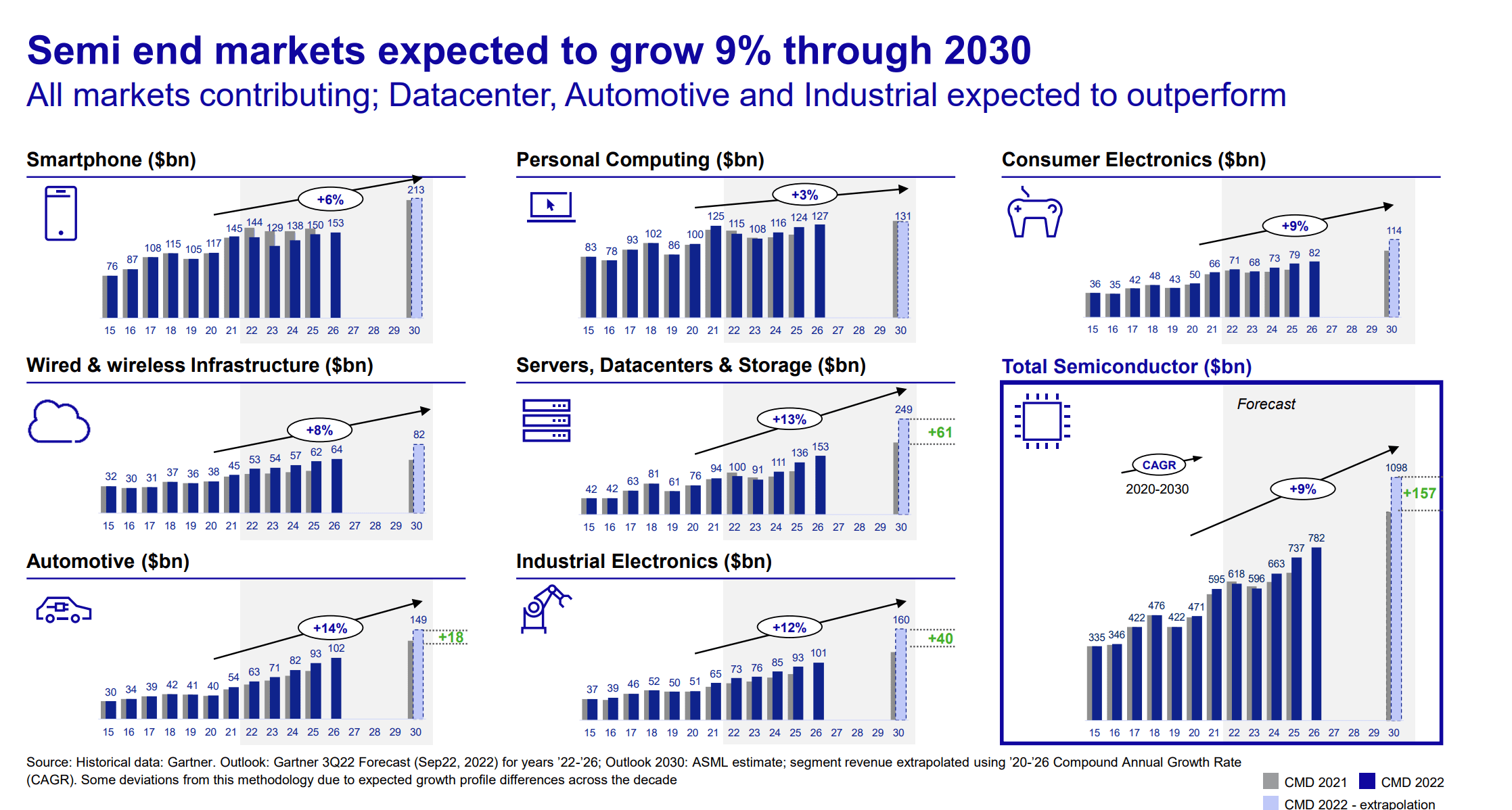
ASML Holding N.V., headquartered in Veldhoven, Netherlands, occupies a singularly dominant position in the global semiconductor manufacturing equipment industry. To understand the financial valuation and overall net worth of the company, one must examine the technological monopoly it holds over Extreme Ultraviolet (EUV) lithography systems. These massive, highly complex machines are absolute prerequisites for fabricating sub-7-nanometer microchips, which power everything from modern artificial intelligence accelerators to advanced smartphones and data center infrastructure.
The company's financial strength does not stem merely from unit sales of these multi-million-dollar machines, but also from its extensive installed base management. ASML generates substantial, high-margin recurring revenue through maintenance, system upgrades, and customer support services over the multi-decade lifecycle of each lithography tool. This business model cushions the corporation against cyclical downturns in the broader consumer electronics market, anchoring its balance sheet and stabilizing its market valuation.
Furthermore, ASML’s strategic relationships with key industry titans—such as Taiwan Semiconductor Manufacturing Company (TSMC), Intel, and Samsung—create an impenetrable moat. These fabrication giants invest heavily alongside ASML in research and development to secure early access to next-generation High Numerical Aperture (High-NA) EUV systems. Consequently, the company's valuation is less a reflection of short-term macroeconomic volatility and more a reflection of its status as an indispensable pillar of the global digital economy.
Market Capitalization Versus Book Value and Net Worth
When discussing the net worth of a publicly traded multinational enterprise like ASML, financial analysts typically look at market capitalization as the primary proxy, alongside traditional corporate equity metrics found on the balance sheet. Market capitalization represents the total dollar market value of a company's outstanding shares of stock. Because ASML is listed on both Euronext Amsterdam and NASDAQ (under the ticker ASML), its equity value fluctuates constantly during trading hours based on investor sentiment, global semiconductor demand cycles, geopolitical trade policies, and macroeconomic interest rate shifts.
In contrast to market cap—which prices future growth expectations and intangible assets like intellectual property into the stock—the book value (or total stockholders' equity) reflects the net value of ASML's tangible and recorded assets minus its liabilities. While book value offers a conservative baseline rooted in historical accounting data, market valuation captures the immense premium investors place on ASML’s proprietary technology, engineering talent, and unassailable market share.
| Financial Metric | Concept and Description | Role in Valuation Analysis |
|---|---|---|
| Market Capitalization | Total share price multiplied by total outstanding shares. | Reflects public market sentiment and future growth expectations. |
| Book Value (Equity) | Total recorded assets minus total liabilities on the balance sheet. | Provides a conservative baseline of net tangible and intangible assets. |
| Enterprise Value (EV) | Market cap plus total debt, minus cash and cash equivalents. | Measures total company value independent of capital structure. |
| Free Cash Flow | Operating cash flow minus capital expenditures. | Demonstrates liquidity available for R&D, dividends, and buybacks. |
Evaluating ASML's financial standing requires synthesizing these metrics. While macroeconomic headwinds, export controls, and cyclical inventory corrections in the semiconductor sector introduce volatility, the company's enterprise value generally remains supported by robust operating margins and significant free cash flow generation.
Revenue Streams and Operational Segments
ASML’s financial engine is fueled by two primary operating segments: system sales and installed base management. System sales comprise the delivery of Deep Ultraviolet (DUV) lithography systems, traditional EUV systems, and the newly commercialized High-NA EUV systems. Each system represents a masterclass in precision engineering, commanding astronomical price tags that can exceed hundreds of millions of dollars per unit. The introduction of High-NA EUV systems represents a pivotal revenue catalyst, as these tools carry higher average selling prices and are required for the 2nm node and beyond.
At the same time, the installed base management segment provides a resilient financial buffer. As thousands of DUV and EUV systems operate continuously in cleanrooms around the globe, they require regular calibration, software updates, spare parts, and productivity upgrades. This service revenue yields high gross margins and scales linearly with the expansion of global fab capacity.
| Operating Segment | Primary Offerings | Revenue Characteristic |
|---|---|---|
| EUV Systems | Standard EUV and High-NA EUV lithography tools. | High unit value, cyclical, cutting-edge technology driver. |
| DUV Systems | Immersion and dry ArF, KrF, and i-line lithography tools. | Steady volume, essential for mature and trailing-edge nodes. |
| Installed Base Management | Customer support, upgrades, maintenance, and parts. | High-margin, recurring cash flow that mitigates cyclicality. |
Geographic diversification further stabilizes these revenue streams. ASML distributes its systems across Asia, the United States, and Europe, reflecting the globalized nature of semiconductor manufacturing. However, shifting international trade regulations and export controls targeting specific technological thresholds introduce compliance costs and alter regional sales distribution, factors that financial markets closely monitor when pricing the stock.
Capital Allocation and Shareholder Returns
A core component of ASML’s financial strategy involves disciplined capital allocation designed to balance aggressive research and development with direct returns to shareholders. Developing advanced lithography tools requires multi-billion-dollar investments sustained over decades. ASML consistently pours a substantial percentage of its total annual revenue back into R&D, partnering closely with global research institutes like imec and academic organizations to solve extreme physics and optics challenges.
Beyond R&D, ASML employs a balanced capital return framework consisting of progressive dividend payouts and share repurchase programs. Management uses excess free cash flow to buy back shares, reducing share count and boosting earnings per share (EPS), while steadily increasing dividend distributions over time to reward long-term institutional and retail investors.
- Research and Development Reinvestment: Funding physics research, laser-produced plasma sources, and anamorphic optics design.
- Dividend Policy: Returning a predictable portion of annual earnings to shareholders through regular payouts.
- Share Buybacks: Utilizing excess liquidity to repurchase shares on the open market, enhancing per-share metrics.
- Strategic CapEx: Expanding cleanroom manufacturing capacity in Veldhoven and supporting global logistics networks.
This shareholder-friendly approach, combined with a strong balance sheet carrying manageable debt levels, maintains investor confidence. Even during periods of broader market correction, ASML’s commitment to returning capital underscores management's visibility into long-term industry demand trends.
Macroeconomic Risks and Geopolitical Factors
Assessing the net worth and valuation trajectory of ASML cannot be done in a vacuum; it requires analyzing severe external dependencies and geopolitical pressures. Because lithography equipment sits at the absolute bottleneck of the global tech supply chain, ASML is uniquely exposed to international trade policies, export licensing restrictions, and bilateral tensions between major economic superpowers, particularly regarding trade access to key markets.
Export control regulations implemented by governments in the Netherlands, the United States, and the European Union dictate which specific DUV and EUV systems ASML can ship to certain international customers. Restrictions on advanced tool shipments can impact backlog orders and revenue recognition for specific regions. While strong global demand from unconstrained regions often offsets these localized restrictions, compliance introduces operational friction and requires constant adaptation by legal and supply chain teams.
Furthermore, the semiconductor industry is inherently cyclical. Over-supply in consumer electronics can lead to sudden inventory corrections, causing chipmakers to delay fab expansions and push out delivery schedules for lithography tools. ASML manages these fluctuations by maintaining open dialogue with its customers, managing multi-year order backlogs, and adjusting manufacturing output without compromising its core technological roadmap.
Frequently Asked Questions
What is ASML's primary business model?
ASML designs and manufactures advanced semiconductor lithography systems used by chipmakers to etch complex circuit patterns onto silicon wafers. Its business model combines high-value system sales with high-margin recurring revenue from field maintenance, upgrades, and support for its installed base of machinery.
Why is ASML considered a monopoly in its niche?
ASML is the only company in the world capable of producing Extreme Ultraviolet (EUV) lithography systems. The engineering, optical precision, and supply chain complexity required to build these machines—which utilize laser-produced plasma to generate extreme ultraviolet light—have created an insurmountable barrier to entry for potential competitors.
How do export controls affect ASML's financial valuation?
Export regulations implemented by governments restrict ASML from shipping its most advanced EUV and certain high-end DUV systems to specific international jurisdictions. Financial markets adjust ASML's valuation based on how effectively the company can redirect its manufacturing output and order backlogs to other global customers facing high chip demand.
What are High-NA EUV systems and why do they matter for ASML?
High-Numerical Aperture (High-NA) EUV systems are ASML's next-generation lithography tools, featuring an increased optical lens aperture that allows for finer resolution printing. These systems are essential for chipmakers moving to the 2-nanometer manufacturing node and beyond, representing a major high-margin revenue growth driver.
How does ASML return value to its shareholders?
ASML returns capital to its investors through a combination of regular, growing dividend payouts and structured share repurchase programs. These actions are funded by robust free cash flow generated from both system sales and its extensive installed base management business.
Conclusion and Strategic Outlook
ASML’s financial valuation and net worth are underpinned by its absolute technological leadership in the semiconductor equipment market. By maintaining a near-monopoly on EUV and High-NA EUV lithography systems, the company secures pricing power, deep customer integration, and robust recurring service revenues. While geopolitical export controls and cyclical semiconductor downturns pose ongoing challenges, ASML’s disciplined capital allocation, massive R&D reinvestment, and critical role in the global AI and computing hardware supply chain position it for sustained long-term financial stability.