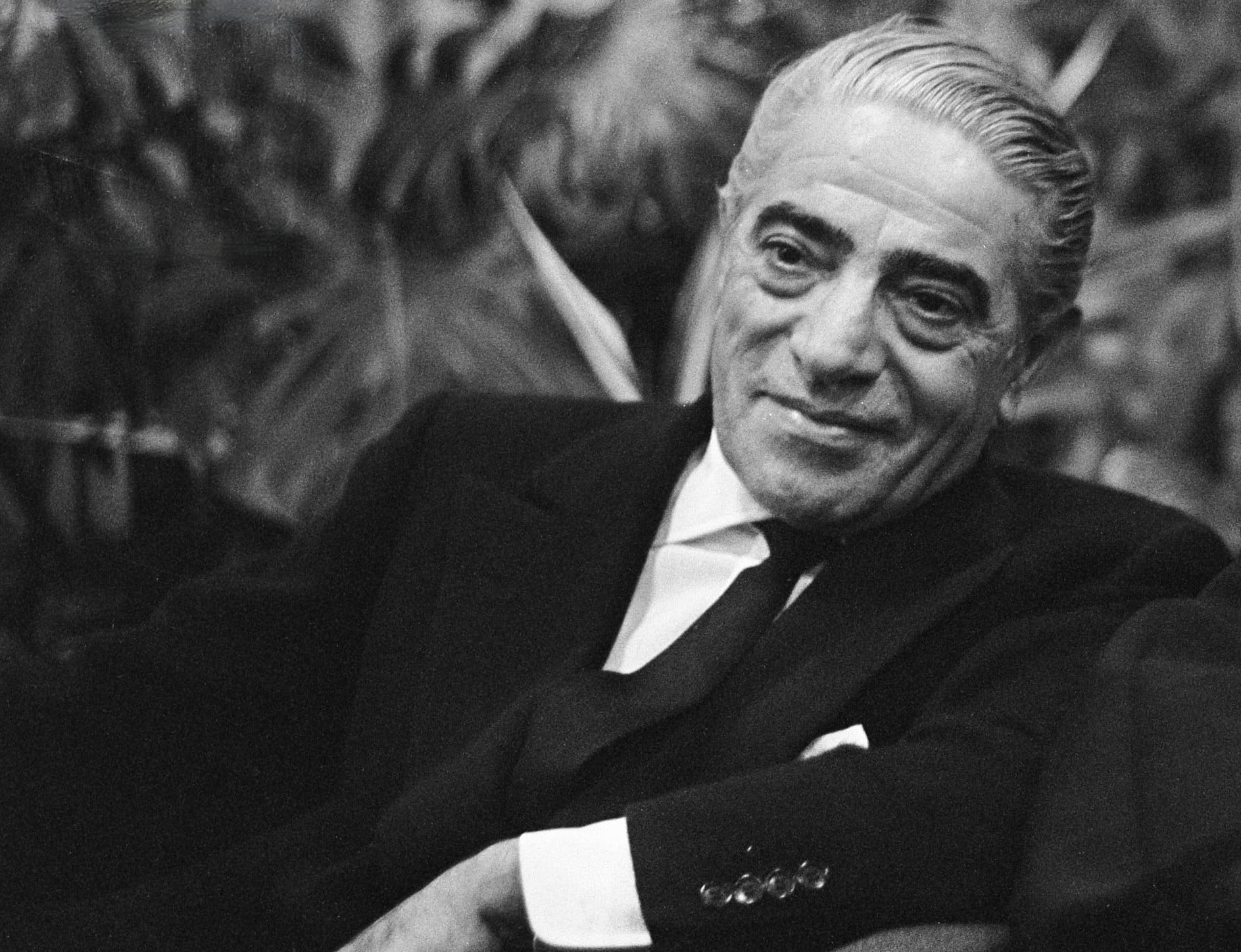
Aristotle Onassis died on March 15, 1975, at the American Hospital of Paris due to respiratory failure caused by bronchial pneumonia. This fatal infection was a complication of myasthenia gravis, a chronic neuromuscular disease that had severely weakened his immune system and respiratory muscles following years of declining health and personal tragedy.
Aristotle Onassis, the legendary Greek shipping magnate known as the "Golden Greek," was one of the most prominent figures of the 20th century. While his life was defined by immense wealth, high-profile romances, and a massive maritime empire, his final years were marked by a harrowing struggle with a debilitating autoimmune disorder. To understand why Aristotle Onassis died of pneumonia, one must look beyond the immediate infection and examine the complex interplay between his underlying medical condition, the state of 1970s medicine, and the psychological toll of losing his only son.
The Underlying Cause: Myasthenia Gravis
While pneumonia was the official cause of death listed on his certificate, it was the "silent partner" of myasthenia gravis (MG) that truly claimed his life. Myasthenia gravis is a chronic autoimmune neuromuscular disease characterized by varying degrees of weakness in the skeletal muscles of the body.
In a healthy body, nerve impulses trigger muscle contractions by releasing a chemical called acetylcholine. In patients with MG, the immune system mistakenly produces antibodies that block or destroy the receptor sites for acetylcholine. This interruption in communication prevents muscles from contracting effectively. For Onassis, this manifested most visibly in his face. In his final years, he suffered from severe ptosis (drooping eyelids), which became so pronounced that he often had to use surgical tape to keep his eyes open during business meetings and social events.
The disease does not just affect the face; it moves to the throat and chest. As the condition progresses, it weakens the muscles used for swallowing and, most critically, breathing. By the time Onassis contracted pneumonia in early 1975, his respiratory system was already significantly compromised. His body lacked the muscular strength to cough effectively or clear his lungs of fluids, creating a perfect environment for a bacterial infection to take hold.
The Progression of the Final Illness
The decline of Aristotle Onassis was not a sudden event but a multi-year descent that began in earnest in 1973. Following the tragic death of his son, Alexander, in a plane crash, Onassis’s physical health mirrored his emotional state. He became increasingly frail and susceptible to illness.
In February 1975, Onassis was flown from Athens to the American Hospital of Paris in Neuilly-sur-Seine. At the time, this facility was considered one of the premier medical institutions in Europe, particularly for treating international dignitaries. Upon admission, doctors found that his myasthenia gravis had reached a critical stage, and he was suffering from a gallbladder infection. Surgeons removed his gallbladder, but the stress of the surgery further exhausted his already depleted reserves.
Following the surgery, bronchial pneumonia set in. In the 1970s, the treatments for pneumonia—while advanced for the time—were often insufficient for patients with severe neuromuscular weakness. Onassis was placed on a ventilator (a "lung machine" in the parlance of the era) to assist his breathing. Despite the administration of potent antibiotics and the round-the-clock care of a specialized medical team, his lungs could no longer oxygenate his blood. He fell into a coma and passed away with his daughter, Christina, by his side.
Why Pneumonia is Fatal for Myasthenia Gravis Patients
To understand the technical specifics of why Onassis died of pneumonia, it is necessary to look at the pathology of respiratory failure in neuromuscular patients. This condition is often referred to as a myasthenic crisis.
- Muscle Fatigue: The intercostal muscles (between the ribs) and the diaphragm are responsible for the physical act of breathing. MG weakens these muscles, making every breath a localized struggle.
- Inability to Clear Secretions: A vital part of the immune response to lung infection is the "cough reflex." Because Onassis’s muscles were too weak to produce a forceful cough, the mucus and bacteria associated with pneumonia remained trapped in his bronchial tubes.
- Aspiration Risks: MG often causes "bulbar weakness," which affects the ability to swallow. This can lead to small amounts of food or saliva entering the lungs (aspiration), which frequently triggers the very pneumonia that becomes fatal.
- Immune Suppression: In 1975, the primary treatment for MG involved corticosteroids. While these drugs help manage the autoimmune attack, they also suppress the general immune system, making it harder for the patient to fight off opportunistic infections like pneumonia.
Historical Comparison: Medical Treatment in 1975 vs. Today
The medical landscape during the time of Onassis’s death was significantly different from modern standards. While the American Hospital of Paris provided the best care available, the options for treating both myasthenia gravis and severe pneumonia have evolved considerably.
| Feature | Medical Standards in 1975 | Modern Standards (2026) |
|---|---|---|
| MG Diagnosis | Clinical observation and Tensilon tests. | Advanced antibody testing and MuSK-protein analysis. |
| Primary MG Therapy | High-dose steroids and thymectomy. | Targeted biologics, eculizumab, and IVIG therapy. |
| Pneumonia Treatment | Broad-spectrum early antibiotics. | Rapid genomic pathogen identification and targeted antivirals/antibiotics. |
| Respiratory Support | Basic mechanical ventilation. | High-frequency oscillatory ventilation and ECMO (Life Support). |
| Patient Monitoring | Manual observation and basic vitals. | AI-driven predictive analytics for respiratory failure. |
If Onassis were treated today, he might have had access to plasmapheresis (plasma exchange) or intravenous immunoglobulin (IVIG) to rapidly remove the harmful antibodies from his blood. These treatments are now standard for stabilizing patients during a myasthenic crisis and might have prevented his respiratory system from failing so completely.
The Psychological Dimension: A "Broken Heart"
Biographers and family members, including his daughter Christina, frequently argued that while pneumonia was the biological cause, grief was the catalyst. The death of Alexander Onassis in January 1973 shattered Aristotle. Alexander was his only son and the intended heir to the Olympic Maritime empire.
Medical science now recognizes a link between severe emotional trauma and the suppression of the immune system. The chronic stress Onassis experienced after 1973 likely led to increased cortisol levels, which further weakened his body's ability to manage the myasthenia gravis. His "will to live" was reportedly diminished; he became a heavy smoker and ignored various dietary restrictions, further complicating his clinical picture. By the time the pneumonia struck, he was a man who had physically and emotionally surrendered.
The Final Moments at the American Hospital of Paris
The circumstances surrounding his death were as dramatic as his life. His wife, Jacqueline Kennedy Onassis, was not present at the moment of his death. She had been in Paris but returned to New York shortly before he passed, reportedly under the impression that his condition was stable for the time being. This created a lasting rift between Jackie and Christina Onassis.
Aristotle was buried on his private island, Skorpios, alongside his son Alexander. His death marked the end of an era in the shipping industry and triggered a complex inheritance process that saw his daughter Christina take over the reins of the business while dealing with the massive philanthropic mandates Aristotle had left in his son's memory.
Legacy of the Onassis Health Crisis
The public nature of Onassis’s struggle with myasthenia gravis brought international attention to the disease. At the time, many people were unaware of the condition, and his visible symptoms—the taped eyelids—served as a haunting visual of the disorder's impact.
Following his death, the Onassis Foundation was established. While its primary focus was fulfilling Aristotle's will regarding shipping and culture, it also became a significant donor to medical research and public health in Greece and abroad. The foundation eventually funded the Onassis Cardiac Surgery Center in Athens, one of the most advanced hospitals in the Mediterranean, ensuring that the medical struggles faced by its founder would lead to better outcomes for future generations.
Frequently Asked Questions
Was pneumonia the only thing that killed Aristotle Onassis?
No. While bronchial pneumonia was the immediate cause of death, it occurred because his body was severely weakened by myasthenia gravis. The pneumonia was a complication that his compromised respiratory system could not overcome.
Where exactly did Aristotle Onassis die?
He died at the American Hospital of Paris, located in the suburb of Neuilly-sur-Seine, France. He had been flown there specifically for the expertise of the doctors and the quality of the facility's intensive care unit.
Why did he tape his eyes open?
This was a direct result of myasthenia gravis. The disease caused severe weakness in the levator palpebrae superioris muscles, which are responsible for lifting the eyelids. Taping them open allowed him to see and maintain a semblance of his public image during business dealings.
How old was Aristotle Onassis when he died?
Onassis was 69 years old at the time of his death. His health had declined rapidly in the two years following his son's death in 1973.
Could modern medicine have saved him?
It is highly probable that modern treatments such as plasmapheresis, improved immunosuppressants, and advanced life-support systems (like ECMO) could have managed his myasthenia gravis more effectively and helped him survive the bout of pneumonia.
Next Steps for Further Research
For those interested in the intersection of celebrity history and medical science, exploring the records of the Myasthenia Gravis Foundation of America provides deep insights into how treatments have evolved since the 1970s. Additionally, the archives of the American Hospital of Paris offer historical context on the types of care provided to international figures during that era. To understand the legal and philanthropic aftermath of his death, the Onassis Foundation provides extensive documentation on the transition of his estate and the establishment of the Alexander S. Onassis Public Benefit Foundation.