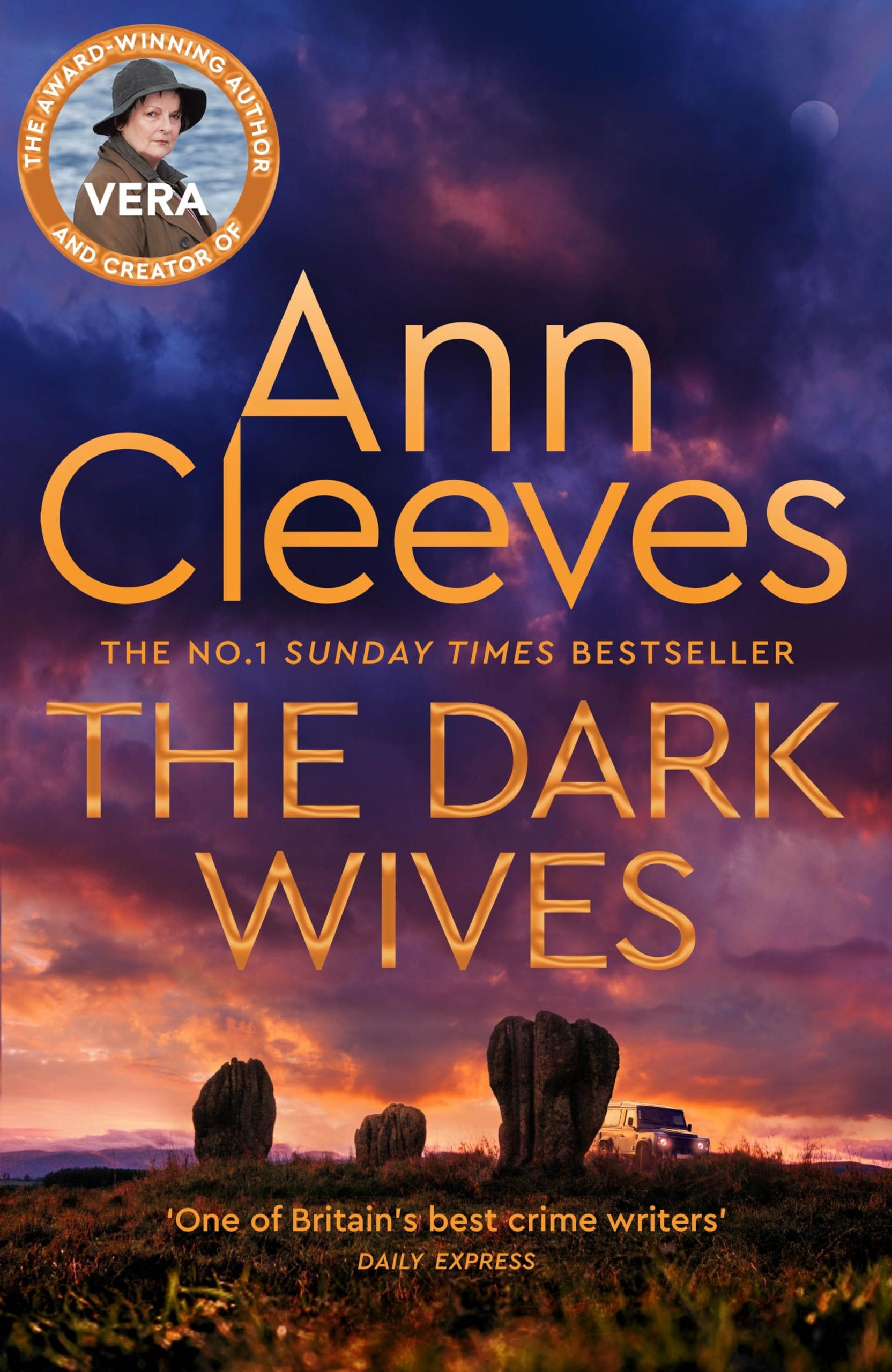
Ann Cleeves has an estimated net worth of £4 million to £8 million ($5 million to $10 million USD). Her financial wealth stems from a career spanning over four decades, driven by multi-million book sales, major television adaptation deals for hit series like Vera and Shetland, global translation rights, and audiobook royalties.
Understanding Ann Cleeves' Financial Footprint
Calculating the precise net worth of a private individual in the United Kingdom requires looking at public commercial records, book trade sales data, and industry standards for media licensing. Unlike corporate executives or publicly traded companies, published authors in the UK are not legally required to publish detailed personal balance sheets. However, financial estimates can be established by evaluating public filings, published sales numbers, screen option agreements, and standard publishing royalty models.
Ann Cleeves is one of Britain’s most commercially successful crime writers. With more than 35 novels published since her debut in 1986, her works have sold over 5 million copies worldwide. Beyond physical book sales, her earnings expanded significantly when UK television networks adapted her novels into international television franchises.
While sensationalized financial sites occasionally post unverified numbers, industry analysis places her net net worth comfortably in the mid-seven-figure range. This accumulated capital is held through personal earnings, intellectual property assets, and corporate trading entities structured under UK tax and business frameworks.
Primary Revenue Streams Behind Ann Cleeves' Wealth
The financial portfolio of a top-tier UK author relies on multiple compound income streams. For Cleeves, wealth creation extends far beyond initial publisher advances.
- ANN CLEEVES REVENUE CORE
- Print & Digital Book Royalties
- TV Rights & Film Production Fees
- Foreign Rights & Translations
- Audiobooks & PLR Public Lending
1. Print and Digital Book Sales
In traditional UK trade publishing, authors receive an advance against royalties, followed by ongoing royalty payments once the initial advance is earned back. Standard royalty rates in the UK publishing market typically range between:
- Hardcover Editions: 10% to 15% of the cover price or net retail price.
- Paperback Editions: 7.5% to 10% of retail price.
- E-books (Kindle/Kobo): 25% of the publisher’s net receipts.
Cleeves’ books are published primarily by Pan Macmillan in the UK and St. Martin’s Press in the United States. With backlist titles continuing to sell steadily alongside new releases in her popular series—such as the Vera Stanhope, Shetland, and Two Rivers (Matthew Venn) series—her annual backlist royalties provide a steady, passive income stream.
2. Television Adaptations and Screen Rights
Television rights represent one of the most lucrative income accelerators for crime authors. When a production company options a book series, author remuneration follows a structured multi-stage payout model:
- Option Fees: A producer pays an initial fee to secure exclusive rights to adapt the material for a set timeframe (usually 12 to 24 months).
- Purchase/Exercise Fees: Once greenlit for production, the network pays a formal purchase fee, often calculated as a percentage of the production budget (typically 1% to 3% per episode or television film).
- Executive Producer / Consultant Fees: Authors who stay on as consultants or executive producers earn additional episodic fees.
- Backend Royalties & International Broadcast Rights: As shows like Vera (produced by ITV Studios) and Shetland (produced by ITV Studios for the BBC) are broadcast in over 150 international territories, secondary broadcast royalties and distribution residuals flow back to the creator.
The sustained global run of Vera (which aired for over 13 series) and Shetland has made Cleeves one of the most televised living British novelists, providing substantial, long-term television royalty distributions.
3. Audiobooks and Foreign Translation Rights
Audiobook consumption has surged across the UK, North America, and Europe. Audiobook contracts usually grant authors between 10% and 25% of net receipts for digital downloads on platforms such as Audible and Apple Books. Given the immersive, narrative-driven nature of Cleeves' detective fiction, audio formats generate strong ongoing revenues.
Additionally, Cleeves’ books have been translated into more than 20 languages. Foreign rights are sold either through sub-agents or directly by primary publishers, yielding separate advances and localized royalty streams across Germany, Scandinavia, France, and North America.
Career Timeline and Financial Growth Trajectory
Understanding how Ann Cleeves built her net worth requires looking at her long career progression. Her financial trajectory moved from modest mid-list earnings to major bestseller status over several key phases.
- 1986–2005: Early Career & Mid-List Publishing
- Published Palmer-Jones and Inspector Ramsay series
- Modest advances; steady library and regional UK readership
- 2006: Breakthrough Moment
- Published "Raven Black" (First Shetland novel)
- Awarded CWA Gold Dagger (£20,000 prize + international prestige)
- 2011–Present: Television Expansion & Global Brand Status
- "Vera" premieres on ITV (2011)
- "Shetland" premieres on BBC One (2013)
- "The Long Call" adapted for ITV (2021)
- Awarded OBE (2022); global sales cross 5 million copies
The Early Decades (1986–2005)
Cleeves published her first book, A Bird in the Hand, in 1986. During the early years of her career, she wrote two distinct series: the George and Molly Palmer-Jones books and the Inspector Ramsay series. During this era, her income was typical of a respected mid-list author, characterized by modest book advances, small print runs, and supplementary employment in community roles and library advocacy.
The Breakthrough: CWA Gold Dagger (2006)
The trajectory of her career changed dramatically in 2006 with the publication of Raven Black, the first novel in her Shetland series. The book won the prestigious Crime Writers' Association (CWA) Duncan Lawrie Dagger (Gold Dagger) for Best Crime Novel of the Year, which carried a prize of £20,000—one of the largest monetary prizes in crime fiction at the time.
Winning the Gold Dagger catapulted her into international prominence, increasing print runs, foreign translation deals, and media interest.
The Television Era (2011–Present)
In 2011, ITV premiered Vera, starring Brenda Blethyn as DCI Vera Stanhope. The series quickly became a flagship crime drama for ITV, drawing millions of viewers per episode in the UK and commanding strong syndication sales in international markets.
Two years later, in 2013, the BBC launched Shetland, starring Douglas Henshall as DI Jimmy Perez. In 2021, ITV adapted her Two Rivers series into The Long Call. Having three separate detective franchises adapted for terrestrial television placed Cleeves in a rare tier of commercial success shared by few UK authors, such as Colin Dexter (Inspector Morse) or Agatha Christie.
Comparison of Author Revenue Streams in the UK
To contextualize how different activities contribute to overall wealth generation for high-profile UK writers, consider the breakdown of standard revenue channels:
| Revenue Stream | Typical Author Share / Rate | Financial Predictability | Long-Term Wealth Contribution |
|---|---|---|---|
| UK Print Sales | 7.5% – 15% of cover price | Moderate (linked to release cycles) | High (Core baseline income) |
| E-Book Downloads | 25% of net publisher receipts | High | Moderate to High |
| TV Optioning & Production | 1% – 3% of production budget | Variable (Project-dependent) | Very High (Lump sums + syndication) |
| Foreign Rights Sales | Variable advances + regional royalties | Low to Moderate | Moderate |
| Audiobook Royalties | 10% – 25% of net digital sales | High (Growing market segment) | Moderate |
| Public Lending Right (PLR) | Statutory fee per library loan (capped at £6,600/yr) | Very High | Low (Fixed statutory cap) |
Financial Structure: How UK Authors Manage Royalty Wealth
Building and retaining wealth in the UK requires tax planning and legal structuring. High-earning authors in Britain manage their income using established business models.
Limited Companies for IP Management
Rather than receiving all income as personal self-employed income—which exposes earnings to top-tier UK personal income tax rates (up to 45%) and National Insurance contributions—top authors often route royalties, option fees, and public appearance income through a private limited company registered at Companies House.
Under a corporate structure:
- Royalty income is received directly by the company.
- The business pays UK Corporation Tax on net profits.
- The author draws income via a combination of salary and dividends, allowing for structured personal financial management.
- Operational expenses, research travel, office setups, and administrative support are deducted as legitimate business expenses.
Public Lending Right (PLR) Income
In the UK, the Public Lending Right scheme run by the British Library compensates authors when their books are borrowed from public libraries. Authors earn a small payment per borrow, up to a statutory maximum cap of £6,600 per year. Given Cleeves’ immense popularity in UK public libraries, she consistently reaches the maximum allowable threshold under the PLR framework, providing a reliable annual contribution to her UK operating revenue.
Philanthropy, Advocacy, and Literary Initiatives
Ann Cleeves' approach to financial success is characterized by her reinvestment into reading programs and community initiatives across the UK.
- COMMUNITY & SOCIAL INVESTMENT
- Reading Well Prescriptions: Funding reading coordinators in healthcare & community networks
- Library & Literacy Advocacy: Patron of UK library services, local literary festivals, & young writers
The Reading for Wellbeing Scheme
In 2021, to mark her 35th anniversary as a published author, Cleeves launched a reading project in partnership with public health bodies in North East England. She funded "Reading Coordinators" in areas of social deprivation, testing how access to books and community reading groups could improve mental health and alleviate isolation.
National Recognition and Advocacy
Cleeves was awarded an OBE (Officer of the Order of the British Empire) in the 2022 New Year Honours for her services to reading and public libraries. She remains a prominent advocate for public library funding, frequently pointing out that early access to free books at local libraries was fundamental to her career success.
Key Factors Influencing Future Net Worth Growth
Several ongoing elements will determine how Ann Cleeves' capital reserves and commercial value continue to evolve:
- Continued Television Syndication: As broadcast networks and global streaming platforms acquire archive rights for Vera and Shetland, international syndication checks will continue to generate backend revenue.
- Backlist Longevity: Unlike fast-expiring non-fiction, popular crime fiction backlists enjoy exceptional shelf lives. Readers entering her series via television often purchase the entire 10-to-12-book print backlists.
- New Novel Advances: As an established, top-tier author, Cleeves commands high six-figure advances for new titles in the Two Rivers series and future publishing projects.
- Estate and Intellectual Property Valuations: Literary estates containing active TV rights and backlist catalogs retain significant capital value over decades, benefiting long-term asset retention.
Frequently Asked Questions
What is Ann Cleeves' estimated net worth?
Ann Cleeves' net worth is estimated to be between £4 million and £8 million ($5 million to $10 million USD). Her financial assets stem from book sales exceeding 5 million copies, global TV adaptation royalties for Vera and Shetland, audiobooks, and foreign translation rights.
How much does Ann Cleeves earn from TV shows like Vera and Shetland?
While exact contract figures remain private, television rights for long-running series yield substantial earnings. Income includes upfront option fees, episode adaptation fees, executive producer royalties, and recurring international broadcast syndication payments as episodes air globally.
How many books has Ann Cleeves sold?
Ann Cleeves has sold more than 5 million books globally. Her titles have been translated into over 20 languages and consistently reach bestseller lists in the UK, North America, Europe, and Australasia.
Does Ann Cleeves own the rights to her TV characters?
Cleeves holds the original literary copyright to characters like Vera Stanhope, Jimmy Perez, and Matthew Venn. Production companies purchase licenses to adapt these characters for screen broadcasts, while Cleeves retains the ultimate ownership of her novel series and literary universe.
What is the Public Lending Right (PLR), and does Ann Cleeves receive it?
The Public Lending Right is a UK government scheme that pays authors when their books are borrowed from public libraries. The maximum payment an author can receive is capped at £6,600 per year, a limit Cleeves regularly reaches due to her high library checkout numbers across the UK.
Practical Summary for Publishing Industry Observers
Understanding Ann Cleeves’ financial standing highlights how modern literary net worth is accumulated in the UK. Success relies on building a diverse commercial portfolio:
- Diversify Beyond Print: True financial scale for authors requires converting written intellectual property into screen, audio, and foreign-language products.
- Leverage Backlist Value: A multi-book series creates a recurring revenue flywheel where every new release drives sales across older titles.
- Utilize Corporate Structures: High-earning UK authors manage tax efficiency and administrative overhead by handling earnings through corporate frameworks rather than straightforward personal income.
Ann Cleeves’ career demonstrates how literary excellence combined with media adaptations creates long-term financial security in the global publishing sector.