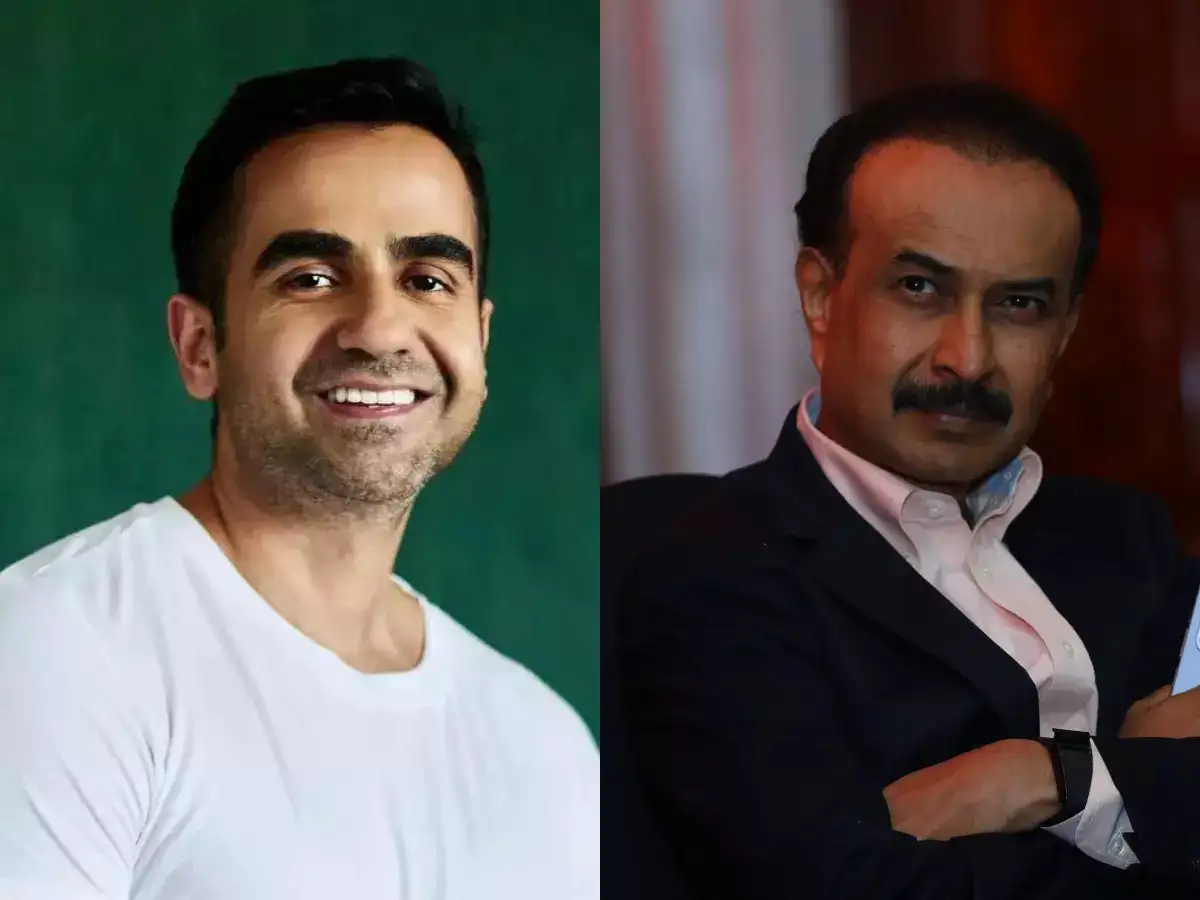
As of 2026, Ankit Nagori’s net worth is estimated to be between $80 million and $120 million (approximately ₹670 Crore to ₹1,000 Crore). This wealth is primarily derived from his substantial equity in Curefoods, residual holdings in Cult.fit (formerly Cure.fit), and historical gains from his tenure as a high-ranking executive at Flipkart.
Ankit Nagori stands as a prominent figure in India’s startup ecosystem, representing a new generation of "Flipkart Mafia" entrepreneurs who transitioned from corporate leadership to successful multi-venture ownership. His financial trajectory is not merely a story of salary and bonuses but a masterclass in equity management, strategic pivots, and the scaling of the "house of brands" model within the food-tech sector. To understand his current valuation in 2026, one must analyze the components of his portfolio, the valuation of his primary venture, Curefoods, and the broader economic climate of the Indian consumer market.
The Foundation of Wealth: The Flipkart Years
Before becoming a serial entrepreneur, Nagori was a pivotal member of Flipkart’s early leadership team. Joining the e-commerce giant in 2010, he rose through the ranks to become the Chief Business Officer (CBO). This period was crucial for his net worth for two primary reasons: the maturation of Employee Stock Ownership Plans (ESOPs) and the experience of scaling a unicorn.
When Nagori exited Flipkart in 2016, he was among the most senior employees to do so. In the years following his exit, particularly during the Walmart acquisition of Flipkart in 2018 and subsequent buyback programs, early employees with significant ESOP holdings realized massive liquidity. While Nagori had already moved on to found Cure.fit, the capital gained from his Flipkart tenure served as the "dry powder" necessary to co-invest in his future ventures. Analysts suggest that the liquidation of these shares provided a multi-million dollar cushion that allowed him to maintain a high equity stake in his own companies during early seed rounds, avoiding excessive dilution.
Cult.fit and the Partnership with Mukesh Bansal
In 2016, Ankit Nagori teamed up with Mukesh Bansal (founder of Myntra) to launch Cure.fit (now Cult.fit). This venture was one of the most well-funded startups in India, attracting capital from heavyweights like Accel, Chiratae Ventures, and Temasek.
Nagori’s role in Cult.fit was instrumental in building the "Eat.fit" vertical, which eventually became the precursor to his current empire. During his time as a co-founder at Cult.fit:
- Equity Valuation: As a co-founder, Nagori held a significant percentage of a company that was valued at over $1.5 billion during various funding peaks.
- The 2020 Spin-off: In a strategic move during the pandemic-induced shifts in the fitness and food industries, the food business (Eat.fit) was spun off as an independent entity, which Nagori took the lead on. This transition allowed him to swap his broad-based equity in the fitness business for a dominant founder's stake in the new food-focused venture, Curefoods.
While he remains a shareholder in the parent fitness entity, the majority of his "paper wealth" shifted into the specialized food-tech domain, which proved to be a lucrative bet by 2026.
Curefoods: The Primary Driver of Net Worth in 2026
Curefoods is the cornerstone of Ankit Nagori’s financial profile today. Operating as a "House of Brands" in the cloud kitchen space, Curefoods has acquired and scaled dozens of popular food brands, including EatFit, CakeZone, Great Indian Khichdi, and Nomad Pizza.
Valuation and Capital Raises
By 2026, Curefoods has completed several significant funding rounds (Series C, D, and beyond). With investors like Iron Pillar, Chiratae, and even celebrity investors like Varun Dhawan, the company’s valuation has fluctuated between $600 million and $850 million. Nagori, as the primary founder and CEO, is estimated to hold an equity stake ranging from 12% to 18%, depending on the level of dilution from recent institutional rounds.
The Profitability Factor
Unlike many 2010-era startups that prioritized growth at all costs, Curefoods shifted its focus toward EBITDA-positive operations in 2024 and 2025. By 2026, the company’s ability to generate consistent revenue across its 150+ cloud kitchens has solidified Nagori’s wealth. In the world of private equity, a founder of a profitable, scale-ready company commands a much higher "secondary market" value for their shares than a founder of a cash-burning entity.
Breakdown of Estimated Assets and Equity (2026)
To arrive at the $80M–$120M estimate, we must look at the diverse segments of Nagori’s financial portfolio. The following table provides a breakdown based on market analysis and reported funding data.
| Asset Category | Estimated Value (USD) | Primary Source/Entity |
|---|---|---|
| Primary Equity | $65M – $90M | Curefoods (Founder's Stake) |
| Residual Equity | $10M – $15M | Cult.fit (Co-founder's Share) |
| Angel Investments | $5M – $10M | 20+ Startups (Fintech, SaaS, Consumer) |
| Liquidity & Cash | $3M – $5M | Historical ESOP exits & Secondary sales |
| Real Estate & Personal | $2M – $4M | Luxury properties in Bangalore |
Angel Investment Portfolio
Ankit Nagori is an active angel investor, a common trait among successful Indian entrepreneurs. He has backed several early-stage companies, often alongside other "Flipkart Mafia" members. These investments are typically in the range of $50,000 to $250,000 per startup. While many early-stage bets fail, a few "breakout" successes in his portfolio contribute significantly to his net worth over a 5–10 year horizon. His investments often focus on consumer brands and logistics tech, sectors where he possesses deep operational expertise.
The "House of Brands" Strategy and Its Impact on Wealth
Nagori’s wealth is uniquely tied to the "Thrasio-style" model for food. By acquiring smaller, profitable local brands and integrating them into the Curefoods tech stack, he has created a portfolio that is less risky than a single-brand restaurant chain.
From a net worth perspective, this model is highly efficient:
- Multiple Revenue Streams: If one food category (e.g., healthy meals) faces a downturn, another (e.g., desserts or pizza) can offset the losses.
- Operational Leverage: By using centralized kitchens for multiple brands, the margins improve, increasing the overall enterprise value of the company and, by extension, the value of Nagori's equity.
- Exit Potential: A house of brands is an attractive acquisition target for larger conglomerates (like Reliance or Tata) or for an Initial Public Offering (IPO). In 2026, rumors of a Curefoods IPO often circulate, which would potentially double Nagori’s liquid net worth upon listing.
Challenges and Market Volatility
It is important to note that a significant portion of Ankit Nagori’s net worth is "on paper." This means it is based on the last known valuation of his private companies. In the 2026 economic environment, several factors can influence these figures:
- Funding Winters: If venture capital interest in food-tech wanes, private valuations may be corrected downwards (down-rounds), reducing the paper value of founder equity.
- Operational Costs: Rising food inflation and delivery partner commissions (Swiggy/Zomato) can compress margins, affecting the company’s valuation multiples.
- Execution Risk: Managing 30+ different brands requires immense operational precision. Any failure in food safety or brand reputation can devalue the entire portfolio.
Despite these risks, Nagori’s move toward a diversified food portfolio has generally protected his wealth better than founders who stayed in high-burn, single-sector startups.
FAQs About Ankit Nagori’s Career and Wealth
1. How did Ankit Nagori make his first million?
His initial wealth was generated through his early role at Flipkart. As one of the first few hundred employees and later a top executive, his stock options grew exponentially in value as Flipkart rose to become India's dominant e-commerce player. His exit and subsequent share buybacks were the primary source of his initial liquidity.
2. Is Ankit Nagori still involved with Cult.fit?
While he is a co-founder of Cult.fit, his primary daily focus since 2020 has been as the CEO of Curefoods. He remains a significant shareholder in Cult.fit, but the two companies operate as separate entities with different management structures.
3. What is the difference between Cure.fit and Curefoods?
Cure.fit (now Cult.fit) focuses on physical fitness, gyms, and mental wellness. Curefoods is a separate company founded by Nagori that focuses entirely on the food-tech and cloud kitchen business. It was spun off to allow both businesses to pursue specific growth strategies independently.
4. What are some of the major brands under Nagori's Curefoods?
The most prominent brands include EatFit (healthy meals), CakeZone (bakery), Nomad Pizza, Olio Pizza, Sharief Bhai (Biryani), and The Great Indian Khichdi. The company owns or has majority stakes in over 20 such brands as of 2026.
5. Does Ankit Nagori own his own cloud kitchens?
Curefoods operates on a hybrid model. While they own many of their kitchens, they also use a sophisticated supply chain and technology layer to manage the production and delivery of food across various urban centers in India.
Summary of Next Actions for Investors and Observers
For those tracking the wealth of Indian tech founders like Ankit Nagori, the next 12 to 18 months are critical. The primary "liquidity event" to watch for is a potential IPO or a late-stage secondary sale by Curefoods.
- Monitor Valuation Shifts: Keep an eye on Series E or F funding announcements for Curefoods, as these will provide the most accurate updated "price per share" for Nagori’s holdings.
- Sector Performance: Watch the profitability reports of public food-tech companies like Zomato. Their market multiples often dictate the private valuation of companies like Curefoods.
- Portfolio Diversification: Nagori’s angel investments in emerging AI and sustainable tech sectors may provide unexpected boosts to his net worth if any of those startups reach unicorn status.
Ankit Nagori’s journey from a high-performing employee to a powerhouse founder exemplifies the evolution of the Indian startup scene—where wealth is increasingly built through long-term equity in diversified, operationally sound business models.