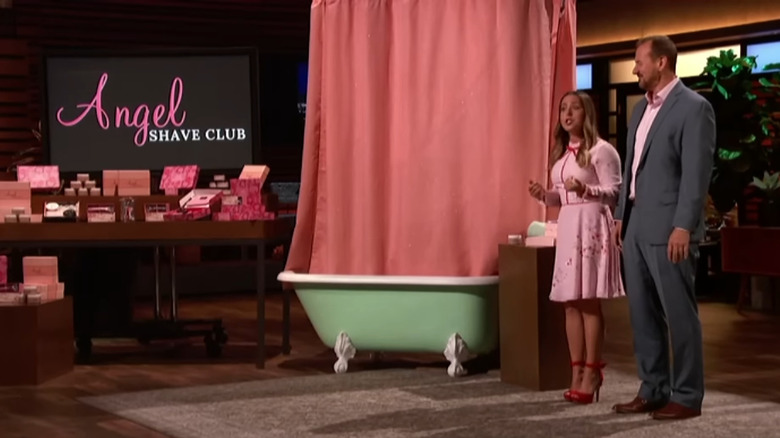
Angel Shave Club never actually appeared on ABC’s hit television show Shark Tank. The widespread belief that the women’s razor subscription startup pitched to Mark Cuban, Lori Greiner, or Kevin O'Leary is a common online misconception. It stems from the boom of direct-to-consumer (DTC) razor brands in the late 2010s, comparisons to male-oriented subscription services, and pitches by other grooming brands that did land TV deals.
The Origin and Business Model of Angel Shave Club
Founded in 2016 by entrepreneur Brian Birch, Angel Shave Club emerged during a period of massive disruption in the personal grooming industry. At the time, direct-to-consumer razor companies like Dollar Shave Club and Harry’s were rapidly capturing market share from traditional legacy brands like Gillette and Schick. However, early subscription razor models focused overwhelmingly on male consumers.
Birch identified a significant gap in the market: women were largely ignored by the first wave of razor subscription boxes. Existing options for women in brick-and-mortar retail often suffered from the "pink tax"—a term describing the higher retail prices routinely charged for products marketed specifically to female consumers compared to functionally identical male products.
| Angel Shave Club Key Features |
|---|
| 100% Designed for Women: Curved handles and moisturizing strips |
| Flexible Deliveries: Shipped blade refills every 2, 3, or 4 mos |
| Quality Construction: Flexible heads using Swedish stainless steel |
| Philanthropic Mission: Sponsored young girls in developing nations |
Angel Shave Club launched with the explicit goal of creating the first boutique shave club tailored exclusively for women. The company built its product ecosystem around customizable options and clean aesthetics:
- Customizable Shave Kits: Customers could select handle designs, ranging from vibrant pastels (like Pink Angel and Blue Angel) to eco-friendly natural bamboo handles.
- Blade Configurations: The service offered flexible blade cartridges featuring flexible head mechanics, 3-blade or 5-blade configurations, and moisture strips infused with aloe vera and vitamin E to prevent razor burn.
- Subscription Flexibility: Subscribers could schedule blade shipments every two, three, or four months depending on their personal shaving frequency, eliminating unnecessary waste and unexpected costs.
- Social Impact Mission: Angel Shave Club integrated a philanthropic mission into its brand identity, donating a portion of every membership fee to help sponsor education and healthcare for young girls in developing nations through non-profit partnerships.
Despite generating significant media coverage in major consumer publications such as Forbes, Glossy, and HuffPost, Angel Shave Club built its subscriber base through digital marketing, crowdfunding platforms, and organic social media reach—not through a televised presentation on Shark Tank.
Why Do People Think Angel Shave Club Was on Shark Tank?
Search engines frequently process queries for "Angel Shave Club Shark Tank," leading many consumers to believe the company pitched the panel of celebrity investors. Several distinct factors contribute to this persistent confusion.
The "Dollar Shave Club" Halo Effect
The massive popularity of direct-to-consumer subscription models created a generalized perception that every disruptive startup from that era must have passed through the Shark Tank studio. Interestingly, Dollar Shave Club—the brand that popularized the model with its famous 2012 viral video—also never appeared on Shark Tank. Dollar Shave Club was backed by private venture capital before being acquired by Unilever in 2016 for a reported $1 billion. Because Angel Shave Club was frequently described by journalists as "the Dollar Shave Club for women," public memory conflated the media narrative with Shark Tank investment stories.
The Surge of DTC Grooming Brands on Television
During Seasons 4 through 10 of Shark Tank, the producers featured numerous pitches focused on personal care, shaving accessories, and body hygiene. When viewers remember seeing a high-tech safety razor, a razor blade sharpener, or a specialty grooming line on the show, they frequently attach those visual memories to recognizable consumer brand names like Angel Shave Club.
Search Engine Aggregation & Algorithmic Blending
Automated content aggregators and e-commerce summary sites frequently combine trending startup names with high-volume search phrases like "Shark Tank update," "net worth," or "where are they now." Over time, these low-quality summaries create false search signals, causing users searching for product reviews to assume an episode exists when it does not.
Shaving and Grooming Brands That Did Pitch on Shark Tank
While Angel Shave Club never stepped into the tank, several other notable shaving and personal grooming startups have pitched the Sharks, securing funding and achieving varying levels of commercial success.
- Shark Tank Grooming Pitches
- Supply
- Season 10
- Deal: Herjavec
- Single-Blade Razor
- Manscaped
- Season 10
- Deal: Cuban/Greiner
- Below-Belt Trimming
- Blade Buddy
- Season 4
- Deal: Herjavec
- Blade Conditioner
- Supply
1. Supply (Formerly Supply Single Edge)
Appearing in Season 10 (Episode 6), co-founders Patrick and Jennifer Crain presented Supply, an engineering-grade single-blade safety razor designed to eliminate razor burn and ingrown hairs. Unlike multi-blade cartridge razors that cut beneath the skin line, Supply used an engineered single injector blade made from solid stainless steel.
- The Pitch: The founders asked for $300,000 in exchange for 15% equity.
- The Result: After demonstrating the durability and superior shave quality of their safety razor, Patrick and Jennifer secured an investment deal with Robert Herjavec for $300,000 in exchange for 15% equity. Supply subsequently scaled into a major personal care brand before being acquired by Tuttle Capital in 2022.
2. Manscaped
Appearing in Season 10 (Episode 4), co-founders Steve King and Paul King presented Manscaped, a personal care brand tailored around below-the-waist hygiene and precision grooming tools for men.
- The Pitch: The founders sought $500,000 for 7% equity, presenting their flagship waterproof electric trimmer equipped with skin-safe ceramic blade technology.
- The Result: The duo sparked a competitive bidding war among the panel, ultimately closing a deal with Mark Cuban and Lori Greiner for $500,000 in exchange for 25% equity. Manscaped went on to become one of the highest-grossing commercial successes in Shark Tank history, expanding into global distribution, sports sponsorships, and retail stores nationwide.
3. Blade Buddy
Appearing in Season 4 (Episode 22), entrepreneur Paul Blum pitched Blade Buddy, a specialized device designed to sharpen and extend the life of standard disposable razor blades by micro-aligning the blade edge.
- The Pitch: Blum requested $175,000 for 25% equity, arguing that his device saved consumers hundreds of dollars annually by making razor cartridges last up to five times longer.
- The Result: Robert Herjavec offered $175,000 for 50% equity, which Blum accepted. Although the product generated immediate post-show sales, changing razor technology and the shift toward direct subscription refills impacted long-term market expansion.
What Happened to Angel Shave Club? Market Dynamics and Sunset
Angel Shave Club entered the market at a pivotal moment, but the direct-to-consumer ecosystem evolved rapidly between 2017 and 2021. Understanding what happened to the company requires evaluating the intense competitive forces in the boutique shaving category.
- Timeline of the Women's Subscription Razor Market
- 2016: Angel Shave Club launches as a pioneer in boutique women's razors.
- 2017: Billie launches, backed by massive venture capital funding.
- 2018: Harry's launches Flamingo to target the women's body care sector.
- 2020: Procter & Gamble & Edgewell attempt acquisitions of major DTC brands.
- 2021+: High CAC and rising logistics costs lead to market consolidation.
The Rise of Heavyweight Venture-Backed Competitors
Shortly after Angel Shave Club launched, heavily funded competitors entered the women’s body care market with immense marketing capital:
- Billie: Launched in 2017, Billie positioned itself aggressively against the pink tax, running nationwide advertising campaigns and securing tens of millions of dollars in venture financing. Procter & Gamble attempted to acquire Billie in 2020 (though blocked by the FTC), and the brand was eventually acquired by Edgewell Personal Care in 2021 for $310 million.
- Flamingo: Launched in 2018 by Harry’s (Harry's Inc.), Flamingo leveraged established manufacturing infrastructure, supply chains, and retail distribution relationships to place women's shaving products directly into retail giants like Target and Walmart.
- Athena Club: Entering slightly later, Athena Club expanded beyond shaving into body care, wellness, and period care products, securing shelf placement across retail chains.
Unit Economics and Customer Acquisition Costs (CAC)
Niche direct-to-consumer businesses relying solely on subscription blade refills face strict financial constraints:
- Low Margin on Initial Kits: To entice consumers to switch from established retail brands, DTC shave clubs often sell starter handles at cost or a financial loss.
- Escalating Digital Advertising Fees: As customer acquisition costs on social media platforms escalated dramatically, smaller bootstrapped startups like Angel Shave Club struggled to maintain profitable acquisition channels compared to venture-backed rivals.
- Retail Distribution Demands: Winning long-term market share in personal care often requires transitioning from pure e-commerce to wholesale brick-and-mortar shelf space. Without retail distribution, customer churn can outpace new subscriber additions.
Due to these compounding pressures, Angel Shave Club gradually scaled down its operations and ultimately ceased taking new subscription orders. While the brand no longer operates as an active player in the market, its early presence played a key role in forcing personal care conglomerates to rethink gender-based product design and pricing strategies.
Comparative Breakdown: DTC Grooming Brands
To help clarify how Angel Shave Club fits into the landscape of direct-to-consumer shaving companies and television pitches, the table below breaks down the key characteristics, target audiences, television history, and operational trajectories of major brands in the space.
| Brand Name | Primary Target Audience | Featured on Shark Tank? | Investment / Deal Status | Core Differentiation | Market Trajectory / Current Status |
|---|---|---|---|---|---|
| Angel Shave Club | Women | No | None (Bootstrapped / Crowdfunded) | Boutique design, customizable handles, social mission | Ceased operations after market consolidation |
| Supply | Men & Women | Yes (Season 10) | $300,000 deal with Robert Herjavec | Single-blade engineered steel safety razor | Acquired by Tuttle Capital; active globally |
| Manscaped | Men | Yes (Season 10) | $500,000 deal with Cuban & Greiner | Below-the-waist electric trimmers & hygiene | Global brand, mass retail & sports partnerships |
| Blade Buddy | All Shavers | Yes (Season 4) | $175,000 deal with Robert Herjavec | Blade sharpening and conditioning pad | Limited online presence after post-show boom |
| Billie | Women | No | Acquired by Edgewell Personal Care | Body-positive marketing, affordable refill plans | Mass market retail presence in big-box stores |
| Dollar Shave Club | Men & Women | No | Raised VC funding; acquired by Unilever | Low-cost subscription razor blade home delivery | Operates globally under private ownership |
Lessons for DTC Entrepreneurs and Personal Care Consumers
The story of Angel Shave Club and the broader direct-to-consumer razor market offers valuable insights for both business founders and consumers navigating online product subscriptions.
- Key Takeaways for DTC Entrepreneurs
- Differentiate Early: Address unmet needs (e.g., pink tax, custom fit).
- Plan Beyond DTC: Omnichannel retail presence is crucial for long-term scale.
1. Identifying Unmet Market Gaps Is Only Step One
Angel Shave Club correctly identified that female consumers were being underserved by early razor subscription models. Identifying an underserved segment allows a brand to achieve rapid early press and loyal early adopters. However, product uniqueness must be backed by sustainable intellectual property, unique manufacturing contracts, or massive marketing budgets to defend against fast-following competitors.
2. The Omnichannel Necessity
Relying exclusively on a digital subscription model leaves brands vulnerable to advertising cost swings. Startup success stories from Shark Tank (such as Supply or Manscaped) demonstrate that television exposure serves as a launching pad, but long-term survival requires expanding into physical retail stores, global wholesale markets, and diversified product lineups.
3. Evaluating Personal Care Subscriptions as a Consumer
When choosing a modern razor subscription or personal care service, consumers should evaluate:
- Blade Material and Engineering: Stainless steel blades sourced from regions known for metallurgy (such as Sweden or Japan) offer better sharpness retention and reduced irritation.
- Commitment and Cancellation Terms: Look for services that allow easy online subscription pauses or single-purchase options without hidden cancellation friction.
- Safety Razors vs. Cartridge Refills: Traditional multi-blade cartridges offer convenience, but single-blade safety razors (like those popularized by Shark Tank alumnus Supply) drastically reduce ongoing plastic waste and recurring cartridge expenses over time.
Frequently Asked Questions
Did Angel Shave Club get a deal on Shark Tank?
No. Angel Shave Club never appeared on Shark Tank, and therefore never received an investment deal from the show's panel of Sharks.
Who founded Angel Shave Club?
Angel Shave Club was founded in 2016 by entrepreneur Brian Birch as a boutique razor subscription service created specifically for women.
Why do so many people search for "Angel Shave Club Shark Tank"?
The search query is common due to market confusion. Consumers often associate direct-to-consumer startup brands with Shark Tank, combining Angel Shave Club's media coverage with memory of actual Shark Tank grooming pitches like Supply, Manscaped, and Blade Buddy.
Did Dollar Shave Club pitch on Shark Tank?
No. Dollar Shave Club was founded by Michael Dubin and Mark Levine and built its business through private venture funding and viral video marketing. It never appeared on Shark Tank before being acquired by Unilever in 2016.
What women's razor brands are available today as alternatives?
Consumers seeking women's body care and razor subscription services have access to widespread options including Billie, Flamingo (by Harry's), Athena Club, and reusable single-blade safety razor brands like Supply or Leaf Shave.
Which razor company made the biggest deal on Shark Tank?
Manscaped achieved the largest retail footprint and brand valuation after securing a $500,000 deal on Season 10. For standard razor handles, Supply secured a notable $300,000 investment deal with Robert Herjavec in the same season.
Final Recommendation
If you are researching Angel Shave Club to locate an existing subscription account, note that the business has ceased active order processing. For consumers seeking reliable shaving products, evaluate your specific shaving priorities:
- For Low Plastic Waste and Skin Health: Consider single-blade safety razor options (such as Supply or Leaf Shave) that use recyclable metal blades and reduce ingrown hairs.
- For Affordable Multi-Blade Refills: Established retail subscription lines like Billie or Flamingo offer widespread availability both online and at major big-box retailers.
- For Evaluating Shark Tank Products: Always verify brand pitches against official broadcast records on ABC or accredited investment databases, as many direct-to-consumer brands use the show's name in search marketing without ever having stepped into the tank.