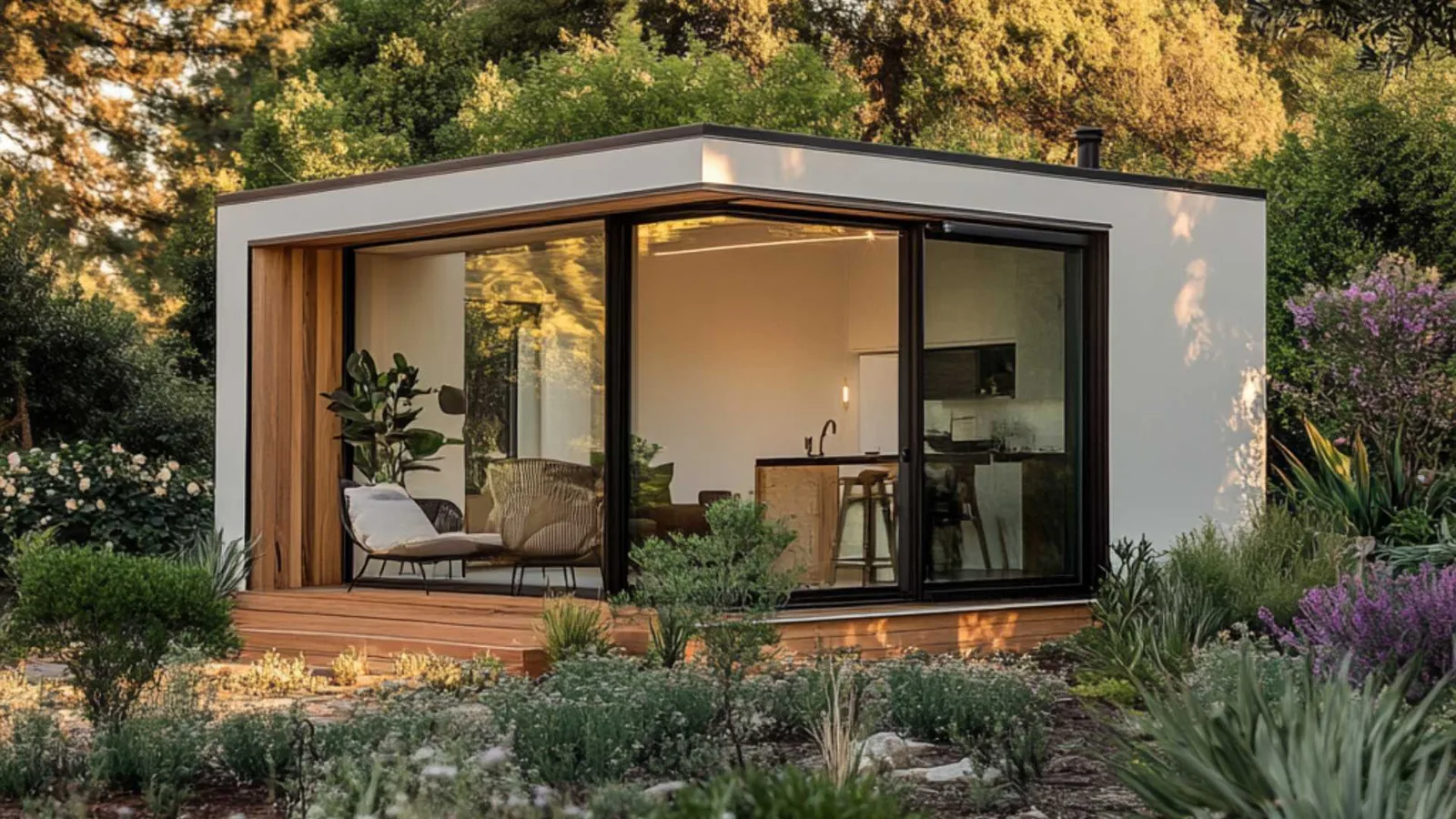
Amazon pod houses, commonly referred to as expandable container homes or prefabricated modular units, represent a significant shift toward rapid-deployment housing. These units provide a turnkey structural shell, typically including basic plumbing, electrical wiring, and partitioned rooms, allowing homeowners to bypass traditional construction timelines. To achieve a functional living space, buyers must manage site preparation, local permitting, and utility integration beyond the initial purchase price.
Understanding the Amazon Pod House Ecosystem
By 2026, the marketplace for prefabricated structures on Amazon has matured from a novelty into a legitimate sector of the "missing middle" housing market. These structures, often marketed as expandable container houses or modular villas, are designed to address the increasing demand for flexible living arrangements, such as accessory dwelling units (ADUs), remote offices, or multi-generational housing.
The core appeal of an Amazon pod house lies in its modularity. Most units are built on a galvanized steel frame with flame-retardant wall panels, usually made of expanded polystyrene (EPS) or polyurethane (PU). The "expandable" nature of these pods means they ship in a footprint similar to a standard ISO shipping container (approx. 8 feet wide) but unfold into a structure spanning 20 to 40 feet in width once on-site. This design drastically reduces shipping costs while maximizing the eventual living square footage.
The Rise of ADUs and Flexible Living
Flexible living is no longer just a trend; it is a response to the 2026 economic reality where traditional home ownership is often out of reach or too rigid for a mobile workforce. Amazon pod houses serve as a bridge, offering a semi-permanent solution that can be relocated if necessary. In many jurisdictions, these units are classified as ADUs, which are secondary housing units on a single-family residential lot. They provide a way for homeowners to gain rental income or house family members without the $200,000+ price tag associated with site-built additions.
Technical Specifications and Material Quality
When evaluating an Amazon pod house, the technical specifications dictate the unit’s longevity and comfort. Most mid-range units utilize a C-channel steel skeleton paired with sandwich panels. These panels are critical because they provide both the structural exterior and the internal insulation.
Frame and Shell Integrity
The structural integrity of a pod house is rated by its wind resistance and snow load capacity. Higher-end models sold in 2026 are rated to withstand wind speeds up to 60-70 mph (Category 1 hurricane equivalent) and a roof snow load of approximately 20-30 lbs per square foot. If you live in an area with extreme weather, these figures are the first thing you should verify with the seller. The steel is typically hot-dip galvanized to prevent rust, which is essential for the longevity of the folding hinges—the most vulnerable part of the structure.
Insulation and R-Values
One of the primary criticisms of early modular pods was poor thermal regulation. In 2026, many manufacturers have upgraded to 50mm to 75mm thick wall panels. However, the R-value (a measure of thermal resistance) of these panels often hovers between R-11 and R-15. For temperate climates, this is sufficient. In regions with harsh winters or extreme heat, owners often find they need to add secondary insulation or "furring out" the interior walls to meet local energy codes.
Windows and Doors
Standard units typically come with aluminum-frame sliding windows and a steel entry door. While functional, these components are often the "weakest links" in terms of energy efficiency. Many buyers choose to replace these with double-pane, low-E glass alternatives after the unit is unfolded to improve soundproofing and climate control.
The Logistics of Delivery and Site Preparation
Ordering a house with a "Buy Now" button is a modern marvel, but the logistics are far more complex than a standard Amazon Prime delivery. The "last mile" of delivery for a 6,000-pound steel crate requires heavy machinery and professional coordination.
Delivery Requirements
Amazon pod houses are usually delivered via a flatbed truck. The most critical requirement is site access. A 20-foot or 40-foot flatbed requires significant clearance to maneuver. If your property has narrow gates, low-hanging power lines, or steep unpaved roads, the delivery driver may be forced to drop the unit at the curb. From there, you will need to hire a crane or a heavy-duty forklift (telehandler) to move the pod into its final position.
Foundation Types
You cannot simply drop a pod house on a lawn and expect it to remain level or dry. There are three primary foundation options for these units:
- Concrete Slab: The most permanent and stable option. It provides a level surface and prevents moisture from rising through the floor.
- Piers or Footings: Concrete pillars at the four corners and the central support points. This is often required for sloping ground.
- Gravel Pad: A more temporary and affordable option that allows for drainage, provided the ground is well-compacted.
Failure to provide a level foundation will result in the "expansion" mechanism jamming. If the hinges are even a fraction of an inch out of alignment, the walls will not lock into place, leading to gaps that allow water and pests to enter.
Cost Analysis: The "Hidden" Expenses of Modular Living
While a 20-foot expandable pod might be listed on Amazon for $12,000 to $18,000, the total cost to make it habitable is often double that amount. Understanding these "hidden" costs is vital for accurate budgeting in 2026.
| Expense Category | Estimated Cost (USD) | Description |
|---|---|---|
| Base Unit | $12,000 – $25,000 | The cost of the pod as listed on the marketplace. |
| Shipping/Freight | $1,500 – $5,000 | Varies based on proximity to the port of entry. |
| Foundation/Site Prep | $2,000 – $8,000 | Excavation, concrete, or gravel pad installation. |
| Utility Hookups | $3,000 – $10,000 | Electrical, plumbing, and sewage/septic connections. |
| Permitting/Fees | $500 – $4,000 | Varies wildly by city and county regulations. |
| Interior Finishing | $2,000 – $5,000 | Flooring upgrades, trim, better appliances, and HVAC. |
| TOTAL PROJECT | $21,000 – $57,000 | A realistic budget for a fully functional ADU. |
Utility Integration
Most Amazon pods come "pre-wired" and "pre-plumbed." However, this often follows international standards that may not align with your local building codes. In the United States, for example, the electrical system must meet National Electrical Code (NEC) standards. You will likely need a licensed electrician to install a breaker box and ensure the outlets are grounded properly. Similarly, the plumbing will need to be connected to either a municipal sewer line or a septic system, which requires significant trenching and professional installation.
Legal and Regulatory Framework (2026 Update)
As of 2026, the legal landscape for "tiny homes" and modular pods has become more defined but also more restrictive in certain areas. The primary challenge is not the house itself, but the land it sits on.
Zoning and Land Use
Before purchasing, you must verify your local zoning ordinances. Some areas allow these units as Accessory Dwelling Units (ADUs), while others classify them as park models or recreational vehicles (RVs). If classified as an RV, you may be prohibited from living in it full-time on your own property.
Building Codes and Appendix Q
Many modern jurisdictions have adopted Appendix Q of the International Residential Code (IRC), which specifically addresses tiny houses. This appendix relaxes certain requirements regarding ceiling heights and loft stairs, making it easier for pod houses to be permitted. However, many Amazon pods are manufactured overseas and may lack the specific HUD-code or state-certified modular labels required for permanent occupancy. Always check if your local inspector accepts third-party certifications from agencies like the International Code Council (ICC).
Living Quality: Pros, Cons, and Practicality
Living in a pod house requires a shift in lifestyle. With square footage ranging from 150 to 800 square feet, every inch must be utilized efficiently.
Advantages of the Pod Lifestyle
- Speed: From the time the unit arrives, it can theoretically be unfolded in 10 to 48 hours. This is months faster than traditional timber-frame construction.
- Predictability: Unlike traditional builds, there are fewer weather delays or material shortages once the unit is purchased.
- Portability: While not "mobile" like a trailer, these units can be refolded and moved to a new property if your life circumstances change.
Disadvantages and Limitations
- Humidity Management: Small, steel-framed spaces are prone to condensation. Without a high-quality ERV (Energy Recovery Ventilator) or a Mini-Split HVAC system, mold can become a significant issue.
- Sound Insulation: The thin walls do not offer much acoustic privacy. If you are using the pod as a home office, you may hear everything happening outside.
- Financing Hurdles: Traditional mortgages are rarely available for Amazon pod houses. Buyers typically rely on personal loans, RV loans, or cash savings.
Assembly and Installation: What to Expect
The marketing videos for these pods often show a small team unfolding a house in under an hour. In practice, the process is more deliberate and requires at least three people and a suite of tools.
- Leveling the Chassis: Once the container is placed on the foundation, you must use heavy-duty jacks to ensure the main chassis is perfectly level.
- Unfolding the Roof and Floor: Using a winch or a crane, the roof section is lifted, and the floor section is lowered. This creates the "wings" of the house.
- Erecting the Walls: The side walls are then swung out into place. It is at this stage that you must ensure all seals are tight.
- Weatherproofing: Once the walls are locked, you must apply industrial-grade caulking and flashing to all joints. This is the most important step for preventing future leaks.
- Interior Setup: The bathroom and kitchen are usually pre-installed in the central "core" of the container to keep plumbing centralized. You will need to unfold the internal partition walls to create separate bedrooms.
Frequently Asked Questions
Do Amazon pod houses come with a warranty?
Most sellers offer a limited 1-year warranty on the structure and 6 months on the internal components like faucets and lights. However, since many of these companies are based overseas, claiming a warranty can be difficult. It is often more practical to assume that you will be responsible for minor repairs and replacements using locally sourced parts.
Can I live in an Amazon pod house in a cold climate?
Yes, but it requires significant modifications. The standard EPS panels are usually insufficient for sub-zero temperatures. You should plan to install a high-efficiency Mini-Split heat pump and potentially add an exterior layer of rigid foam insulation and siding to meet higher R-value requirements.
Are these houses fireproof?
Most units use flame-retardant sandwich panels (Class A or Class B fire rating). While the steel frame will not burn, the internal finishes and the insulation can still be damaged by extreme heat. It is vital to install smoke detectors and fire extinguishers that meet your local safety standards.
How do I handle sewage and waste?
You have three main options: connecting to a municipal sewer (requires a permit and a plumber), installing a septic system (expensive and requires land), or using a self-contained composting toilet and a greywater system for the sinks and shower. The latter is popular for "off-grid" setups but is not legal in all suburban areas.
Can these units be stacked?
Generally, no. While traditional shipping containers are designed to be stacked, the "expandable" pod houses have different load-bearing points. Attempting to stack them without a secondary external steel exoskeleton could lead to a structural failure of the bottom unit.
Final Recommendations for Potential Buyers
If you are considering an Amazon pod house for flexible living, the most important step is to consult your local building department before clicking "buy." A pod house is a tool, not a finished product; its success depends entirely on the preparation of the land and the legality of the placement.
For those in search of a guest house or a backyard office, the 20-foot expandable model offers the best balance of cost and utility. However, for full-time living, look toward the 40-foot units or "L-shaped" modular configurations which allow for a more traditional layout and better airflow. Always budget at least 50% more than the purchase price to cover the essential infrastructure that turns a steel crate into a comfortable, permanent home.