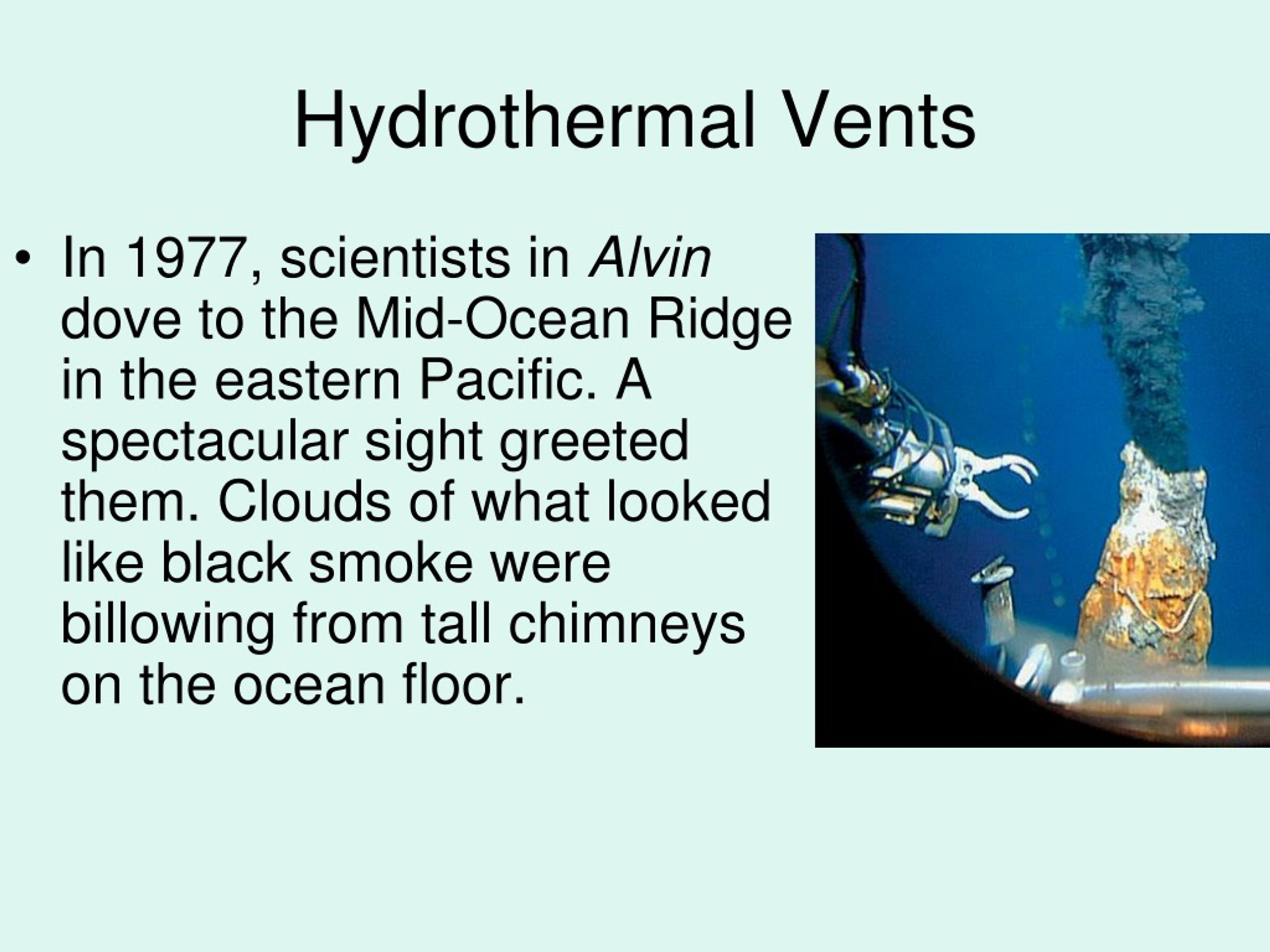
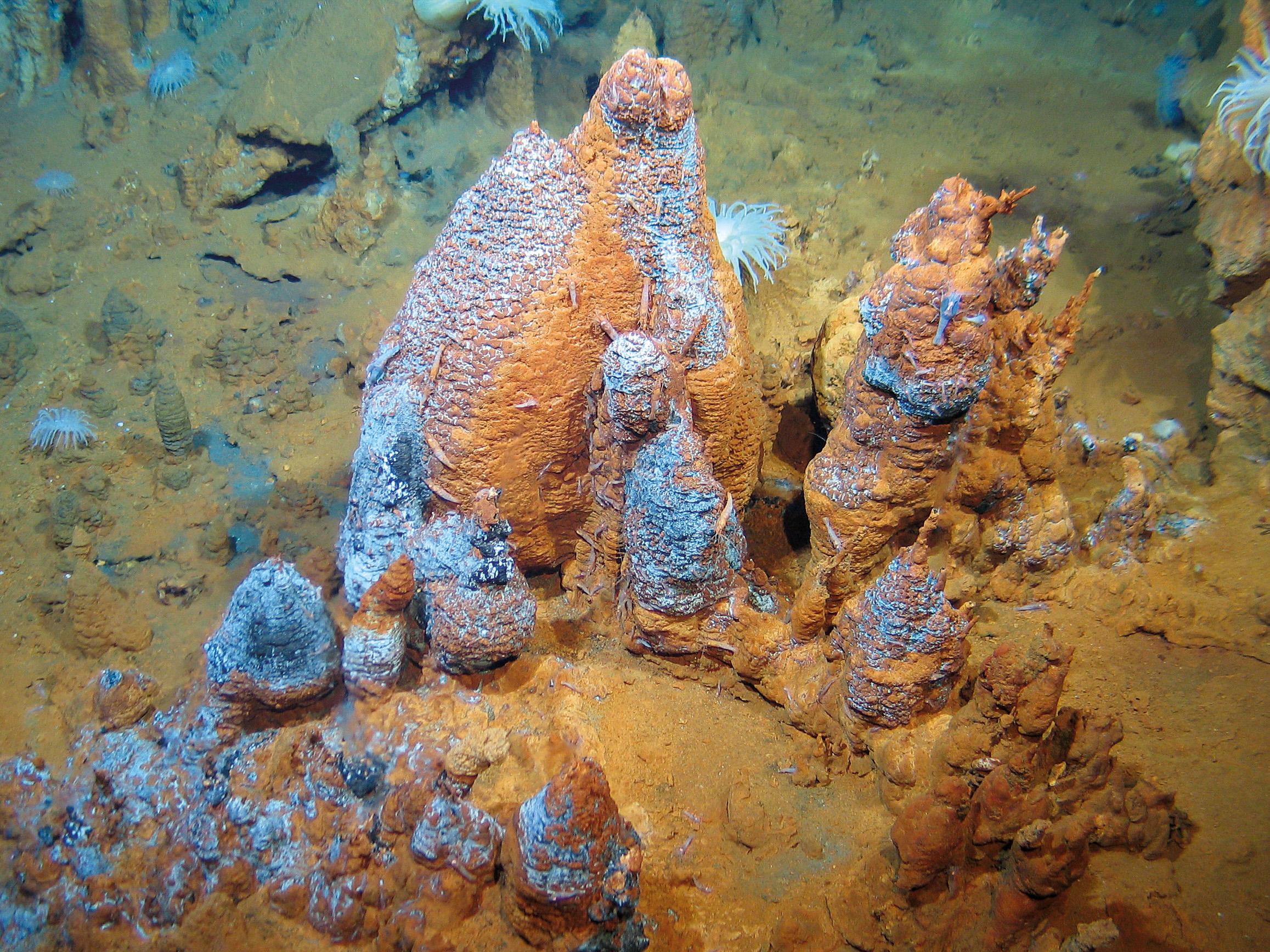
In 1977, the deep-sea submersible Alvin discovered the first hydrothermal vents at the Galapagos Rift in the Pacific Ocean. This groundbreaking find revealed complex ecosystems thriving in total darkness, powered by chemical energy (chemosynthesis) rather than sunlight, fundamentally changing our understanding of biology, geology, and the potential for life on other planets.
The Historical Context of Deep-Sea Exploration in the 1970s
Before the late 1970s, the prevailing scientific consensus viewed the deep ocean floor as a "biological desert." It was widely assumed that life at extreme depths—where pressures are crushing and temperatures hover just above freezing—was sparse and entirely dependent on "marine snow," the organic debris drifting down from the sunlit surface layers.
At the same time, the geological community was in the midst of a revolution. The theory of plate tectonics and seafloor spreading had gained acceptance only a decade earlier. Scientists hypothesized that if the seafloor was indeed spreading at mid-ocean ridges, there must be a mechanism for heat to escape from the Earth's interior. This led to the prediction of hydrothermal activity: seawater circulating through the crust, being heated by magma, and re-emerging as mineral-rich springs.
The 1977 expedition to the Galapagos Rift was primarily a geological mission. Led by researchers from the Woods Hole Oceanographic Institution (WHOI), Oregon State University, and the Massachusetts Institute of Technology (MIT), the goal was to find these elusive "hot springs" to prove the thermal theories of seafloor spreading.
The Technology Behind the Discovery: DSV Alvin and R/V Knorr
The discovery would not have been possible without the unique capabilities of the Deep Submergence Vehicle (DSV) Alvin. Operated by WHOI, Alvin was one of the few manned submersibles capable of reaching the depths required to explore mid-ocean ridges.
The Role of DSV Alvin
In 1977, Alvin was already a veteran of the FAMOUS (French-American Mid-Ocean Undersea Study) project, but the Galapagos mission pushed its operational limits. The submersible allowed three people—a pilot and two scientists—to descend to nearly 2,500 meters (about 8,200 feet). Its mechanical arms and viewport systems were essential for the precise sampling of water and geological specimens that would later prove the existence of hydrothermal activity.
The ANGUS Sled and R/V Knorr
The research vessel Knorr served as the mothership for the expedition. Because Alvin's battery life and bottom time were limited, scientists first deployed the ANGUS (Acoustically Navigated Geological Underwater Survey) sled. This unmanned, camera-equipped sled was towed near the seafloor to scout for temperature anomalies. On February 15, 1977, ANGUS detected a sudden spike in water temperature and captured grainy photographs of shimmering water and clusters of white shells. These clues provided the coordinates for Alvin's historic dive.
February 17, 1977: The Moment of Discovery
On the morning of February 17, 1977, Alvin Dive 713 commenced. The crew consisted of pilot Jack Donnelly and geologists Jack Corliss and Jerry van Andel. As they reached the target coordinates on the Galapagos Rift, they encountered a sight that defied all biological expectations.
Instead of a barren landscape, the scientists saw vibrant "oases" of life. Huge, white clam shells and brownish mussels were clustered around cracks in the basaltic seafloor. Most strikingly, they observed tall, white tubes with bright red plumes—later identified as giant tube worms (Riftia pachyptila).
The water emerging from these vents was not boiling—those "black smokers" would be discovered two years later—but it was significantly warmer than the surrounding 2°C (35.6°F) bottom water. The geologists realized they had found the predicted hydrothermal activity, but they were unprepared for the biological explosion surrounding it. Since the expedition lacked a trained biologist, the team was forced to describe the strange creatures using culinary analogies, naming the first site "Clambake I."
Understanding Chemosynthesis: Life Without the Sun
The discovery of hydrothermal vents forced a total rewrite of biology textbooks. Until 1977, it was believed that photosynthesis was the primary foundation of all life on Earth. In the sunless depths of the Galapagos Rift, however, a different process was at work: chemosynthesis.
The Microbial Engine
Geochemist John Edmond and microbiologist Holger Jannasch later determined that the base of this deep-sea food web was bacteria. These microbes utilize hydrogen sulfide—a gas that is toxic to most terrestrial life—which is abundant in the mineral-rich vent fluids. Through chemosynthesis, the bacteria convert the chemical energy from the oxidation of hydrogen sulfide into organic matter.
Symbiotic Relationships
The giant tube worms discovered by Alvin are perhaps the most famous examples of vent life. These creatures have no mouth or digestive tract. Instead, they house billions of chemosynthetic bacteria in an internal organ called a trophosome. The worm’s red plume acts as a gill, extracting oxygen, carbon dioxide, and hydrogen sulfide from the water and delivering them to the bacteria. In exchange, the bacteria provide the worm with the nutrients it needs to grow, sometimes reaching lengths of over two meters.
Geological and Chemical Significance
Beyond biology, the 1977 discovery provided the "missing link" in ocean chemistry and plate tectonics. Scientists had long wondered why the chemical composition of seawater remained constant despite the massive influx of minerals from rivers.
The Alvin discovery revealed that the entire volume of the Earth's oceans circulates through the seafloor crust every few million years. As seawater sinks into the crust, it reacts with hot basalt, stripping out certain elements (like magnesium) and picking up others (like manganese, iron, and copper). This hydrothermal circulation acts as a massive chemical regulator for the world's oceans.
Comparing Hydrothermal Vent Characteristics
The following table outlines the differences between the types of vents discovered during the early years of exploration following the 1977 mission.
| Feature | Diffuse Flow (Galapagos 1977) | Black Smokers (East Pacific Rise 1979) | White Smokers |
|---|---|---|---|
| Temperature | 5°C to 30°C | 300°C to 400°C+ | 250°C to 300°C |
| Visual Appearance | Shimmering, clear water | Dense, black "smoke" (metal sulfides) | White/grey "smoke" (silica/anhydrite) |
| Primary Minerals | Low mineral precipitation | Iron, Copper, and Zinc sulfides | Barium, Calcium, and Silicon |
| Dominant Life | Clams, Mussels, Tube Worms | Pompeii worms, Shrimps | Diverse microbial mats |
| Depth | ~2,500 meters | ~2,100 to 3,000+ meters | Variable |
The Legacy of Alvin’s Discovery in 2026
As of 2026, nearly 50 years after the initial discovery, the impact of Alvin's find continues to resonate across multiple scientific disciplines.
Astrobiology and the Search for Extraterrestrial Life
The realization that life can thrive in extreme environments without sunlight has fundamentally shifted NASA’s search for life in the solar system. The hydrothermal vents of the Galapagos Rift are considered the best Earth-based analogs for potential habitats on the icy moons of Jupiter (Europa) and Saturn (Enceladus). If these moons have liquid oceans over rocky cores, it is highly probable that hydrothermal activity exists there, potentially supporting chemosynthetic life.
Evolution and the Origins of Life
Many scientists now hypothesize that hydrothermal vents may have been the "cradle of life" on Earth. The stable temperatures, chemical gradients, and protective rocky environment of the vents provide a more plausible setting for the emergence of the first self-replicating molecules than the chaotic, UV-blasted surface of the early Earth.
Modern Submersible Capabilities
While the original Alvin was a marvel of its time, the vehicle has undergone numerous overhauls. By 2026, the current iteration of Alvin is capable of descending to 6,500 meters, allowing scientists to reach 98% of the ocean floor. The original 1977 discovery proved the necessity of manned (and later, robotic) exploration in the deep sea, leading to the identification of over 500 vent fields globally.
Operational Challenges and Environmental Concerns
Exploring hydrothermal vents is not without significant risk and ethical considerations. The environments are highly acidic and corrosive, posing constant threats to the structural integrity of submersibles. Furthermore, the discovery of massive sulfide deposits around vents has attracted interest from the deep-sea mining industry.
In 2026, the scientific community remains divided over the exploitation of these sites. While they contain high concentrations of gold, silver, and rare earth elements, mining could cause irreparable damage to the unique biological communities that Alvin first revealed. International bodies like the International Seabed Authority (ISA) are currently tasked with creating regulations to balance economic interests with the preservation of these scientific treasures.
Frequently Asked Questions
Why was the discovery of hydrothermal vents such a surprise?
Before 1977, it was believed that all life on Earth relied on the sun via photosynthesis. Discovering a massive, complex ecosystem that thrived on chemical energy from the Earth's interior overturned centuries of biological assumptions and proved that life is far more resilient than previously thought.
Who were the key scientists on the 1977 Galapagos expedition?
The expedition involved a multidisciplinary team. Jack Corliss (Oregon State University) and John Edmond (MIT) were central to the geochemical analysis, while Tjeerd van Andel (Stanford) provided geological expertise. Although no biologist was on the initial dive, Robert Ballard (WHOI) played a significant role in the photographic survey and subsequent expeditions.
Is Alvin still in use today?
Yes. As of 2026, DSV Alvin remains one of the world's most active and advanced deep-sea research submersibles. It has been rebuilt and upgraded several times, most notably in the early 2020s to extend its depth rating to 6,500 meters and improve its high-definition imaging systems.
What is the difference between a hydrothermal vent and a "black smoker"?
All black smokers are hydrothermal vents, but not all vents are black smokers. The original vents found in 1977 were "diffuse flow" vents with lower temperatures. Black smokers, first found in 1979 at 21° North on the East Pacific Rise, are much hotter (over 350°C) and emit dark minerals that look like smoke when they hit the cold seawater.
How do tube worms survive without a mouth?
Tube worms have a symbiotic relationship with chemosynthetic bacteria. The worm provides the bacteria with a steady supply of oxygen and hydrogen sulfide through its specialized hemoglobin, and the bacteria convert those chemicals into food for the worm. This is a form of internal symbiosis.
Practical Recommendation for Further Study
For those interested in the history and ongoing science of deep-sea exploration, the Woods Hole Oceanographic Institution (WHOI) maintains an extensive archive of Alvin’s mission logs, photographs, and scientific papers. Researchers and students should also consult the NOAA Ocean Exploration website for recent data on hydrothermal vent mapping and the current status of deep-sea conservation efforts. If you are visiting the United States, the original personnel sphere from Alvin is occasionally featured in Smithsonian Institution exhibits, providing a tangible link to this monumental discovery.