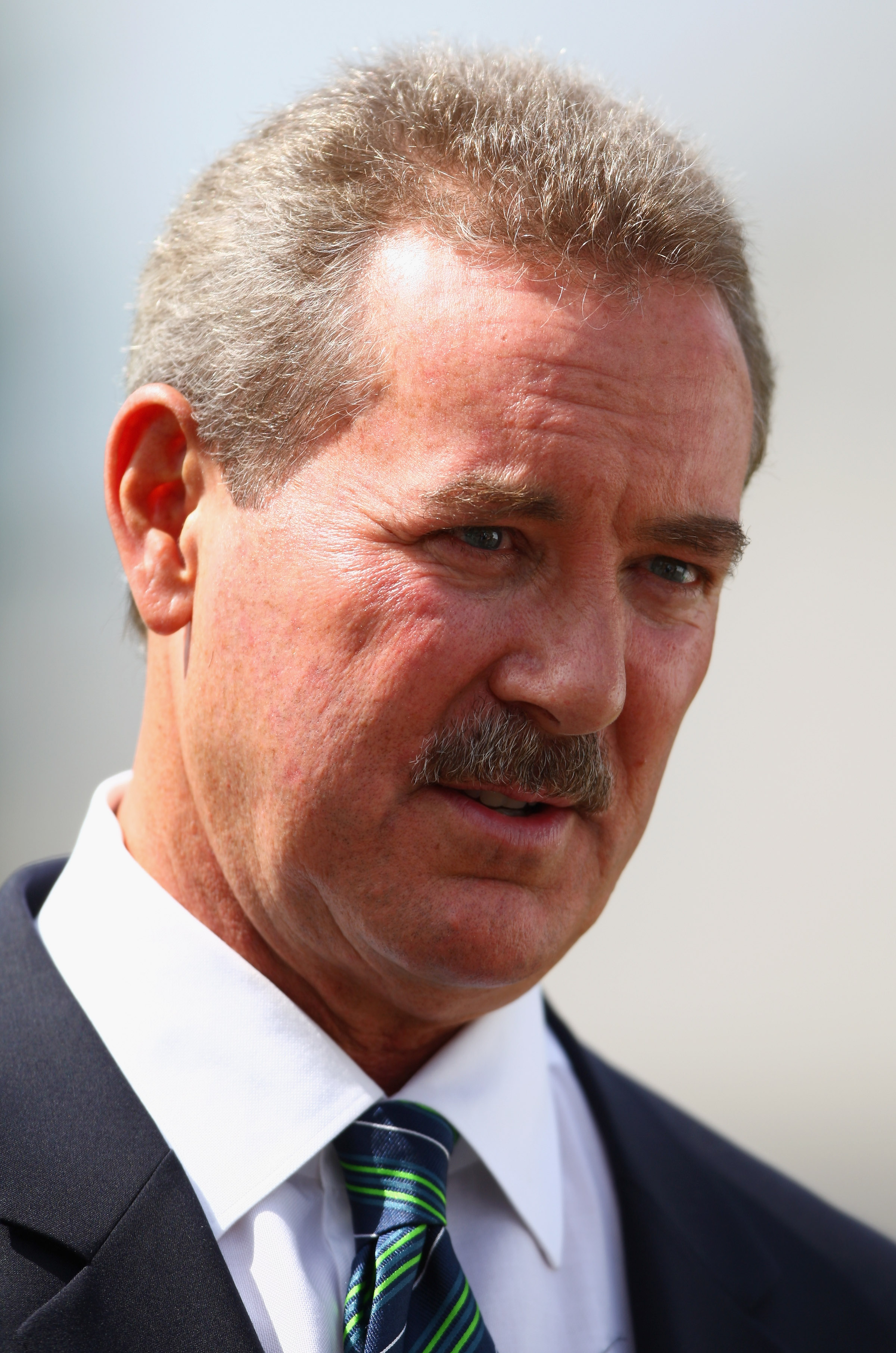
At the peak of his career, Robert Allen Stanford was a billionaire with an estimated net worth of $2.2 billion, ranking on the Forbes 400 list. However, following his 2009 arrest for orchestrating a $7 billion Ponzi scheme, his assets were seized, and his net worth effectively plummeted to zero. As of 2026, he remains incarcerated, serving a 110-year federal prison sentence.
The story of Allen Stanford is one of the most significant cautionary tales in the history of international finance. Once a dominant figure in Caribbean banking and a flamboyant patron of professional sports, Stanford’s business background reveals a complex web of offshore entities, aggressive marketing, and systemic fraud. Understanding his financial trajectory requires examining how he built his empire, the mechanisms he used to deceive investors, and the eventual liquidation of his global assets.
The Early Business Background of Robert Allen Stanford
Born in 1950 in Mexia, Texas, Robert Allen Stanford’s early career did not immediately suggest the heights of international banking. He began his professional life in the 1970s, initially following in the footsteps of his father, James Stanford, who operated a small insurance and real estate business.
Stanford’s first significant independent venture was in the fitness industry. In the early 1980s, he opened a chain of health clubs in the Houston area. While the business initially showed promise during the Texas oil boom, the subsequent economic downturn in the mid-80s led to the failure of the gyms. Stanford filed for bankruptcy in 1985, an event that would later be viewed as a pivotal moment in his risk tolerance and business philosophy.
Following the collapse of his fitness venture, Stanford moved into the offshore finance sector. He relocated to Montserrat, a British Overseas Territory, where he established Guardian International Bank. When Montserrat tightened its banking regulations in the late 1980s, Stanford moved his operations to Antigua and Barbuda. It was here that the Stanford Financial Group (SFG) and Stanford International Bank (SIB) truly began to take shape, eventually becoming the centerpiece of his multi-billion dollar empire.
The Architecture of the Stanford Financial Group
By the late 1990s and early 2000s, Stanford had transformed his Antiguan operations into a massive international conglomerate. The Stanford Financial Group was not a single entity but a sprawling network of over 100 companies located in various jurisdictions, including the United States, Switzerland, and several Caribbean nations.
Stanford International Bank (SIB)
The core of the business was Stanford International Bank, based in St. John's, Antigua. SIB marketed high-yield Certificates of Deposit (CDs) to investors worldwide. These CDs were the primary engine of Stanford’s wealth. Investors were told that their funds were being managed by a team of over 20 analysts and invested in a diversified portfolio of liquid assets, including stocks, bonds, and precious metals.
In reality, the bank operated as a classic Ponzi scheme. The "high returns" paid to early investors were funded by the principal deposits of newer investors. The "diversified portfolio" was largely a fabrication; much of the money was diverted into Stanford’s private business ventures, real estate, and lavish personal lifestyle.
Expansion into the United States
To lend an air of legitimacy to his offshore operations, Stanford established Stanford Group Company (SGC), a Houston-based broker-dealer and investment adviser registered with the SEC. SGC served as the primary sales arm for SIB’s certificates of deposit in the United States. Financial advisers at SGC were incentivized with unusually high commissions to steer clients toward the Antiguan CDs, often marketing them as safe alternatives to traditional U.S. bank products.
Analyzing Allen Stanford's Peak Net Worth
In 2008, Forbes estimated Allen Stanford’s net worth at $2.2 billion. This figure made him one of the wealthiest people in the world and the largest private employer in Antigua and Barbuda. His wealth was not just reflected in bank accounts but in a massive portfolio of tangible and high-profile assets.
Real Estate and Private Islands
Stanford owned a vast array of properties. In Antigua, his holdings were so extensive that he was often referred to as the "uncrowned king" of the island. He owned the Maiden Island development, several high-end restaurants, and a local newspaper. In the United States, his primary residence was a massive estate in St. Croix, complemented by luxury properties in Florida and Texas.
The Fleet and the Yacht
Stanford’s lifestyle was defined by excess. He maintained a private fleet of six aircraft, including several Gulfstream jets and Sikorsky helicopters. His maritime interests were anchored by the Sea Eagle, a 112-foot luxury yacht. These assets served a dual purpose: they provided personal comfort and projected an image of immense, stable wealth that lured further investment into his bank.
Sports Sponsorships and the Cricket Legacy
Perhaps the most visible display of Stanford’s wealth was his involvement in professional cricket. In 2008, he launched the "Stanford 20/20" tournament, culminating in a $20 million winner-take-all match between England and a Stanford All-Stars team. He arrived at the cricket grounds in a private helicopter, carrying a plexiglass case filled with $20 million in cash. This event was a masterclass in branding, cementing his status as a global billionaire just months before his empire collapsed.
The Mechanism of the $7 Billion Fraud
The downfall of Allen Stanford began when regulators started looking past the flashy sponsorships and into the balance sheets of Stanford International Bank. The fraud was sophisticated but relied on a few key deceptions:
- Fictitious Returns: SIB consistently reported annual returns of 10% to 15%, even during market downturns like the 2001 dot-com bust.
- Lack of Independent Oversight: The bank was audited by a tiny accounting firm in Antigua, CAS Hewitt, which was run by a close associate of Stanford. The firm lacked the resources and independence to verify the multi-billion dollar claims.
- Bribing Regulators: It was later revealed in court that Stanford had bribed Leroy King, the chief regulator of Antigua’s Financial Services Regulatory Commission, to ignore red flags and forestall investigations.
- Misappropriation of Assets: Hundreds of millions of dollars were funneled into "loans" to Stanford himself, which he used to fund his private business failures and lifestyle.
| Asset Category | Reported Value (2008) | Actual Realizable Value (Post-2009) |
|---|---|---|
| Certificates of Deposit (CDs) | $7.2 Billion | ~$800 Million (Estimated Recovery) |
| Personal Real Estate | $200+ Million | Seized/Sold for significantly less |
| Corporate Aircraft Fleet | $100 Million | Seized and Liquidated |
| Cash Reserves | $1 Billion+ | Non-existent/Fabricated |
| Antiguan Business Holdings | $500 Million | Mostly insolvent or seized by government |
The Investigation and Legal Downfall
The SEC began a formal investigation into the Stanford Financial Group in late 2008, spurred in part by the collapse of Bernard Madoff’s Ponzi scheme, which had put regulators on high alert for high-yield, "market-proof" investment vehicles. In February 2009, federal agents raided the Stanford offices in Houston.
Stanford was officially indicted in June 2009. The charges included conspiracy to commit mail and wire fraud, money laundering, and obstruction of justice. Unlike Madoff, who pleaded guilty almost immediately, Stanford maintained his innocence for years, claiming that his assets were real and that the government’s intervention was the only reason investors lost money.
In 2012, a jury in Houston found Stanford guilty on 13 of 14 counts. The presiding judge, David Hittner, described the fraud as "one of the most egregious frauds ever presented to a trial court" and sentenced Stanford to 110 years in federal prison.
Asset Liquidation and the Quest for Victim Recovery
The process of recovering funds for Stanford’s victims has been a decades-long legal battle. Upon his arrest, a court-appointed Receiver, Ralph Janvey, took control of the Stanford Financial Group’s remaining assets.
The Role of Third-Party Liability
Because Stanford had spent or lost the majority of the $7 billion, the Receiver turned toward third parties that had facilitated the fraud. This included major financial institutions that provided banking services to Stanford. Significant legal victories were achieved against banks such as TD Bank, HSBC, and Independent Bank (formerly Bank of Houston). In 2023 and 2024, settlements totaling over $1.6 billion were reached with these institutions, providing a substantial boost to the recovery fund.
The 2026 Status of Payouts
By 2026, the receivership has distributed billions of dollars to thousands of victims. While many investors have recovered a significant portion of their principal, the recovery remains "cents on the dollar" for those who lost their life savings. The liquidation of his Caribbean properties proved difficult due to jurisdictional disputes between the U.S. receivership and Antiguan liquidators.
Summary of Business Holdings and Personal Wealth
| Feature | Details |
|---|---|
| Primary Business | Stanford International Bank (SIB) |
| Headquarters | St. John's, Antigua & Houston, Texas |
| Peak Net Worth | $2.2 Billion (2008) |
| Total Fraud Amount | ~$7 Billion |
| Current Net Worth | $0 (Incarcerated) |
| Key Assets Seized | Private jets, yachts, Antiguan real estate, US mansions |
| Criminal Sentence | 110 Years (USP Coleman II) |
Frequently Asked Questions
What was Allen Stanford’s official net worth at the time of his arrest?
At the time of his arrest in early 2009, Allen Stanford’s paper net worth was still estimated in the billions. However, the SEC and the court-appointed receiver quickly determined that his liquid assets were a fraction of that amount. Within weeks of the freeze, it became clear that his "net worth" was an illusion supported by the ongoing Ponzi scheme.
Is any of Allen Stanford's money still hidden?
While there have been persistent rumors of "hidden accounts" in various tax havens, the court-appointed receiver and federal authorities have conducted an exhaustive global search. Most of the money was lost to bad business investments, lavish personal spending, and the "interest" payments made to early investors to keep the scheme running.
What happened to Allen Stanford’s knighthood?
Stanford was appointed a Knight Commander of the Order of the Nation (KCN) by the government of Antigua and Barbuda in 2006. Following his fraud conviction, the National Honours Committee of Antigua and Barbuda formally stripped him of the knighthood and the title of "Sir" in 2010.
How did Allen Stanford's business background help him commit fraud?
Stanford leveraged his family’s history in the insurance business to build a brand of "Texas reliability." He combined this with the secrecy and higher interest rates associated with offshore banking in Antigua. His background in real estate also allowed him to create a facade of "hard assets" that reassured investors.
Where is Allen Stanford now in 2026?
As of 2026, Robert Allen Stanford is serving his 110-year sentence at the United States Penitentiary (USP) Coleman II in Florida. He has exhausted his major appeals and remains one of the highest-profile white-collar criminals in the federal prison system.
Final Perspective on the Stanford Empire
The business background of Allen Stanford illustrates the dangers of "regulatory arbitrage," where a businessman moves operations to jurisdictions with weak oversight to hide financial discrepancies. His perceived net worth was a tool used to facilitate further fraud, demonstrating that high-profile lifestyle markers—like private jets and sports sponsorships—are not a substitute for audited financial transparency.
For those tracking the recovery of assets in 2026, the focus remains on the final stages of the receivership. While Stanford himself will never return to the world of business, the legal precedents set by the lawsuits against the banks that supported him continue to influence how financial institutions monitor high-risk offshore clients today.